


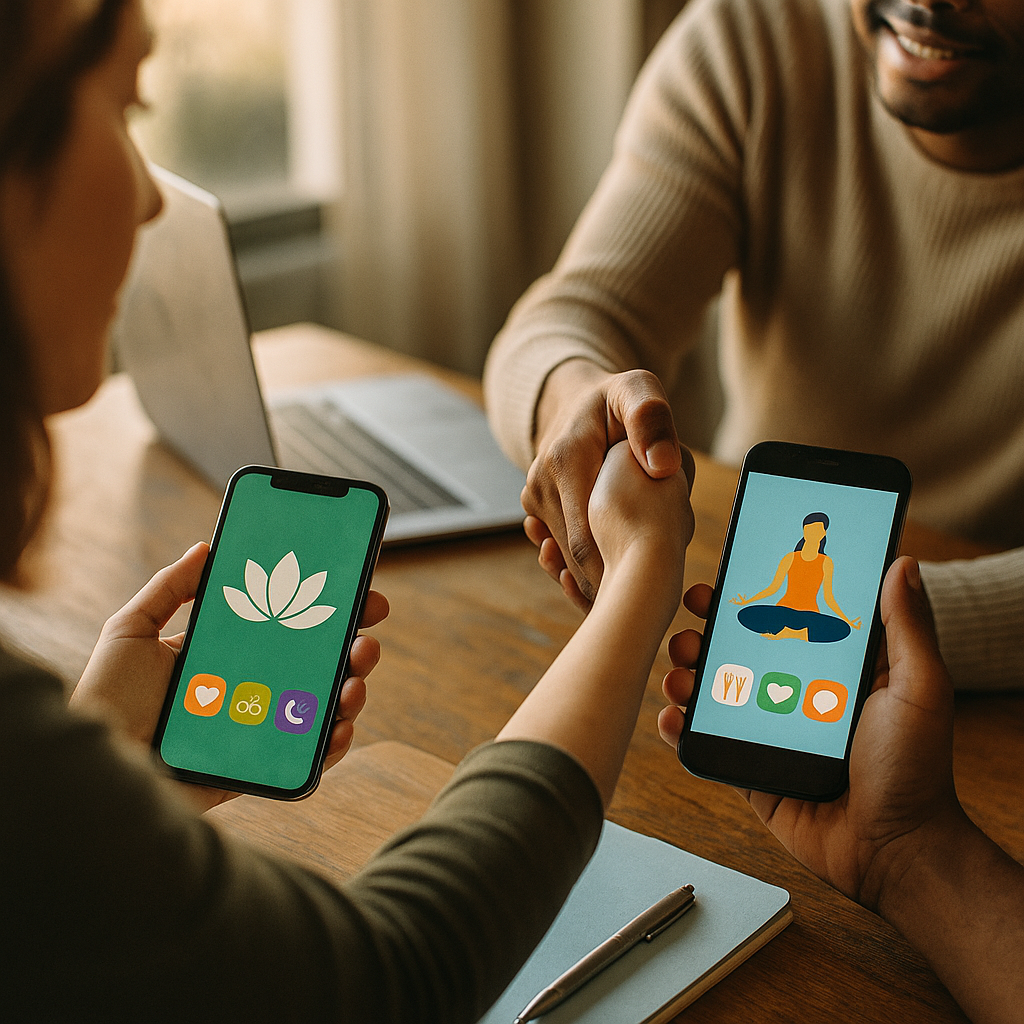
In 2025, growth-minded founders are learning that product alone rarely wins in crowded markets. This case study shows how a wellness app used strategic alliances to expand distribution, build trust, and improve retention without burning cash on endless ads. You’ll see the partners, deal structures, and execution rhythms that turned collaboration into compounding growth—and the one decision that made everything click.
Strategic alliances in wellness apps: the starting point and constraints
PulsePath (a pseudonym used to protect proprietary partner terms) launched as a mobile wellness app focused on stress management, sleep improvement, and habit coaching. The product had strong early indicators: high onboarding completion, positive app-store feedback, and a small but loyal cohort of subscribers. Yet growth flattened after the initial wave of early adopters.
The team diagnosed three constraints that made paid acquisition an unattractive primary lever:
- High trust requirements: Wellness is intimate. Users want reassurance that content is safe, credible, and aligned with their goals. Unknown brands face skepticism.
- Rising acquisition costs: Competing for broad “meditation” and “sleep” keywords drove costs up while diluting intent, pushing the payback period beyond their comfort zone.
- Limited differentiation at the top of funnel: Prospects couldn’t easily tell why PulsePath was different in an ad, even though the experience was distinct after a week of use.
Instead of pushing harder on ads, PulsePath treated distribution as a partnership problem. The aim was to borrow trust, reach users where they already make health decisions, and integrate into existing routines. That shift led to a structured alliance strategy built around shared incentives and measurable outcomes.
Partnership strategy for wellness app growth: a clear alliance thesis
PulsePath wrote a one-page “alliance thesis” to guide decisions and prevent random partnership chasing. The thesis answered four questions, up front, for every prospective partner:
- Whose relationship are we accessing? The partner must already have engaged health-conscious users, employees, patients, or members.
- What new capability do we gain? Examples included clinical credibility, distribution into employer programs, or content that expands use cases.
- What does the partner gain that they cannot easily build? This was critical for bargaining power; PulsePath would not compete with a partner’s core product.
- How will we measure success in 90 days? Each alliance required a short cycle with explicit metrics, not vague “brand awareness.”
They also defined the non-negotiables that supported Google’s EEAT expectations for health-related topics:
- Clinical review process: Any content touching medical or mental health claims required review by a qualified professional with relevant credentials.
- Clear boundaries: The app positioned itself as wellness support, not diagnosis or treatment, and directed users to appropriate care when needed.
- Data stewardship: Partnership integrations had to respect consent, minimize data sharing, and document access controls.
This thesis did two things: it sharpened partner selection and made negotiations faster, because PulsePath could articulate value exchange without improvising.
Healthcare and employer partnerships: building credibility and distribution
PulsePath pursued two “anchor” alliance categories first: healthcare-adjacent credibility partners and employer distribution partners. The goal was to pair trust with scale.
1) Healthcare-adjacent credibility partner (sleep clinic network)
PulsePath approached a regional sleep clinic network that wanted better between-visit support for patients struggling with sleep hygiene. The clinics were not looking to become an app company; they wanted an evidence-informed, low-friction tool to reinforce care plans.
Deal structure:
- Co-branded pathway: A dedicated onboarding flow for clinic referrals with tailored sleep modules.
- Revenue model: Clinics received a referral fee on paid conversions during a defined window, with caps to protect margins.
- Governance: Quarterly content review sessions and a documented escalation route for safety concerns.
What made it work: PulsePath avoided overpromising outcomes. Messaging focused on adherence and habit support. The clinics gained a practical tool to extend care, while PulsePath gained authoritative association and a steady referral stream with high intent.
2) Employer wellness program partner (mid-market HR platform)
Next, PulsePath partnered with an HR benefits platform serving mid-sized employers. Employers were asking for mental wellness and stress support, but HR teams lacked the time to evaluate dozens of apps.
Deal structure:
- Per-employee-per-month option: For employers who wanted predictable costs.
- Hybrid model: A base fee plus usage-based component when engagement exceeded targets, aligning incentives around activation.
- Implementation kit: Email templates, manager talking points, and an internal launch calendar to reduce HR workload.
Execution details that mattered: PulsePath assigned a partner success lead to run joint launches and track engagement weekly. They learned that employer programs fail when launched once and forgotten, so they shipped monthly themed “micro-campaigns” (sleep month, focus month) to keep participation steady.
Results in practice: These two categories produced compounding effects: the clinical partner improved trust signals and conversion quality, while the employer channel delivered repeatable distribution. Importantly, they also reduced churn because users entered with a clear context (“my clinic recommended this” or “my employer provides this”), which increased commitment.
Influencer and content collaborations: converting attention into retention
PulsePath avoided large, one-off influencer sponsorships. Instead, they built alliances with creators and subject-matter experts whose audiences matched specific use cases (new parents, shift workers, remote knowledge workers). The objective was not just downloads, but habit formation.
Creator alliance model
- Co-created series: Four-week audio or video “programs” inside the app with the creator as a guide.
- Outcome-based compensation: Payment tied to trial-to-paid conversion and 30-day retention, not impressions.
- Transparent expertise labeling: The app clearly stated whether the creator was a clinician, coach, or experienced peer, and what that meant.
Why this improved EEAT and performance
This approach boosted perceived expertise without blurring credentials. It also answered a user’s follow-up question—“Will this fit my life?”—because each program targeted a real scenario with practical routines. Users who joined via a program started with structure, which increased the odds of reaching the “aha moment” (better sleep, lower stress, consistent routines) before the trial ended.
Content distribution alliances
PulsePath also struck distribution swaps with newsletters and podcasts that already served health-focused audiences. Instead of paying for generic ads, they offered:
- Exclusive tools: A short assessment and a personalized starter plan branded for the publisher.
- Editorial integrity: The publisher retained final say on how they described the app, which increased audience trust.
This positioned PulsePath as useful content rather than another sponsor, and it generated evergreen traffic as episodes and issues continued to circulate.
Integration partnerships and data privacy: making alliances operational
PulsePath learned that partnerships fail when they stay at the marketing layer. So they invested in integrations that improved the user experience while meeting strict privacy expectations.
Key integrations
- Wearable ecosystem integration: Sleep and activity signals helped personalize recommendations (for example, lighter wind-down after days with higher fatigue).
- Telehealth referral pathway: If users reported red-flag symptoms, the app offered clear guidance and an option to connect with care partners where appropriate.
- SSO for employers: Reduced friction for benefit users and improved activation rates.
Privacy and compliance posture
PulsePath created a “partner data appendix” used in every negotiation. It spelled out:
- Consent language: What users agree to and where it appears in the flow.
- Data minimization: Only share what is required to operate the partnership, not what is “nice to have.”
- Access controls and retention: Who can access what, and how long partner-provided data is stored.
- Security review: A standard questionnaire and technical review before any integration goes live.
This reduced legal back-and-forth and increased partner confidence. It also aligned with what readers typically wonder next: “Is my wellness data safe?” PulsePath made the answer visible in product and in partner materials, not buried behind vague promises.
Scaling through alliance management: metrics, cadence, and negotiation lessons
PulsePath treated alliances like a product line with a pipeline, playbooks, and performance reviews.
Partner scorecard (reviewed every two weeks)
- Activation rate: Percentage of referred users completing onboarding and first session.
- Week-4 retention: A leading indicator of long-term value for wellness habits.
- Conversion: Trial-to-paid or employer enrollment-to-active usage.
- Support load: Tickets per 1,000 users and common friction points.
- Net revenue: After rev-share, incentives, and implementation costs.
Operational cadence
- Joint launch plan: Every partner launch included messaging, timelines, owners, and a post-launch retro.
- Quarterly business reviews: Focused on what worked, what didn’t, and what to test next.
- Content refresh cycle: Partners received updated modules and campaigns to prevent stagnation.
Negotiation lessons that unlocked scale
- Start with a pilot: A 60–90 day pilot lowered risk and shortened procurement cycles.
- Price by value and effort: Integrations, clinical review, and success management have real costs; PulsePath priced to sustain quality.
- Protect the user experience: They rejected partnerships that demanded intrusive upsells or excessive data access, even when short-term revenue looked attractive.
- Build partner-facing assets: One-page explainers, training videos, and FAQs reduced dependence on live demos.
The pivotal decision was assigning alliance ownership to a cross-functional “partner pod” (growth, product, clinical reviewer, and customer success). That prevented the common failure mode where sales signs a deal that product cannot support.
FAQs
What is a strategic alliance in a wellness app context?
A strategic alliance is a collaboration where a wellness app and another organization share resources—audience access, credibility, technology, or services—to achieve measurable growth goals. The best alliances align incentives and improve the user experience, not just marketing reach.
Which partners help a wellness app scale fastest?
Employers, healthcare-adjacent organizations, and established media/creator brands tend to scale efficiently because they already have trust and distribution. The “fastest” partner depends on your product: sleep and stress tools often perform well with employers and clinics, while fitness-adjacent tools may benefit more from creator-led programs.
How do you structure revenue sharing without losing margins?
Use limited-time referral windows, tiered payouts based on retention, and caps tied to profitability. Track net revenue after partner fees and implementation costs. If a partner requires heavy customization, price the added workload into the agreement.
What metrics should you track for partnership performance?
At minimum: activation, week-4 retention, conversion to paid (or active usage in B2B), support load, and net revenue. Add qualitative feedback from partner teams and users to spot friction that metrics miss.
How do wellness apps maintain trust and EEAT in partnerships?
Use credentialed review for health-related content, label expertise clearly, avoid medical claims you can’t substantiate, and implement strict privacy controls with transparent consent. Choose partners whose standards match your own, because misalignment can damage credibility.
How long does it take for alliances to produce results?
With a tight pilot and a motivated partner, early signals can appear within weeks (activation and initial retention). Reliable scaling usually requires multiple cycles of launch, measurement, and optimization, because partner channels improve as playbooks mature.
PulsePath scaled by treating partnerships as a disciplined growth system: pick partners that add trust or distribution, design deals with aligned incentives, and operationalize delivery with clear metrics and privacy safeguards. Strategic alliances worked because they improved the product experience and reduced friction for users and partners. The takeaway: build fewer, deeper alliances—and run them with the same rigor you apply to product.
Top Influencer Marketing Agencies
The leading agencies shaping influencer marketing in 2026
Agencies ranked by campaign performance, client diversity, platform expertise, proven ROI, industry recognition, and client satisfaction. Assessed through verified case studies, reviews, and industry consultations.
Moburst

-
2

The Shelf
Boutique Beauty & Lifestyle Influencer AgencyA data-driven boutique agency specializing exclusively in beauty, wellness, and lifestyle influencer campaigns on Instagram and TikTok. Best for brands already focused on the beauty/personal care space that need curated, aesthetic-driven content.Clients: Pepsi, The Honest Company, Hims, Elf Cosmetics, Pure LeafVisit The Shelf → -
3

Audiencly
Niche Gaming & Esports Influencer AgencyA specialized agency focused exclusively on gaming and esports creators on YouTube, Twitch, and TikTok. Ideal if your campaign is 100% gaming-focused — from game launches to hardware and esports events.Clients: Epic Games, NordVPN, Ubisoft, Wargaming, Tencent GamesVisit Audiencly → -
4

Viral Nation
Global Influencer Marketing & Talent AgencyA dual talent management and marketing agency with proprietary brand safety tools and a global creator network spanning nano-influencers to celebrities across all major platforms.Clients: Meta, Activision Blizzard, Energizer, Aston Martin, WalmartVisit Viral Nation → -
5

The Influencer Marketing Factory
TikTok, Instagram & YouTube CampaignsA full-service agency with strong TikTok expertise, offering end-to-end campaign management from influencer discovery through performance reporting with a focus on platform-native content.Clients: Google, Snapchat, Universal Music, Bumble, YelpVisit TIMF → -
6

NeoReach
Enterprise Analytics & Influencer CampaignsAn enterprise-focused agency combining managed campaigns with a powerful self-service data platform for influencer search, audience analytics, and attribution modeling.Clients: Amazon, Airbnb, Netflix, Honda, The New York TimesVisit NeoReach → -
7

Ubiquitous
Creator-First Marketing PlatformA tech-driven platform combining self-service tools with managed campaign options, emphasizing speed and scalability for brands managing multiple influencer relationships.Clients: Lyft, Disney, Target, American Eagle, NetflixVisit Ubiquitous → -
8

Obviously
Scalable Enterprise Influencer CampaignsA tech-enabled agency built for high-volume campaigns, coordinating hundreds of creators simultaneously with end-to-end logistics, content rights management, and product seeding.Clients: Google, Ulta Beauty, Converse, AmazonVisit Obviously →