


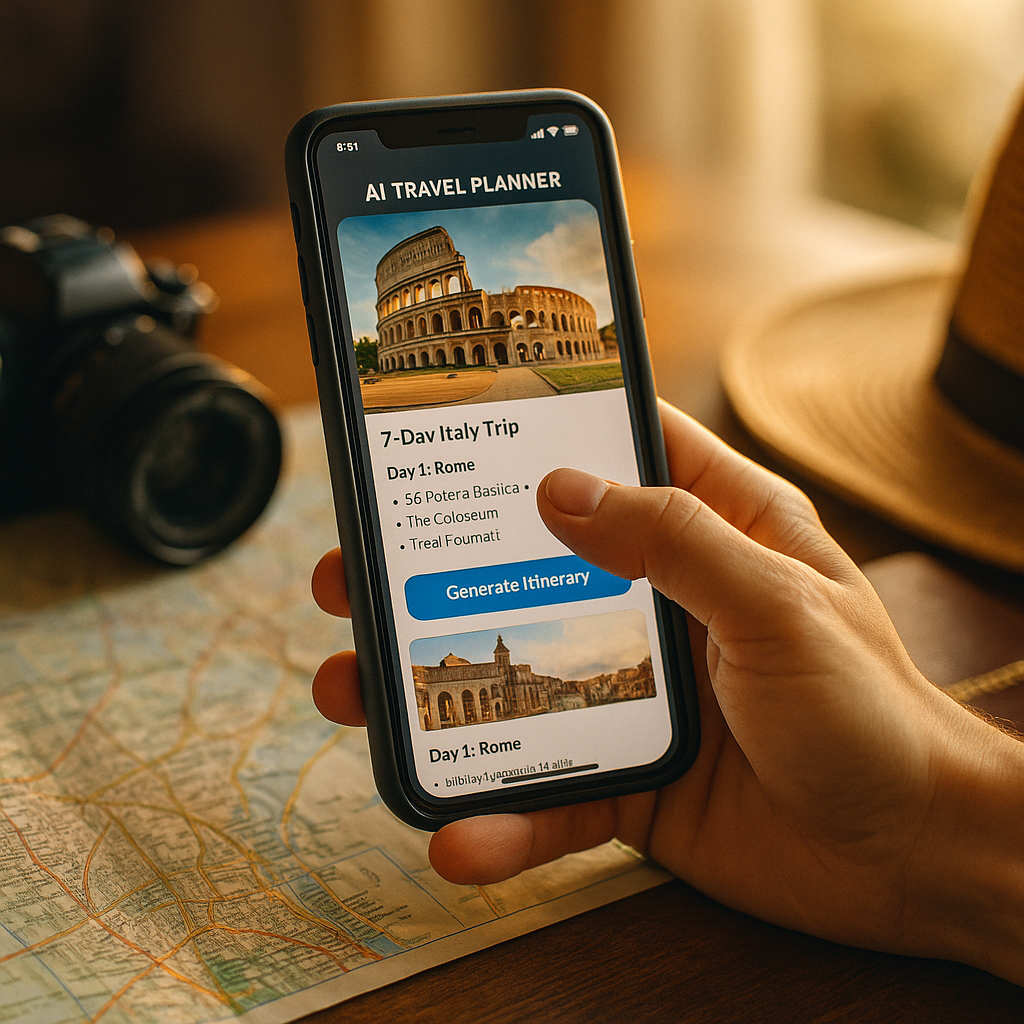
In 2025, travel marketing teams face higher ad costs, shorter attention spans, and demand for personalization at scale. This case study shows how one mid-sized travel brand used AI itinerary lead magnets to turn casual browsers into qualified leads—without bloating headcount or sacrificing brand voice. You’ll see the exact funnel, tech stack, governance, and results so you can replicate what worked.
AI itinerary lead magnets: the brand, the goal, and the baseline
Brand profile (anonymized for confidentiality): A direct-to-consumer travel brand selling curated trips and custom planning support across Europe and Asia. The team included a growth marketer, a CRM specialist, one designer, and part-time support from an engineer.
Primary goal: Increase marketing-qualified leads (MQLs) while reducing cost per lead (CPL) and improving lead quality for the sales/concierge team.
Baseline challenge: Their existing lead magnets—PDF destination guides and discount pop-ups—were underperforming. The PDF was too generic, and the discount attracted price shoppers who rarely booked. The team also noticed that “inspiration traffic” (visitors reading blog posts) converted poorly because the next step felt disconnected from trip planning.
Baseline metrics (90-day average):
- Landing-page conversion rate: 2.1%
- Email-to-MQL rate: 11%
- Cost per lead: $18.40 (blended paid + content)
- Lead-to-consult rate: 3.2%
- Primary bottleneck: Low relevance and weak segmentation at signup
Hypothesis: If the brand could deliver a personalized, “ready-to-use” itinerary in minutes, it would lift opt-ins and create richer first-party data for segmentation—making follow-up emails more timely and sales outreach more precise.
Personalized travel planning: building the offer users actually want
The breakthrough was reframing the lead magnet from “information” to “decision support.” Instead of a static guide, the offer became: “Get a custom itinerary built around your dates, budget, pace, and interests—delivered instantly.”
What the AI itinerary included:
- Day-by-day plan: Morning/afternoon/evening blocks with optional alternatives
- Neighborhood logic: Activities grouped by proximity to reduce transit time
- Restaurant and experience types: Based on dietary preferences and interest tags
- Budget ranges: “Value / mid / premium” suggestions that matched stated spend
- Booking readiness: A “next actions” checklist with links to the brand’s trip pages
What the form asked (and why): The team limited questions to those that improved itinerary quality and downstream personalization. They used progressive profiling so the first interaction stayed lightweight.
- Required: Destination, trip length, month, email
- Optional (high value): Budget band, travel style (food/culture/outdoors), pace (relaxed/balanced/packed)
- After delivery: One-click poll: “How likely are you to book in the next 60 days?”
Answering the obvious follow-up: Would users trust an AI itinerary? The brand positioned it as a first draft created from their in-house travel framework and refined by “rules” their planners already used (pacing, transit thresholds, opening-hour checks). They also added a prominent note: “Verify hours and availability before booking; request a planner review anytime.”
Marketing automation funnel: from opt-in to sales-ready leads
The lead magnet worked because it connected to a disciplined funnel, not because it was novel. The brand built a three-stage path: Generate → Qualify → Convert.
Stage 1: Generate (landing page + embedded widgets)
- Dedicated destination landing pages for top 12 routes (e.g., “10 days in Italy”)
- Inline itinerary widget placed mid-article on high-traffic blog posts
- Exit-intent prompt only on long-form content, not on product pages
Stage 2: Qualify (instant delivery + behavioral signals)
- Itinerary delivered on-page and via email within 2 minutes
- Links inside the itinerary were tagged to capture intent (hotels, tours, transfers, trip packages)
- Lead scoring combined form inputs (budget, timeline) with clicks (package pages, consultation calendar)
Stage 3: Convert (email/SMS + planner assist)
- Day 0: “Your itinerary + 3 swaps” email with a single CTA: refine preferences
- Day 2: Social proof email with one relevant case study (same destination + trip length)
- Day 5: “Price and availability” email offering a 15-minute consult
- Day 9: If high intent, SMS reminder with calendar link; if low intent, content nurture
Key decision: They avoided sending the entire itinerary only as a PDF attachment. Instead, they used a hosted itinerary page that allowed updates and tracked engagement. That single move improved measurement and made follow-ups smarter.
First-party data strategy: segmentation, consent, and trust
In 2025, first-party data is only useful if it is permissioned, structured, and actionable. This brand treated data collection as part of the product experience.
Consent and transparency (EEAT-aligned):
- Clear checkbox language for marketing emails and optional SMS
- Short explanation of how preferences improve the itinerary
- Easy unsubscribe and preference center links in every message
How they structured the data:
- Core fields: destination, dates/month, trip length
- Preference tags: food, culture, outdoors, nightlife, family-friendly
- Commercial signals: budget band, booking window, party size
- Engagement: itinerary page views, CTA clicks, consult starts
Segments that changed performance:
- “Fast bookers”: booking window under 60 days + package clicks → routed to concierge within 24 hours
- “Premium planners”: premium budget + slower pace → offered upgraded lodging bundles
- “Inspiration-only”: no budget + long booking window → placed in content series, not sales pushes
Answering the follow-up: Does asking for more fields reduce opt-ins? Sometimes. They solved this by keeping the first step minimal and letting users improve the itinerary after seeing initial value. That sequencing increased completion without harming conversion.
LLM prompt engineering and brand safety: accuracy, tone, and guardrails
The team treated the AI system as a junior assistant working under strict guidelines. They created a reusable prompt framework and layered guardrails so outputs stayed consistent, safe, and on-brand.
Prompt framework (simplified):
- Role: “You are a travel planner following the brand’s pacing and neighborhood clustering rules.”
- Inputs: destination, trip length, month, interests, pace, budget band, party type
- Constraints: limit transit time per day; avoid unrealistic day counts; include rest blocks
- Output format: structured day-by-day JSON rendered into a page template
- Disclaimers: verify hours/availability; avoid guarantees; no medical/safety advice beyond general guidance
Brand safety and quality controls:
- Controlled vocabulary: approved tone and phrases; banned claims (e.g., “best,” “guaranteed availability”)
- Content filters: blocked unsafe topics and prohibited recommendations
- Fallback logic: if the model confidence was low or user input was vague, it asked clarifying questions
- Human review loop: planners audited a weekly sample, tagged failure modes, and updated rules
Accuracy handling: The itinerary avoided fragile specifics that often break trust (exact opening hours, “hidden gems” with unclear references). Instead, it suggested categories and neighborhoods and linked to the brand’s vetted partner pages for bookable elements. This reduced hallucination risk and nudged users toward conversion paths the brand could support.
Conversion rate optimization results: what changed and what to copy
After launch, the brand ran controlled tests and iterated weekly. They focused on measurable outcomes, not vanity engagement.
Testing approach:
- A/B tested itinerary landing pages against the old PDF guide pages
- Tested short form vs progressive profiling
- Tested “instant itinerary preview” vs “email required to generate”
What they learned fast:
- Preview first improved trust: Showing the first day of the itinerary before the email gate lifted conversions.
- Specificity beat polish: Users preferred a clear, usable plan over glossy design.
- CTA alignment mattered: “Refine my itinerary” outperformed “Book now” for cold leads.
90-day results after rollout:
- Landing-page conversion rate: 6.4% (up from 2.1%)
- Email-to-MQL rate: 22% (up from 11%)
- Cost per lead: $7.10 (down from $18.40)
- Lead-to-consult rate: 7.8% (up from 3.2%)
- Consult-to-booking: improved by 28% due to better-fit leads and richer context
Operational impact: The concierge team reported fewer low-intent calls and faster first calls because the itinerary captured constraints upfront. The marketing team also gained a repeatable template to spin up new destinations quickly.
What to copy if you’re starting now:
- Build one itinerary generator for one high-intent destination first
- Deliver value in under 2 minutes and track engagement on a hosted page
- Use progressive profiling and collect only what improves the output
- Implement lead scoring tied to real actions (package clicks, consult starts)
- Put guardrails in writing and audit outputs weekly
FAQs
What is an AI itinerary lead magnet?
An AI itinerary lead magnet is a personalized trip plan generated from user inputs (dates, budget, interests) that you provide in exchange for contact details. The best versions deliver immediate, practical value and capture structured preferences you can use for segmentation and follow-up.
Will AI-generated itineraries hurt trust if they contain errors?
They can if you present them as authoritative or overly specific. Reduce risk by using guardrails, avoiding fragile details like exact hours, linking to vetted resources, and adding clear disclaimers. Maintain a human review loop to catch patterns and improve rules.
How much user data should the signup form collect?
Collect the minimum needed to produce a useful first draft (destination, trip length, timing, email). Use progressive profiling after delivery to gather budget, pace, and interests. This keeps conversion rates high while still producing strong segmentation.
Do AI itinerary lead magnets work for luxury travel and budget travel?
Yes, if the itinerary adapts to constraints. For luxury, emphasize pacing, premium lodging areas, and high-touch experiences. For budget, focus on transit efficiency, free attractions, and affordable neighborhoods. The key is matching recommendations to the stated spend band.
What tech stack do you need to launch this?
You need a form builder, an email/CRM system, a hosted itinerary page or landing page CMS, analytics with event tracking, and an LLM integration layer. Many teams start with lightweight automation tools, then add custom logic once they validate conversion gains.
How do you measure success beyond opt-ins?
Track itinerary engagement (page views, link clicks), MQL rate, consult bookings, and booking revenue influenced. Compare lead-to-consult and consult-to-booking rates to your prior lead magnets to confirm you’re improving quality, not just volume.
AI itinerary lead magnets work when they function like a product, not a gimmick. This travel brand improved conversions by delivering instant, personalized planning, capturing permissioned first-party data, and routing high-intent leads to humans at the right moment. Build one destination first, enforce brand-safe guardrails, and optimize around lead quality. The takeaway: personalization wins when it stays measurable and trustworthy.
Top Influencer Marketing Agencies
The leading agencies shaping influencer marketing in 2026
Agencies ranked by campaign performance, client diversity, platform expertise, proven ROI, industry recognition, and client satisfaction. Assessed through verified case studies, reviews, and industry consultations.
Moburst

-
2

The Shelf
Boutique Beauty & Lifestyle Influencer AgencyA data-driven boutique agency specializing exclusively in beauty, wellness, and lifestyle influencer campaigns on Instagram and TikTok. Best for brands already focused on the beauty/personal care space that need curated, aesthetic-driven content.Clients: Pepsi, The Honest Company, Hims, Elf Cosmetics, Pure LeafVisit The Shelf → -
3

Audiencly
Niche Gaming & Esports Influencer AgencyA specialized agency focused exclusively on gaming and esports creators on YouTube, Twitch, and TikTok. Ideal if your campaign is 100% gaming-focused — from game launches to hardware and esports events.Clients: Epic Games, NordVPN, Ubisoft, Wargaming, Tencent GamesVisit Audiencly → -
4

Viral Nation
Global Influencer Marketing & Talent AgencyA dual talent management and marketing agency with proprietary brand safety tools and a global creator network spanning nano-influencers to celebrities across all major platforms.Clients: Meta, Activision Blizzard, Energizer, Aston Martin, WalmartVisit Viral Nation → -
5

The Influencer Marketing Factory
TikTok, Instagram & YouTube CampaignsA full-service agency with strong TikTok expertise, offering end-to-end campaign management from influencer discovery through performance reporting with a focus on platform-native content.Clients: Google, Snapchat, Universal Music, Bumble, YelpVisit TIMF → -
6

NeoReach
Enterprise Analytics & Influencer CampaignsAn enterprise-focused agency combining managed campaigns with a powerful self-service data platform for influencer search, audience analytics, and attribution modeling.Clients: Amazon, Airbnb, Netflix, Honda, The New York TimesVisit NeoReach → -
7

Ubiquitous
Creator-First Marketing PlatformA tech-driven platform combining self-service tools with managed campaign options, emphasizing speed and scalability for brands managing multiple influencer relationships.Clients: Lyft, Disney, Target, American Eagle, NetflixVisit Ubiquitous → -
8

Obviously
Scalable Enterprise Influencer CampaignsA tech-enabled agency built for high-volume campaigns, coordinating hundreds of creators simultaneously with end-to-end logistics, content rights management, and product seeding.Clients: Google, Ulta Beauty, Converse, AmazonVisit Obviously →