


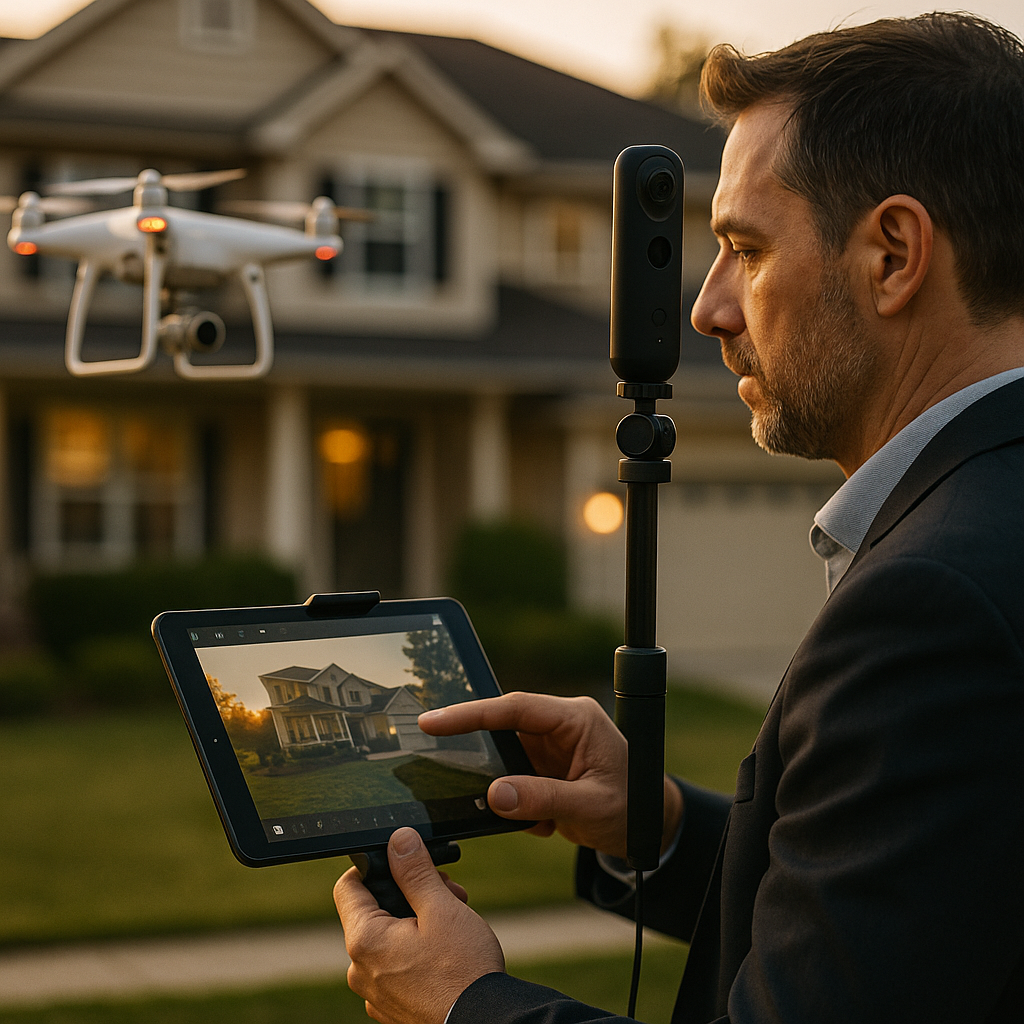
In 2025, buyers expect to understand a property before they schedule a showing, and real estate teams need media that earns attention fast. This case study on drones and 360 video for sales shows how one mid-sized brand built trust, reduced wasted showings, and improved lead quality with immersive visuals. The approach is replicable, measurable, and surprisingly practical—if you know where to start.
Immersive real estate marketing: the brand, market, and goals
Brand profile: A mid-sized real estate brokerage with 45 agents across a coastal metro area and nearby suburbs. The team specializes in mid-to-upper price points, with a mix of single-family homes, new-build communities, and a small but profitable luxury segment.
The challenge: The brand noticed three problems compounding at once:
- Lead volume was rising, but quality was falling. Online inquiries increased, yet many prospects were not ready to buy or were mismatched to the property.
- Showing efficiency was poor. Agents spent time on in-person tours that could have been filtered out earlier.
- Listings struggled to differentiate. Standard photos and short walkthrough videos blended together on portals and social feeds.
The goal: Improve the buyer’s “pre-showing understanding” of each listing, shorten time-to-offer for qualified leads, and give sellers a clear reason to list with the brand.
Success metrics set upfront: The team committed to measuring outcomes that matter to clients and operations: qualified inquiry rate, showing-to-offer ratio, average days to first serious offer, and cost per qualified lead from paid channels. They also tracked watch time and engagement as leading indicators, but they refused to call the project a win unless it affected sales performance.
Drone real estate photography: why they chose aerial first
The brand started with drone real estate photography before adding 360, because aerial media solved an immediate information gap: location context. For many buyers, especially relocation clients, a listing’s surroundings matter as much as the interior.
What they shot with drones:
- Property boundary context: Showing lot size, tree lines, fences, driveway approach, and nearby structures.
- Neighborhood proximity: Distance to beaches, parks, trails, schools, and commercial zones—without overselling.
- Approach and curb appeal: A smooth reveal shot that made the home feel “real,” not staged.
- Community amenities: For new-build communities, a quick pass of clubhouse, pool, and green spaces to reduce repetitive agent explanations.
Operational decision that mattered: They created a “drone-eligible checklist” instead of flying every listing. Homes with no visual upside from aerial context (dense urban condos, obstructed tree canopy, restricted airspace) stayed on a standard package, protecting margin.
Compliance and risk control: To support EEAT, the brand documented its process. Licensed pilots handled flights, and every listing file included flight notes, airspace checks, and seller approvals. The marketing team also adopted a strict rule: drone footage could not imply a feature the property didn’t have (for example, showing a nearby marina without clarifying it’s public, not private).
Early impact: Sellers responded immediately. Listing presentations became more persuasive because aerials made the marketing package feel premium and transparent. Agents also reported fewer “surprise objections” during showings because buyers arrived with realistic expectations about roads, proximity, and lot layout.
360 virtual tours for homes: building buyer confidence before the showing
Once drone content improved top-of-funnel interest, the team added 360 virtual tours for homes to improve decision-making inside the funnel. Their hypothesis was simple: if buyers can self-qualify a property remotely, agents spend more time with serious prospects.
What they built: A guided 360 tour for each eligible listing, with a consistent structure:
- Start at the entry: So viewers understand flow immediately.
- Kitchen and primary suite emphasis: These rooms drove the most questions and objections, so clarity mattered.
- Functional spaces included: Laundry, garage, storage, and mechanical areas were shown when appropriate, because leaving them out created distrust.
- Key callouts in context: Short labels for materials and upgrades (e.g., “quartz counters,” “impact windows”), avoiding hype language.
Accessibility and usability choices: They ensured tours loaded quickly, worked on mobile, and offered a non-VR “tap to explore” mode. This mattered because many buyers browse on phones during short breaks, and heavy tours lose them before they see the value.
Answering the question buyers ask next: “Is the home really like this?” The brand addressed authenticity by using accurate color profiles, avoiding extreme wide-angle distortion, and publishing a short statement on the listing page explaining that 360 tours represent current conditions and may not show minor cosmetic changes that occur after filming (like staging adjustments). That transparency reduced friction and buyer skepticism.
What changed in the sales process: Agents began sending the 360 tour as the first follow-up to inquiries, paired with three questions: budget readiness, desired move timeline, and non-negotiables. Prospects who engaged with the tour tended to answer more specifically, making agent calls more productive.
Real estate video strategy: combining drone + 360 into a conversion funnel
The breakthrough came when the brand stopped treating content as “nice visuals” and implemented a full real estate video strategy tied to specific stages of the buyer journey.
They used three asset types per listing:
- Drone teaser (15–25 seconds): Built for social and ads, focused on location context and curb appeal.
- Feature walkthrough (45–90 seconds): Standard video with clear room progression and a calm pace, designed for listing pages and agent follow-ups.
- 360 tour: The “decision asset,” used after initial interest to help buyers qualify.
Distribution plan (not guesswork): Each asset had a job and a destination:
- Portals and Google Business Profile: Walkthrough video embedded on listing pages and shared in posts for local discovery.
- Social feeds: Drone teaser optimized for silent viewing with on-screen text and a clear property identifier.
- Email and SMS follow-up: The 360 tour link sent to serious leads with a simple prompt: “Explore the home room-by-room and tell us what you’d change.”
- Seller reporting: A weekly recap showing views, saves, and showings booked—connecting media activity to tangible progress.
Brand safety rules: The marketing lead wrote a short internal guide so every agent and editor followed the same standards: no misleading “ocean view” claims, no aggressive filters, no AI sky replacements unless disclosed to the seller, and no filming of neighbors’ private spaces. Consistency protected trust, which is the real currency in real estate marketing.
How they handled cost concerns: They built tiered packages. Standard listings received professional photos plus either drone or a short walkthrough depending on suitability. Premium listings received the full stack: drone, walkthrough, and 360. This prevented overspending and let sellers choose based on expected ROI.
Property listing conversion: results, attribution, and what actually moved the needle
For six months, the brand tracked property listing conversion using consistent definitions. A “qualified lead” meant a prospect who confirmed financing status or proof of funds, stated a move timeline, and requested a showing or buyer consult.
What they measured:
- Inquiry-to-qualified rate: How many inquiries became actionable opportunities.
- Showing efficiency: Showings per accepted offer on listed properties.
- Speed indicators: Days to first serious offer (not just any offer).
- Ad performance: Cost per qualified lead for paid social campaigns featuring drone teasers.
What they found (directional outcomes):
- Higher lead quality: The 360 tour acted as a filter. Prospects who disliked layout or finishes opted out early, while serious buyers moved faster.
- Fewer wasted showings: Agents reported fewer “tourist” appointments because buyers arrived informed and ready with targeted questions.
- Improved seller confidence: Sellers saw concrete evidence of marketing activity and perceived the brand as more professional and transparent.
- Better ad engagement: Drone teasers generated stronger thumb-stopping behavior, which lowered friction for initial interest and improved retargeting pool quality.
Attribution approach (practical, not perfect): The team used unique tracking links for 360 tours, platform-level video analytics, and CRM notes tagging which asset was sent before a showing was booked. They avoided claiming that a single video “caused” a sale. Instead, they looked for consistent patterns: leads who viewed a 360 tour were more likely to book a showing within a shorter window, and those showings were more likely to produce offers.
What actually moved the needle: Not the technology alone, but the sequence. Drone created context and interest. Walkthrough built understanding. 360 produced confidence. When those steps were delivered in the right order, agents spent their time on buyers who were already aligned with the property.
Drone videography ROI: lessons learned and a repeatable playbook
Once the team had proof points, they treated the system as a process, not a campaign. Their focus shifted to drone videography ROI—protecting profitability while improving outcomes for buyers, sellers, and agents.
Key lessons they documented:
- Standardize shot lists and timelines: They created templates by property type (suburban single-family, waterfront, new-build) to reduce reshoots and editing delays.
- Don’t overproduce: Buyers want clarity, not a music video. Stable motion, accurate color, and logical room order beat flashy transitions.
- Use 360 selectively: 360 performed best on homes with distinctive layouts, premium finishes, or larger square footage where photos alone left too many questions.
- Train agents on how to sell with media: The team ran short monthly workshops on texting tour links, framing follow-up questions, and handling objections that arise from “seeing too much.”
- Protect trust with disclosure: If editing touched anything that could affect perception (virtual twilight, minor object removal), the seller approved it and the agent could explain it if asked.
The repeatable playbook: For each new listing, the marketing coordinator ran a simple decision tree: Is location context a selling point? If yes, drone. Is layout a common objection? If yes, 360. Is the property premium or competitive in a crowded segment? If yes, combine drone + walkthrough + 360 and deploy retargeting ads.
Likely follow-up question: “Will this replace in-person showings?” No. The brand’s data showed immersive media replaces unnecessary showings, not all showings. Serious buyers still want to verify feel, sound, smell, and neighborhood traffic patterns. The goal is to make the first in-person visit more decisive.
FAQs
Do drones and 360 tours work for non-luxury listings?
Yes, when chosen strategically. Drones help when lot, views, access roads, or neighborhood amenities matter. 360 tours help when layout, room sizes, or condition questions commonly derail showings. A tiered package keeps costs aligned with expected return.
What’s the biggest mistake brands make with drone footage?
Overselling the surroundings. If a beach, skyline, or golf course is nearby but not part of the property, the video must make that clear. Trust lost from misleading context costs more than any marketing benefit.
How do you use 360 tours to increase lead quality?
Send the 360 link immediately after the initial inquiry and ask specific questions tied to the tour: “Which room matters most to you?” and “Does the layout fit your needs?” People who engage and respond are typically closer to a showing decision.
Will 360 tours reduce offers because buyers notice flaws?
It can reduce offers from mismatched buyers, which is a positive outcome. The brand found that transparency produced fewer last-minute objections and more serious negotiations because buyers felt informed.
How should a team measure ROI from immersive media?
Track qualified inquiry rate, showing-to-offer ratio, days to first serious offer, and cost per qualified lead. Use tracking links for tour views and log which assets were sent before a showing is booked. Avoid attributing a sale to a single video; measure patterns across multiple listings.
What about privacy and neighbor concerns?
Use licensed pilots, confirm airspace rules, avoid filming into neighboring windows or private yards, and keep footage focused on the subject property. A documented approval process with the seller and a clear internal policy reduces risk.
In 2025, this real estate brand proved that immersive media works best when it serves the sales process, not when it chases novelty. Drone footage delivered location clarity, and 360 tours helped buyers qualify themselves with confidence. Together, they improved lead quality, reduced wasted showings, and strengthened seller trust. The takeaway: build a structured content funnel, measure outcomes, and prioritize accuracy over hype.
Top Influencer Marketing Agencies
The leading agencies shaping influencer marketing in 2026
Agencies ranked by campaign performance, client diversity, platform expertise, proven ROI, industry recognition, and client satisfaction. Assessed through verified case studies, reviews, and industry consultations.
Moburst

-
2

The Shelf
Boutique Beauty & Lifestyle Influencer AgencyA data-driven boutique agency specializing exclusively in beauty, wellness, and lifestyle influencer campaigns on Instagram and TikTok. Best for brands already focused on the beauty/personal care space that need curated, aesthetic-driven content.Clients: Pepsi, The Honest Company, Hims, Elf Cosmetics, Pure LeafVisit The Shelf → -
3

Audiencly
Niche Gaming & Esports Influencer AgencyA specialized agency focused exclusively on gaming and esports creators on YouTube, Twitch, and TikTok. Ideal if your campaign is 100% gaming-focused — from game launches to hardware and esports events.Clients: Epic Games, NordVPN, Ubisoft, Wargaming, Tencent GamesVisit Audiencly → -
4

Viral Nation
Global Influencer Marketing & Talent AgencyA dual talent management and marketing agency with proprietary brand safety tools and a global creator network spanning nano-influencers to celebrities across all major platforms.Clients: Meta, Activision Blizzard, Energizer, Aston Martin, WalmartVisit Viral Nation → -
5

The Influencer Marketing Factory
TikTok, Instagram & YouTube CampaignsA full-service agency with strong TikTok expertise, offering end-to-end campaign management from influencer discovery through performance reporting with a focus on platform-native content.Clients: Google, Snapchat, Universal Music, Bumble, YelpVisit TIMF → -
6

NeoReach
Enterprise Analytics & Influencer CampaignsAn enterprise-focused agency combining managed campaigns with a powerful self-service data platform for influencer search, audience analytics, and attribution modeling.Clients: Amazon, Airbnb, Netflix, Honda, The New York TimesVisit NeoReach → -
7

Ubiquitous
Creator-First Marketing PlatformA tech-driven platform combining self-service tools with managed campaign options, emphasizing speed and scalability for brands managing multiple influencer relationships.Clients: Lyft, Disney, Target, American Eagle, NetflixVisit Ubiquitous → -
8

Obviously
Scalable Enterprise Influencer CampaignsA tech-enabled agency built for high-volume campaigns, coordinating hundreds of creators simultaneously with end-to-end logistics, content rights management, and product seeding.Clients: Google, Ulta Beauty, Converse, AmazonVisit Obviously →