


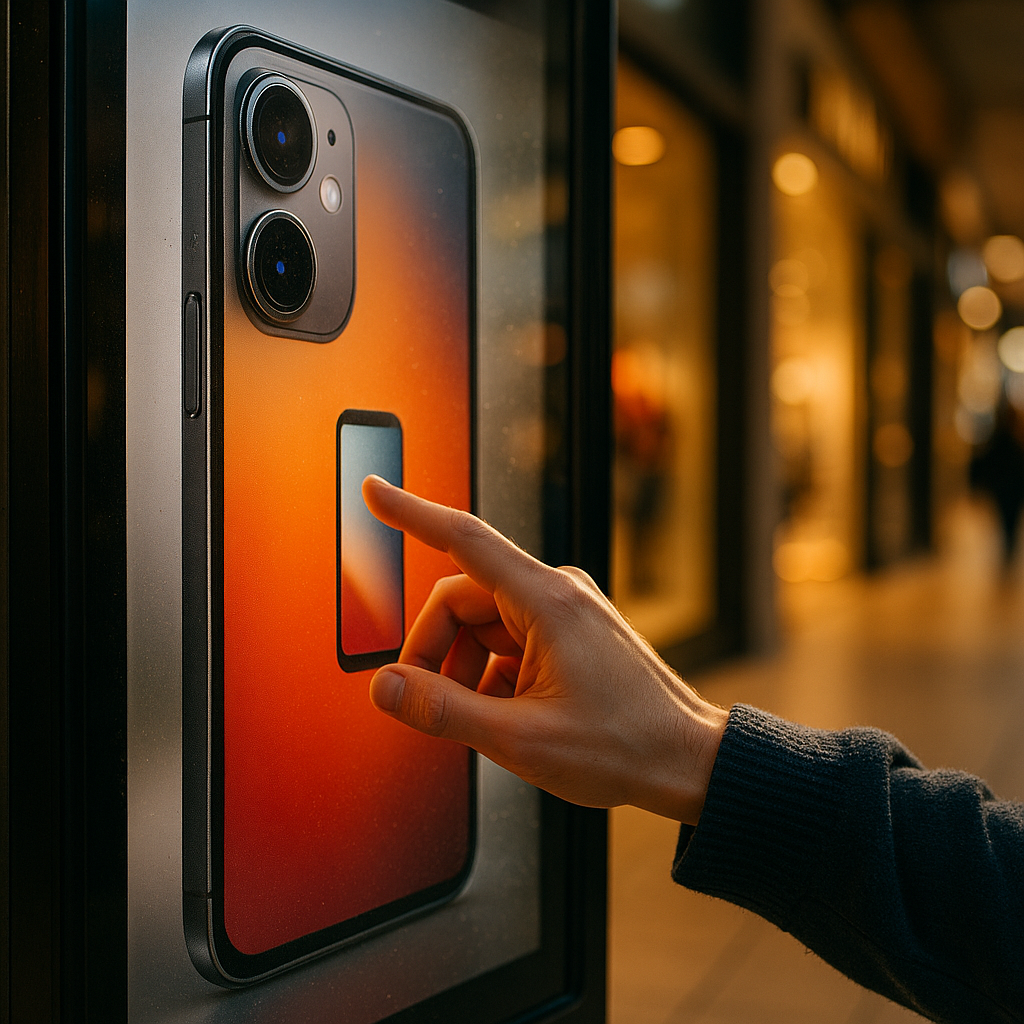
Designing for Haptic Storytelling and Physical Sensation in Ads is moving from novelty to measurable advantage in 2025. Consumers scroll faster, mute more often, and ignore polished visuals that feel interchangeable. Haptics adds a layer people literally feel—turning attention into embodied memory. The result can be higher recall, clearer product meaning, and stronger intent when done responsibly. Ready to design touch that tells a story?
What is haptic storytelling in advertising and why it works
Haptic storytelling uses touch cues—typically phone vibrations, controller feedback, wearables, or interactive surfaces—to reinforce a narrative beat and create a physical association with a brand message. Instead of relying on sound alone for rhythm, or visuals alone for emotion, haptics adds a third channel that can increase comprehension and recall by making a moment feel “real” in the body.
In 2025, “haptic” usually means mobile vibration patterns triggered by an ad unit, an in-app experience, a game engine, or a connected device. It can also include tactile printed materials (raised varnish, embossing) and product sampling, but this article focuses on digital ads where haptics can be instrumented and measured.
Why it works:
- Multisensory integration: When touch synchronizes with sight and sound, the brain links them into one event. That linkage can improve brand recall and message clarity.
- Attention gating: A subtle, timed pulse can interrupt mindless scrolling without demanding volume or full-screen takeover.
- Meaning via metaphor: Different patterns signal different concepts—impact, softness, urgency, warmth, precision—helping you “show” product attributes physically.
- Distinctiveness: Most ads feel similar. A well-designed tactile moment can make a campaign unmistakably yours.
Haptics is not a shortcut to persuasion. It is a design layer that must be earned with relevance: the sensation should explain the story, not decorate it.
Haptic design principles for mobile ads: patterns, pacing, and comfort
Great mobile haptics start with constraints: small actuators, varied device behavior, and diverse user sensitivity. Designing “stronger” is rarely the answer. Designing clearer is.
1) Map sensation to narrative intent
Choose a tactile vocabulary and keep it consistent across placements:
- Single soft tap: confirmation, arrival, reveal
- Double tap: choice point, compare, “two options” framing
- Short ramp (tap + slightly longer tap): build, anticipation, countdown
- Brief buzz (carefully used): impact, collision, bold emphasis
- Silence: intimacy, focus, contrast before the next beat
Match the haptic beat to the message beat. If your copy says “smooth,” avoid a harsh staccato pattern. If you want “precision,” keep pulses crisp and evenly spaced.
2) Use pacing to guide attention, not startle
Haptics should feel like a cue, not an alarm. In-feed placements benefit from delayed onset: let the user visually commit before the first pulse. For skippable formats, concentrate haptics in the first seconds to communicate the value proposition, then taper.
3) Respect comfort thresholds
Design for broad tolerance:
- Keep patterns short; avoid sustained vibration that can feel intrusive.
- Avoid rapid-fire pulses that can irritate or create fatigue.
- Do not rely on haptics as the only carrier of key information.
4) Account for device variability
Amplitude and timbre differ across phones. Treat haptics like color management: you won’t get perfect consistency, but you can design robustly. Test on a representative device set and prioritize patterns that remain recognizable when intensity shifts.
5) Build a haptic style guide
Document patterns, use cases, and “do not use” rules. Include when to opt out (e.g., health contexts, sensitive topics) and how haptics pairs with motion and sound. This is a practical EEAT step: it shows process maturity and reduces risk.
Multisensory marketing and sensory branding: syncing touch with sound and visuals
Haptic storytelling becomes powerful when it is synchronized. The goal is not to add three separate effects but to create one coherent sensation across channels.
Align three layers:
- Visual rhythm: cuts, typography animation, micro-interactions
- Audio rhythm: kick, snare, voice emphasis, silence
- Tactile rhythm: taps, ramps, pulses timed to the same beats
When these layers agree, the message feels “locked in.” When they conflict, users experience it as noise—even if they can’t explain why.
Practical synchronization examples
- Product “click” moment: A single pulse when a cap closes, a latch clicks, or a UI toggle engages. Pair with a subtle sound (if enabled) and a sharp visual snap.
- Texture metaphor: For “softness,” use gentle, longer taps that fade. Pair with slow-motion imagery and rounded typography motion.
- Impact storytelling: For sports or action, reserve a stronger pulse for one key hit, not every hit. Contrast creates meaning.
Answering the common follow-up: “Should we still design for sound-off?” Yes. In 2025, sound-off is still common. Haptics can complement sound, but visuals and captions must remain complete. Think of haptics as an enhancer that improves immersion when available.
Branding consistency
Over time, repeated tactile motifs can become a brand asset, similar to sonic logos. Keep the “signature” simple enough to recognize and rare enough to stay special. A haptic signature used on every impression becomes background.
Interactive ad formats with haptics: shoppable, gaming, and AR use cases
Haptics performs best when the user’s action triggers the sensation. Interactivity makes the touch feel justified, and it helps users attribute the experience to the brand rather than the device.
1) Shoppable ads and product exploration
Use haptics to clarify interaction states:
- Swipe to compare: a light tick at each product boundary
- Add to cart: a single confirmation tap (avoid celebratory buzzes that feel spammy)
- Size/fit guidance: gentle pulses at key steps so the user feels progress without needing extra UI clutter
Make the tactile feedback functional: it should reduce uncertainty and help users complete the task faster.
2) Gaming and rewarded experiences
Many ad environments sit next to games. In those contexts, haptics can mirror in-game feedback patterns users already understand. Keep it consistent with platform conventions and avoid hijacking controls or overusing intense vibration, which can be perceived as manipulative.
3) AR ads and camera-based experiences
AR often struggles with “what do I do now?” Use a small pulse to acknowledge successful tracking, object placement, or interaction completion. For AR try-ons, a delicate tap can mark a correct alignment moment (e.g., glasses positioned) without distracting from the camera view.
4) Out-of-home to mobile handoff
When a user scans a code or taps NFC, a quick confirmation pulse can reduce friction and reassure them that the transition worked. This is especially valuable in busy environments where audio cues are unreliable.
Implementation note readers ask about: “Do platforms support haptics in ads?” Support varies by ecosystem and format. Many experiences deliver haptics through in-app interactivity, playable units, AR modules, or web experiences where user gestures trigger vibration. Plan for graceful degradation so the ad remains complete when haptics is unavailable or disabled.
Accessibility and ethics in haptic advertising: user control, consent, and safety
EEAT in 2025 means designing not only for performance but for trust. Haptics touches the body; that raises the standard for consent and comfort.
Give users control
- Honor system settings: If the user has disabled vibration or uses focus modes, do not attempt to bypass.
- Provide an in-experience toggle: “Vibration on/off” should be easy to find in interactive units.
- Use haptics only after user action when possible: A tap-to-start or swipe-to-explore provides implied consent and reduces surprise.
Design for accessibility
- Do not encode essential information only in vibration: Pair with text, icons, and visual state changes.
- Avoid patterns that can cause discomfort: Very rapid or prolonged vibration can be unpleasant for some users.
- Consider sensory sensitivity: Some audiences prefer minimal stimulation. Offer a low-intensity mode where feasible.
Be careful with sensitive categories
In health, finance distress, or crisis-related messaging, unexpected vibration can feel intrusive or alarming. In those cases, prioritize calm interaction cues or avoid haptics entirely unless the user explicitly opts in.
Privacy and data handling
Haptics itself is typically output-only, but the interactive experiences around it may collect behavioral signals. Disclose what you measure, minimize collection, and ensure analytics align with consent frameworks. Trust is part of conversion—especially when you introduce a bodily sensation.
Measuring haptic ad performance: brand lift, attention, and experimentation
Haptic storytelling must prove value beyond “cool factor.” Measurement should answer three questions: did users notice, did they understand, and did they act?
Define success metrics by funnel stage
- Attention and engagement: viewability, time-in-unit, interaction rate, completion rate
- Comprehension: message recall, attribute association (“felt premium,” “felt smooth”), qualitative feedback
- Conversion: add-to-cart, lead completion, purchase, or downstream ROAS where attribution allows
Run clean experiments
- A/B test haptics on vs. off: Keep everything else identical, including timing and creative.
- Test pattern variants: Compare subtle tap vs. ramp vs. no haptic on the same narrative moment.
- Segment by context: In-feed vs. full-screen vs. interactive modules can produce very different outcomes.
Account for opt-outs and device differences
Track availability (whether vibration is permitted) and treat it like a reach factor. Report results with transparent denominators: “lift among haptic-capable sessions” and “overall campaign lift.” This strengthens credibility with stakeholders.
Qualitative research still matters
Short user interviews or moderated tests can reveal whether the sensation matched the intended meaning. Ask directly: “What did that vibration communicate?” If answers vary widely, simplify the pattern or align it more tightly with the visual beat.
FAQs about haptic storytelling and physical sensation in ads
What industries benefit most from haptic ads?
Categories with tangible product attributes—beauty, automotive, wearables, consumer electronics, sports, and premium beverages—often see the clearest creative fit. Service brands can also use haptics effectively when it supports interaction clarity (confirmation, progress, completion).
Can haptics increase conversions, or is it mainly for branding?
It can support both, but it works best when it reduces friction or improves understanding at a key moment (e.g., confirming a selection, highlighting a product feature). If haptics is unrelated to the task, it may raise attention without improving outcomes.
How strong should haptic feedback be in an ad?
Default to subtle. Use the minimum intensity that remains noticeable, and reserve stronger pulses for one or two pivotal story beats. Overuse creates fatigue and can trigger negative sentiment.
Do haptic ads work when sound is off?
Yes, if the experience is complete visually and haptics is used as reinforcement rather than a requirement. Pair touch cues with captions, clear UI states, and motion that communicates meaning without audio.
How do we make haptic storytelling accessible?
Never rely on vibration alone to convey critical information, provide a vibration toggle when possible, respect system settings, and avoid intense or prolonged patterns. Design with comfort and predictability in mind.
What’s the biggest mistake brands make with haptics?
Using vibration as a gimmick. The second biggest is deploying it too early or too often, which can feel like an interruption rather than a reward for interaction.
Haptic advertising works in 2025 when touch serves the story, not the other way around. Start with a clear narrative beat, design a simple tactile vocabulary, and synchronize it with visuals and sound for one coherent moment. Make user control and accessibility non-negotiable, then validate with disciplined testing. Done well, haptics turns fleeting impressions into felt experiences that audiences remember and trust.
Top Influencer Marketing Agencies
The leading agencies shaping influencer marketing in 2026
Agencies ranked by campaign performance, client diversity, platform expertise, proven ROI, industry recognition, and client satisfaction. Assessed through verified case studies, reviews, and industry consultations.
Moburst

-
2

The Shelf
Boutique Beauty & Lifestyle Influencer AgencyA data-driven boutique agency specializing exclusively in beauty, wellness, and lifestyle influencer campaigns on Instagram and TikTok. Best for brands already focused on the beauty/personal care space that need curated, aesthetic-driven content.Clients: Pepsi, The Honest Company, Hims, Elf Cosmetics, Pure LeafVisit The Shelf → -
3

Audiencly
Niche Gaming & Esports Influencer AgencyA specialized agency focused exclusively on gaming and esports creators on YouTube, Twitch, and TikTok. Ideal if your campaign is 100% gaming-focused — from game launches to hardware and esports events.Clients: Epic Games, NordVPN, Ubisoft, Wargaming, Tencent GamesVisit Audiencly → -
4

Viral Nation
Global Influencer Marketing & Talent AgencyA dual talent management and marketing agency with proprietary brand safety tools and a global creator network spanning nano-influencers to celebrities across all major platforms.Clients: Meta, Activision Blizzard, Energizer, Aston Martin, WalmartVisit Viral Nation → -
5

The Influencer Marketing Factory
TikTok, Instagram & YouTube CampaignsA full-service agency with strong TikTok expertise, offering end-to-end campaign management from influencer discovery through performance reporting with a focus on platform-native content.Clients: Google, Snapchat, Universal Music, Bumble, YelpVisit TIMF → -
6

NeoReach
Enterprise Analytics & Influencer CampaignsAn enterprise-focused agency combining managed campaigns with a powerful self-service data platform for influencer search, audience analytics, and attribution modeling.Clients: Amazon, Airbnb, Netflix, Honda, The New York TimesVisit NeoReach → -
7

Ubiquitous
Creator-First Marketing PlatformA tech-driven platform combining self-service tools with managed campaign options, emphasizing speed and scalability for brands managing multiple influencer relationships.Clients: Lyft, Disney, Target, American Eagle, NetflixVisit Ubiquitous → -
8

Obviously
Scalable Enterprise Influencer CampaignsA tech-enabled agency built for high-volume campaigns, coordinating hundreds of creators simultaneously with end-to-end logistics, content rights management, and product seeding.Clients: Google, Ulta Beauty, Converse, AmazonVisit Obviously →