


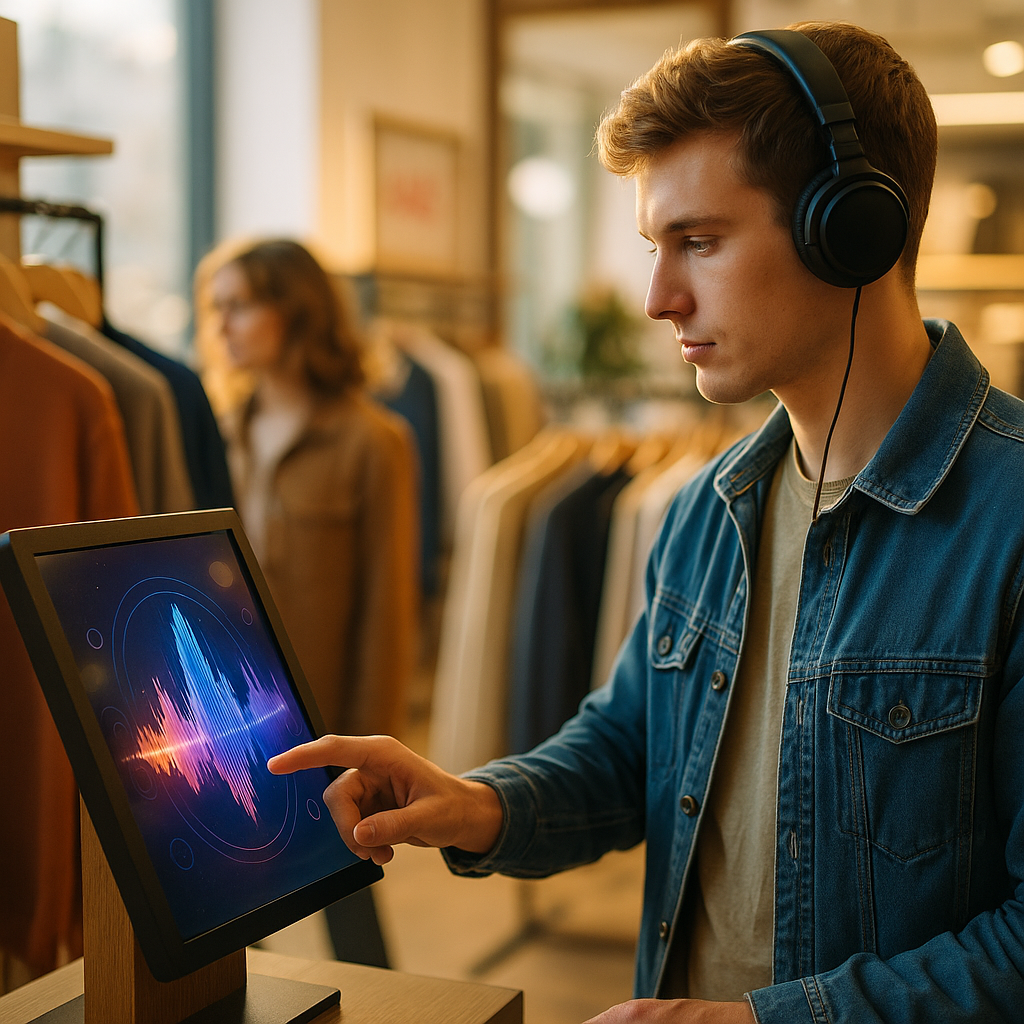
Using AI to generate hyper niche soundscapes for branded retail is changing how stores shape attention, emotion, and dwell time. In 2025, customers expect spaces that feel intentional, not generic, and audio is one of the fastest ways to signal identity. This guide explains how to design, deploy, and measure AI-driven retail sound with credibility, safety, and brand consistency—so your atmosphere sells without saying a word.
AI soundscapes for retail branding: what they are and why they work
AI soundscapes for retail branding are dynamically created audio environments tailored to a specific store, product category, and customer moment. Unlike a standard playlist, an AI soundscape can be composed to fit micro-context: the acoustics of a room, the time of day, local footfall patterns, seasonal merchandising, and even the emotional tone a brand wants to project.
They work because shoppers process sound continuously, often without conscious attention. Audio influences perceived pace, comfort, and quality cues. When the sound aligns with the brand, the space feels coherent: lighting, scent, textures, staff behavior, and audio all tell the same story. When sound is mismatched or repetitive, customers feel friction, even if they can’t name it.
“Hyper niche” matters because many retail concepts now compete in narrow positions: zero-waste refill stores, ultralight outdoor specialists, Korean skincare boutiques, boutique pet nutrition, or premium resale. These businesses need audio that reflects distinct values, not the same top-40 background heard everywhere else.
For operators, the business case is practical: a branded sound system should reduce customer fatigue, support staff experience, and strengthen recall. If customers remember the store as calm, energetic, premium, playful, or local, audio is part of the cause. AI makes it feasible to scale that specificity across locations without a full-time music team.
Generative audio design: building hyper niche soundscapes that match customer intent
Generative audio design starts with intent, not tools. The most effective programs begin by defining what the sound must do at each stage of the shopper journey: entry, browse, try-on, queue, checkout, and post-purchase pickup. Your goal is to translate brand and behavioral goals into an audio blueprint.
Start with a “brand audio brief” that covers:
- Brand adjectives: three to five traits (for example: precise, warm, local, confident, minimal).
- Customer state: rushed, curious, self-conscious, celebratory, decision-fatigued.
- Behavioral target: slower browsing, faster throughput, reduced queue anxiety, premium perception, or comfort for fitting rooms.
- Do-not-cross lines: no vocals, no aggressive transients, no “club” feel, no recognizable melodies, no culturally sensitive motifs unless approved.
Then translate the brief into controllable audio parameters. AI systems can generate sound beds with specific tempo ranges, tonal color, dynamic range, density, and rhythmic complexity. This is where hyper niche becomes real: a minimalist Japanese stationery shop might use low-density, soft percussive textures and airy harmonics; a specialty running store might use subtle forward motion with higher rhythmic clarity—but not so much that it distracts from conversation with staff.
Answering the common follow-up question: “Do we need music at all?” Not always. Many premium concepts perform better with non-melodic soundscapes that feel designed rather than curated. Sound design can reduce “song fatigue,” limit licensing complexity, and maintain brand control across long opening hours.
Design for zones: The fitting room zone often benefits from lower dynamics and reduced high-frequency content to feel less exposed. High-traffic accessory walls can tolerate more texture and motion. Checkout can use calmer, steady patterns that reduce perceived waiting time without triggering impatience.
Brand sonic identity: aligning soundscapes with merchandising, layout, and local culture
Brand sonic identity is the consistent use of audio elements that make a space recognizable and emotionally coherent. In retail, that identity must integrate with your visual merchandising, product stories, and staff scripts. AI helps by generating variations that remain “on brand” while avoiding repetition.
Build a sonic palette, not a single track. Define a set of “ingredients” the AI can use: instrumentation families (synthetic pads, organic percussion, field textures), harmonic language (major/minor ambiguity, modal color), and production style (dry/close vs. lush/reverberant). The palette becomes a constraint system that preserves identity across time and locations.
Synchronize with merchandising cycles. Instead of swapping playlists for campaigns, update parameters: brighter timbre for spring product drops, deeper low-end warmth for winter, or more pronounced rhythmic pulse during weekend peak hours. This keeps the store feeling alive without turning audio into a marketing gimmick.
Local relevance without tokenism. Retailers often want to “sound local.” Do it carefully. Avoid superficial cultural cues unless you have permission and expertise. A safer approach is to use local field recordings (with releases), local acoustic references (reverb character, ambient textures), or collaborations with local artists who approve the creative direction. Hyper niche should feel specific, not appropriative.
Practical question: “How do we keep multiple stores consistent?” Use a shared core palette and allow limited “local modifiers” per site (for example, a coastal modifier that adds airy textures and wider stereo image, or an urban modifier that adds tighter rhythmic detail). Keep the modifiers documented and auditable.
Retail audio compliance: licensing, privacy, and safety in 2025
Retail audio compliance is where many promising programs fail. In 2025, you must treat AI-generated audio as both a creative asset and an operational risk. The safest approach is to document provenance, licensing status, and usage rights from day one.
Licensing and rights:
- Know what you’re generating: fully original generative sound, AI-assisted compositions, or music-like tracks that resemble copyrighted works.
- Vendor contracts matter: require written terms that clarify commercial rights, indemnification, and whether the model was trained on licensed material.
- Avoid “soundalikes”: even if a track is newly generated, it can still create legal risk if it strongly imitates recognizable songs or artists.
Privacy and data: Many retailers want soundscapes that respond to traffic patterns. Prefer aggregated, non-identifying signals (hourly footfall counts, queue length, POS tempo) rather than anything that could be considered personal data. If you use microphones for level monitoring, ensure they are not used for speech capture and communicate clearly to staff and customers.
Health and safety: Keep volume within safe ranges for staff exposure. Ensure announcements remain intelligible. Avoid excessive low-frequency build-up that can cause fatigue, especially in small spaces with reflective surfaces. Include a process for staff to report discomfort and for managers to adjust settings without improvising.
Operational governance: Create a simple policy: who can change audio settings, what gets logged, and how often the program is reviewed. This turns audio from “set and forget” into a controlled brand system.
In-store sound analytics: measuring impact on dwell time, sales, and staff wellbeing
In-store sound analytics should focus on outcomes that matter: conversion, average basket, dwell time in key zones, customer sentiment, and staff retention. AI soundscapes are flexible, but flexibility is useless without measurement.
Set clear hypotheses. For example: “A calmer checkout soundscape reduces perceived wait time and lowers queue abandonment,” or “A higher-energy weekend profile increases accessory attachment rate.” Pick one primary metric per test to avoid confusing results.
Use controlled experiments. Run A/B tests by time blocks or matched stores. Keep staffing and promotions consistent during test windows. Document confounders like weather spikes or major local events. If you can’t do strict A/B, use a before-and-after approach with a stabilization period so you don’t mistake novelty for performance.
Combine quantitative and qualitative signals:
- Quantitative: conversion rate, units per transaction, dwell time by zone, fitting room usage, queue length, returns rate.
- Qualitative: staff feedback, customer intercept surveys, complaint logs, and mystery shopping notes.
Answering the follow-up: “How long before we know it’s working?” You can detect directional signals quickly, but reliable conclusions typically require enough traffic to reduce noise. Plan for multiple weeks of data for stable stores, and longer for low-traffic boutiques. Evaluate staff wellbeing on a regular cadence because staff are exposed to audio for entire shifts.
Optimize for the long run. The goal is not a “loud” improvement that spikes one metric while annoying staff. The best branded soundscapes deliver steady gains and fewer negative signals: fewer volume disputes, fewer complaints, and a store that feels easier to be in.
Implementation roadmap: deploying AI-driven ambient music across locations
Deploying AI-driven ambient music across locations is a change-management project. Treat it like a retail technology rollout: pilot, refine, document, and scale.
Step 1: Acoustic and hardware audit. Evaluate speaker placement, amplifier headroom, and acoustic reflections. A great soundscape fails on poor hardware. Confirm zoning capability so different areas can run different profiles.
Step 2: Define your sound profiles. Most retailers need at least three: open/quiet, peak, and close/downshift. Add specialized profiles for fitting rooms, events, or high-sensitivity hours.
Step 3: Choose a generation approach.
- Real-time generative: continuously evolving soundscapes with constraints for stability.
- Batch-generated loops: pre-rendered assets swapped by schedule; easier to audit and license.
- Hybrid: pre-rendered beds with real-time adaptive layers (for example, intensity or brightness changes).
Step 4: Create guardrails and QA. Require listening checks in the actual space. Test intelligibility of staff communication and announcements. Validate that the sound does not mask accessibility cues and does not produce distracting artifacts. Maintain an approval workflow so no one “ships” a new profile directly to all stores without review.
Step 5: Train staff and managers. Give them a simple control interface: volume range limits, profile selection, and a “comfort reset” option. Provide a short playbook that explains why the audio exists and how to report issues. Staff buy-in reduces tampering and improves consistency.
Step 6: Scale with consistency. Roll out in waves. Monitor key metrics and feedback after each wave. Keep a central log of changes so performance shifts can be traced to specific audio updates, not guesswork.
FAQs: AI-generated soundscapes for branded retail
What makes a soundscape “hyper niche” in retail?
A hyper niche soundscape is designed for a specific brand promise, product category, and customer context, using constraints like timbre, density, rhythm, and dynamics. It avoids generic playlists and instead creates a signature atmosphere that fits the store’s identity and shopper intent.
Is AI-generated retail audio legally safe to use in stores?
It can be, if you verify commercial rights, avoid soundalikes, and require clear licensing and indemnification terms from vendors. Keep documentation of provenance and maintain an approval process to prevent risky content from reaching live environments.
Do AI soundscapes replace curated music playlists?
They can replace playlists, complement them, or run in specific zones. Many retailers use soundscapes as an always-on bed and reserve curated tracks for events or brand moments where recognizable music supports the experience.
How do we prevent AI audio from becoming distracting or repetitive?
Use strict constraints (limited tempo range, controlled dynamics), create multiple profiles, and rotate parameter sets. QA the audio in the real space and collect staff feedback weekly during the first month to catch fatigue early.
What KPIs should we track to evaluate soundscape performance?
Track conversion rate, units per transaction, dwell time in key zones, queue abandonment, fitting room usage, customer sentiment, and staff feedback. Use controlled testing where possible and log every audio change so you can attribute outcomes correctly.
How many sound profiles does a typical retailer need?
Most stores benefit from three to five profiles: quiet hours, peak hours, closing/downshift, plus optional fitting-room and event modes. The right number depends on store size, traffic variability, and how distinct your zones are.
AI soundscapes can make retail feel more intentional, more local, and more aligned with how customers actually shop. The winning approach in 2025 combines creative direction, measurable hypotheses, and strict compliance, not random “AI music” experiments. Define a sonic identity, pilot with guardrails, and use analytics plus staff feedback to refine. The takeaway: treat sound as brand infrastructure, then scale it confidently.
Top Influencer Marketing Agencies
The leading agencies shaping influencer marketing in 2026
Agencies ranked by campaign performance, client diversity, platform expertise, proven ROI, industry recognition, and client satisfaction. Assessed through verified case studies, reviews, and industry consultations.
Moburst

-
2

The Shelf
Boutique Beauty & Lifestyle Influencer AgencyA data-driven boutique agency specializing exclusively in beauty, wellness, and lifestyle influencer campaigns on Instagram and TikTok. Best for brands already focused on the beauty/personal care space that need curated, aesthetic-driven content.Clients: Pepsi, The Honest Company, Hims, Elf Cosmetics, Pure LeafVisit The Shelf → -
3

Audiencly
Niche Gaming & Esports Influencer AgencyA specialized agency focused exclusively on gaming and esports creators on YouTube, Twitch, and TikTok. Ideal if your campaign is 100% gaming-focused — from game launches to hardware and esports events.Clients: Epic Games, NordVPN, Ubisoft, Wargaming, Tencent GamesVisit Audiencly → -
4

Viral Nation
Global Influencer Marketing & Talent AgencyA dual talent management and marketing agency with proprietary brand safety tools and a global creator network spanning nano-influencers to celebrities across all major platforms.Clients: Meta, Activision Blizzard, Energizer, Aston Martin, WalmartVisit Viral Nation → -
5

The Influencer Marketing Factory
TikTok, Instagram & YouTube CampaignsA full-service agency with strong TikTok expertise, offering end-to-end campaign management from influencer discovery through performance reporting with a focus on platform-native content.Clients: Google, Snapchat, Universal Music, Bumble, YelpVisit TIMF → -
6

NeoReach
Enterprise Analytics & Influencer CampaignsAn enterprise-focused agency combining managed campaigns with a powerful self-service data platform for influencer search, audience analytics, and attribution modeling.Clients: Amazon, Airbnb, Netflix, Honda, The New York TimesVisit NeoReach → -
7

Ubiquitous
Creator-First Marketing PlatformA tech-driven platform combining self-service tools with managed campaign options, emphasizing speed and scalability for brands managing multiple influencer relationships.Clients: Lyft, Disney, Target, American Eagle, NetflixVisit Ubiquitous → -
8

Obviously
Scalable Enterprise Influencer CampaignsA tech-enabled agency built for high-volume campaigns, coordinating hundreds of creators simultaneously with end-to-end logistics, content rights management, and product seeding.Clients: Google, Ulta Beauty, Converse, AmazonVisit Obviously →