


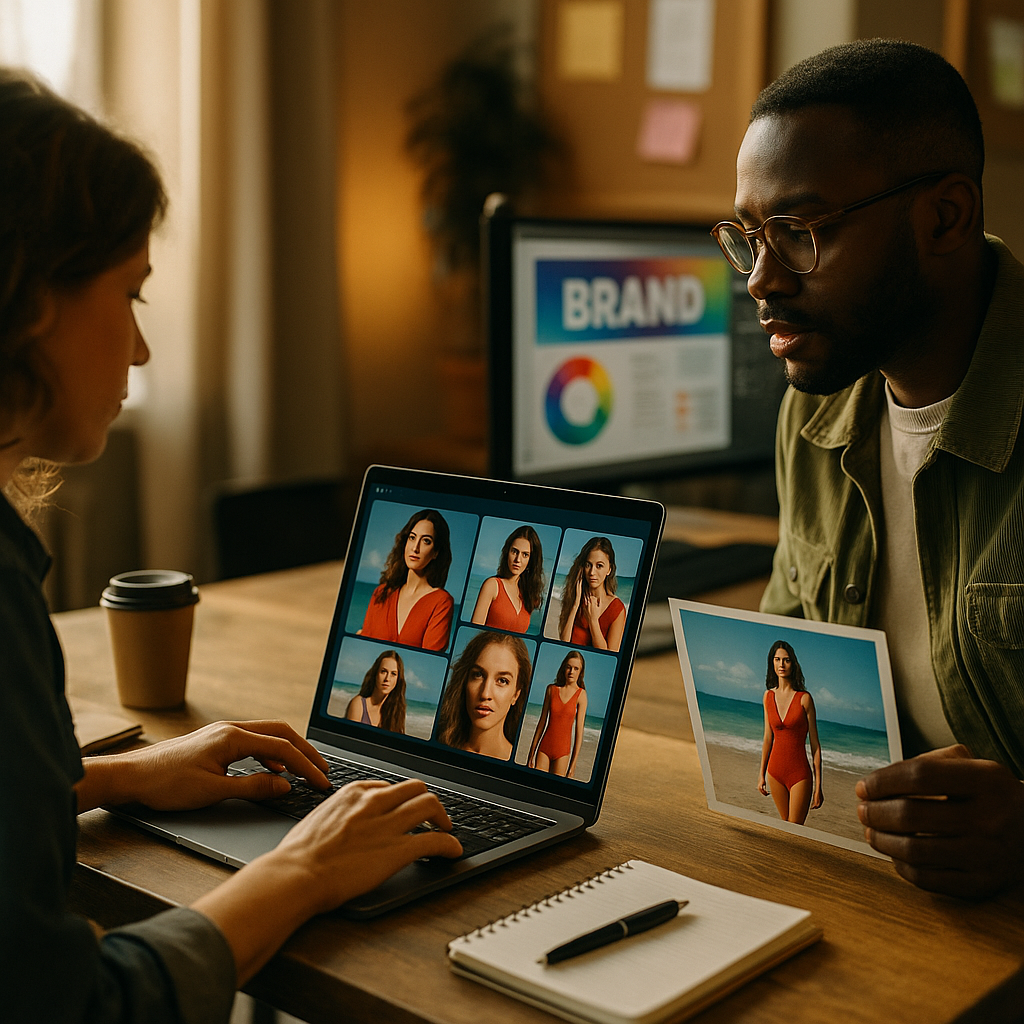
Sixty Seconds Changed Everything
At the Entertainment Marketing Summit earlier this year, a live demo produced a fully compliant, on-brand video ad in 57 seconds using generative AI. The audience — mostly senior marketers and studio executives — sat in uncomfortable silence. Not because the creative was flawless. Because it was good enough, and their internal review cycles still take 11 days on average. That gap isn’t a minor inefficiency anymore. It’s an existential brand competency problem.
The AI-at-60-Seconds Standard: What It Actually Means for Brand Teams
Let’s be precise about what happened. The demo wasn’t a gimmick. It combined a pre-trained brand model, a standing asset library, and a template framework running on Adobe Firefly integrated with custom workflows. The output — a 15-second vertical spot promoting a streaming premiere — hit brand guidelines, included proper disclosures, and matched the tone of the campaign brief. Fifty-seven seconds, end to end.
The implication isn’t that AI replaces creative teams. It’s that the bottleneck has permanently shifted from creation to approval. When production shrinks from days to seconds, every hour your legal team spends debating font sizes becomes the most expensive hour in your marketing org.
Speed is no longer a nice-to-have operational metric. It’s a brand competency — one that determines whether you capture cultural moments or comment on them three days late.
According to Gartner research, 63% of marketing leaders now rank speed-to-market as a top-three priority, up from 34% just two years ago. That’s not incremental change. That’s a structural shift in how CMOs define competitive advantage.
Why Your Creative Review Process Is the Real Problem
Here’s what most brand teams won’t admit: their review process was designed for a world where creative production was expensive and slow. Multiple rounds of revision made sense when a single campaign shoot cost six figures and took weeks. That logic collapses when AI generates 40 creative variants in under two minutes.
The typical enterprise creative review looks something like this:
- Creative team produces draft (2-3 days)
- Brand manager reviews and requests changes (1-2 days)
- Revised creative goes to legal/compliance (2-3 days)
- Final sign-off from senior leadership (1-2 days)
- Asset formatting and distribution (1 day)
That’s 7-11 business days. For a single piece of creative. In a market where TikTok trends peak and die in 48 hours.
The brands winning right now have collapsed that entire chain into a system that looks radically different. They’re not asking “how do we speed up review?” They’re asking “how do we eliminate the need for review on 80% of assets?”
If you’re still structuring your marketing team for AI agents, the review process redesign should be your first operational priority — not your last.
Pre-Approved Asset Libraries: The Infrastructure Nobody Talks About
The Entertainment Marketing Summit demo worked because the brand had done unglamorous prep work months in advance. Specifically, they built a pre-approved asset library — a curated, legally cleared repository of brand elements that AI tools can pull from without requiring additional sign-off.
What goes into one of these libraries?
- Visual elements: Logos, color palettes, typography, approved photography, talent images with cleared usage rights
- Copy blocks: Pre-approved headlines, CTAs, disclaimers, product descriptions, and tagline variations
- Audio assets: Licensed music tracks, sound effects, voiceover clips
- Compliance overlays: FTC disclosure language, platform-specific ad requirements, territorial restrictions
- Brand guardrails: Negative keyword lists, forbidden imagery, tone parameters encoded as AI model constraints
Building this library is a one-time (with ongoing maintenance) investment that pays dividends every single time an asset needs to ship fast. Think of it as moving the compliance conversation upstream — instead of reviewing every output, you’re certifying the inputs.
This approach connects directly to how high-performing brands are using speed-to-publish as a KPI. The brands measuring time-to-live in minutes rather than days have all invested in this kind of infrastructure.
One caveat: pre-approved doesn’t mean permanent. Consumer sentiment shifts. Talent contracts expire. Regulatory landscapes evolve — just look at the FTC’s expanding guidelines on AI-generated content. Build quarterly audits into your library management cycle.
Standing AI Creative Templates: What They Are and How to Build Them
Templates sound boring. They shouldn’t. In practice, standing AI creative templates are the single most powerful operational lever brand teams can pull right now.
A standing template isn’t a static Canva file. It’s a dynamic framework — a set of pre-configured AI prompts, design parameters, format specifications, and brand rules that generate finished creative with minimal human input. Change the product name, swap the hero image from the pre-approved library, and the system outputs a platform-ready asset.
Here’s what separates functional templates from useless ones:
Functional templates are platform-native. A TikTok template isn’t a resized Instagram template. It accounts for safe zones, caption overlay areas, sound-on versus sound-off behavior, and platform-specific aspect ratios. If your team is still doing vertical video reformatting manually, templates solve that problem at the architecture level.
Functional templates encode brand rules, not just brand aesthetics. Color and font are table stakes. The valuable templates include tone-of-voice parameters, approved messaging hierarchies, and compliance requirements baked into the generation logic. When the template runs, the output is pre-compliant.
Functional templates have versioning and governance. Who can edit the master template? How are updates propagated to regional teams? What happens when a creator needs a customized version? These are operational questions that need clear answers before you scale.
The goal isn’t to automate creativity. It’s to automate the 70% of creative production that’s repetitive format adaptation — so your human talent spends time on the 30% that actually differentiates your brand.
The Organizational Redesign Nobody Wants to Do
Technology alone doesn’t solve this. You can build the most sophisticated template library on the planet, and it won’t matter if your VP of brand still insists on personally approving every Instagram Story.
The brands executing the 60-second standard have made hard organizational choices:
Tiered approval authority. Not all creative carries the same risk. A 24-hour Instagram Story promoting a product already in market doesn’t need the same review rigor as a TV spot launching a new brand identity. Leading teams now classify assets into risk tiers — Tier 1 (auto-approved from templates), Tier 2 (single-reviewer fast-track), and Tier 3 (full committee review for high-stakes creative).
Embedded legal at the template level. Instead of legal reviewing outputs, legal reviews and certifies the templates themselves. This is a fundamental shift. It requires legal and compliance teams to understand AI generation parameters — which means training, which means budget, which means executive buy-in.
Creator-specific template access. For influencer programs, some brands now give vetted creators direct access to branded template systems. The creator customizes within pre-set guardrails, and the asset ships without a brand manager touching it. This works especially well within creator retainer models where trust has been established over time.
Platforms like Canva’s enterprise suite and Jasper’s brand control features are making this kind of tiered template governance increasingly accessible — even for mid-market brands without custom-built tech stacks.
What Happens to Brands That Don’t Adapt
They lose. Not dramatically. Slowly.
They miss the cultural moment by 72 hours and post a “me too” reaction that reads as stale. They watch competitors activate creator campaigns around trending audio while their legal team is still debating whether AI-generated visuals need a different disclaimer. They spend $200K on a polished campaign that launches the same week a competitor’s template-generated, creator-distributed version already captured 80% of the conversation.
Speed compounds. Brands that ship faster learn faster, iterate faster, and build audience relationships faster. Those building conversion-focused creator networks understand this instinctively — the network’s value multiplies with activation velocity.
The 60-second standard isn’t a stunt. It’s a preview of baseline expectations within the next 18 months.
Your Next Move
Audit your current average time from creative brief to live asset. If it’s measured in days, start building your pre-approved asset library and standing template system this quarter. The brands that treat speed as a core competency — not an aspiration — will own the next era of entertainment and influencer marketing.
Frequently Asked Questions
What is the AI-at-60-seconds standard in entertainment marketing?
The AI-at-60-seconds standard refers to the benchmark demonstrated at the Entertainment Marketing Summit, where a fully compliant, on-brand video ad was generated in under 60 seconds using generative AI tools combined with pre-approved asset libraries and standing creative templates. It represents the new speed expectation for brand creative production.
How can brand teams redesign creative review processes for speed?
Brand teams can redesign creative review processes by implementing tiered approval authority that classifies assets by risk level, embedding legal sign-off at the template level rather than the output level, and pre-approving input assets so that AI-generated creative ships without requiring full committee review for routine content.
What should a pre-approved asset library include?
A pre-approved asset library should include cleared visual elements like logos and photography, pre-approved copy blocks and CTAs, licensed audio assets, compliance overlays with FTC disclosure language and platform-specific requirements, and brand guardrails such as negative keyword lists and tone parameters encoded as AI model constraints.
What are standing AI creative templates?
Standing AI creative templates are dynamic, pre-configured frameworks that combine AI prompts, design parameters, format specifications, and brand rules to generate finished, platform-ready creative assets with minimal human input. They differ from static templates because they encode compliance requirements and brand tone directly into the generation logic.
How do pre-approved templates affect legal and compliance workflows?
Pre-approved templates shift legal and compliance review upstream. Instead of reviewing every individual asset after production, legal teams certify the templates and input libraries themselves. This means outputs generated within template guardrails are pre-compliant, dramatically reducing review bottlenecks and enabling faster time-to-publish.
Top Influencer Marketing Agencies
The leading agencies shaping influencer marketing in 2026
Agencies ranked by campaign performance, client diversity, platform expertise, proven ROI, industry recognition, and client satisfaction. Assessed through verified case studies, reviews, and industry consultations.
Moburst

-
2

The Shelf
Boutique Beauty & Lifestyle Influencer AgencyA data-driven boutique agency specializing exclusively in beauty, wellness, and lifestyle influencer campaigns on Instagram and TikTok. Best for brands already focused on the beauty/personal care space that need curated, aesthetic-driven content.Clients: Pepsi, The Honest Company, Hims, Elf Cosmetics, Pure LeafVisit The Shelf → -
3

Audiencly
Niche Gaming & Esports Influencer AgencyA specialized agency focused exclusively on gaming and esports creators on YouTube, Twitch, and TikTok. Ideal if your campaign is 100% gaming-focused — from game launches to hardware and esports events.Clients: Epic Games, NordVPN, Ubisoft, Wargaming, Tencent GamesVisit Audiencly → -
4

Viral Nation
Global Influencer Marketing & Talent AgencyA dual talent management and marketing agency with proprietary brand safety tools and a global creator network spanning nano-influencers to celebrities across all major platforms.Clients: Meta, Activision Blizzard, Energizer, Aston Martin, WalmartVisit Viral Nation → -
5

The Influencer Marketing Factory
TikTok, Instagram & YouTube CampaignsA full-service agency with strong TikTok expertise, offering end-to-end campaign management from influencer discovery through performance reporting with a focus on platform-native content.Clients: Google, Snapchat, Universal Music, Bumble, YelpVisit TIMF → -
6

NeoReach
Enterprise Analytics & Influencer CampaignsAn enterprise-focused agency combining managed campaigns with a powerful self-service data platform for influencer search, audience analytics, and attribution modeling.Clients: Amazon, Airbnb, Netflix, Honda, The New York TimesVisit NeoReach → -
7

Ubiquitous
Creator-First Marketing PlatformA tech-driven platform combining self-service tools with managed campaign options, emphasizing speed and scalability for brands managing multiple influencer relationships.Clients: Lyft, Disney, Target, American Eagle, NetflixVisit Ubiquitous → -
8

Obviously
Scalable Enterprise Influencer CampaignsA tech-enabled agency built for high-volume campaigns, coordinating hundreds of creators simultaneously with end-to-end logistics, content rights management, and product seeding.Clients: Google, Ulta Beauty, Converse, AmazonVisit Obviously →