


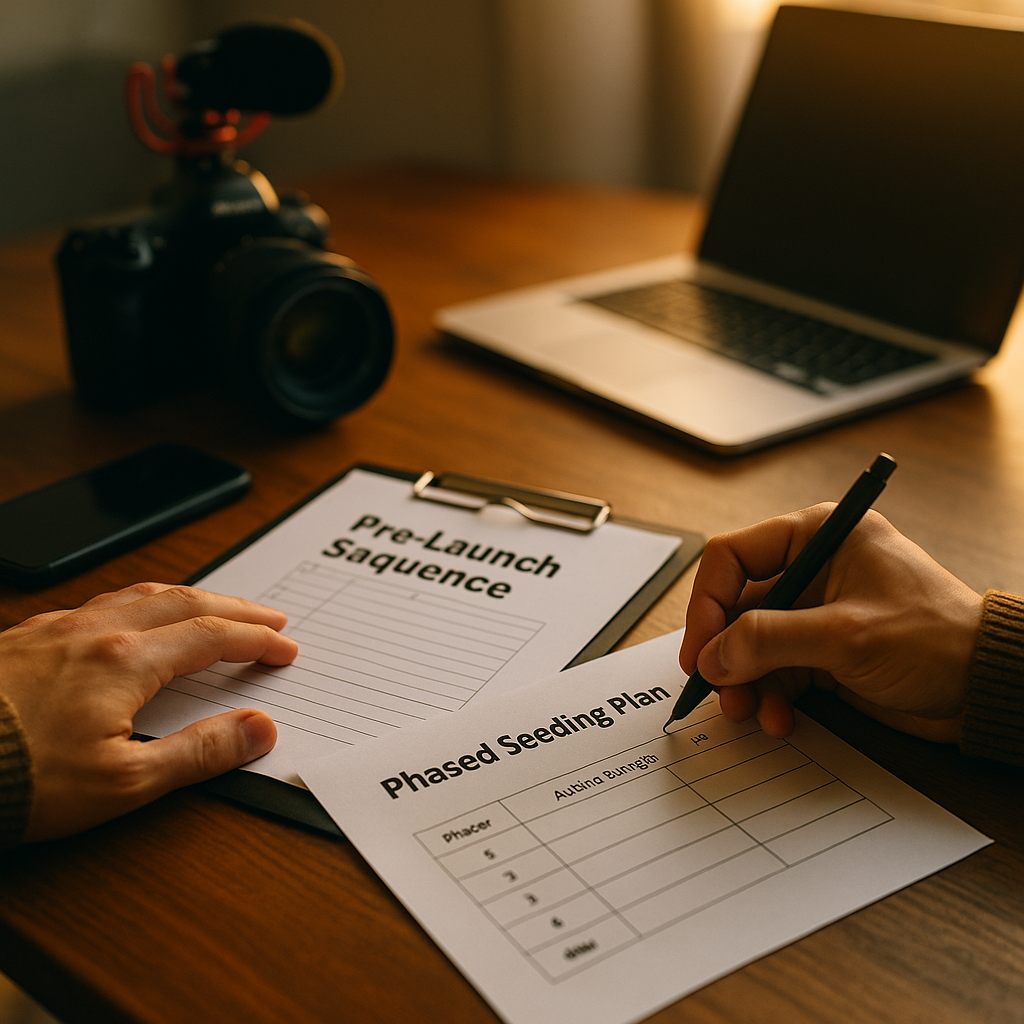
Brands That Win Launch Day Started Building Demand Six Weeks Ago
According to Statista research, 78% of consumers who purchase within the first 48 hours of a product launch were exposed to creator content about that product before it went live. That number should reshape how you think about launch timelines. The creator-driven pre-launch sequence — a structured, phased approach to seeding products with creators, staging reveals, and building community anticipation — has become the single most effective lever for manufacturing pre-purchase intent before a product is even available.
Forget the old playbook of embargoed press kits and day-of influencer blitzes. The brands consistently selling out on launch day are running creator campaigns that start weeks earlier, with carefully orchestrated content cadences that transform curiosity into commitment.
Why Phased Creator Seeding Outperforms the Launch-Day Blitz
The launch-day blitz has a fatal flaw: it compresses all awareness, consideration, and conversion into a single 24-hour window. Algorithms don’t reward that. Audiences don’t respond to it. And your finance team can’t forecast against it.
Phased creator seeding works differently. It distributes narrative beats across multiple weeks, giving each phase a specific job: intrigue, educate, validate, convert. Each wave of creator content builds on the last, compounding reach while deepening intent.
The brands generating the highest day-one sell-through rates are running 4-6 week pre-launch creator sequences — not because they need more time, but because staged exposure converts at 3-4x the rate of simultaneous saturation.
Think about what Glossier did with their fragrance launches, or how Rare Beauty seeds products with micro-creators weeks before retail availability. These aren’t accidental timelines. They’re engineered content sequences with specific weekly objectives, asset types, and creator tiers assigned to each phase.
From an operational standpoint, phased seeding also de-risks your launch. If Week 2 content underperforms, you can adjust the Week 3 brief. You get real signal — save rates, comment sentiment, DM volume — before you’ve committed your full creator budget. That’s the kind of revenue attribution logic that gets CFOs to approve bigger influencer line items.
The Four Phases of a Pre-Launch Creator Sequence
Every effective pre-launch sequence follows a similar narrative arc, even if the specific content formats vary by category and platform. Here’s the framework:
Phase 1: The Seed (Weeks 6-5 before launch)
Objective: create ambient curiosity. No product shown. Creators hint at something coming — a new routine step, a problem they’ve been asked to help solve, a brand relationship they’re excited about. The content feels organic because it is organic at this stage. You’re seeding context, not selling.
Creator tier: inner-circle loyalists who already have authentic affinity with your brand. Usually 5-10 creators maximum. No paid promotion required at this stage; the content is subtle enough to live as organic posts.
Phase 2: The Tease (Weeks 4-3)
Objective: establish the product’s category and territory without full reveal. Creators can show packaging, texture, a single ingredient — anything that rewards attention without satisfying curiosity. This is where product reveal formats earn their keep: unboxing partials, “what’s in the box” stories, close-up sensory content.
Creator tier: expand to 15-30 mid-tier creators. Mix of categories — lifestyle, niche expertise, aesthetic-aligned. Start amplifying top-performing tease content with paid spend.
Phase 3: The Reveal (Weeks 2-1)
Objective: full product disclosure. Name, benefits, pricing, availability date. Creators publish detailed reviews, demos, comparisons. This is your highest-volume content window. Brief creators for story arc completion — the content needs to resolve the tension you’ve been building.
Creator tier: full roster activation, including macro creators and any celebrity partnerships. Coordinate with paid media for maximum algorithmic momentum.
Phase 4: The Conversion Window (Launch week)
Objective: drive action. Every piece of creator content should include direct purchase paths — links, discount codes, TikTok Shop integration, swipe-ups. Creators shift from storytelling to urgency: “It’s live,” “selling fast,” “here’s what I ordered.”
Community Anticipation-Building: The Content Between the Content
The phased framework above is the skeleton. The muscle is what happens between major content beats — the community anticipation-building layer that most brands ignore.
This includes:
- Countdown-specific Stories and Reels that aren’t formal posts but keep the product top-of-mind in casual, ephemeral formats
- Creator-led polls and speculation content (“What shade do you think it is?” or “Guess the price point”) that generate comment volume and signal to algorithms
- Behind-the-scenes development content — lab footage, formula iterations, design decisions — posted by founders or brand accounts and reshared by creators
- Waitlist and early-access mechanics that give creators’ audiences a tangible action to take before the product exists
This interstitial content does something critical: it gives audiences something to do with their anticipation. Without it, hype decays between major content drops. With it, each piece of speculation or interaction deepens commitment to eventual purchase.
Brands like Rhode and Kosas have mastered this. Their pre-launch Threads and Instagram comments sections become communities unto themselves — people debating shades, sharing wishlists, tagging friends. That’s earned media you couldn’t buy at any CPM, and it connects directly to the Gen Z authenticity dynamics that drive social commerce.
Pre-purchase intent isn’t a feeling. It’s a measurable behavior: waitlist sign-ups, save rates, “notify me” clicks, comment sentiment scores. If your pre-launch sequence isn’t generating these signals by Week 3, your launch is already underperforming.
Week-by-Week Brief Template for a Six-Week Launch Countdown
Here’s a practical brief template you can adapt for your next launch. Each week maps to specific creator deliverables, content goals, and KPIs.
Week 6 — Ambient Context
Deliverable: 1 organic Story or casual mention per creator (5-10 creators)
Brief direction: “Share that you’ve been working on something exciting with [Brand]. No details. Let your audience ask questions.”
KPI: DM/comment volume asking “what is it?”
Week 5 — Problem Framing
Deliverable: 1 feed post or Reel per creator
Brief direction: “Talk about the gap or frustration in [category] that you wish a brand would solve. Mention [Brand] is working on something.”
KPI: Save rate, comment engagement
Week 4 — Partial Reveal
Deliverable: 1 Reel + 2 Stories per creator (expand to 15-30 creators)
Brief direction: “Show one element — packaging, texture, scent, a single feature. Use a staged reveal format. End with a cliffhanger.” Reference remixable asset strategies so these tease clips get reshared.
KPI: Shares, saves, waitlist sign-ups from creator links
Week 3 — Deep Tease + Waitlist Push
Deliverable: 1 long-form video or carousel + daily Stories
Brief direction: “Compare what you know so far to what’s currently available. Invite your audience to join the waitlist for early access. Share your genuine first impressions of what you’ve seen.”
KPI: Waitlist conversion rate, link clicks
Week 2 — Full Reveal
Deliverable: 2 feed posts + 3 Stories per creator (full roster activation)
Brief direction: “Full product reveal — name, benefits, your honest reaction. Film a first-impression demo. Include the launch date and early-access link.”
KPI: Video completion rate, link clicks, “notify me” actions
Week 1 — Conversion Sprint
Deliverable: Daily Stories + 1 launch-day Reel per creator
Brief direction: “Countdown to launch. Day-of content should be ‘it’s live’ energy — show yourself ordering, share your cart, create urgency without manufactured scarcity.”
KPI: Revenue attributed to creator codes/links, sell-through rate, ROAS
Throughout all six weeks, ensure compliance with FTC disclosure guidelines — even tease content requires clear material connection disclosures if creators have received product or compensation.
Operational Considerations That Make or Break the Sequence
The brief template is the easy part. Execution is where most pre-launch sequences fail. A few hard-won lessons:
Ship product early enough. If creators receive product in Week 3 and your full reveal is Week 2, you have zero margin for shipping delays, formulation changes, or content revisions. Build a two-week buffer into your seeding logistics.
Coordinate across platforms without homogenizing. Your TikTok tease content should feel native to TikTok. Your Instagram content should leverage carousels and Stories differently. Platform-specific briefs matter — generic cross-platform instructions produce generic content. Tools like CreatorIQ and Grin can help manage multi-platform workflows at scale.
Centralize approvals without bottlenecking creators. Establish a 24-hour approval SLA for pre-launch content. Anything slower and you’ll miss posting windows, frustrate creators, and lose algorithmic momentum.
Measure weekly, not just at launch. Each phase has its own KPIs for a reason. If your Week 4 tease content generates low save rates, that’s a signal to adjust your Week 3 brief — not something to discover in your post-launch report.
What Comes After Launch Day
The strongest pre-launch sequences don’t end at launch. They transition into sustained post-launch creator programs where early adopters become ongoing advocates, UGC from the launch period gets repurposed into paid creative, and the waitlist audience becomes a retargeting segment.
Your pre-launch sequence is the most expensive, most visible phase of creator collaboration. Build it right, and it generates assets, data, and audience relationships that compound for months.
Your next step: Map your next product launch onto the six-week template above, assign creator tiers to each phase, and set weekly KPI thresholds that trigger brief adjustments. The brands winning launch day aren’t lucky — they’re six weeks early.
FAQs
How far in advance should a creator-driven pre-launch sequence begin?
Most successful pre-launch creator sequences run four to six weeks before the product availability date. This allows enough time for phased content to build cumulative awareness and intent without losing audience attention from starting too early. Six weeks is ideal for hero product launches; four weeks works for line extensions or limited drops.
How many creators do you need for a pre-launch seeding campaign?
Start with 5-10 high-affinity creators for the early seed phase and scale to 30-50+ by full reveal week. The exact number depends on your category, budget, and target reach. What matters more than headcount is tiering — assigning the right creators to the right phase so each content wave serves a distinct narrative purpose.
What KPIs should brands track during a pre-launch creator sequence?
Track phase-appropriate KPIs rather than relying solely on launch-day sales. Early phases should measure curiosity signals like DM volume, comment questions, and save rates. Mid-phase KPIs include waitlist sign-ups and link clicks. Final-phase KPIs focus on conversion metrics: revenue attributed to creator codes, sell-through rate, and ROAS. Weekly measurement allows real-time brief adjustments.
Do creators need to disclose partnerships during the tease phase?
Yes. FTC guidelines require disclosure of material connections regardless of whether the product has been named or fully revealed. Even vague tease content must include clear partnership disclosures if the creator has received compensation, free product, or any other material benefit from the brand.
Can small brands run pre-launch creator sequences on a limited budget?
Absolutely. Smaller brands can run effective pre-launch sequences with 5-15 micro-creators using gifted product instead of paid placements for early phases. Focus budget on amplifying top-performing content with paid spend during the reveal and conversion phases. The phased structure actually helps small brands by spreading investment over weeks rather than requiring a single large budget commitment.
Top Influencer Marketing Agencies
The leading agencies shaping influencer marketing in 2026
Agencies ranked by campaign performance, client diversity, platform expertise, proven ROI, industry recognition, and client satisfaction. Assessed through verified case studies, reviews, and industry consultations.
Moburst

-
2

The Shelf
Boutique Beauty & Lifestyle Influencer AgencyA data-driven boutique agency specializing exclusively in beauty, wellness, and lifestyle influencer campaigns on Instagram and TikTok. Best for brands already focused on the beauty/personal care space that need curated, aesthetic-driven content.Clients: Pepsi, The Honest Company, Hims, Elf Cosmetics, Pure LeafVisit The Shelf → -
3

Audiencly
Niche Gaming & Esports Influencer AgencyA specialized agency focused exclusively on gaming and esports creators on YouTube, Twitch, and TikTok. Ideal if your campaign is 100% gaming-focused — from game launches to hardware and esports events.Clients: Epic Games, NordVPN, Ubisoft, Wargaming, Tencent GamesVisit Audiencly → -
4

Viral Nation
Global Influencer Marketing & Talent AgencyA dual talent management and marketing agency with proprietary brand safety tools and a global creator network spanning nano-influencers to celebrities across all major platforms.Clients: Meta, Activision Blizzard, Energizer, Aston Martin, WalmartVisit Viral Nation → -
5

The Influencer Marketing Factory
TikTok, Instagram & YouTube CampaignsA full-service agency with strong TikTok expertise, offering end-to-end campaign management from influencer discovery through performance reporting with a focus on platform-native content.Clients: Google, Snapchat, Universal Music, Bumble, YelpVisit TIMF → -
6

NeoReach
Enterprise Analytics & Influencer CampaignsAn enterprise-focused agency combining managed campaigns with a powerful self-service data platform for influencer search, audience analytics, and attribution modeling.Clients: Amazon, Airbnb, Netflix, Honda, The New York TimesVisit NeoReach → -
7

Ubiquitous
Creator-First Marketing PlatformA tech-driven platform combining self-service tools with managed campaign options, emphasizing speed and scalability for brands managing multiple influencer relationships.Clients: Lyft, Disney, Target, American Eagle, NetflixVisit Ubiquitous → -
8

Obviously
Scalable Enterprise Influencer CampaignsA tech-enabled agency built for high-volume campaigns, coordinating hundreds of creators simultaneously with end-to-end logistics, content rights management, and product seeding.Clients: Google, Ulta Beauty, Converse, AmazonVisit Obviously →