


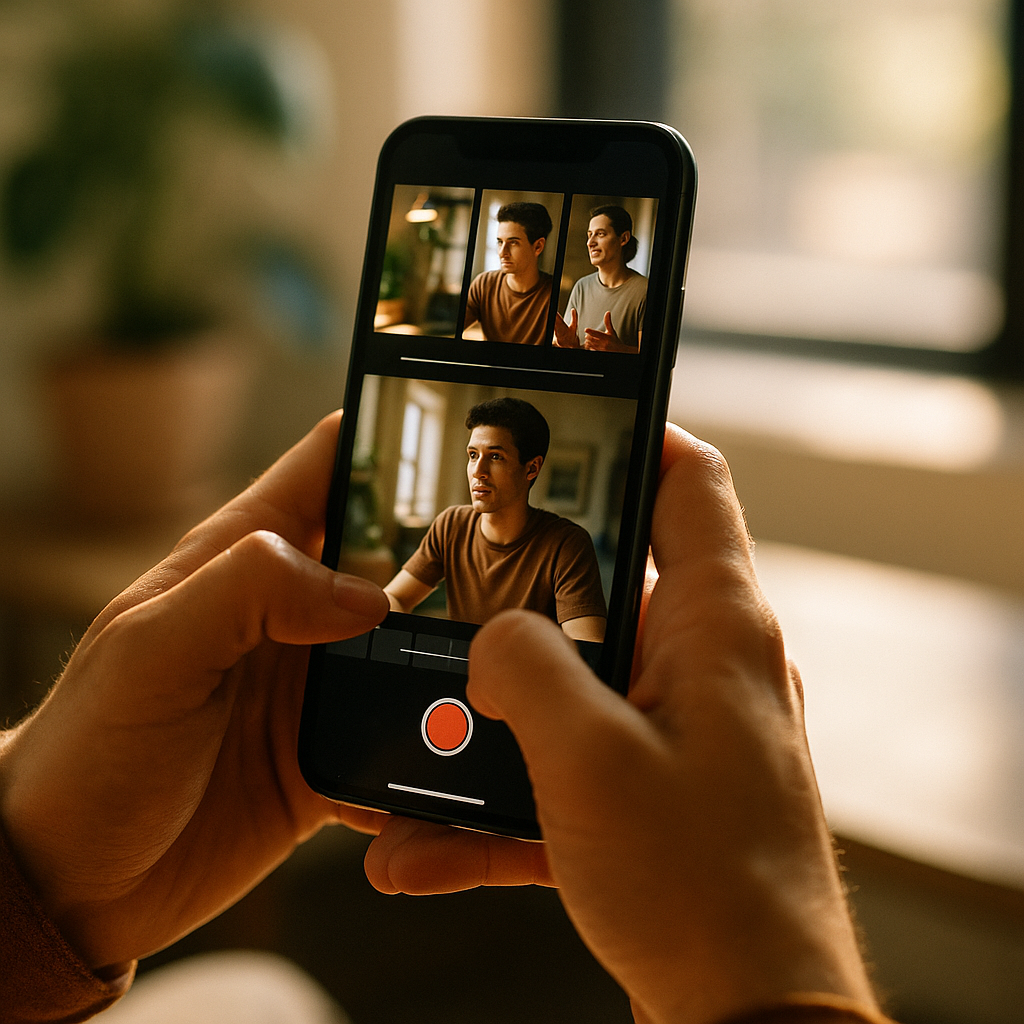
The 60-Second Story Problem Most Brands Get Wrong
Videos that hold attention past the 75% mark are 3.5x more likely to be pushed by TikTok’s recommendation engine, according to TikTok’s own advertiser resources. Yet the average branded short-form video loses half its audience within the first three seconds. The gap between those two data points is where immersive short-form narrative lives — and where most creator briefs catastrophically fail. Brands don’t have a content problem. They have a structure problem. And it starts with how they brief.
Why Completion Rate Is the Only Metric That Matters First
Before engagement. Before shares. Before saves. The algorithm needs one signal above all: did people stay?
Every major short-form platform — TikTok, Instagram Reels, YouTube Shorts — weights completion rate as the primary input for deciding whether to push a video beyond its initial test audience. Meta’s engineering team has been transparent about this: a Reel that retains viewers through its full duration gets exponentially more distribution than one with high initial impressions but rapid drop-off.
This creates a specific design constraint for branded content. You cannot front-load a product pitch and expect the algorithm to reward you. You cannot slap a logo on the first frame. The formats that win algorithms are the ones engineered for sustained attention, not just initial clicks.
The algorithm doesn’t care about your brand guidelines. It cares about whether humans kept watching. Brief for completion first, and every other metric improves downstream.
So what does this mean for your creator brief? It means the brief itself must be a narrative architecture document — not a list of talking points and required mentions.
Three Acts in 60 Seconds: The Structural Framework
Hollywood figured this out decades ago. Every compelling story has a beginning, middle, and end. The challenge is compressing that structure into a vertical video shorter than most elevator rides.
Here’s the framework we’ve seen work across hundreds of creator campaigns, and the one we detail in our deep dive on 60-second story arc briefs:
Act I: The Hook (0-8 seconds)
This is not a brand introduction. This is a pattern interrupt. The creator must establish a tension, a question, or a scenario that feels native to the platform. Think: “I almost returned this until I tried one thing” or a visual that subverts expectations. The hook must create an open loop — a question the viewer’s brain needs answered.
Effective hooks fall into three categories:
- Conflict hooks: “My dermatologist told me to stop doing this”
- Curiosity hooks: An unexpected visual or action with no immediate explanation
- Stakes hooks: “I spent $400 on this and almost cried”
Act II: The Tension Build (8-42 seconds)
This is where most branded content collapses. Brands instruct creators to “explain the product features” during this middle section. Wrong. Act II should escalate the tension established in Act I. The product enters as the resolution mechanism — not as a pitch, but as a plot device.
A skincare brand doesn’t say “our serum contains 15% niacinamide.” A creator shows the morning-after result of a routine change, builds anticipation through their genuine reaction, and lets the product appear as the natural answer to the problem the narrative established.
Act III: The Payoff (42-60 seconds)
Close the loop. Deliver the emotional or practical resolution. This is where brand recall actually forms — not because you forced a CTA, but because the viewer’s brain connects the positive narrative resolution with the product that enabled it. Research from NielsenIQ consistently shows that emotional resolution moments drive significantly higher brand recall than explicit product mentions.
How to Actually Write This Into a Brief
Knowing the three-act structure is table stakes. The operational challenge is translating it into a document that a creator can execute without feeling handcuffed.
Here’s what the brief should contain — and critically, what it should omit.
Include:
- The narrative tension: Define the problem, conflict, or question — not the product benefit. Let the creator find the bridge between the two.
- Product integration window: Specify where in the arc the product should appear (typically 55-70% through the video) and the maximum screen time for the product — usually 4-7 seconds total.
- Platform-specific format cues: Reference trending audio formats, text overlay styles, or transition types that are currently native to the platform. This changes weekly, so your brief needs a “trending context” section updated before each campaign wave.
- One non-negotiable brand line: Give the creator exactly one required phrase — ideally under six words. Anything more, and you’re writing a script, not a brief.
- Completion rate benchmarks: Share the actual number you’re optimizing for. Most high-performing creator content hits 65-80% average completion on TikTok. Setting this expectation up front aligns creative decisions.
Omit:
- Scripts longer than three sentences
- Required feature lists (move these to a separate “accuracy check” document)
- Mandatory opening brand mentions
- Prescriptive shot lists
The goal is to give creators what we call “narrative guardrails” — enough structure to ensure brand safety and story coherence, with enough freedom to feel authentic. Brands that need tighter control should explore our brand safety brief framework for additional safeguards without stifling creativity.
Embedding Product Without Breaking the Spell
This is the part that keeps brand managers up at night. How do you make a product visible enough to justify the spend but invisible enough to not trigger the viewer’s ad-detection reflex?
The answer is contextual inevitability.
When a product appears as the only logical solution to the narrative problem, it doesn’t feel like an ad. It feels like a recommendation from a friend who just figured something out. This is the principle behind the best short-form video for conversion — the product earns its place in the story.
Three integration techniques that consistently sustain completion rates:
The Reveal Integration: The product is hidden or obscured until the narrative payoff moment. Think unboxing energy applied to everyday products. The viewer stays because they want to see what the thing is.
The Process Integration: The product is used as part of a demonstrated process — cooking, getting ready, fixing something. It’s visible but not featured. The narrative is about the transformation, not the tool.
The Reaction Integration: The creator’s genuine response to using the product is the story. No explanation needed. The emotion does the selling. This works exceptionally well on TikTok, where Gen Z authenticity expectations make polished pitches counterproductive.
If a viewer can identify exactly when the “ad part” starts, your integration has failed. The product should be woven so deeply into the narrative arc that removing it would break the story.
What “Platform-Native” Actually Requires in Practice
Saying content should “feel native” is easy. Operationalizing it is not.
Platform-native in 2026 means matching the current production vernacular of each platform — and these vernaculars are diverging rapidly. TikTok’s native aesthetic has shifted toward longer cuts, documentary-style narration, and text-heavy overlays. Instagram Reels still reward higher production value but with casual framing. YouTube Shorts increasingly favors educational density.
Your brief must specify which platform the video is primarily targeting, because a piece of content optimized for TikTok completion will underperform on Reels, and vice versa. Cross-posting without re-editing is a budget leak, not a budget saver.
Practical platform-native checklist for your brief:
- Specify the primary platform and its current dominant content style
- Include 3-5 reference videos (not from competitors — from native creators in adjacent categories)
- Note current trending audio or format mechanics (and their expected shelf life)
- Define text overlay expectations: font style, placement, reading speed
- Indicate whether the creator should use front-facing camera, POV, or mixed perspectives
Tools like Sprout Social and CreatorIQ can help identify trending format patterns and benchmark completion rates across platforms before you finalize your brief.
Measuring What Actually Worked
Completion rate is your first-order metric. But it’s not the only one that matters for ROI.
Map your measurement to the narrative structure itself. Where in the video did drop-off occur? If viewers leave during Act II, your tension build is weak. If they leave during Act III, your payoff didn’t deliver — or your product integration was too jarring. Platform analytics from TikTok and Instagram both provide second-by-second retention graphs. Use them.
Beyond completion, track the downstream signals that indicate the algorithm is amplifying your content: share rate (the strongest organic distribution trigger), save rate (indicates rewatch intent), and comment sentiment. For revenue attribution, pair these creative metrics with the commerce-side measurement approach we outline in our revenue attribution guide.
The brands winning at immersive short-form narrative aren’t producing more content. They’re producing structurally superior content — videos engineered from the brief stage to sustain attention, embed product naturally, and trigger algorithmic distribution. That starts with treating your creator brief as a narrative blueprint, not a compliance checklist.
Your next step: Pull your last five creator briefs. Count how many contain a defined three-act structure, a specific product integration window, and a completion rate target. If the answer is zero, you’ve found your biggest lever for performance improvement this quarter.
FAQs
What completion rate should branded short-form videos aim for?
High-performing branded creator content typically achieves 65-80% average completion rate on TikTok and similar platforms. This threshold is where algorithmic distribution meaningfully accelerates. Anything below 50% suggests structural issues with the narrative hook or tension build in your brief.
How long should a product appear on screen in a 60-second video?
Aim for 4-7 seconds of total product screen time within a 60-second video. The product should appear roughly 55-70% through the video, during the transition between Act II and Act III, where it serves as the narrative resolution rather than an interruption.
Should the same short-form video be posted across TikTok, Reels, and Shorts?
No. Cross-posting without re-editing typically underperforms because each platform has a distinct native aesthetic and algorithm preference. Your brief should specify a primary platform and tailor production style, pacing, text overlays, and audio to that platform’s current content vernacular.
How much creative freedom should brands give creators in their briefs?
Briefs should provide narrative guardrails — defining the tension, product integration window, and one required brand phrase — while leaving execution choices like shot composition, dialogue, and pacing to the creator. Overly prescriptive briefs with scripts, feature lists, and mandatory opening brand mentions consistently produce lower completion rates.
How do you measure whether product integration disrupted the narrative flow?
Use second-by-second retention graphs available in TikTok and Instagram analytics. A sharp drop-off at the moment the product appears indicates the integration felt unnatural. Successful integration shows a flat or even rising retention curve through the product moment, meaning viewers perceived it as part of the story rather than an ad break.
Top Influencer Marketing Agencies
The leading agencies shaping influencer marketing in 2026
Agencies ranked by campaign performance, client diversity, platform expertise, proven ROI, industry recognition, and client satisfaction. Assessed through verified case studies, reviews, and industry consultations.
Moburst

-
2

The Shelf
Boutique Beauty & Lifestyle Influencer AgencyA data-driven boutique agency specializing exclusively in beauty, wellness, and lifestyle influencer campaigns on Instagram and TikTok. Best for brands already focused on the beauty/personal care space that need curated, aesthetic-driven content.Clients: Pepsi, The Honest Company, Hims, Elf Cosmetics, Pure LeafVisit The Shelf → -
3

Audiencly
Niche Gaming & Esports Influencer AgencyA specialized agency focused exclusively on gaming and esports creators on YouTube, Twitch, and TikTok. Ideal if your campaign is 100% gaming-focused — from game launches to hardware and esports events.Clients: Epic Games, NordVPN, Ubisoft, Wargaming, Tencent GamesVisit Audiencly → -
4

Viral Nation
Global Influencer Marketing & Talent AgencyA dual talent management and marketing agency with proprietary brand safety tools and a global creator network spanning nano-influencers to celebrities across all major platforms.Clients: Meta, Activision Blizzard, Energizer, Aston Martin, WalmartVisit Viral Nation → -
5

The Influencer Marketing Factory
TikTok, Instagram & YouTube CampaignsA full-service agency with strong TikTok expertise, offering end-to-end campaign management from influencer discovery through performance reporting with a focus on platform-native content.Clients: Google, Snapchat, Universal Music, Bumble, YelpVisit TIMF → -
6

NeoReach
Enterprise Analytics & Influencer CampaignsAn enterprise-focused agency combining managed campaigns with a powerful self-service data platform for influencer search, audience analytics, and attribution modeling.Clients: Amazon, Airbnb, Netflix, Honda, The New York TimesVisit NeoReach → -
7

Ubiquitous
Creator-First Marketing PlatformA tech-driven platform combining self-service tools with managed campaign options, emphasizing speed and scalability for brands managing multiple influencer relationships.Clients: Lyft, Disney, Target, American Eagle, NetflixVisit Ubiquitous → -
8

Obviously
Scalable Enterprise Influencer CampaignsA tech-enabled agency built for high-volume campaigns, coordinating hundreds of creators simultaneously with end-to-end logistics, content rights management, and product seeding.Clients: Google, Ulta Beauty, Converse, AmazonVisit Obviously →