


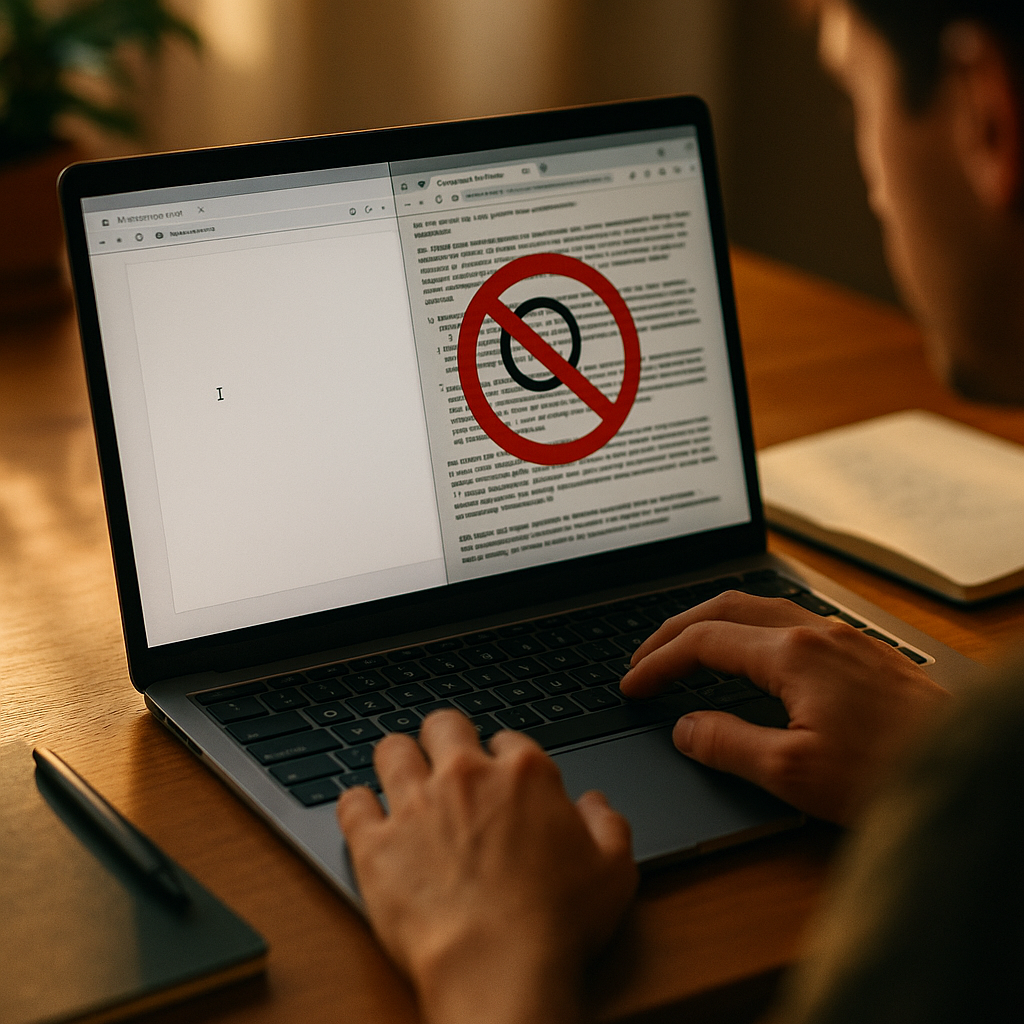
Anti SEO copywriting sounds like rebellion, but it is really a return to first principles: write for people who want clarity, proof, and a reason to trust you. In 2025, algorithms increasingly reward content that demonstrates real experience and solves real problems without padding. This approach protects your brand voice, reduces churn, and increases conversions. Ready to write like a human again?
Human-first content: why readers decide before algorithms do
Search engines can suggest your page; only a reader can decide to believe it, share it, or buy from it. “Anti SEO” does not mean ignoring search. It means refusing to let ranking tactics override comprehension, credibility, and emotional resonance. When you lead with the human need—answers, reassurance, guidance—you naturally create the signals modern search systems look for: satisfied intent, meaningful engagement, and trustworthy presentation.
In practice, human-first content starts with a clear promise and keeps it. It uses plain language, avoids vague generalities, and anticipates the reader’s next question. If the page claims to teach, it teaches. If it claims to compare, it shows criteria and trade-offs. If it claims expertise, it demonstrates it through examples, process, and constraints.
What this changes for your writing workflow:
- Start with intent, not keywords. Ask: “What decision is the reader trying to make?”
- Write the answer early. Don’t hide the point behind long setups.
- Use structure to reduce effort. Short paragraphs, specific subtopics, and skimmable lists.
- Offer next steps. Readers feel supported when you tell them what to do after they understand.
Readers also make fast trust judgments. They look for competence, transparency, and care. If your page feels like it was written to manipulate a crawler—repetitive phrases, thin claims, inflated word count—people leave. That “pogo-sticking” behavior is the opposite of what you want in 2025, when helpfulness and satisfaction increasingly matter.
Search intent optimization: the real alternative to keyword stuffing
Secondary keywords and careful phrasing still matter, but not as a substitute for substance. The strongest “anti SEO” move is to optimize for intent so well that keywords become a byproduct of precision. If a reader searches “anti SEO copywriting,” they usually want one of three things: a definition, a method they can apply, or proof it works. You can satisfy all three by building the page around a decision framework.
Use this intent-first outline:
- Define the term in one sentence. Then explain what it is not.
- Describe the problem it solves. For example: robotic content, low trust, low conversion.
- Show the method. Steps, templates, examples, and what to avoid.
- Prove credibility. Demonstrate experience, cite constraints, and explain how you test quality.
- Help readers choose a path. DIY checklist, team process, or hiring guidance.
Instead of forcing exact-match keywords into every paragraph, use natural language that matches how humans think: synonyms, related concepts, and concrete scenarios. This approach increases topical completeness without sacrificing voice.
Quick self-check: If you removed every keyword from your draft, would it still be obviously about the topic and still be valuable? If not, the content depends on signals instead of meaning. Strengthen the meaning.
EEAT content strategy: credibility you can show, not just claim
Google’s emphasis on experience, expertise, authoritativeness, and trustworthiness is not a checkbox; it is a reader expectation made measurable. EEAT is especially important for advice-driven content, brand positioning pages, and any copy that influences money, time, or reputation. Anti SEO copywriting aligns with EEAT because it forces you to be specific and honest.
Practical EEAT moves that improve both trust and performance:
- Demonstrate experience with details. Share real constraints: timelines, team roles, review cycles, budget ranges, common mistakes you’ve seen.
- Explain your process. Readers trust a repeatable method more than bold claims.
- Use verifiable references when data is necessary. Quote recent sources and link them on your site where appropriate (even if not shown here), especially for statistics.
- Separate facts from opinions. Use language like “in our tests,” “typically,” and “it depends” when it truly does.
- Reduce risk with transparency. Clarify who the advice is for and when it will not work.
Authority is also built through consistency. If your blog promotes empathy but your product pages read like a spammy template, the disconnect erodes trust. Align your voice across touchpoints: homepage, pricing, onboarding emails, and support articles.
Answer a likely follow-up: “Do I need an author bio and credentials on every page?” Not always, but for high-stakes topics and flagship content, clear authorship, editorial review, and update practices materially improve trust. If you operate a business, publish a transparent “about,” “contact,” and policies that show you are real and accountable.
Emotional copywriting: writing for the human soul without manipulation
Writing for the human soul does not mean poetic vagueness. It means you respect what is at stake for the reader: identity, anxiety, ambition, belonging, and the desire to make a good decision. Emotional copywriting works best when it is grounded in truth, not pressure tactics.
Use emotion ethically by focusing on:
- Clarity: Say what changes for the reader after they act.
- Specificity: Replace “transform your business” with “reduce proposal revisions by standardizing scope language.”
- Empathy: Name the friction: “You don’t have time to compare ten tools.”
- Agency: Help them choose; don’t corner them with urgency games.
A useful test is to read your draft and ask: “If someone did not buy, would they still feel respected?” If the answer is yes, you are writing with integrity.
Micro-techniques that keep soul in the sentence:
- Concrete verbs: “Choose,” “measure,” “simplify,” “protect,” “confirm.”
- Sensory specifics: “Your dashboard stops feeling like noise.”
- Honest trade-offs: “This approach takes longer upfront, but it reduces rework.”
- Human rhythm: Vary sentence length. Use occasional fragments for emphasis, not filler.
Readers can sense when copy is engineered to inflate metrics rather than help. When you write with care—showing them a path, acknowledging their doubts, and offering real examples—you earn attention. Attention becomes trust. Trust becomes action.
Conversion-focused storytelling: how anti SEO copywriting sells more with fewer words
“Anti SEO” writing often converts better because it removes bloat. Many pages fail because they chase comprehensiveness and forget decision-making. Conversion-focused storytelling is not about fictional narratives; it is about sequencing information so the reader feels safe moving forward.
A high-converting structure that stays human:
- Problem: State the real pain in plain language.
- Insight: Explain why the usual fixes fail.
- Solution: Present your approach and how it works.
- Proof: Provide evidence: outcomes, demos, testimonials, or transparent case notes.
- Fit: Define who it is for and who it is not for.
- Next step: A clear call to action with low-friction options.
When you add proof, avoid vague “we helped many clients” lines. Use what you can responsibly share: ranges, time-to-value, before/after process improvements, or qualitative outcomes tied to observable behavior. If you cannot share client names, explain why and provide anonymized context. That honesty often increases trust.
Common follow-up: “Won’t shorter content rank worse?” Not if it satisfies intent better. A shorter page that answers the question, provides useful next steps, and keeps readers engaged can outperform a longer page built on repetition. The goal is not word count; it is satisfaction.
Sustainable SEO writing: a practical workflow for 2025 teams
Anti SEO copywriting becomes sustainable when it is operationalized. The best teams treat content like a product: research, draft, review, publish, measure, improve. This protects voice and reduces the temptation to chase tactics that age poorly.
A practical workflow you can adopt:
- Research: Collect customer questions from sales calls, support tickets, and on-site search queries.
- Intent brief: Write a one-paragraph “reader mission” describing what success looks like.
- Outline: Map sections to decisions: definition, options, trade-offs, steps, proof, next action.
- Draft: Write quickly, then cut ruthlessly. Remove repeated points and generic claims.
- EEAT review: Confirm accuracy, add experience-based specifics, and ensure transparency.
- Publish with support: Add internal links to related guides, a clear CTA, and a way to contact you.
- Measure: Track engagement and business outcomes, not just rankings: qualified leads, trial-to-paid, refund rates, support load.
Quality control checklist:
- Helpful: Would a reader bookmark this?
- Skimmable: Does each paragraph earn its place?
- Accurate: Are claims supportable? Are limitations disclosed?
- Distinct: Does it sound like your brand and your experience?
- Actionable: Does it tell the reader what to do next?
This workflow also answers a key operational question: “How do we use AI responsibly?” Use it for ideation, summarizing notes, and first-pass outlines, then require human accountability for accuracy, nuance, and ethics. In 2025, the competitive edge is not generating more text; it is publishing fewer, better pages that readers trust.
FAQs: anti SEO copywriting and writing for the human soul
What is anti SEO copywriting?
It is a human-first approach to copy that prioritizes clarity, proof, and reader satisfaction over keyword repetition and formulaic optimization. It still respects search fundamentals, but it refuses to sacrifice meaning for tactics.
Does anti SEO copywriting mean ignoring keywords?
No. It means using keywords as navigation cues, not as the engine of the writing. You optimize by fully answering the intent behind the query, then polish titles, headings, and phrasing for discoverability.
How do I keep content emotional without being manipulative?
Ground emotion in reality: name the reader’s stakes, offer transparent trade-offs, and preserve their agency. Avoid false urgency, exaggerated outcomes, or shame-based persuasion.
How can I show EEAT if I’m not a famous brand?
Show your work. Explain your process, share real experience details, cite reliable sources when using data, publish clear contact information, and be transparent about what you can and cannot guarantee.
What metrics should I track besides rankings?
Track outcomes tied to intent: time on page with scroll depth, return visits, email sign-ups, demo requests, trial activation, sales-qualified leads, support ticket reduction, and conversion rate by landing page.
When should I choose long-form content vs short-form content?
Choose long-form when the decision is complex and readers need comparisons, steps, and proof. Choose short-form when intent is narrow and the best experience is a fast, complete answer with a clear next step.
Can anti SEO copywriting work for product pages?
Yes. Product pages often improve when you reduce fluff, clarify who the product is for, explain how it works, show proof, and answer objections directly. This increases trust and conversion while still supporting search visibility.
How do I know if my content sounds “too SEO”?
If it repeats phrases unnaturally, delays the main point, uses generic claims, or reads like it was written for a bot, it is likely over-optimized. Ask a colleague to read it and summarize the value in one sentence; if they struggle, revise for clarity.
Takeaway: The power of anti SEO copywriting is not in rejecting search, but in rejecting emptiness. Write with experience, precision, and empathy, and you create pages that readers trust and algorithms can confidently recommend. In 2025, sustainable visibility comes from usefulness: clear answers, honest proof, and a voice that sounds like a real person. Publish fewer words, with more soul—then measure what matters.
Top Influencer Marketing Agencies
The leading agencies shaping influencer marketing in 2026
Agencies ranked by campaign performance, client diversity, platform expertise, proven ROI, industry recognition, and client satisfaction. Assessed through verified case studies, reviews, and industry consultations.
Moburst

-
2

The Shelf
Boutique Beauty & Lifestyle Influencer AgencyA data-driven boutique agency specializing exclusively in beauty, wellness, and lifestyle influencer campaigns on Instagram and TikTok. Best for brands already focused on the beauty/personal care space that need curated, aesthetic-driven content.Clients: Pepsi, The Honest Company, Hims, Elf Cosmetics, Pure LeafVisit The Shelf → -
3

Audiencly
Niche Gaming & Esports Influencer AgencyA specialized agency focused exclusively on gaming and esports creators on YouTube, Twitch, and TikTok. Ideal if your campaign is 100% gaming-focused — from game launches to hardware and esports events.Clients: Epic Games, NordVPN, Ubisoft, Wargaming, Tencent GamesVisit Audiencly → -
4

Viral Nation
Global Influencer Marketing & Talent AgencyA dual talent management and marketing agency with proprietary brand safety tools and a global creator network spanning nano-influencers to celebrities across all major platforms.Clients: Meta, Activision Blizzard, Energizer, Aston Martin, WalmartVisit Viral Nation → -
5

The Influencer Marketing Factory
TikTok, Instagram & YouTube CampaignsA full-service agency with strong TikTok expertise, offering end-to-end campaign management from influencer discovery through performance reporting with a focus on platform-native content.Clients: Google, Snapchat, Universal Music, Bumble, YelpVisit TIMF → -
6

NeoReach
Enterprise Analytics & Influencer CampaignsAn enterprise-focused agency combining managed campaigns with a powerful self-service data platform for influencer search, audience analytics, and attribution modeling.Clients: Amazon, Airbnb, Netflix, Honda, The New York TimesVisit NeoReach → -
7

Ubiquitous
Creator-First Marketing PlatformA tech-driven platform combining self-service tools with managed campaign options, emphasizing speed and scalability for brands managing multiple influencer relationships.Clients: Lyft, Disney, Target, American Eagle, NetflixVisit Ubiquitous → -
8

Obviously
Scalable Enterprise Influencer CampaignsA tech-enabled agency built for high-volume campaigns, coordinating hundreds of creators simultaneously with end-to-end logistics, content rights management, and product seeding.Clients: Google, Ulta Beauty, Converse, AmazonVisit Obviously →