


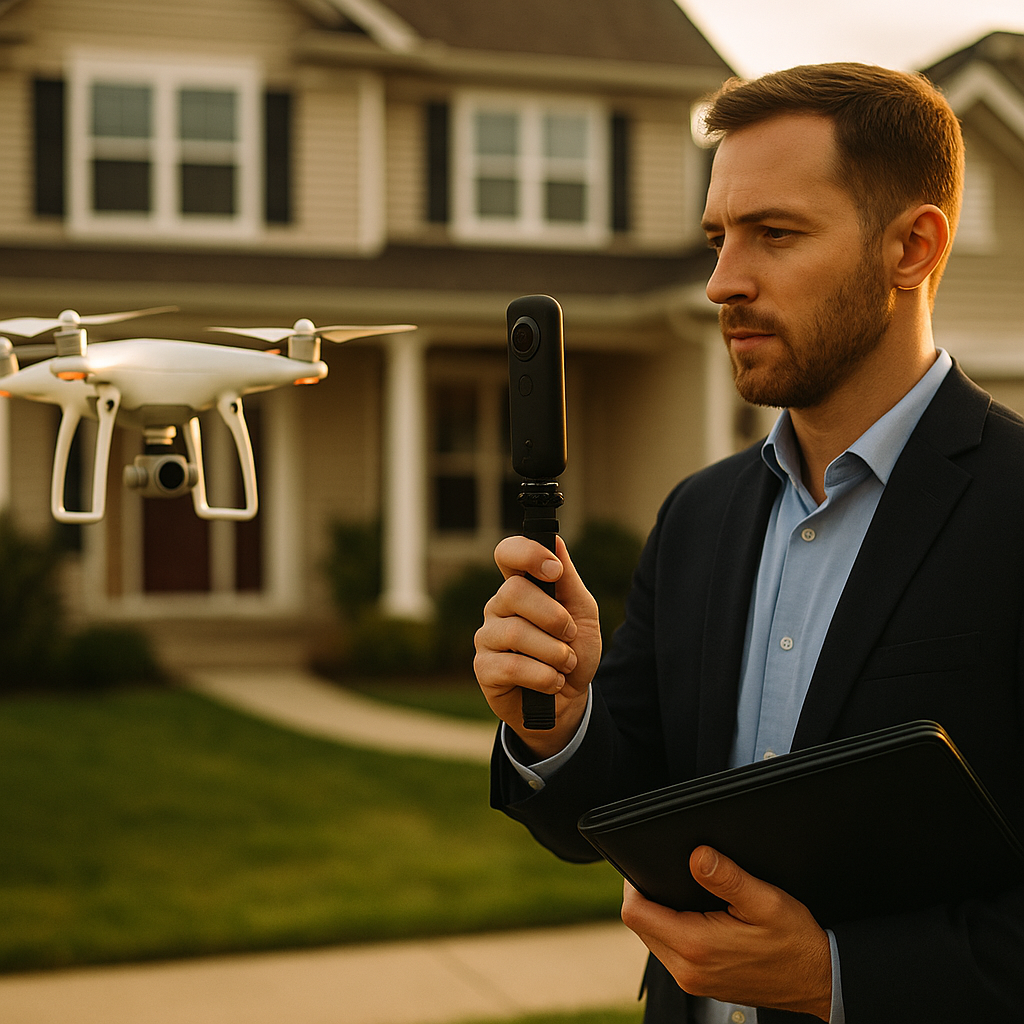
Case Study: How a Real Estate Brand Used Drones and 360 Video for Sales shows what happens when listing content is treated like a product experience, not a brochure. In 2025, buyers expect speed, transparency, and a realistic sense of place before they ever schedule a showing. This case study breaks down the strategy, workflow, results, and safeguards behind an immersive approach—so you can replicate it without wasting budget or risking compliance. Ready to see what moved the needle?
Real estate drone videography strategy: the brand, the market, the problem
A mid-sized residential real estate brand (about 40 agents across two metro areas) faced a familiar tension: high inventory competition and shrinking attention spans. Their internal data showed that premium listings were receiving plenty of clicks, but fewer qualified inquiries. Buyers were browsing, not committing.
Leadership identified three root causes:
- Expectation gaps: Standard photos and short highlight reels left out context—street approach, lot shape, views, proximity to neighbors—leading to wasted showings.
- Remote decision-making: A growing share of serious buyers were relocating or investing from out of town and needed more certainty before traveling.
- Commodity marketing: Competing listings looked the same in feeds and portals, reducing differentiation and compressing perceived value.
They set a clear goal: increase qualified inquiries and reduce time-to-offer without inflating production costs beyond what sellers would accept. The team chose a two-part solution—drone video for context and 360 video for interior continuity—supported by a repeatable production process.
To meet EEAT expectations, the brand appointed an internal “visual compliance owner” (a licensed broker) to approve every deliverable against local advertising rules, MLS requirements, and privacy standards before publication.
360 virtual tours for listings: the creative concept and buyer journey
The team avoided “tech for tech’s sake” and mapped each format to a decision point in the buyer journey:
- Drone video answered: “Where is this home, what’s around it, and how does the property sit on the lot?”
- 360 video walkthrough answered: “How does it feel to move through the space, and what’s the real flow?”
Instead of producing long cinematic films, they built an immersive listing package with three components:
- 60–90 second drone-led neighborhood and lot story (approach, frontage, backyard depth, nearby amenities, and view corridors)
- 3–5 minute 360 continuous walkthrough focused on layout truth, not dramatic cuts
- 10–15 second vertical teasers from the same footage for social ads and agent sharing
This approach answered likely buyer follow-ups inside the media itself. For example, the drone segment included one steady pass showing distance to adjacent homes (without lingering on neighbors), and the 360 walkthrough included “transition moments” like hallways and stair turns that typical highlight videos skip. The result was fewer surprises—and more serious appointments.
The brand also added accessibility cues: slower camera pacing, clear room-to-room navigation, and captions for key features (e.g., “south-facing backyard,” “new roof 2023”) while ensuring captions matched verified property disclosures.
Drone footage for property marketing: production workflow, equipment, and compliance
To keep quality consistent across agents and neighborhoods, the company standardized production into a checklist-driven workflow. They used a small in-house media team plus two vetted freelancers to handle peak volume. Every shoot followed the same steps:
- Pre-flight and pre-shoot brief: confirm property lines, restricted airspace, planned flight paths, and homeowner privacy requests
- On-site capture plan: drone first (weather-dependent), then 360 interior, then quick stills if needed
- Post-production standards: color consistency, stabilization, and a “no misleading edits” policy (no artificial sky replacements that alter weather conditions, no digital removal of power lines or neighboring structures unless explicitly disclosed where allowed)
- Compliance review: broker sign-off, MLS format checks, and watermark rules
They also implemented a strict risk-management framework:
- Permits and credentials: only qualified, authorized drone operators; flight logs stored per project
- Privacy controls: avoid hovering over neighboring yards, blur plates and faces if incidentally captured, and remove audio that includes private conversations
- Truth-in-advertising guardrails: no wide-angle distortion that materially misrepresents room size; no “enhanced” views that cannot be seen from the property
To improve buyer trust, each listing page included a short note: “All footage captured on-site. Layout shown continuously to reflect true flow.” That statement seems small, but it supported credibility, reduced complaints, and gave agents a confident script when buyers asked whether the media was “real.”
Immersive real estate marketing results: metrics, attribution, and ROI
The brand treated this as an experiment with measurable outcomes, not a branding exercise. They defined success metrics that aligned with sales reality:
- Qualified inquiry rate: inquiries that resulted in a showing or a substantive agent conversation within 48 hours
- Showing efficiency: ratio of showings to offers (a proxy for expectation alignment)
- Time-to-offer: days from go-live to first offer received
- Content engagement: completion rate of the 360 walkthrough and replays of the drone segment
Attribution was handled with practical controls rather than guesswork:
- Link tagging: every channel (MLS, brokerage site, email, paid social) used unique parameters to measure traffic sources
- Call tracking: a dedicated number on the listing landing page to connect inquiries to the immersive package
- A/B rotation: in similar neighborhoods, a subset of listings launched with standard media for two weeks before upgrading, allowing directional comparison without harming sellers
Over two quarters, the team documented consistent improvements on listings using the full immersive package:
- Higher-quality leads: agents reported fewer “tire-kicker” showings and more buyers arriving with specific, informed questions
- Faster decision cycles: remote buyers were more willing to place offers contingent on inspection, since the layout and context were clearer
- Stronger seller confidence: listing presentations became easier to close because sellers could see a concrete marketing plan, not generic promises
From an ROI perspective, the brand kept costs predictable by standardizing shot lists and limiting revisions. They priced the package as an optional “premium media” line item with a clear deliverable list, which reduced negotiation and protected margins. Agents also reused teaser cuts for recruiting and farming campaigns, increasing the lifetime value of each shoot.
To address the reader’s likely next question—“Will this work in slower markets?”—the brand found the biggest advantage was not hype-driven demand; it was expectation alignment. When buyers understand a property better, you reduce wasted time, friction, and fall-through risk in any market condition.
Real estate video marketing best practices: what made it credible (EEAT)
Immersive media can backfire if it feels gimmicky or misleading. The brand leaned into credibility by operationalizing EEAT across content creation and distribution:
- Experience: their media team shadowed top agents to learn which features actually influence offers (kitchen workflow, storage, driveway usability, backyard privacy). That shaped the shot list.
- Expertise: a broker reviewed every piece for accuracy, and agents verified feature claims against disclosures before publishing captions or callouts.
- Authoritativeness: they hosted all tours on a fast, branded domain with clear agent contact, licensing details, and a consistent listing template. Buyers knew who was behind the content.
- Trust: they added transparent notes about what the viewer was seeing (e.g., “drone altitude increased for neighborhood context”) and avoided deceptive edits.
They also built buyer-friendly usability into the experience:
- Fast loading: compressed deliverables without visible quality loss and provided multiple playback resolutions
- Clear next steps: every tour ended with a single call-to-action: schedule a showing, request disclosures, or ask a question
- Accessibility: captions, minimal motion effects, and optional “guided mode” for viewers prone to motion sensitivity
This matters for SEO as well: when users stay longer, interact with the tour, and return to the listing page, engagement signals improve. More importantly, helpful content earns more shares from agents, buyers, and local businesses—links and mentions that tend to be higher quality than paid placements.
Real estate sales enablement with drones: rollout plan you can copy
The brand avoided a messy “company-wide launch” and rolled out in controlled steps:
- Pilot (10 listings): focused on homes where context matters most—view properties, acreage, complex floor plans, and luxury listings
- Playbook creation: standardized scripts for agents (how to introduce the tour, how to answer “Is this accurate?” and how to handle privacy questions)
- Vendor bench: trained two freelancers on the same shot list, naming conventions, and compliance rules
- Seller-facing menu: clear package tiers with examples and expected timelines
- Ongoing optimization: monthly review of engagement and conversion; adjust shot list by property type
If you want to replicate it, focus on these operational details that are easy to miss:
- Pre-listing coordination: schedule shoots right after staging/cleaning, before yard work grows uneven or signage goes up
- Weather policy: define what triggers a reshoot (wind thresholds, heavy overcast) to protect quality and reduce disputes
- MLS compatibility: confirm which tour links and video formats are allowed, and prepare a compliant fallback
- Data retention: store raw footage securely; it helps resolve buyer complaints and supports future edits
The core lesson: immersive media succeeds when it is repeatable, accurate, and sales-connected. The technology is only the delivery mechanism.
FAQs: Drones and 360 video for real estate sales
-
Do drones and 360 video actually help sell homes faster?
They can, especially when they reduce uncertainty. The biggest gains typically come from better-qualified inquiries, fewer wasted showings, and faster confidence for remote buyers. Results depend on market conditions and execution quality, but expectation alignment is valuable in any cycle.
-
What listings benefit most from drone and 360 content?
Homes where context influences value: waterfront or view properties, large lots, rural acreage, corner lots, proximity to parks or trails, and homes with non-standard layouts. Condos can still benefit, but the drone segment should focus on building access, surroundings, and amenities.
-
How long should a real estate 360 walkthrough be?
Most buyers prefer a complete but efficient walkthrough: about 3–5 minutes for typical homes. Keep movement steady, include transitions, and avoid skipping key spaces. If the home is large, use chapters or a guided path rather than stretching a single long clip.
-
Are there privacy or legal risks with drone filming?
Yes. You need proper authorization, safe flight practices, and a privacy-first capture plan. Avoid filming neighbors unnecessarily, blur sensitive details if captured, and follow local regulations and platform/MLS rules. Build a compliance review step before publishing.
-
How do you measure ROI from immersive listing media?
Track qualified inquiries, showing-to-offer ratio, time-to-offer, and tour engagement. Use tagged links per channel and consistent listing pages. The goal is not just more clicks; it’s fewer unproductive showings and faster, more confident buyers.
-
Should agents host tours on third-party platforms or their own site?
A branded listing page usually builds more trust and gives you better measurement and control, while third-party hosting can improve compatibility with portals. Many teams use both: host on a branded page and embed or link out where required.
In 2025, immersive media works when it serves the buyer’s need for clarity and the seller’s need for serious demand. This case study showed that drones deliver context, 360 video delivers flow, and a standardized workflow delivers consistency. The clear takeaway: treat visuals as sales enablement, measure qualified outcomes, and protect trust with accuracy and compliance—then scale only what you can repeat. Want a faster path to better offers?
Top Influencer Marketing Agencies
The leading agencies shaping influencer marketing in 2026
Agencies ranked by campaign performance, client diversity, platform expertise, proven ROI, industry recognition, and client satisfaction. Assessed through verified case studies, reviews, and industry consultations.
Moburst

-
2

The Shelf
Boutique Beauty & Lifestyle Influencer AgencyA data-driven boutique agency specializing exclusively in beauty, wellness, and lifestyle influencer campaigns on Instagram and TikTok. Best for brands already focused on the beauty/personal care space that need curated, aesthetic-driven content.Clients: Pepsi, The Honest Company, Hims, Elf Cosmetics, Pure LeafVisit The Shelf → -
3

Audiencly
Niche Gaming & Esports Influencer AgencyA specialized agency focused exclusively on gaming and esports creators on YouTube, Twitch, and TikTok. Ideal if your campaign is 100% gaming-focused — from game launches to hardware and esports events.Clients: Epic Games, NordVPN, Ubisoft, Wargaming, Tencent GamesVisit Audiencly → -
4

Viral Nation
Global Influencer Marketing & Talent AgencyA dual talent management and marketing agency with proprietary brand safety tools and a global creator network spanning nano-influencers to celebrities across all major platforms.Clients: Meta, Activision Blizzard, Energizer, Aston Martin, WalmartVisit Viral Nation → -
5

The Influencer Marketing Factory
TikTok, Instagram & YouTube CampaignsA full-service agency with strong TikTok expertise, offering end-to-end campaign management from influencer discovery through performance reporting with a focus on platform-native content.Clients: Google, Snapchat, Universal Music, Bumble, YelpVisit TIMF → -
6

NeoReach
Enterprise Analytics & Influencer CampaignsAn enterprise-focused agency combining managed campaigns with a powerful self-service data platform for influencer search, audience analytics, and attribution modeling.Clients: Amazon, Airbnb, Netflix, Honda, The New York TimesVisit NeoReach → -
7

Ubiquitous
Creator-First Marketing PlatformA tech-driven platform combining self-service tools with managed campaign options, emphasizing speed and scalability for brands managing multiple influencer relationships.Clients: Lyft, Disney, Target, American Eagle, NetflixVisit Ubiquitous → -
8

Obviously
Scalable Enterprise Influencer CampaignsA tech-enabled agency built for high-volume campaigns, coordinating hundreds of creators simultaneously with end-to-end logistics, content rights management, and product seeding.Clients: Google, Ulta Beauty, Converse, AmazonVisit Obviously →