


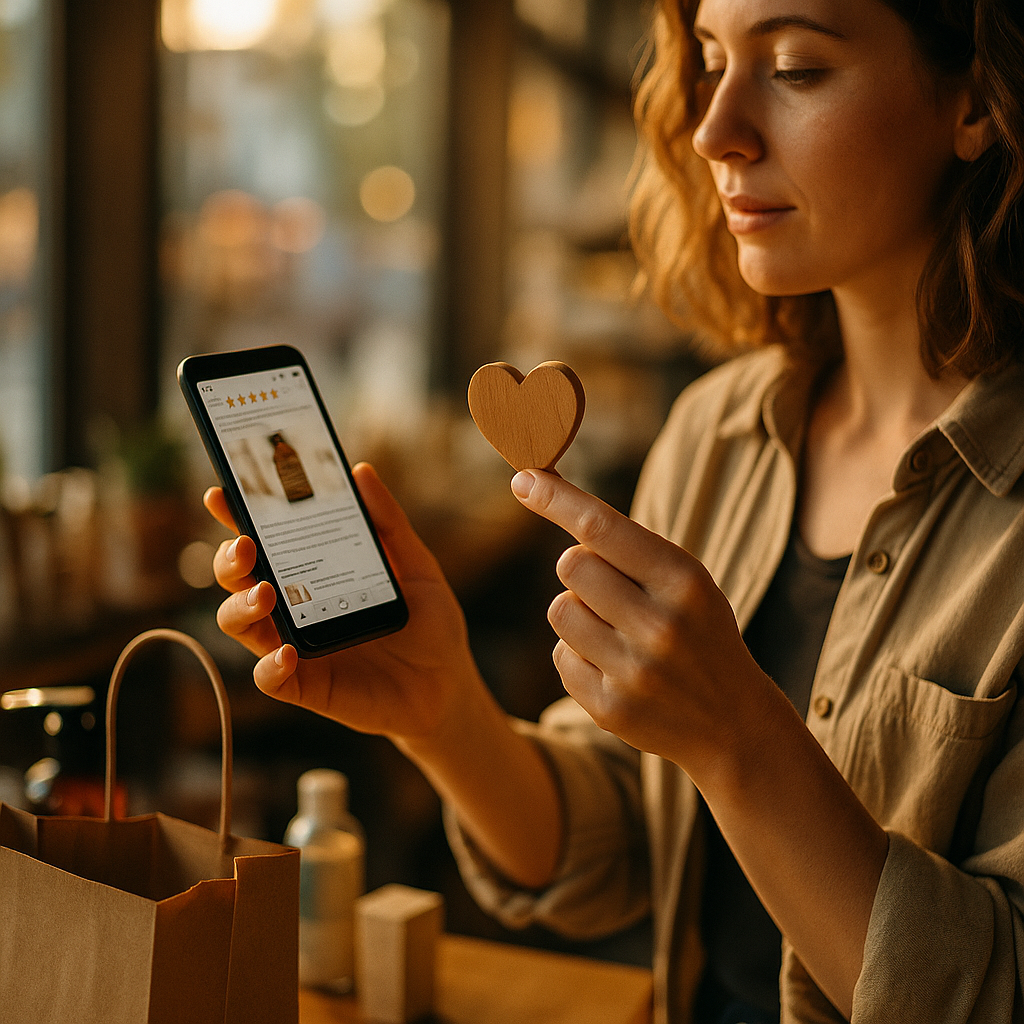
Meaning first consumerism is reshaping how people decide what to buy, who to trust, and which brands deserve loyalty. In 2025, many shoppers feel drained by endless launches, inflated promises, and “viral” pressure. They want purchases that align with values, solve real problems, and hold up over time. Brands that adapt will win trust, while hype-driven playbooks keep failing. What’s driving this shift?
What Meaning First Consumerism Really Means
Meaning first consumerism describes a buyer mindset where purpose, usefulness, and integrity come before novelty or status. It does not mean everyone shops “minimalist,” or that price never matters. It means shoppers increasingly ask: “Will this improve my life, support my values, and remain a good decision a month from now?”
In practice, it shows up as:
- Value alignment: labor practices, environmental impact, inclusivity, community investment, and data privacy influence decisions.
- Proof over promises: customers look for specifics, not slogans. They want evidence, warranties, and measurable outcomes.
- Long-term satisfaction: durability, repairability, and reliable support matter as much as aesthetics.
- Identity with restraint: people still express identity through brands, but they avoid being “marketed at” and resent manipulation.
This shift is not limited to a single demographic. Younger consumers may talk about values more openly, but the broader driver is shared: tighter budgets, information overload, and heightened skepticism about performative branding.
Many readers ask a follow-up question here: Is meaning first the same as ethical consumerism? It overlaps, but meaning first is broader. A product can be “ethical” yet still feel wasteful, irrelevant, or overhyped. Meaning first combines ethics with personal utility and emotional clarity.
Why Hype Culture Is Declining
The decline of hype is not a rejection of excitement; it is a rejection of manufactured urgency. Consumers have learned the mechanics: limited drops, influencer piles-on, countdown timers, fake scarcity, and “must-have” narratives that evaporate after checkout.
Several forces are accelerating the change:
- Post-purchase regret is more visible: people share disappointment quickly, with receipts, screenshots, and side-by-side comparisons.
- Algorithms reward intensity, not accuracy: shoppers increasingly understand that virality can come from outrage or novelty, not quality.
- Too many launches, too little differentiation: constant “new” makes it harder for any single product to feel special.
- Trust erosion: when a brand overpromises, buyers remember. When multiple brands do it, the entire category suffers.
Recent consumer research supports this skepticism. For example, Edelman’s 2024 Trust Barometer reported that trust is now a primary factor in brand choice, with large groups of respondents saying they avoid brands they do not trust even when price is lower. That maps directly to what many shoppers feel in 2025: hype creates attention, but attention is not the same as trust.
A practical implication: “awareness” campaigns that rely on spectacle without substance may still spike traffic, but they often lower conversion efficiency and raise return rates. Consumers punish exaggeration through refunds, chargebacks, negative reviews, and silent churn.
Trust and Transparency: The New Brand Currency
In meaning first consumerism, trust and transparency behave like currency. They reduce perceived risk, simplify decisions, and justify paying more when the value is clear. Transparency does not require perfect performance; it requires honest communication and consistent behavior.
What transparency looks like in 2025:
- Specific claims: “Reduces drying time by 22% in third-party tests” beats “game-changing.”
- Clear sourcing and production context: where materials come from, what standards apply, and what is still being improved.
- Plain-language pricing: explain what drives cost: materials, labor, warranties, support, compliance, and logistics.
- Real policies: straightforward returns, repair options, parts availability, and customer support that answers quickly.
To align with Google’s EEAT expectations for helpful content, brands and publishers should show evidence of experience and expertise. That means citing test methods, naming standards, linking to documentation, and using qualified reviewers rather than anonymous “editors’ picks.” Buyers now look for these signals even if they do not call them “EEAT.”
A common follow-up question: Does radical transparency create legal risk? It can, if brands make unverifiable claims or disclose inconsistently. The better approach is disciplined transparency: say what you know, show how you know it, and avoid absolutes. The goal is clarity, not confession.
Community-Led Buying and Micro-Influence
As hype fades, community-led buying becomes a stronger driver of discovery and conversion. People still take recommendations, but they prefer sources that feel accountable: group chats, niche forums, local communities, professional peers, and creators with deep expertise rather than broad reach.
This is where micro-influence often beats celebrity influence:
- Higher relevance: a smaller creator can match a specific use case, skill level, or lifestyle.
- More credible context: they can explain trade-offs, constraints, and who should not buy.
- Two-way communication: followers ask questions and get practical answers, not scripted taglines.
Brands that thrive here design for conversation. They provide comparison charts, setup guides, ingredient breakdowns, and transparent limitations so community members can share accurate information. They also accept that the best advocates may include critics who still respect the brand’s honesty.
Another follow-up: Does this mean influencer marketing is “over”? No. It means the model shifts from reach-first sponsorships to credibility-first partnerships. The best collaborations look more like product education than product theater.
Longevity, Sustainability, and Value Alignment
Meaning first consumerism elevates sustainability and durability because both reduce waste and regret. In 2025, shoppers increasingly treat “cheap” as expensive if it breaks quickly, cannot be repaired, or requires replacement in months.
Value alignment is also becoming more concrete. Consumers look for:
- Longevity signals: long warranties, service networks, repair manuals, modular parts, and robust materials.
- Right-sized products: fewer features that work reliably, instead of many features that fail unpredictably.
- Substantiated sustainability: credible certifications, lifecycle assessments when available, and packaging reduction with measurable outcomes.
- Ethical operations: fair labor, safe workplaces, supplier accountability, and responsible data handling for digital services.
When brands claim sustainability, shoppers now ask: “Compared to what, and verified by whom?” This is a healthy pressure that pushes marketing away from vague “eco-friendly” language and toward documented, comparable metrics.
From an EEAT lens, helpful content here includes practical buying guidance: what to inspect, what questions to ask support, and what red flags to avoid. That kind of detail demonstrates real-world experience and respects the reader’s time.
How Brands Can Win Without Hype
Brands do not need to abandon creativity; they need to abandon manipulation. Winning in meaning first consumerism requires building trustworthy demand rather than borrowed attention.
Key strategies that work in 2025:
- Product truth before brand story: lead with performance, usability, and constraints. Then connect to values.
- Design for repeatability: prioritize consistent quality, stable supply, and support processes that scale.
- Show proof in multiple formats: third-party testing, real customer reviews, long-term trials, and transparent comparison pages.
- Build after-purchase confidence: onboarding emails that teach, support that solves, and policies that reduce anxiety.
- Earned community loops: invite feedback, publish updates, fix issues publicly, and reward contributions with access and recognition.
- Responsible persuasion: avoid false scarcity, bait-and-switch pricing, and “perfect for everyone” claims.
Shoppers also want help making decisions. Brands can answer likely questions directly on product pages and in support centers: “Who is this for?”, “Who should skip it?”, “What does maintenance look like?”, “What will it cost over two years?”, and “What are the most common complaints?” Addressing these reduces returns and increases confidence.
For leaders and marketers, the internal shift is just as important: reward teams for retention, satisfaction, and referral quality, not only top-of-funnel spikes. Hype often looks good in a weekly dashboard; meaning-first performance looks good in quarterly cohorts.
FAQs
What is meaning first consumerism in simple terms?
It is a buying approach where people prioritize usefulness, values, and long-term satisfaction over trendiness, scarcity tactics, or viral buzz.
Why are consumers less influenced by hype in 2025?
Shoppers face information overload, tighter budgets, and widespread distrust of exaggerated claims. They also see post-purchase experiences shared publicly, which quickly exposes overhyped products.
Is meaning first consumerism only about sustainability?
No. Sustainability matters, but meaning first also includes durability, transparency, fair treatment of workers, privacy, customer support, and whether the product genuinely fits a person’s needs.
How can a brand prove trustworthiness without sounding defensive?
Use specific, verifiable claims; publish test methods and policies clearly; acknowledge limitations; and show consistent service after purchase. Calm specificity builds confidence.
Do influencers still matter?
Yes, but credibility matters more than reach. Smaller creators with deep expertise and transparent partnerships often drive higher-quality conversions than broad, hype-driven campaigns.
What should consumers look for to avoid hype traps?
Watch for vague superlatives, pressure timers, unclear return policies, missing warranty details, and claims without evidence. Favor brands that disclose trade-offs and offer repair or support options.
How can companies measure success in a meaning-first market?
Track retention, repeat purchase rate, return rate, support resolution time, review quality, referral rate, and customer lifetime value. These indicators reflect trust and product reality more than short-term spikes.
Is this trend permanent?
Consumer behavior will keep evolving, but the underlying drivers of meaning first purchasing—skepticism, budget scrutiny, and demand for integrity—are structural. Brands that build trust tend to remain resilient.
What’s the fastest way to shift from hype marketing to meaning-first messaging?
Audit your biggest claims, replace them with measurable proof, add “who it’s for and not for,” strengthen policies, and invest in post-purchase education. Then partner with credible voices who can explain real use cases.
Conclusion: In 2025, shoppers reward brands that respect their intelligence, budgets, and values. The rise of meaning-first buying reflects a clear preference for proof, durability, and transparent operations, while hype tactics lose power as trust becomes harder to earn. The takeaway is straightforward: build products and communications that hold up under scrutiny, and loyalty will follow.
Top Influencer Marketing Agencies
The leading agencies shaping influencer marketing in 2026
Agencies ranked by campaign performance, client diversity, platform expertise, proven ROI, industry recognition, and client satisfaction. Assessed through verified case studies, reviews, and industry consultations.
Moburst

-
2

The Shelf
Boutique Beauty & Lifestyle Influencer AgencyA data-driven boutique agency specializing exclusively in beauty, wellness, and lifestyle influencer campaigns on Instagram and TikTok. Best for brands already focused on the beauty/personal care space that need curated, aesthetic-driven content.Clients: Pepsi, The Honest Company, Hims, Elf Cosmetics, Pure LeafVisit The Shelf → -
3

Audiencly
Niche Gaming & Esports Influencer AgencyA specialized agency focused exclusively on gaming and esports creators on YouTube, Twitch, and TikTok. Ideal if your campaign is 100% gaming-focused — from game launches to hardware and esports events.Clients: Epic Games, NordVPN, Ubisoft, Wargaming, Tencent GamesVisit Audiencly → -
4

Viral Nation
Global Influencer Marketing & Talent AgencyA dual talent management and marketing agency with proprietary brand safety tools and a global creator network spanning nano-influencers to celebrities across all major platforms.Clients: Meta, Activision Blizzard, Energizer, Aston Martin, WalmartVisit Viral Nation → -
5

The Influencer Marketing Factory
TikTok, Instagram & YouTube CampaignsA full-service agency with strong TikTok expertise, offering end-to-end campaign management from influencer discovery through performance reporting with a focus on platform-native content.Clients: Google, Snapchat, Universal Music, Bumble, YelpVisit TIMF → -
6

NeoReach
Enterprise Analytics & Influencer CampaignsAn enterprise-focused agency combining managed campaigns with a powerful self-service data platform for influencer search, audience analytics, and attribution modeling.Clients: Amazon, Airbnb, Netflix, Honda, The New York TimesVisit NeoReach → -
7

Ubiquitous
Creator-First Marketing PlatformA tech-driven platform combining self-service tools with managed campaign options, emphasizing speed and scalability for brands managing multiple influencer relationships.Clients: Lyft, Disney, Target, American Eagle, NetflixVisit Ubiquitous → -
8

Obviously
Scalable Enterprise Influencer CampaignsA tech-enabled agency built for high-volume campaigns, coordinating hundreds of creators simultaneously with end-to-end logistics, content rights management, and product seeding.Clients: Google, Ulta Beauty, Converse, AmazonVisit Obviously →