


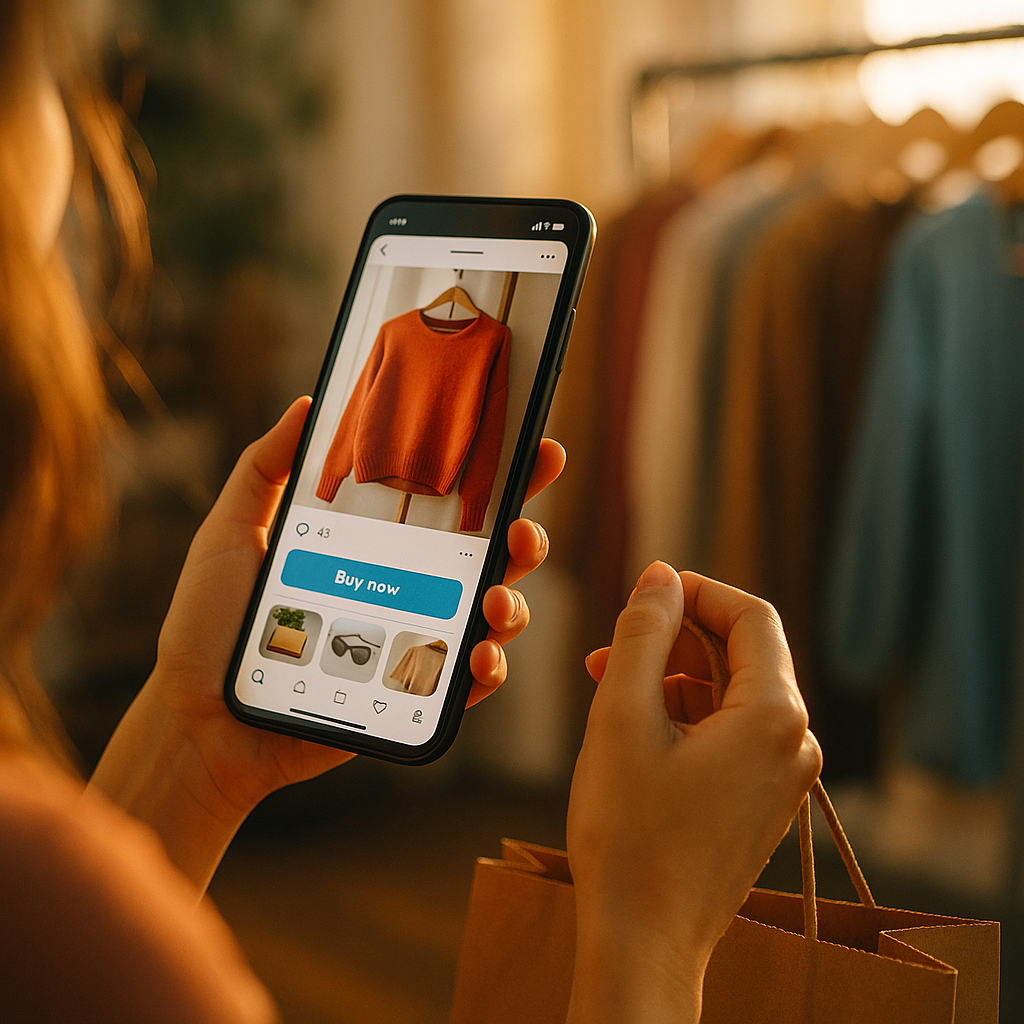
In 2025, social commerce has moved from “see it, search it, buy it later” to seamless, native checkout experiences. This evolution reshapes how people discover products, trust recommendations, and complete purchases without leaving their favorite apps. Understanding the Evolution of Social Commerce from Discovery to Full In App Buy helps brands reduce drop-off, improve attribution, and build loyalty—if they adapt fast enough. Ready to see what changed and why it matters?
Social commerce discovery: how algorithms, creators, and community drive intent
Social platforms still begin the customer journey with discovery, but discovery now behaves less like browsing and more like personalized retail. Recommendation engines learn from watch time, saves, comments, and even “dwell” behavior to surface products at the moment of highest intent.
In practical terms, discovery has shifted from “followed accounts” to “interest graphs.” That matters because interest graphs compress the funnel: a user can go from passive scrolling to active consideration within minutes when content matches a need, a problem, or an aspiration.
Key discovery drivers in 2025:
- Creator-led demos and storytelling that show fit, use cases, and results rather than features.
- Community validation through comments, duets/stitches/remixes, and peer Q&A.
- Search inside social apps, where users type “best running shoes for flat feet” or “how to style wide-leg jeans,” expecting shoppable answers.
- Short-form product education that reduces uncertainty: sizing, setup, ingredients, compatibility, shipping expectations.
If you sell online, the follow-up question is usually: “How do we influence discovery?” You do it by designing content for questions buyers actually ask and by ensuring product pages, creator briefs, and customer support scripts consistently answer the same objections (price, alternatives, delivery, returns, authenticity).
In-app shopping features: the tools that turned posts into storefronts
As platforms competed for commerce revenue, they introduced native features that made shopping feel like a built-in behavior rather than an external link. Today, in-app shopping is not a single feature—it is a stack of capabilities that enable product exploration and conversion with fewer steps.
Common in-app shopping building blocks:
- Product tagging in videos, photos, and live streams, often with tappable product cards.
- Shoppable collections that mimic category pages: “Workwear Essentials,” “Starter Kits,” or “Trending Gifts.”
- Creator storefronts and affiliate links that let audiences shop a curated assortment with transparent incentives.
- In-app product detail views with images, variants, FAQs, shipping/returns, and reviews.
- Native checkout or accelerated checkout options that store payment and address details.
Brands often ask: “Should we rely on platform shops or drive to our site?” The best answer is hybrid. Use platform-native surfaces to capture impulse and mid-funnel demand, while maintaining a strong direct channel for retention, customer data (where permitted), and higher-margin bundles. Align product catalog data across channels so pricing, inventory, and descriptions match—mismatches are a top cause of abandoned carts and customer complaints.
Frictionless checkout: what “Full In App Buy” changes for conversion and attribution
Full in-app buy removes the most failure-prone step in social selling: the handoff to a browser. Each tap you eliminate reduces the chance that a shopper gets distracted, loses confidence, or encounters slow load times. In 2025, the strategic value of native checkout is not only higher conversion—it is better measurement and faster learning cycles for creative and targeting.
What changes when checkout is native:
- Lower drop-off because users stay in the same environment with familiar UI patterns.
- More consistent tracking since conversions occur inside the platform’s event system (with privacy constraints and aggregated reporting).
- Faster iteration on creative, offers, and audiences because feedback loops are shorter.
- Higher expectation for service because the platform experience feels “instant,” and delays stand out.
However, full in-app buy also changes how you manage operations. You must be ready for spikes driven by viral content, and you need clear policies for shipping, cancellations, and returns that match platform requirements.
Practical checklist to succeed with native checkout:
- Inventory accuracy in near real-time to prevent overselling.
- Variant clarity (size charts, shade matching, compatibility notes) to reduce returns.
- Fulfillment SLAs that meet platform expectations; communicate cutoff times and tracking.
- Offer discipline: avoid constant discounting that trains customers to wait.
- Attribution plan that combines platform reporting with incrementality tests where possible.
Buyers also ask: “Is in-app buy secure?” Generally, platforms invest heavily in payment security and dispute handling, but trust still depends on the seller’s reliability. Keep branding consistent, respond quickly to messages, and provide clear proof of authenticity for high-risk categories (beauty, electronics, collectibles).
Creator-driven commerce: why trust signals now matter more than reach
Creator-driven commerce has matured from sponsorships to performance partnerships. Audiences expect creators to demonstrate real usage, disclose incentives, and answer questions. For brands, the opportunity is less about one celebrity post and more about building a repeatable system with credible voices.
Trust signals that drive purchases in social environments:
- Demonstrated expertise: creators who explain tradeoffs, not just benefits.
- Consistency: repeated use over time, follow-up videos, “wear tests,” or updates.
- Audience fit: the creator’s community matches your buyer profile and values.
- Transparent disclosure of paid partnerships and affiliate relationships.
- Social proof: comment sentiment, saves, shares, and user-generated replies.
To apply Google’s EEAT principles in social commerce, treat every shoppable touchpoint as a mini product education page:
- Experience: show real-world use, unboxings, side-by-sides, and setup steps.
- Expertise: include technical details where relevant (materials, certifications, testing methods).
- Authoritativeness: leverage credible creators, press mentions, or third-party verification.
- Trustworthiness: provide clear policies, responsive support, and accurate claims.
A common follow-up question is: “How many creators do we need?” Start with a focused roster. A smaller group of high-fit creators producing multiple assets often outperforms one-off campaigns. Repurpose top-performing creator content into paid placements (with permission) to scale reach while keeping trust intact.
Social commerce strategy: catalog, customer support, and operations for scale
When social becomes a direct sales channel, marketing and operations must work as one. The brands that win in 2025 treat social commerce as a storefront with standards, not an experiment.
Build a scalable foundation:
- Product catalog hygiene: consistent titles, variant naming, bulletproof descriptions, and accurate imagery.
- Pricing and promotions governance: define which SKUs can be discounted, when, and why.
- Customer support readiness: fast responses inside DMs and comments, plus templated answers for shipping, sizing, and returns.
- Fulfillment resilience: backup stock, split shipments policy, and clear handling for lost packages.
- Returns and exchanges: make it simple; social buyers abandon brands that complicate returns.
Operationally, you should plan for “content-triggered demand.” If a product is likely to spike, prepare a dedicated inventory buffer and a rapid update process for product pages and pinned comments. If something goes out of stock, update tags and listings immediately and offer a waitlist or alternative product to preserve goodwill.
Another likely question: “What about customer data?” In-app checkout can limit direct access to certain customer details depending on platform policies. Counter that by focusing on retention mechanisms you control, such as exceptional packaging, insert cards that encourage opt-in (without violating policies), and post-purchase education that reduces returns and increases repeat buys.
Future of social commerce: live shopping, messaging, and personalization in 2025
In 2025, the next phase is not simply more checkout adoption—it is deeper integration of shopping into entertainment, conversations, and personalized feeds. Live shopping, conversational commerce, and AI-assisted discovery increasingly blend into one experience.
Trends shaping the near-term future:
- Live shopping as interactive retail: hosts answer questions in real time, demonstrate products, and manage urgency ethically (limited stock that is truly limited).
- Messaging-based commerce: shoppers ask for recommendations, sizing help, or bundles inside DMs, then complete purchase with minimal steps.
- Personalized bundles: platforms surface “complete the look” or “frequently bought together” based on behavioral signals.
- Stronger content-to-commerce analytics: improved creative diagnostics, cohort insights, and conversion pathways within privacy constraints.
To prepare, invest in assets that support interactivity: comparison charts, short FAQs, size and fit guidance, and “who it’s for” positioning. Train support teams to handle commerce questions quickly and consistently. Finally, keep claims conservative and verifiable—platforms, regulators, and consumers are less tolerant of exaggerated performance promises, especially in health-adjacent categories.
FAQs: The Evolution of Social Commerce from Discovery to Full In App Buy
What is social commerce?
Social commerce is the buying and selling of products directly within social platforms, using features like product tags, shoppable posts, live shopping, and native checkout. It combines discovery, consideration, and purchase in one environment.
What does “Full In App Buy” mean?
Full in-app buy means a shopper can complete the entire purchase—product selection, payment, and confirmation—without leaving the social app. It reduces friction compared with sending users to an external website.
Is in-app checkout better than linking to an online store?
In-app checkout often improves conversion by removing steps, but linking to your store can be better for brand control, merchandising flexibility, and deeper customer relationships. Many brands use both: in-app for impulse and discovery-driven purchases, direct site for retention and higher AOV bundles.
How do creators influence social commerce performance?
Creators provide trust, demonstration, and context. They reduce uncertainty by showing real use, comparing options, and answering questions. High-fit creators with credible experience usually outperform generic high-reach placements.
What are the biggest risks with social commerce?
The biggest risks include inventory mismatches, slow fulfillment, unclear returns, inconsistent pricing, and weak customer support. Reputation damage can happen quickly because feedback is public in comments and shares.
How should brands measure success in social commerce?
Track platform-native conversion metrics, product-level performance, creative engagement that correlates with sales (saves, shares, qualified comments), and customer service indicators like response time and refund rate. Where possible, run incrementality tests to understand what sales are truly driven by social.
Social commerce now spans a complete journey: algorithmic discovery, creator-led trust, product education, and frictionless checkout. The shift to full in-app buying rewards brands that treat social like a serious retail channel with strong operations, clear policies, and credible content. In 2025, the best strategy blends native checkout with brand-owned retention efforts, turning attention into repeatable revenue. The takeaway: reduce friction, earn trust, and scale responsibly.
Top Influencer Marketing Agencies
The leading agencies shaping influencer marketing in 2026
Agencies ranked by campaign performance, client diversity, platform expertise, proven ROI, industry recognition, and client satisfaction. Assessed through verified case studies, reviews, and industry consultations.
Moburst

-
2

The Shelf
Boutique Beauty & Lifestyle Influencer AgencyA data-driven boutique agency specializing exclusively in beauty, wellness, and lifestyle influencer campaigns on Instagram and TikTok. Best for brands already focused on the beauty/personal care space that need curated, aesthetic-driven content.Clients: Pepsi, The Honest Company, Hims, Elf Cosmetics, Pure LeafVisit The Shelf → -
3

Audiencly
Niche Gaming & Esports Influencer AgencyA specialized agency focused exclusively on gaming and esports creators on YouTube, Twitch, and TikTok. Ideal if your campaign is 100% gaming-focused — from game launches to hardware and esports events.Clients: Epic Games, NordVPN, Ubisoft, Wargaming, Tencent GamesVisit Audiencly → -
4

Viral Nation
Global Influencer Marketing & Talent AgencyA dual talent management and marketing agency with proprietary brand safety tools and a global creator network spanning nano-influencers to celebrities across all major platforms.Clients: Meta, Activision Blizzard, Energizer, Aston Martin, WalmartVisit Viral Nation → -
5

The Influencer Marketing Factory
TikTok, Instagram & YouTube CampaignsA full-service agency with strong TikTok expertise, offering end-to-end campaign management from influencer discovery through performance reporting with a focus on platform-native content.Clients: Google, Snapchat, Universal Music, Bumble, YelpVisit TIMF → -
6

NeoReach
Enterprise Analytics & Influencer CampaignsAn enterprise-focused agency combining managed campaigns with a powerful self-service data platform for influencer search, audience analytics, and attribution modeling.Clients: Amazon, Airbnb, Netflix, Honda, The New York TimesVisit NeoReach → -
7

Ubiquitous
Creator-First Marketing PlatformA tech-driven platform combining self-service tools with managed campaign options, emphasizing speed and scalability for brands managing multiple influencer relationships.Clients: Lyft, Disney, Target, American Eagle, NetflixVisit Ubiquitous → -
8

Obviously
Scalable Enterprise Influencer CampaignsA tech-enabled agency built for high-volume campaigns, coordinating hundreds of creators simultaneously with end-to-end logistics, content rights management, and product seeding.Clients: Google, Ulta Beauty, Converse, AmazonVisit Obviously →