


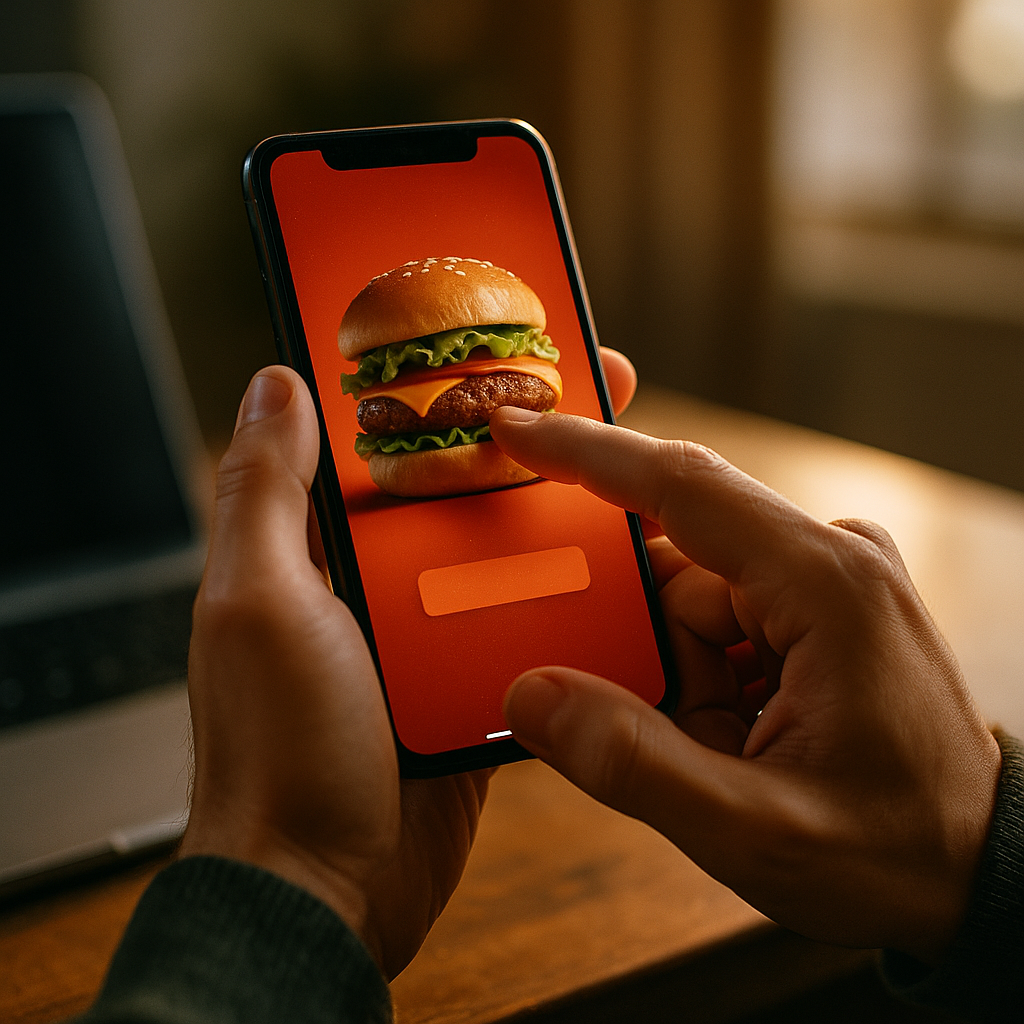
Haptic storytelling is reshaping mobile advertising by turning taps, swipes, and vibrations into meaningful brand moments. In 2026, marketers can no longer rely on visuals and sound alone to hold attention on crowded screens. Thoughtful tactile feedback adds emotion, clarity, and memorability to mobile ads without increasing visual clutter. So how do you design haptics that feel intentional rather than intrusive?
Why haptic feedback in mobile ads matters for attention and memory
Mobile advertising has always been constrained by screen size, distracted users, and limited time to make an impression. Haptics add a new layer to the experience by engaging the sense of touch. When used with care, vibration patterns and tactile cues can reinforce key moments in an ad journey, making the interaction feel more immersive and easier to remember.
This matters because mobile users increasingly scroll with low intent and high speed. A subtle tactile pulse at the right moment can interrupt autopilot behavior without feeling aggressive. For example, a product reveal, a reward confirmation, or a personalized action can be paired with haptic feedback to create a micro-moment of significance. That physical cue helps the brain mark the event as important.
From an experience standpoint, haptics can also reduce ambiguity. If a user drags a slider, unlocks a feature, or completes a purchase step inside an ad unit, tactile confirmation reassures them that the action worked. That lowers friction and supports usability, which is critical for campaign performance.
To meet Google’s helpful content standards, it is important to be precise here: haptics are not a universal performance hack. Poorly timed, repetitive, or strong vibrations can feel gimmicky and may even prompt users to dismiss the ad. Effective haptic storytelling depends on relevance, timing, restraint, and compatibility with device settings and accessibility preferences.
The strongest use cases share three traits:
- Narrative alignment: the tactile cue matches a story beat, not just a random interaction.
- Functional value: the feedback clarifies progress, success, urgency, or transformation.
- User respect: the sensation is brief, optional where appropriate, and never essential to understanding the ad.
In short, haptics work best when they support both emotion and usability. They should make the ad feel smarter, not louder.
Core principles of sensory mobile ad design
Designing for touch requires a different mindset than designing for sight and sound. Visual storytelling often tolerates some excess; haptic storytelling does not. Because tactile feedback is felt directly on the body, even small design decisions can dramatically affect perception.
Start with intention. Ask what the physical sensation is meant to communicate. Is it signaling impact, progress, selection, tension, delight, or resolution? If the answer is vague, the haptic element is probably unnecessary. Every tactile cue should have a job.
Next, match intensity to context. A finance app promotion should not use the same haptic pattern as a mobile game ad. Brand category, audience expectation, and emotional tone all matter. Luxury, wellness, and productivity brands often benefit from lighter, cleaner pulses. Entertainment, sports, and gaming can support stronger or more rhythmic feedback if it fits the creative concept.
Temporal precision is equally important. If the vibration lands even slightly after the visual event, the ad can feel off. Synchronization is what turns haptics into storytelling rather than mere device output. Teams should test timing at the frame level whenever possible.
Another principle is economy. One or two well-placed haptic moments usually outperform a dense sequence. Too many cues create sensory fatigue and reduce the emotional effect. Think of haptics as punctuation, not a paragraph.
Designers should also plan for platform differences. Not all mobile devices produce the same tactile quality. Some offer crisp, localized feedback; others feel softer or less distinct. Since ad experiences run across a fragmented mobile ecosystem, creative concepts must remain effective even when haptic fidelity varies. The story cannot depend entirely on a sensation that some users may barely notice.
Good sensory design also considers environment. Many users encounter ads while commuting, multitasking, or holding their device loosely. This affects whether a subtle pattern is detectable. Testing in realistic conditions, not just quiet internal demos, is part of responsible execution.
Useful questions during concept development include:
- What emotional beat does the haptic cue reinforce?
- Would the ad still make sense if haptics were disabled?
- Is the sensation distinct enough to be felt, but restrained enough to avoid irritation?
- Does the timing align with the visual and audio narrative?
- Are we using touch to add meaning rather than novelty?
These principles help creative teams move from experimentation to disciplined craft.
Building interactive ad experiences with haptic story arcs
The most effective haptic storytelling follows a structure. Instead of adding isolated vibration events, design a simple tactile arc that mirrors the ad narrative. This can be done even in short mobile ad formats.
A practical framework includes three phases: cue, confirm, and reward.
- Cue: introduce a tactile signal that draws attention to the first meaningful interaction. This could be a light pulse when a user begins a swipe, rotates a product, or enters a personalized ad flow.
- Confirm: provide tactile acknowledgment when the user reaches a key point, such as selecting a variant, unlocking a feature, or achieving a milestone inside the ad.
- Reward: end with a satisfying but brief sensation that supports the final reveal, offer, or call to action.
This structure works because it gives touch a narrative logic. The user does not just feel the device vibrate; they experience progression. That progression can support many ad objectives:
- Product demonstration: a skincare brand might pair gentle pulses with texture exploration or before-and-after transitions.
- Feature education: a fintech ad can confirm successful budgeting actions or security steps.
- Entertainment promotion: a streaming campaign can punctuate suspense, impact, or reveal moments.
- Retail conversion: a commerce ad can reinforce add-to-cart or limited-time offer interactions.
Follow-up question: should every interactive ad include haptics? No. If the ad goal is simple awareness and there is no meaningful user action, haptics may add little value. They are most useful when the user participates in the story and tactile feedback can reinforce that participation.
Another common question is whether haptics should replace sound in muted environments. The answer is no. Haptics can complement silent-first design, but they should not be treated as a substitute for clear visual communication. Many users disable vibration, and some contexts make tactile cues hard to detect. The ad must still succeed on visual merit alone.
What about personalization? In 2026, creative optimization tools make it easier to tailor copy, visuals, and sequencing. Haptic personalization is possible too, but it should be approached carefully. Rather than creating highly granular tactile variants, focus on audience-level differences tied to intent. A retargeting ad for cart abandoners may use more decisive confirmation cues than an upper-funnel discovery ad. Keep the logic simple, testable, and brand-safe.
Best practices for mobile UX accessibility and consent
Any discussion of haptic ads must address accessibility and user control. This is not just a compliance issue. It is central to trust, brand safety, and campaign effectiveness.
First, respect system settings. If a user has disabled vibration or reduced certain sensory effects on their device, the ad should honor that preference. Do not attempt to force tactile output or design a story that breaks when haptics are unavailable.
Second, avoid using haptics as the sole carrier of critical information. A purchase confirmation, game outcome, or offer deadline should never depend only on a vibration pattern. Every important message needs a visual equivalent and, where relevant, accessible text support.
Third, be cautious with intensity and repetition. Strong or frequent haptic signals may be uncomfortable for some users. Tactile feedback that simulates urgency should be used sparingly, especially in categories involving health, finance, or sensitive personal decisions. Emotional manipulation is not good storytelling.
Fourth, consider inclusivity in testing. Internal teams often evaluate creative on premium devices in controlled settings. That misses real-world accessibility challenges. Include users with different device models, sensory preferences, and usage contexts. Test with sound on and off, one-handed use, and varying grip styles. Helpful content and responsible design both depend on evidence, not assumptions.
Fifth, document your haptic system. If your brand uses tactile cues across campaigns, define what each pattern means. Consistency improves learnability and keeps creative teams from improvising incompatible experiences. This is especially valuable for brands running multiple interactive formats across media partners.
A simple accessibility checklist includes:
- Haptics are optional and respect device settings.
- All key information is also delivered visually.
- Intensity remains subtle unless the context clearly supports stronger feedback.
- No rapid or repetitive patterns that could distress users.
- Testing includes diverse devices and real usage conditions.
Brands that treat haptics responsibly gain more than compliance. They build confidence, which is essential when asking users to engage more deeply with ads.
How to measure haptic advertising performance effectively
One of the biggest mistakes in emerging ad formats is measuring novelty instead of business value. Haptic storytelling should be evaluated against clear experience and marketing outcomes, not just curiosity metrics.
Start by defining the role of haptics in the campaign. Are they meant to improve attention, increase interaction quality, support message recall, or lift conversion? The answer determines what to measure.
At a minimum, compare a haptic-enabled variant against a non-haptic control. Without that baseline, it is impossible to know whether touch improved the experience or simply changed it. Keep other variables as stable as possible, including placement, audience, visual assets, and call to action.
Relevant metrics often include:
- Engagement rate: whether users interact with the ad at all.
- Interaction depth: how far users progress through the ad experience.
- Completion rate: useful for story-based or rewarded interactions.
- Click-through or tap-through rate: whether tactile reinforcement improves action.
- Post-exposure recall: measured through brand lift studies where available.
- Negative signals: quick dismissals, drop-offs after tactile events, or complaint patterns.
Qualitative feedback matters too. Session recordings, user interviews, and moderated tests can reveal whether people interpret the haptic cue as helpful, distracting, premium, playful, or intrusive. That language is valuable for iteration because it captures sentiment metrics cannot.
Follow-up question: what if engagement rises but conversions do not? That usually means the haptics increased curiosity without strengthening the offer or reducing friction. In such cases, adjust the narrative placement of tactile cues. Move them closer to moments of decision or use them to confirm value, not just to attract attention.
Another issue is attribution. Haptics rarely drive outcomes alone. They influence the quality of interaction inside a broader creative system that includes design, copy, media placement, and audience targeting. Teams should present results honestly: haptics are an enhancer, not a miracle variable.
For EEAT-aligned content, practical transparency is important. There is no single benchmark that proves haptic success across every campaign. Device variation, ad format, category, and user context all affect outcomes. Reliable learning comes from disciplined testing, careful instrumentation, and repeated iteration.
Future-ready creative technology for mobile marketing
As mobile hardware and ad platforms evolve, haptic storytelling is becoming more viable and more nuanced. The opportunity in 2026 is not just stronger device feedback. It is better orchestration between creative, context, and measurement.
Creative teams are beginning to design haptics earlier in the process instead of adding them at the end. That shift matters. When tactile feedback is considered from the storyboard stage, it can support pacing, emotional rhythm, and conversion design more naturally. This also improves collaboration between strategists, designers, developers, and media teams.
Automation will help, but it should not replace judgment. Tooling can suggest timing windows, generate variants, or adapt patterns for device capabilities. Still, brand fit and user comfort require human review. The best haptic ads feel intentional because someone asked what the sensation means, not just whether the API can trigger it.
Expect growth in commerce, gaming, streaming, automotive, wellness, and app install campaigns where interaction depth is high. In these environments, touch can help users feel product benefits rather than merely view them. But growth will also bring more mediocre executions. Brands that win will be the ones that treat haptics as part of user experience design, not a novelty layer.
If you are building a roadmap, prioritize these actions:
- Identify campaign types where user interaction is central.
- Develop a small library of brand-appropriate haptic patterns.
- Prototype with controls and test across real devices.
- Document accessibility rules and consent logic.
- Measure impact against both engagement and business outcomes.
This approach turns haptic storytelling from an experimental feature into a repeatable capability.
FAQs about haptic storytelling in mobile ads
What is haptic storytelling in mobile advertising?
It is the use of tactile feedback, such as vibrations or pulses, to support the narrative and interaction design of a mobile ad. Instead of relying only on visuals and sound, the ad uses touch to emphasize important moments, confirm actions, and deepen emotional impact.
Do haptics improve ad performance?
They can, but only when they serve a clear purpose. Haptics may improve attention, interaction quality, and memorability. However, they should be tested against a non-haptic version because poor implementation can distract users or increase dismissals.
Are haptic ads intrusive?
They can be if the feedback is too strong, too frequent, or unrelated to the user’s action. Well-designed haptic ads are subtle, timed precisely, and aligned with the story. They also respect device settings and never force tactile effects.
Should haptics be used in every mobile campaign?
No. They are most effective in interactive formats where users swipe, drag, reveal, choose, or complete an action. For simple awareness ads with little participation, haptics may add complexity without clear value.
How do you make haptic ads accessible?
Respect system vibration settings, avoid using touch as the only way to communicate key information, keep patterns restrained, and test on different devices and usage conditions. Accessibility should be built into the concept, not added later.
What industries benefit most from haptic storytelling?
Gaming, entertainment, retail, fintech, automotive, wellness, and app marketing often benefit because they involve richer interaction or product demonstration. The real factor is not industry alone, but whether touch can add clarity or emotion to the ad experience.
How many haptic moments should a mobile ad include?
Usually fewer than teams expect. One to three meaningful tactile cues are often enough for a short ad experience. Overuse weakens the effect and can make the creative feel noisy.
Can haptics replace audio in sound-off environments?
No. Haptics can complement silent-first design, but they should not replace clear visual communication. Many users disable vibration, and not all devices deliver the same tactile quality.
Haptic storytelling gives mobile ads a physical dimension that can make interactions clearer, more emotional, and more memorable. The key is restraint. Design each tactile cue to support a specific story beat, respect accessibility and device settings, and validate impact through testing. When touch serves the user and the message, it becomes a genuine creative advantage rather than a passing gimmick.
Top Influencer Marketing Agencies
The leading agencies shaping influencer marketing in 2026
Agencies ranked by campaign performance, client diversity, platform expertise, proven ROI, industry recognition, and client satisfaction. Assessed through verified case studies, reviews, and industry consultations.
Moburst

-
2

The Shelf
Boutique Beauty & Lifestyle Influencer AgencyA data-driven boutique agency specializing exclusively in beauty, wellness, and lifestyle influencer campaigns on Instagram and TikTok. Best for brands already focused on the beauty/personal care space that need curated, aesthetic-driven content.Clients: Pepsi, The Honest Company, Hims, Elf Cosmetics, Pure LeafVisit The Shelf → -
3

Audiencly
Niche Gaming & Esports Influencer AgencyA specialized agency focused exclusively on gaming and esports creators on YouTube, Twitch, and TikTok. Ideal if your campaign is 100% gaming-focused — from game launches to hardware and esports events.Clients: Epic Games, NordVPN, Ubisoft, Wargaming, Tencent GamesVisit Audiencly → -
4

Viral Nation
Global Influencer Marketing & Talent AgencyA dual talent management and marketing agency with proprietary brand safety tools and a global creator network spanning nano-influencers to celebrities across all major platforms.Clients: Meta, Activision Blizzard, Energizer, Aston Martin, WalmartVisit Viral Nation → -
5

The Influencer Marketing Factory
TikTok, Instagram & YouTube CampaignsA full-service agency with strong TikTok expertise, offering end-to-end campaign management from influencer discovery through performance reporting with a focus on platform-native content.Clients: Google, Snapchat, Universal Music, Bumble, YelpVisit TIMF → -
6

NeoReach
Enterprise Analytics & Influencer CampaignsAn enterprise-focused agency combining managed campaigns with a powerful self-service data platform for influencer search, audience analytics, and attribution modeling.Clients: Amazon, Airbnb, Netflix, Honda, The New York TimesVisit NeoReach → -
7

Ubiquitous
Creator-First Marketing PlatformA tech-driven platform combining self-service tools with managed campaign options, emphasizing speed and scalability for brands managing multiple influencer relationships.Clients: Lyft, Disney, Target, American Eagle, NetflixVisit Ubiquitous → -
8

Obviously
Scalable Enterprise Influencer CampaignsA tech-enabled agency built for high-volume campaigns, coordinating hundreds of creators simultaneously with end-to-end logistics, content rights management, and product seeding.Clients: Google, Ulta Beauty, Converse, AmazonVisit Obviously →