


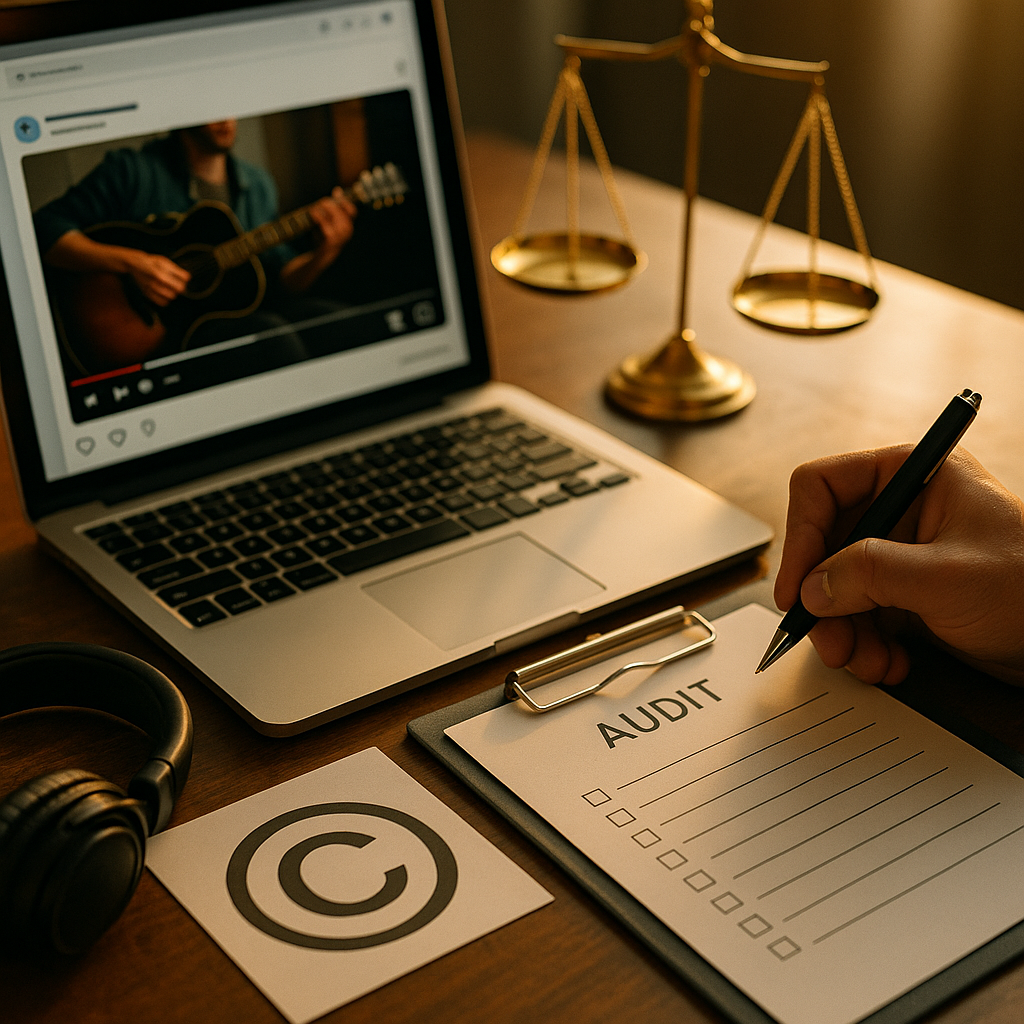
One Lawsuit Just Changed the Math on Every Trending Sound in Your Campaign Library
A single copyright infringement claim can cost between $750 and $150,000 per work — and that’s statutory damages, before attorneys’ fees even enter the conversation. When the Quince record label lawsuit expanded the risk perimeter for brands using unlicensed music in creator content, it didn’t just create a legal precedent. It created an operational emergency. If your brand runs social-first campaigns with music, sound effects, or creator-generated audio, a copyright liability audit is no longer optional — it’s the cost of doing business without a ticking legal exposure underneath every active post.
What the Quince Lawsuit Actually Changed
The Quince copyright lawsuit didn’t invent music licensing risk. What it did was clarify — painfully — that brands can be held liable for music synchronization violations in creator content they commission, amplify, or repurpose. The argument that “the creator picked the sound, not us” collapsed under judicial scrutiny.
Here’s the core shift: courts are increasingly treating brand-sponsored posts that use copyrighted music the same way they’d treat a television commercial with an unlicensed soundtrack. The platform’s library license (TikTok’s Commercial Music Library, for instance) doesn’t necessarily extend to paid partnerships, boosted posts, or whitelisted ads. That gap is where the liability lives.
If a brand directs, funds, or amplifies content containing copyrighted audio, the “creator chose it” defense is functionally dead. The risk perimeter now includes every piece of creator content a brand touches — not just what it produces in-house.
This matters because most social-first brands touch hundreds of creator posts per quarter. Many of those posts contain trending sounds, remixed audio, or platform-native music that carries restrictions invisible to a marketing team scrolling through a content approval dashboard.
Why Platform Licenses Don’t Protect You the Way You Think
TikTok, Instagram Reels, and YouTube Shorts all offer music libraries. Creators use them freely. But there’s a critical distinction most brand teams miss: personal-use licenses and commercial-use licenses are different animals.
TikTok’s Commercial Music Library exists precisely because the standard creator music library does not grant commercial rights. When a creator makes an organic post with a trending sound, that’s typically covered under the platform’s blanket license with rights holders. The moment that post becomes a Spark Ad, a whitelisted promotion, or gets repurposed to a brand’s own channel, the licensing context changes.
Meta’s situation is similar. Instagram’s music sticker library grants personal, non-commercial use. Brands running Partnership Ads or boosting creator posts need separate clearance — and Meta’s own business resources don’t make this obvious enough.
The audit question isn’t “did our creator use a platform-approved sound?” It’s “does the license for that sound extend to our specific commercial use case?” Those are radically different questions with radically different answers.
The Five-Layer Audit Framework
A copyright liability audit for social-first brands needs to be systematic, not reactive. Here’s a framework that works across campaign scale, from DTC startups running 20 creators to enterprise programs managing 500+.
Layer 1: Inventory every active post with audio. This sounds obvious. It isn’t. Most brands can’t produce a complete list of every live sponsored post, whitelisted ad, or repurposed creator asset currently in market. Start with your influencer platform (CreatorIQ, Grin, Aspire, TRIBE — whatever you use) and cross-reference with your ad manager. Any post that’s live, boosted, or available for future amplification needs to be cataloged. Include archived content that could be reactivated.
Layer 2: Classify the audio source for each asset. For every piece of content, identify whether the audio is:
- Original (creator-produced, no third-party music)
- Platform library (standard, non-commercial license)
- Platform commercial library (explicitly cleared for ads)
- Licensed through the brand’s own sync agreement
- Unknown or unverifiable
That last category — unknown — is where most of the risk hides. And in our experience, it’s also the largest category for brands that haven’t audited before.
Layer 3: Map the usage rights chain. For each asset, trace the licensing chain from rights holder to final use. Does your creator contract include an IP warranty clause? Does it require creators to use only commercially cleared audio? Does your creative control framework address music selection at all? If the answer to any of these is “I’m not sure,” you have a gap.
Layer 4: Flag high-risk amplification scenarios. Not all uses carry equal risk. A creator’s organic post with a trending sound that stays organic? Relatively low risk (though not zero). That same post turned into a paid ad running across six markets? Dramatically higher exposure. Prioritize your review by amplification level:
- Whitelisted/Spark Ads (highest risk)
- Boosted/promoted posts
- Brand-repurposed content on owned channels
- Organic sponsored posts (lower but not negligible)
Layer 5: Remediate, document, and build forward-looking controls. For flagged content, you have three options: secure retroactive licensing, take the content down, or accept the risk with documentation. The third option is rarely advisable. For future campaigns, embed audio clearance requirements into your creator briefs, approval workflows, and compliance scoring processes.
The Contract Clauses That Actually Matter
Most influencer contracts include a boilerplate IP warranty — something like “Creator represents that all content is original or properly licensed.” That’s a start, but it’s a paper shield. It gives you a contractual claim against the creator if something goes wrong. It doesn’t stop the rights holder from coming after your brand directly.
Stronger contracts include:
- Affirmative audio restrictions: Creator must use only brand-approved music, original audio, or platform commercial library tracks
- Indemnification with teeth: Creator indemnifies brand specifically for third-party IP claims related to audio, with a realistic damages floor
- Audit rights: Brand retains the right to request proof of audio licensing for any deliverable
- Takedown cooperation: Creator agrees to promptly remove or modify content if a rights issue is identified
If your contracts don’t address music synchronization explicitly, you’re relying on general IP language that may not survive a challenge — especially under the expanded interpretation the Quince case introduced. Review your compliance audit processes alongside these clauses.
The brands that survive copyright liability scrutiny aren’t the ones with the best lawyers — they’re the ones with documented, systematic processes that demonstrate good-faith compliance efforts at every stage of the campaign lifecycle.
AI-Generated Audio Adds Another Variable
Just when you thought the audit scope was clear, AI-generated music enters the picture. Tools like Suno, Udio, and platform-native AI audio generators are increasingly popular with creators. The copyright status of AI-generated music remains legally unsettled. The U.S. Copyright Office has signaled that purely AI-generated works may not qualify for copyright protection — but that doesn’t mean they’re free from infringement claims if the AI model was trained on copyrighted material.
For your audit, AI-generated audio should be flagged as a separate category with its own risk assessment. Don’t treat it as “original” audio. Don’t treat it as licensed. Treat it as uncertain — and document that uncertainty.
The FTC’s evolving guidance on AI in advertising adds yet another layer. Disclosure obligations may apply to AI-generated creative elements, including audio, depending on how the content is presented to consumers.
Operationalizing the Audit: Who Owns This?
The biggest failure point isn’t legal knowledge. It’s organizational ownership. In most social-first brands, music selection happens in a gray zone between the creator (who picks the sound), the influencer manager (who approves the content), and the paid media team (who boosts it). Nobody owns the audio licensing question end-to-end.
Fix this by assigning explicit responsibility. One model that works: the influencer marketing lead owns the creator-side controls (brief language, contract clauses, content approval). The paid media lead owns the amplification-side controls (verifying commercial clearance before any post gets ad spend behind it). Legal or compliance reviews quarterly audit samples and updates the approved audio list.
This isn’t glamorous work. But the Quince case demonstrated that glamorous campaigns built on unlicensed audio can become very expensive, very fast. Build the system now, or budget for the settlement later.
Your next step: Pull a complete list of every live sponsored post and active ad creative that contains audio. Classify each one using the five-layer framework above. Anything in the “unknown” category gets paused for amplification until clearance is confirmed. That single action reduces your exposure by more than any contract clause ever will.
Frequently Asked Questions
Can a brand be held liable for music in creator content it didn’t directly produce?
Yes. The Quince lawsuit established that brands commissioning, amplifying, or repurposing creator content can face copyright liability for unlicensed music in that content — even if the creator independently selected the audio. Sponsorship, boosting, or whitelisting a post can shift the usage context from personal to commercial, triggering synchronization license requirements the brand is expected to satisfy.
Does using a sound from TikTok’s music library protect a brand from copyright claims?
Not necessarily. TikTok’s standard music library grants personal, non-commercial licenses to creators. When a post is used as a Spark Ad, whitelisted, or repurposed for brand channels, commercial licensing is required. TikTok’s separate Commercial Music Library exists for this purpose, but brands must verify each track is sourced from the commercial library before amplifying content.
How often should a social-first brand conduct a copyright liability audit?
At minimum, quarterly — aligned with campaign cycles. Brands running high-volume creator programs with more than 50 active creators should implement continuous monitoring through their influencer platform, with a formal comprehensive audit at least twice per year. Any time a post is flagged for amplification or repurposing, audio clearance should be verified as part of the approval workflow.
What is music synchronization licensing and why does it matter for influencer campaigns?
Music synchronization (sync) licensing grants the right to pair a specific musical recording with visual content. In influencer marketing, any video that combines copyrighted music with branded visual content technically requires a sync license. This applies to sponsored posts, brand ads, and repurposed creator content. Without a valid sync license, both the creator and the sponsoring brand can face statutory damages ranging from $750 to $150,000 per infringed work.
Are AI-generated music tracks safe to use in branded creator content?
The legal status of AI-generated music is unsettled. While AI-generated outputs may not qualify for copyright protection themselves, they can still infringe existing copyrights if the AI model was trained on copyrighted material. Brands should treat AI-generated audio as a separate risk category in their audits, require creators to disclose when AI audio tools are used, and avoid classifying such tracks as either “original” or “licensed” without further legal review.
Top Influencer Marketing Agencies
The leading agencies shaping influencer marketing in 2026
Agencies ranked by campaign performance, client diversity, platform expertise, proven ROI, industry recognition, and client satisfaction. Assessed through verified case studies, reviews, and industry consultations.
Moburst

-
2

The Shelf
Boutique Beauty & Lifestyle Influencer AgencyA data-driven boutique agency specializing exclusively in beauty, wellness, and lifestyle influencer campaigns on Instagram and TikTok. Best for brands already focused on the beauty/personal care space that need curated, aesthetic-driven content.Clients: Pepsi, The Honest Company, Hims, Elf Cosmetics, Pure LeafVisit The Shelf → -
3

Audiencly
Niche Gaming & Esports Influencer AgencyA specialized agency focused exclusively on gaming and esports creators on YouTube, Twitch, and TikTok. Ideal if your campaign is 100% gaming-focused — from game launches to hardware and esports events.Clients: Epic Games, NordVPN, Ubisoft, Wargaming, Tencent GamesVisit Audiencly → -
4

Viral Nation
Global Influencer Marketing & Talent AgencyA dual talent management and marketing agency with proprietary brand safety tools and a global creator network spanning nano-influencers to celebrities across all major platforms.Clients: Meta, Activision Blizzard, Energizer, Aston Martin, WalmartVisit Viral Nation → -
5

The Influencer Marketing Factory
TikTok, Instagram & YouTube CampaignsA full-service agency with strong TikTok expertise, offering end-to-end campaign management from influencer discovery through performance reporting with a focus on platform-native content.Clients: Google, Snapchat, Universal Music, Bumble, YelpVisit TIMF → -
6

NeoReach
Enterprise Analytics & Influencer CampaignsAn enterprise-focused agency combining managed campaigns with a powerful self-service data platform for influencer search, audience analytics, and attribution modeling.Clients: Amazon, Airbnb, Netflix, Honda, The New York TimesVisit NeoReach → -
7

Ubiquitous
Creator-First Marketing PlatformA tech-driven platform combining self-service tools with managed campaign options, emphasizing speed and scalability for brands managing multiple influencer relationships.Clients: Lyft, Disney, Target, American Eagle, NetflixVisit Ubiquitous → -
8

Obviously
Scalable Enterprise Influencer CampaignsA tech-enabled agency built for high-volume campaigns, coordinating hundreds of creators simultaneously with end-to-end logistics, content rights management, and product seeding.Clients: Google, Ulta Beauty, Converse, AmazonVisit Obviously →