


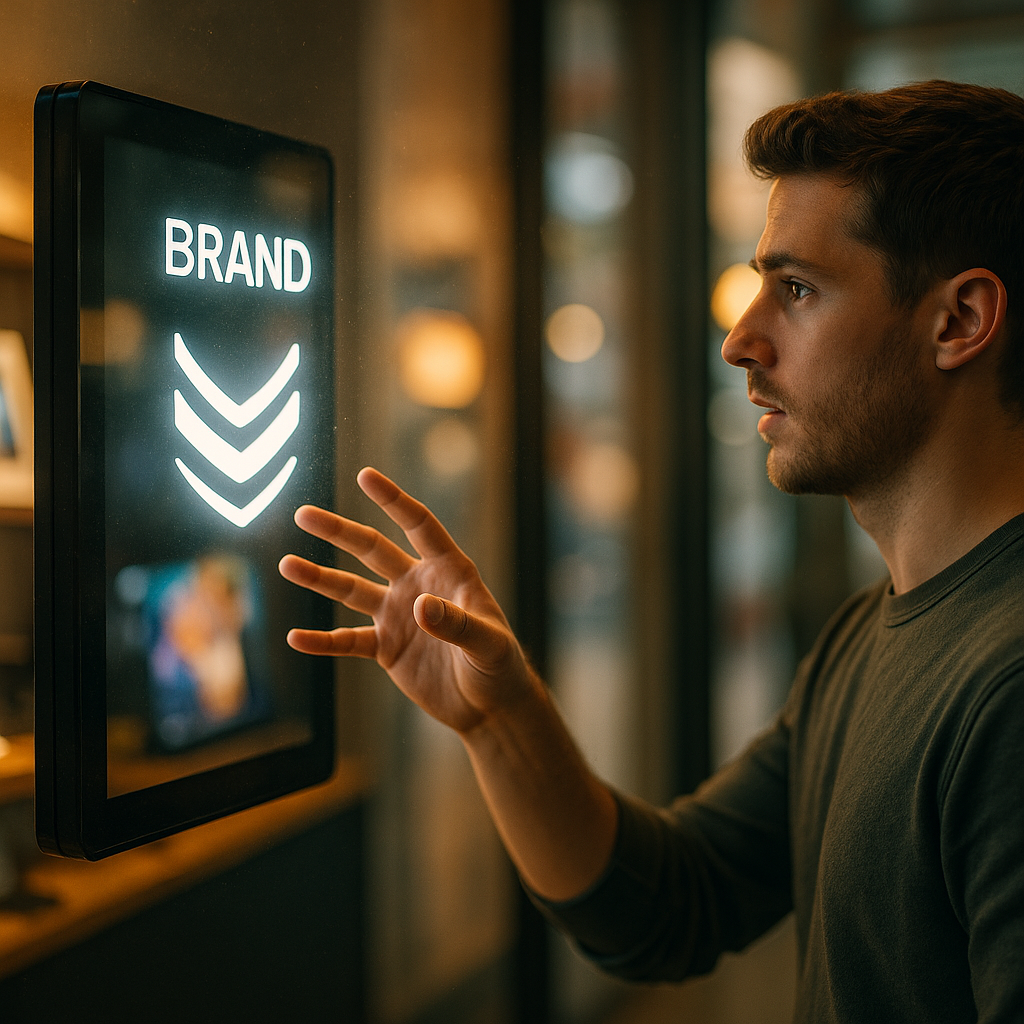
Ultra Haptics and the Future of Feeling Brand Interfaces in Mid Air is reshaping how people interact with digital products in 2026. Instead of tapping glass, users can feel buttons, pulses, and textures suspended in space through focused ultrasound. For brands, that changes engagement, accessibility, hygiene, and memorability at once. The real question is no longer whether this matters, but how fast experiences will evolve.
What mid-air haptics technology means for brand experience
Mid-air haptics technology uses focused ultrasound to create tactile sensations on a user’s skin without requiring physical contact. In practice, an array of ultrasonic transducers projects pressure points into the air. When a hand moves through those points, the user feels taps, edges, pulses, or motion cues. Combined with hand tracking, this creates the impression of touching an invisible interface.
For brands, that is more than a technical novelty. It introduces a new sensory layer to customer experience design. Visual interfaces already compete for attention, and audio adds emotion and direction. Haptics adds confirmation, delight, and confidence. If a customer can feel where to interact, an interface becomes more intuitive and more memorable.
This matters in locations where touchscreens can be limiting or undesirable, including:
- Retail displays and product discovery zones
- Automotive dashboards and infotainment systems
- Public kiosks in airports, healthcare, and hospitality
- Immersive entertainment and gaming experiences
- Museums, exhibitions, and branded activations
The strongest use cases are not built around spectacle alone. They solve a user problem. A physical button gives confidence because it provides tactile feedback. Glass surfaces often remove that certainty. Mid-air haptics restores it without adding moving parts, fingerprints, or wear-and-tear-heavy controls.
That blend of utility and emotional impact is why marketers, product teams, and experience designers are paying attention. The future brand interface is not only seen and heard. It is felt.
How contactless user interfaces are changing customer expectations
Contactless user interfaces grew from convenience into a broader design shift. Consumers now expect fast, low-friction interactions across physical and digital touchpoints. Voice, gesture, facial recognition, and touchless payments all helped normalize non-contact behavior. Ultra-haptics adds tactile feedback to that trend, solving one of the biggest weaknesses in touchless interaction: uncertainty.
Without tactile cues, users often hesitate. They wonder whether a gesture registered or where an invisible control begins and ends. A mid-air pulse can confirm a selection immediately. A textured path can guide a hand to the correct zone. A distinct haptic signature can reinforce a premium brand moment.
That changes customer expectations in several ways:
- Speed: Users want immediate confirmation without staring at a screen.
- Clarity: Interfaces should guide interaction naturally, even for first-time users.
- Cleanliness: Shared environments benefit from fewer touched surfaces.
- Accessibility: Multisensory cues support broader usability.
- Memorability: Unique tactile moments increase recall.
In sectors such as automotive, tactile confirmation can reduce visual distraction. In retail, it can make discovery more playful and premium. In healthcare or transit, it can help users complete tasks without touching heavily used surfaces. The broader point is simple: contactless does not have to feel empty anymore.
Brands that invest here should not assume every interaction deserves haptic effects. The best systems use tactile feedback with restraint. A confirmation pulse, a navigation cue, or a branded microinteraction often creates more value than a constant stream of sensations. Good haptic design respects attention. Great haptic design disappears into intuitive behavior.
Why ultrasound haptic feedback gives brands a sensory advantage
Ultrasound haptic feedback gives brands something rare in interface design: a new sensory territory that still feels practical. Sight and sound are crowded channels. Every app, kiosk, ad display, and in-car system competes visually and sonically. Touch in mid air is relatively new, which gives early adopters room to differentiate.
That advantage shows up in three areas.
First, stronger brand recall. People remember experiences that engage multiple senses. A branded mid-air interaction can reinforce identity in a subtle but distinctive way. A luxury auto brand might use soft, precise pulses that suggest refinement. A gaming brand might create energetic, directional effects. A wellness brand might use calm, flowing tactile patterns.
Second, more confident action. Customers are more likely to complete an interaction when they receive tactile confirmation. Whether selecting a menu option, navigating a product configurator, or responding to an in-store prompt, users benefit from a signal that says, “Yes, that worked.”
Third, better physical durability. Traditional buttons degrade. Touchscreens scratch and collect smudges. Contactless controls can reduce maintenance demands in public or high-use environments, especially where cleanliness and uptime matter.
Still, the sensory advantage only works if implementation is thoughtful. Brand teams should ask:
- What action deserves tactile confirmation?
- What emotion should the sensation support?
- How will users learn the interaction quickly?
- Will the haptic pattern feel distinct without becoming distracting?
- How does this improve the actual task, not just the demo?
These questions reflect a practical EEAT approach. Helpful content and helpful design both depend on expertise, real-world testing, and clarity. Brands should avoid exaggerated claims about “replacing all touchscreens.” The more credible position is that ultrasound haptics enhances specific interactions where confidence, hygiene, accessibility, or delight matter.
Where automotive haptics and retail activation are leading adoption
Adoption is moving fastest where safety, immersion, and differentiation intersect. Automotive haptics is one of the clearest examples. Drivers increasingly rely on digital dashboards and central displays, but flat glass can demand too much visual attention. Mid-air tactile cues offer a way to confirm adjustments while helping keep focus on the road.
In automotive environments, useful applications include:
- Climate and media control confirmation
- Gesture-based menu navigation with tactile cues
- Driver alerts delivered through localized mid-air sensations
- Passenger entertainment controls without surface contact
Retail is another strong category because it rewards experiences that are both functional and memorable. A premium cosmetics brand can let shoppers explore ingredients or routines through touchless displays. A consumer electronics brand can create product demos that feel futuristic without requiring constant cleaning. A food or beverage activation can use tactile effects to support storytelling around texture, carbonation, freshness, or motion.
Branded spaces also benefit because ultra-haptics can bridge digital content and physical presence. That matters at events and showrooms, where brands want people to stop, engage, and remember. Tactile interaction can increase dwell time when it adds real discovery value. For example, a user might feel a sequence that represents product features or use directional haptics to locate invisible interaction zones in a darkened immersive exhibit.
Healthcare, hospitality, and public infrastructure also stand out. In these environments, touchless interaction can support hygiene goals and reduce visible wear. However, deployment must be guided by usability testing, environmental conditions, and clear instructions. Lighting, noise, user height, hand-tracking accuracy, and physical spacing all affect performance.
The most successful adoption stories come from teams that prototype early, test with real users, and measure completion rates, error rates, and satisfaction instead of relying on “wow factor” alone.
How accessible interface design improves with mid-air touch
Accessible interface design is one of the most important reasons to take ultra-haptics seriously. Not every user processes visual or auditory information in the same way. Adding tactile feedback can improve interaction for people who benefit from multisensory guidance, including users with low vision, attention-related challenges, or situational limitations such as glare, noise, or occupied hands.
That does not mean mid-air haptics automatically makes an interface accessible. Accessibility requires intentional design. Haptic cues should be consistent, learnable, and paired with other modes rather than replacing them entirely. A user should be able to understand a system through multiple pathways.
Best practices include:
- Use clear tactile hierarchies: Differentiate between confirmation, warning, and navigation cues.
- Keep patterns simple: Overly complex sensations are harder to interpret and remember.
- Support multimodal feedback: Combine haptics with visual labels and optional audio.
- Test with diverse users: Accessibility claims should be based on evidence, not assumption.
- Provide onboarding: A short guided interaction can teach users what sensations mean.
There is also a broader inclusion benefit. Many people interact with interfaces in less-than-ideal conditions. Bright sunlight can wash out a display. Loud spaces can drown out audio cues. Gloves, moisture, or hygiene concerns can reduce comfort with direct touch. In these contexts, mid-air touch becomes a practical fallback rather than a futuristic extra.
For brands, the takeaway is clear: tactile design should be treated as part of user experience strategy, not just technology strategy. When haptics improves clarity and confidence for more people, it supports both accessibility and performance.
What immersive brand technology will require next
Immersive brand technology is entering a more disciplined phase. In 2026, the conversation is less about novelty and more about measurable value. Buyers want to know how ultra-haptics integrates with existing systems, what it costs to maintain, how reliable hand tracking is, and whether the experience improves conversions, satisfaction, or safety.
That means the next wave of progress will depend on operational maturity as much as creative ambition.
Brands exploring this space should focus on five priorities:
- Identify the right moment. Start with one interaction where tactile feedback solves a clear problem.
- Design for environment. Consider lighting, placement, user flow, and physical ergonomics.
- Prototype with realistic content. Test the actual branded interaction, not just generic effects.
- Measure outcomes. Track completion, satisfaction, recall, dwell time, and error reduction.
- Plan governance. Define maintenance, calibration, privacy considerations, and accessibility standards.
Another likely development is deeper integration with spatial computing, in-car systems, robotics, and ambient computing. As interfaces spread across physical environments, users will need cues that do not depend on screens alone. Mid-air haptics can help anchor those experiences in the body. That is especially valuable when digital controls are embedded into dashboards, counters, walls, or mixed-reality layers.
Yet the winning principle remains simple: do not add haptics because it looks advanced. Add it because it reduces friction, improves confidence, or creates a stronger emotional connection with the brand. Sensory design should always serve the task and the user.
FAQs about ultra haptics and mid-air brand interfaces
What is ultra haptics?
Ultra haptics refers to systems that use focused ultrasound to create tactile sensations in mid air. Users can feel virtual buttons, pulses, or movement cues without touching a surface.
How do mid-air haptic interfaces work?
They combine ultrasonic transducers with hand tracking. The system detects hand position and projects pressure patterns to specific points in space, creating the feeling of touch on the skin.
Why are brands interested in mid-air touch?
Brands see value in hygiene, novelty, durability, accessibility, and stronger customer engagement. It can also create more memorable interactions in retail, automotive, hospitality, and experiential marketing.
Is ultrasound haptic feedback safe?
Commercial systems are designed to operate within regulated safety parameters. Brands should still work with reputable vendors, follow deployment guidance, and validate performance in real environments.
Can ultra-haptics replace touchscreens completely?
No. In most cases, it works best as a complement to screens, gestures, voice, or physical controls. The strongest applications improve specific interactions rather than trying to replace every interface at once.
Does mid-air haptics improve accessibility?
It can, especially when used as part of a multimodal design strategy. Tactile confirmation and guidance may help users who benefit from non-visual cues, but accessibility should be tested with diverse users.
Which industries are adopting it fastest?
Automotive, retail, entertainment, healthcare, hospitality, and public kiosks are leading because they benefit from touchless control, tactile confirmation, and differentiated customer experiences.
What should a brand evaluate before investing?
Look at the user problem, environment, integration needs, maintenance, accessibility, analytics, and ROI. A pilot should measure whether the haptic interaction actually improves usability or brand outcomes.
Ultra-haptics is turning touch into a digital channel that extends beyond the screen. For brands, the opportunity is not just to appear innovative, but to build interfaces that feel clearer, safer, and more memorable. The smartest path in 2026 is focused adoption: use mid-air haptics where tactile feedback genuinely improves the experience, then scale based on evidence, usability, and customer response.
Top Influencer Marketing Agencies
The leading agencies shaping influencer marketing in 2026
Agencies ranked by campaign performance, client diversity, platform expertise, proven ROI, industry recognition, and client satisfaction. Assessed through verified case studies, reviews, and industry consultations.
Moburst

-
2

The Shelf
Boutique Beauty & Lifestyle Influencer AgencyA data-driven boutique agency specializing exclusively in beauty, wellness, and lifestyle influencer campaigns on Instagram and TikTok. Best for brands already focused on the beauty/personal care space that need curated, aesthetic-driven content.Clients: Pepsi, The Honest Company, Hims, Elf Cosmetics, Pure LeafVisit The Shelf → -
3

Audiencly
Niche Gaming & Esports Influencer AgencyA specialized agency focused exclusively on gaming and esports creators on YouTube, Twitch, and TikTok. Ideal if your campaign is 100% gaming-focused — from game launches to hardware and esports events.Clients: Epic Games, NordVPN, Ubisoft, Wargaming, Tencent GamesVisit Audiencly → -
4

Viral Nation
Global Influencer Marketing & Talent AgencyA dual talent management and marketing agency with proprietary brand safety tools and a global creator network spanning nano-influencers to celebrities across all major platforms.Clients: Meta, Activision Blizzard, Energizer, Aston Martin, WalmartVisit Viral Nation → -
5

The Influencer Marketing Factory
TikTok, Instagram & YouTube CampaignsA full-service agency with strong TikTok expertise, offering end-to-end campaign management from influencer discovery through performance reporting with a focus on platform-native content.Clients: Google, Snapchat, Universal Music, Bumble, YelpVisit TIMF → -
6

NeoReach
Enterprise Analytics & Influencer CampaignsAn enterprise-focused agency combining managed campaigns with a powerful self-service data platform for influencer search, audience analytics, and attribution modeling.Clients: Amazon, Airbnb, Netflix, Honda, The New York TimesVisit NeoReach → -
7

Ubiquitous
Creator-First Marketing PlatformA tech-driven platform combining self-service tools with managed campaign options, emphasizing speed and scalability for brands managing multiple influencer relationships.Clients: Lyft, Disney, Target, American Eagle, NetflixVisit Ubiquitous → -
8

Obviously
Scalable Enterprise Influencer CampaignsA tech-enabled agency built for high-volume campaigns, coordinating hundreds of creators simultaneously with end-to-end logistics, content rights management, and product seeding.Clients: Google, Ulta Beauty, Converse, AmazonVisit Obviously →