


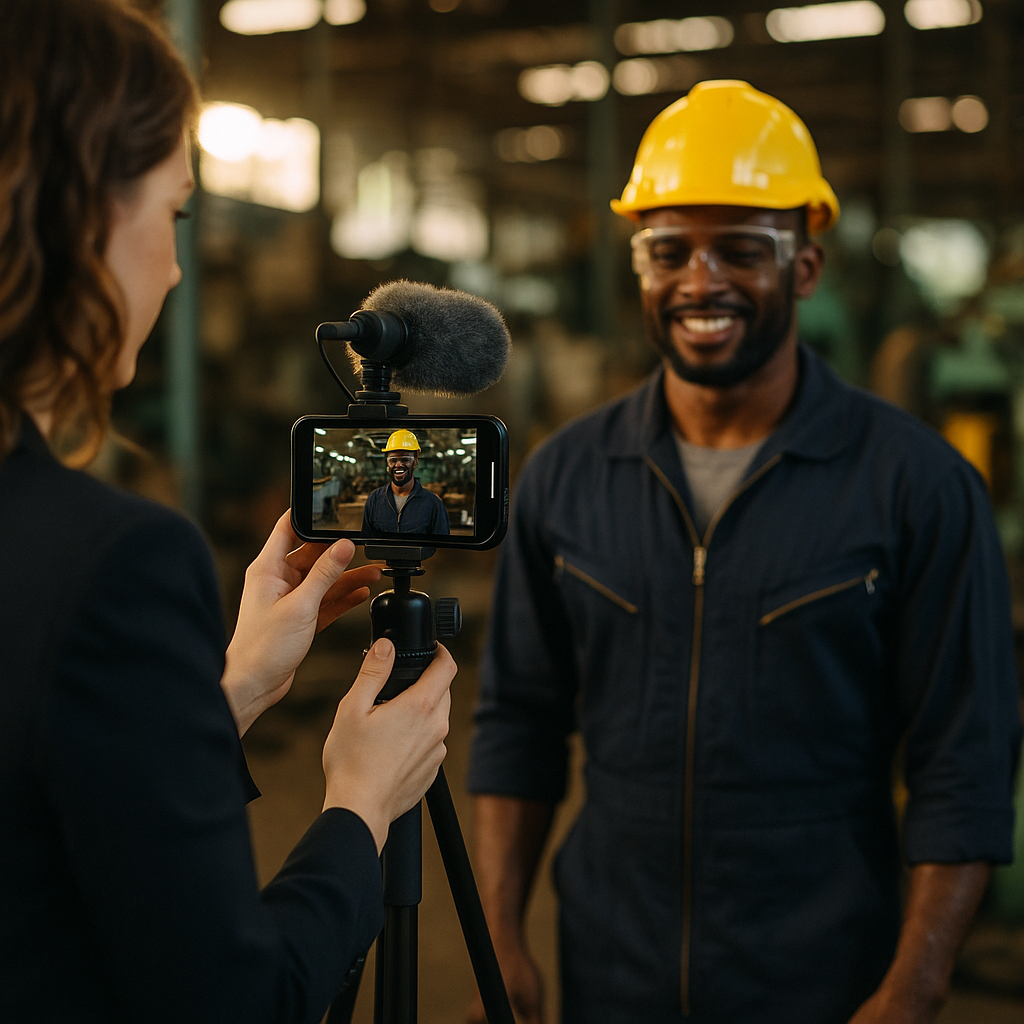
In 2026, social video recruitment is no longer a tactic reserved for flashy consumer brands. Traditional manufacturers now use short-form, authentic video to compete for skilled workers, technicians, engineers, and plant leaders. This case study shows how one established manufacturer reshaped employer perception, improved applicant quality, and turned overlooked channels into a measurable hiring engine. What changed, exactly?
Why Social Video Recruiting Solves a Modern Manufacturing Hiring Gap
A traditional manufacturer often faces a difficult talent equation. It may offer stable pay, long-term careers, and advanced technology on the factory floor, yet still struggle with outdated public perception. Many candidates picture repetitive work, old equipment, and limited growth. That perception creates a serious barrier before a recruiter ever speaks to an applicant.
Social video recruiting addresses this problem because video compresses context fast. In seconds, it can show modern machinery, clean facilities, collaborative teams, safety standards, automation tools, and career progression. For manufacturing employers, that matters more than polished slogans. Candidates want visual proof.
In this case study, the company is a mid-sized, family-owned industrial manufacturer in the U.S. with multiple plants, a long operating history, and a persistent staffing challenge across maintenance, CNC operation, quality assurance, engineering support, and shift supervision. Its recruitment team relied on job boards, local staffing partners, school outreach, and a dated careers page. Those channels generated volume, but not enough qualified applicants.
The leadership team saw several root causes:
- Low awareness among younger job seekers
- Weak employer differentiation in a crowded local labor market
- Misconceptions about the plant environment and career mobility
- Limited engagement from passive candidates who were not actively searching job boards
- Recruiter messages that lacked personality and credibility
Instead of increasing ad spend on the same channels, the company tested a social-first content strategy designed for talent acquisition. The goal was not to “go viral.” The goal was to make the company visible, believable, and attractive to the right people.
Employer Branding for Manufacturers: The Starting Point and Strategy
Before publishing a single video, the company audited its employer brand. This step is critical for EEAT because helpful content starts with firsthand reality, not assumptions. The recruiting team partnered with HR, operations leaders, plant managers, and frontline employees to identify what candidates actually cared about and what current employees genuinely valued.
They found five themes that repeatedly surfaced in interviews and stay interviews:
- Predictable schedules in selected roles
- Strong safety culture and modernized equipment
- Internal promotion opportunities
- Paid training and skill development
- Pride in making essential products used in daily life
Those themes became the content pillars. This choice mattered because generic “we’re hiring” messages rarely persuade skeptical candidates. Specific proof does.
The company also segmented target talent groups:
- Entry-level production workers
- Skilled trades candidates
- Maintenance technicians
- CNC machinists and operators
- Engineering and quality talent
- High school and community college graduates
Each audience had different objections. Entry-level workers wanted to know pay, shift options, and training. Skilled trades candidates wanted to see equipment quality, downtime expectations, and team competence. Engineers cared about automation, process improvement, and whether the company invested in innovation.
From there, the team built a simple strategy:
- Create short videos featuring real employees, not actors.
- Answer the most common candidate questions directly.
- Show the facility as it truly looks, with no overproduction.
- Tailor content by role and platform.
- Measure outcomes beyond views, including qualified applicants and interview-to-offer conversion.
This was a major shift. The company stopped thinking like a traditional HR department and started thinking like a publisher with a hiring goal.
Short-Form Video Content That Made Manufacturing Careers Feel Real
The manufacturer launched its effort on LinkedIn, Instagram Reels, Facebook, and TikTok, with video assets embedded on its careers page and used in paid social campaigns. The creative format stayed simple: vertical video, direct hooks, captions, clear calls to action, and employee-led storytelling.
Several content formats performed well.
1. “Day in the life” videos
These showed a maintenance technician, a machine operator, and a quality specialist across a typical shift. Candidates saw the workspace, tools, team interactions, and pace of work. This reduced uncertainty, which is often the hidden reason people do not apply.
2. “What I wish I knew before I joined” clips
Employees shared practical insights about training, culture, overtime expectations, and growth opportunities. Because the tone felt candid, trust increased.
3. Supervisor spotlights
Hiring managers briefly explained what success looked like in open roles. This helped candidates self-qualify and made leadership more visible and approachable.
4. Skills and technology demonstrations
Instead of saying the plant was modern, the company showed robotics, CNC systems, testing equipment, digital dashboards, and maintenance workflows. This was especially effective for technical applicants.
5. Career growth stories
One of the strongest performing assets featured an employee who joined in an entry-level role and advanced into team leadership after company-sponsored training. This directly countered the belief that manufacturing jobs lack mobility.
6. Safety and culture videos
Many candidates, especially experienced ones, evaluate manufacturing employers through a safety lens. Videos that showed PPE practices, clean production areas, and team communication built confidence quickly.
The company learned an important lesson early: authenticity outperformed polish. Videos filmed on-site by a trained internal marketing generalist and a recruiter consistently produced stronger engagement than highly scripted corporate footage. The audience responded to natural language, real backgrounds, and specific details.
Another important tactic was captioning every video and writing concise text overlays. Many users watched without sound. Captions improved completion rates and accessibility, while also reinforcing key employment details such as shift availability, location, training, and benefits.
Talent Acquisition Metrics That Proved Social Video Was Working
The manufacturer did not evaluate the initiative based on vanity metrics alone. Views and likes can signal interest, but hiring teams need evidence tied to outcomes. So the company set up tracking across its ATS, campaign links, careers page engagement, and recruiter intake process.
Over two quarters in 2026, the company saw measurable gains in the roles featured most consistently in video campaigns. The exact internal numbers remain proprietary, but the directional results were clear and substantial:
- Higher careers page engagement from social traffic
- Longer time on page for job listings with embedded video
- More completed applications from paid and organic social visitors
- Improved qualified applicant rate for technician and operator roles
- Lower cost per qualified applicant compared with some job board campaigns
- Better interview show rates because candidates had a clearer picture of the work
Recruiters also reported a qualitative improvement. Candidates arrived at interviews with better questions. They referenced specific employees, videos, and equipment they had seen online. That meant less time correcting assumptions and more time assessing fit.
One especially useful insight came from comparing high-performing and low-performing videos. The best videos had four characteristics:
- A strong first three seconds
- Real employees speaking plainly
- Role-specific details rather than brand-level messaging
- A clear next step, such as “Apply for the maintenance team”
The weaker videos tended to sound like corporate promotions. They focused on the company in broad terms rather than the candidate’s decision criteria. That distinction reshaped the editorial calendar.
The team also discovered that social video supported retention as well as hiring. New hires said the videos accurately represented the environment, reducing early disappointment. That alignment matters. If recruiting content overpromises, turnover often rises. In this case, truth-based marketing built trust.
Recruitment Marketing Best Practices for Traditional Industrial Brands
This case study offers practical lessons for any manufacturer, distributor, or industrial employer considering social video. The model works best when it reflects operational reality and candidate needs. It fails when treated as a surface-level branding campaign.
Here are the most effective practices the company used.
- Put frontline employees at the center. Candidates trust peers more than polished employer claims.
- Answer obvious questions directly. Include pay range context when possible, shift information, training, location, commute realities, and advancement opportunities.
- Film where the work happens. Manufacturing talent wants evidence, not abstractions.
- Use recruiters as translators. Recruiters can turn internal jargon into language candidates understand.
- Coordinate with operations. Plant leaders helped identify the strongest stories and the most urgent hiring gaps.
- Repurpose high-performing clips. The company used the same assets across social, career pages, email outreach, and hiring-event screens.
- Build content by role family. A general employer brand video is useful, but role-specific videos convert better.
- Stay compliant and accurate. Claims about pay, benefits, schedules, and safety must be current and verifiable.
Another best practice was keeping production simple enough to sustain. Many companies launch with enthusiasm, produce a few expensive videos, then stop. This manufacturer instead built a repeatable monthly workflow:
- HR and plant leaders identified priority roles.
- Recruiters gathered candidate objections and FAQs.
- Marketing captured short interviews and facility footage.
- Videos were edited into multiple versions by platform.
- Performance data informed the next batch of topics.
This operating rhythm mattered more than one standout campaign. Consistency built familiarity in the labor market.
Manufacturing Employer Brand Results and the Clear Takeaway
The biggest win was not simply more attention. It was better alignment between employer reality and candidate perception. Social video helped this manufacturer show what had long been true internally: stable careers, modern operations, skill development, and genuine pride in the work.
For traditional manufacturers, that is the strategic value of social video. It shortens the trust gap. It helps passive candidates imagine themselves in the role. It gives recruiters stronger conversations to build on. And it allows industrial brands to compete for talent without pretending to be something they are not.
If you lead HR, recruiting, or plant operations, the next step is straightforward. Start with one hiring-critical role, one honest employee story, and one short video that answers a real candidate question. Then measure qualified applicants, not just impressions. The manufacturer in this case study did not reinvent hiring. It made the truth visible, and that changed results.
FAQs About Social Video Recruitment for Manufacturers
What is social video recruitment in manufacturing?
It is the use of short-form videos on platforms like LinkedIn, Instagram, Facebook, TikTok, and career sites to attract job candidates. In manufacturing, these videos often show real employees, plant environments, equipment, safety practices, and career paths.
Why does social video work for traditional manufacturers?
It helps correct outdated assumptions. Many candidates do not realize how modern, technical, and growth-oriented manufacturing roles can be. Video shows those realities quickly and credibly.
Which platforms are best for manufacturing hiring?
It depends on the audience. LinkedIn works well for professional, engineering, and leadership roles. Facebook and Instagram often perform strongly for local hiring and community reach. TikTok can be useful for awareness among younger talent if the content feels authentic.
Do manufacturers need expensive video production?
No. This case study showed that authentic, on-site, employee-led videos often outperform highly polished corporate content. Good lighting, clear audio, accurate captions, and useful information matter more than cinematic production.
What should manufacturing recruitment videos include?
Useful details such as the work environment, schedule expectations, training, team culture, equipment, safety standards, advancement opportunities, and a clear call to action. Candidates want specifics, not generic branding language.
How do you measure success beyond views?
Track qualified applicants, application completion rate, interview show rate, source of hire, cost per qualified applicant, and retention indicators. Compare roles with video support against roles using only traditional channels.
Can social video help with skilled trades hiring?
Yes. Skilled trades candidates often want to assess equipment quality, technical standards, leadership credibility, and working conditions before applying. Video gives them direct evidence.
How often should a manufacturer post recruitment videos?
Consistency matters more than volume. A sustainable cadence, such as several short videos per month tied to priority roles and hiring events, is usually more effective than occasional large campaigns.
Who should appear in the videos?
Frontline employees, supervisors, recruiters, and plant leaders can all add value. Employees usually build the most trust, while recruiters and managers help explain role expectations and hiring steps.
What is the main lesson from this case study?
Traditional manufacturers can win talent by showing reality clearly. When social video highlights real people, real work, and real opportunity, it improves employer perception and drives stronger hiring outcomes.
Social video gave this traditional manufacturer a practical edge in a competitive labor market. By showing real employees, real equipment, and real career paths, the company replaced outdated assumptions with credible proof. The takeaway is simple: manufacturers do not need louder recruiting. They need clearer storytelling, consistent execution, and metrics tied to qualified applicants, interviews, and long-term fit.
Top Influencer Marketing Agencies
The leading agencies shaping influencer marketing in 2026
Agencies ranked by campaign performance, client diversity, platform expertise, proven ROI, industry recognition, and client satisfaction. Assessed through verified case studies, reviews, and industry consultations.
Moburst

-
2

The Shelf
Boutique Beauty & Lifestyle Influencer AgencyA data-driven boutique agency specializing exclusively in beauty, wellness, and lifestyle influencer campaigns on Instagram and TikTok. Best for brands already focused on the beauty/personal care space that need curated, aesthetic-driven content.Clients: Pepsi, The Honest Company, Hims, Elf Cosmetics, Pure LeafVisit The Shelf → -
3

Audiencly
Niche Gaming & Esports Influencer AgencyA specialized agency focused exclusively on gaming and esports creators on YouTube, Twitch, and TikTok. Ideal if your campaign is 100% gaming-focused — from game launches to hardware and esports events.Clients: Epic Games, NordVPN, Ubisoft, Wargaming, Tencent GamesVisit Audiencly → -
4

Viral Nation
Global Influencer Marketing & Talent AgencyA dual talent management and marketing agency with proprietary brand safety tools and a global creator network spanning nano-influencers to celebrities across all major platforms.Clients: Meta, Activision Blizzard, Energizer, Aston Martin, WalmartVisit Viral Nation → -
5

The Influencer Marketing Factory
TikTok, Instagram & YouTube CampaignsA full-service agency with strong TikTok expertise, offering end-to-end campaign management from influencer discovery through performance reporting with a focus on platform-native content.Clients: Google, Snapchat, Universal Music, Bumble, YelpVisit TIMF → -
6

NeoReach
Enterprise Analytics & Influencer CampaignsAn enterprise-focused agency combining managed campaigns with a powerful self-service data platform for influencer search, audience analytics, and attribution modeling.Clients: Amazon, Airbnb, Netflix, Honda, The New York TimesVisit NeoReach → -
7

Ubiquitous
Creator-First Marketing PlatformA tech-driven platform combining self-service tools with managed campaign options, emphasizing speed and scalability for brands managing multiple influencer relationships.Clients: Lyft, Disney, Target, American Eagle, NetflixVisit Ubiquitous → -
8

Obviously
Scalable Enterprise Influencer CampaignsA tech-enabled agency built for high-volume campaigns, coordinating hundreds of creators simultaneously with end-to-end logistics, content rights management, and product seeding.Clients: Google, Ulta Beauty, Converse, AmazonVisit Obviously →