


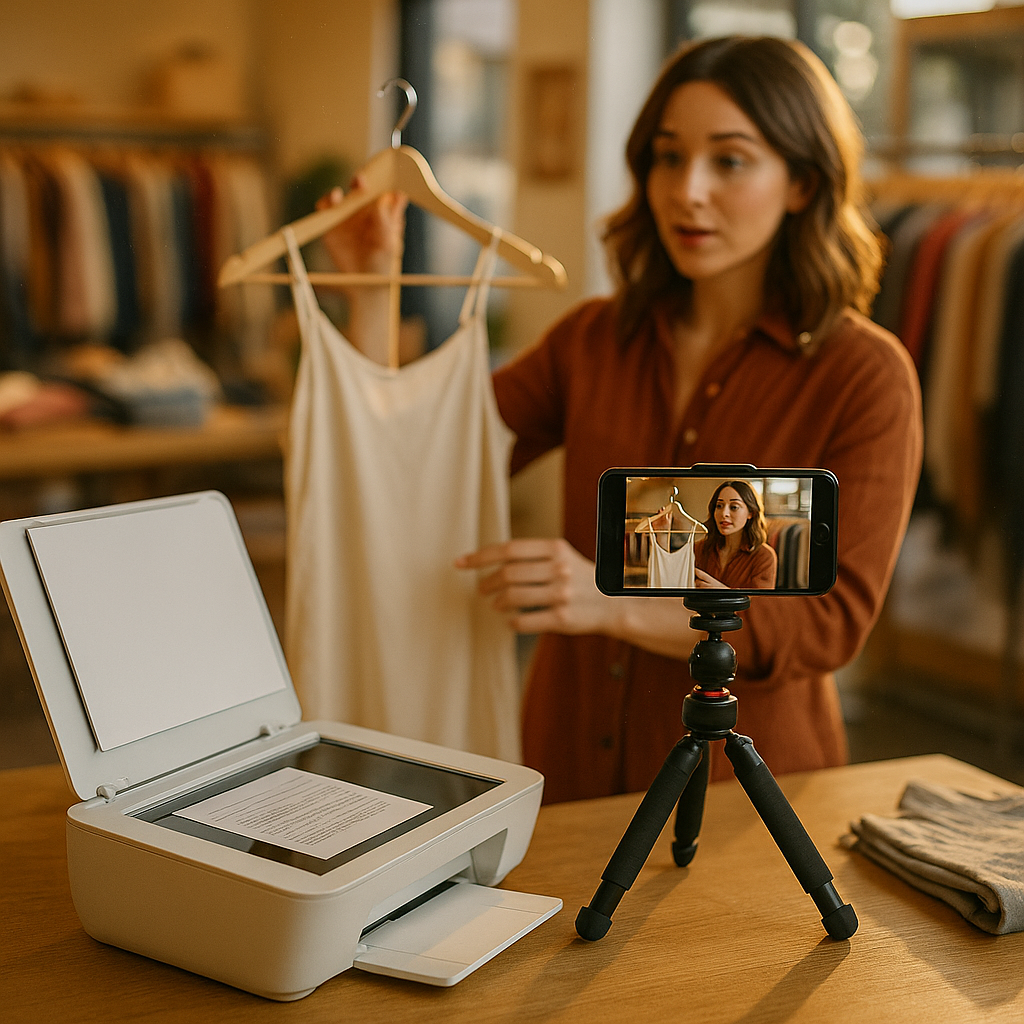
For retailers facing shrinking print response and rising acquisition costs, this case study: a retailer’s successful transition from print to social video shows what modern growth looks like in 2026. By shifting budget, creative strategy, and measurement frameworks, one mid-sized brand improved reach, store traffic, and online sales without losing local relevance. Here is how the transition worked and why it matters.
Retail marketing strategy: Why print started losing momentum
The retailer in this case study was a regional home and lifestyle brand with 48 stores and a growing ecommerce business. For years, print inserts, direct mail, and local magazine placements drove seasonal promotions. The company knew how to negotiate print rates, plan long lead times, and align offers with in-store inventory. Print had a clear place in the marketing mix.
By early 2026, however, performance signals had changed. Coupon redemption rates from print dropped for three consecutive quarters. Store managers reported that younger customers often discovered promotions on social platforms before they saw anything in mailers. At the same time, print production costs increased, campaign timelines remained rigid, and the brand had limited visibility into what creative messages actually influenced purchases.
The leadership team did not abandon print because it was old. They reduced it because it became less efficient. That distinction matters. Helpful retail marketing advice starts with diagnosing the real business issue, not chasing trends. In this case, the issue was simple: the retailer needed a channel that could move faster, reach customers where attention already existed, and produce measurable performance data at the creative level.
Internal analysis highlighted three gaps:
- Speed: print campaigns took weeks to produce and distribute, limiting responsiveness to inventory changes and weather-driven demand.
- Measurement: attribution depended heavily on broad assumptions rather than platform-level engagement and conversion tracking.
- Audience fit: core growth segments spent significantly more time on short-form social video than on traditional local print media.
The retailer’s executives agreed on a practical goal: reallocate 35% of the print budget into social video over two quarters, then compare cost efficiency, traffic quality, and sales impact before expanding the shift.
Social video marketing: Building a test-and-learn framework
The transition succeeded because the retailer did not treat social video marketing as a creative experiment alone. It built a structured operating model. The marketing team started with a pilot across three campaign objectives: store visits, ecommerce conversions, and new customer acquisition. This prevented the common mistake of asking one video strategy to do everything at once.
The pilot covered short-form placements on the social platforms where the brand’s customers already engaged with home inspiration, seasonal shopping ideas, and local discovery content. Instead of repurposing print layouts into motion graphics, the team created platform-native assets from the ground up. That meant vertical framing, stronger hooks in the first two seconds, clear product demonstration, on-screen text for sound-off viewing, and creator-style pacing.
To improve trust and relevance, the retailer filmed in real stores, used actual staff members in several videos, and highlighted practical use cases rather than broad branding statements. This approach aligned with EEAT principles because the content demonstrated direct experience, category knowledge, and operational credibility. Customers could see products in authentic retail environments, not only polished studio shots.
The testing framework included:
- Creative variables: product demo, staff tips, customer testimonial, before-and-after styling, and limited-time offer videos.
- Audience variables: loyalty members, lookalike audiences, local radius targeting near stores, and interest-based prospecting.
- Offer variables: percentage discount, bundle promotion, free in-store pickup, and exclusive weekend event messaging.
- Measurement variables: view-through rate, click-through rate, add-to-cart rate, store locator visits, and matched-market lift.
Importantly, the retailer aligned merchandising, store operations, and digital analytics before launch. Staff knew which products would be promoted. Inventory feeds were checked daily. Landing pages matched video messaging. QR codes and unique offer codes supported cross-channel tracking. These operational details often determine whether a channel shift produces true revenue or just vanity metrics.
Video content strategy: What creative formats actually worked
The strongest results came from a focused video content strategy built around buyer intent. The retailer initially assumed highly polished brand videos would lead performance. They did not. The top performers were direct, useful, and visually clear. In practice, customers responded to videos that answered immediate shopping questions: What does this product solve? How does it look at home? Why should I buy now?
Five formats consistently outperformed print-derived creative:
- Staff-led product explainers: short clips featuring associates demonstrating popular items and sharing one practical tip.
- Seasonal problem-solution videos: content tied to timely needs such as outdoor updates, small-space organization, or last-minute gifting.
- Side-by-side comparisons: videos comparing styles, sizes, or bundles to help customers choose quickly.
- User-generated style assets: creator and customer footage showing products in lived-in settings, edited to match brand standards.
- Offer-led event countdowns: urgency-based videos for weekend sales, store openings, and pickup deadlines.
One especially effective campaign featured store employees restyling an entryway setup in under 20 seconds. It combined a visible transformation, exact pricing overlays, and a clear call to action for store pickup. Compared with a nearly identical offer in a print insert, the video campaign drove substantially higher engagement and lower cost per attributed sale.
The retailer also learned what to avoid. Videos with long branded intros lost viewers quickly. Clips that tried to show too many products at once reduced conversion. Generic lifestyle footage without prices or proof points underperformed against simple demonstration videos. These learnings helped the team create a practical content playbook that balanced brand presentation with conversion logic.
To maintain quality at scale, the company set creative standards for every asset:
- A compelling visual hook in the first two seconds
- Readable text overlays with one primary message
- Visible product usage or transformation
- A single call to action tied to the campaign objective
- Store relevance, pickup information, or local context when appropriate
This discipline reduced production waste and made weekly iteration possible.
Retail advertising ROI: Measuring performance beyond views
One reason the shift gained executive support was that the retailer measured retail advertising ROI in a way finance teams could trust. Instead of presenting views and engagement as proof of success, the marketing team tied campaign performance to business outcomes. That meant combining platform analytics with ecommerce data, store traffic indicators, and offer redemption analysis.
After two quarters, the pilot delivered results that justified the transition:
- 27% lower customer acquisition cost for promoted product categories compared with the previous print-heavy mix
- 41% increase in store locator visits from campaign traffic
- 33% higher ecommerce conversion rate on landing pages aligned with video-specific messaging
- 18% lift in average order value for video-driven bundle offers
- Noticeable improvement in local event attendance when countdown videos supported in-store promotions
These outcomes did not mean every print placement failed. In a few rural markets, direct mail still supported awareness effectively, especially for older loyalty segments. But social video proved more efficient for growth audiences and gave the team better control over creative testing and budget allocation. The real breakthrough was not replacing one channel with another. It was creating a measurement model that identified where each channel worked best.
The retailer used a blended scorecard with four categories:
- Attention quality: hold rate, thumb-stop rate, completion patterns
- Intent signals: product page views, store locator visits, saves, shares
- Conversion actions: purchases, pickup orders, event RSVPs, coupon use
- Profitability: margin-adjusted return by category and region
This approach answered the questions executives care about: Which videos drove profitable sales? Which audiences responded best? Which local markets needed different messaging? When marketers can answer those questions clearly, channel transformation becomes easier to scale.
Omnichannel retail: Managing stores, ecommerce, and local relevance
The most valuable lesson from this transition involved omnichannel retail. Social video performed best when it connected online discovery to offline action. The retailer did not frame digital and physical stores as separate businesses. Instead, it used video to shorten the path between interest and purchase.
For example, geo-targeted campaigns promoted items available at nearby stores and highlighted same-day pickup. Videos referenced real neighborhoods, local weather, and store events. Landing pages automatically surfaced nearby inventory when possible. This local execution made the content more useful and more believable.
Store teams also became part of the marketing engine. Associates submitted ideas based on customer questions they heard daily. Those questions often became winning video concepts. A common one was, Which storage option works in a small apartment? Another was, How does this finish look in natural light? By answering real customer questions, the brand produced content with stronger relevance and practical authority.
Operationally, the retailer made three changes that supported long-term success:
- Cross-functional planning: merchandising, media, creative, and store operations met weekly to align inventory, promotions, and content priorities.
- Local feedback loops: store managers flagged best-selling products and regional trends that could shape creative briefs.
- Faster production cycles: the team moved from monthly campaign planning to weekly optimization without sacrificing brand standards.
This model reduced friction. If a product started trending, the team could launch fresh video within days instead of waiting for the next print cycle. If inventory tightened, they could pause spend or switch creative. If one store event overperformed, they could replicate the format in similar markets. Agility became a competitive advantage.
Digital transformation in retail: Key lessons other brands can apply
This case highlights a broader truth about digital transformation in retail: success comes from process change, not only media change. Many retailers assume they need bigger budgets or viral creative to compete on social platforms. In reality, they often need better collaboration, tighter measurement, and content rooted in real customer experience.
For brands planning a similar shift, these lessons stand out:
- Do not copy print into video. Social platforms reward native creative built for how people watch.
- Start with a pilot. Define objectives, test variables, and validate economics before scaling spend.
- Use store knowledge. Associates and managers often know which questions and product stories matter most.
- Measure sales impact, not just attention. Views matter only when they connect to profitable outcomes.
- Keep what still works. The goal is channel fit, not total replacement for its own sake.
Retail leaders also need to prepare for likely follow-up questions. How much content is enough? In this case, the team produced 10 to 15 core assets per month, then cut variations by audience and offer. How quickly should results appear? Initial directional signals emerged within two to three weeks, but reliable budget decisions required a full quarter of testing. Does every retailer need creators? Not necessarily. Authentic staff-led content performed extremely well here because it matched the brand’s trust-based positioning.
The retailer ultimately expanded social video to become a primary acquisition and promotional channel while retaining selected print placements for specific markets and seasonal moments. That balanced outcome is important. The winning strategy was not ideological. It was evidence-based, customer-centered, and operationally sound.
FAQs: Social video and print transition for retailers
Why are retailers moving budget from print to social video in 2026?
Retailers are following customer attention, seeking faster campaign turnaround, and demanding more precise measurement. Social video allows creative testing, audience targeting, and real-time optimization that print cannot match at the same speed.
Should a retailer eliminate print completely?
No. Print can still work in specific regions, demographic groups, or promotional moments. The smarter approach is to evaluate each channel by audience fit, cost efficiency, and sales impact rather than making an all-or-nothing decision.
What type of social video works best for retail?
Short, practical videos usually perform best. Product demonstrations, staff tips, comparisons, seasonal problem-solution content, and local event promotions often drive stronger results than highly polished brand-only videos.
How can retailers measure social video success accurately?
Use a blended model that includes engagement quality, website behavior, store locator visits, purchases, offer redemptions, and margin-adjusted return. Looking only at views or likes gives an incomplete picture.
How long does it take to see results after shifting from print?
Early signals often appear within a few weeks, especially on engagement and traffic metrics. However, retailers should allow at least one full quarter to judge acquisition cost, conversion quality, and profitability with confidence.
Can small or mid-sized retailers compete in social video?
Yes. They often have an advantage in authenticity and local relevance. Staff-led videos, real store environments, and practical product advice can outperform expensive creative when the message is useful and targeted well.
What is the biggest mistake in moving from print to social video?
The biggest mistake is treating video as moving print. Social content needs a faster pace, a strong opening hook, clear visual proof, and platform-native formatting to succeed.
The retailer’s move from print to social video worked because it matched channel choice to customer behavior, built content around real shopping questions, and measured outcomes with discipline. The takeaway is clear: retailers do not need to guess their way through change. With structured testing, local insight, and credible measurement, social video can become a reliable growth engine.
Top Influencer Marketing Agencies
The leading agencies shaping influencer marketing in 2026
Agencies ranked by campaign performance, client diversity, platform expertise, proven ROI, industry recognition, and client satisfaction. Assessed through verified case studies, reviews, and industry consultations.
Moburst

-
2

The Shelf
Boutique Beauty & Lifestyle Influencer AgencyA data-driven boutique agency specializing exclusively in beauty, wellness, and lifestyle influencer campaigns on Instagram and TikTok. Best for brands already focused on the beauty/personal care space that need curated, aesthetic-driven content.Clients: Pepsi, The Honest Company, Hims, Elf Cosmetics, Pure LeafVisit The Shelf → -
3

Audiencly
Niche Gaming & Esports Influencer AgencyA specialized agency focused exclusively on gaming and esports creators on YouTube, Twitch, and TikTok. Ideal if your campaign is 100% gaming-focused — from game launches to hardware and esports events.Clients: Epic Games, NordVPN, Ubisoft, Wargaming, Tencent GamesVisit Audiencly → -
4

Viral Nation
Global Influencer Marketing & Talent AgencyA dual talent management and marketing agency with proprietary brand safety tools and a global creator network spanning nano-influencers to celebrities across all major platforms.Clients: Meta, Activision Blizzard, Energizer, Aston Martin, WalmartVisit Viral Nation → -
5

The Influencer Marketing Factory
TikTok, Instagram & YouTube CampaignsA full-service agency with strong TikTok expertise, offering end-to-end campaign management from influencer discovery through performance reporting with a focus on platform-native content.Clients: Google, Snapchat, Universal Music, Bumble, YelpVisit TIMF → -
6

NeoReach
Enterprise Analytics & Influencer CampaignsAn enterprise-focused agency combining managed campaigns with a powerful self-service data platform for influencer search, audience analytics, and attribution modeling.Clients: Amazon, Airbnb, Netflix, Honda, The New York TimesVisit NeoReach → -
7

Ubiquitous
Creator-First Marketing PlatformA tech-driven platform combining self-service tools with managed campaign options, emphasizing speed and scalability for brands managing multiple influencer relationships.Clients: Lyft, Disney, Target, American Eagle, NetflixVisit Ubiquitous → -
8

Obviously
Scalable Enterprise Influencer CampaignsA tech-enabled agency built for high-volume campaigns, coordinating hundreds of creators simultaneously with end-to-end logistics, content rights management, and product seeding.Clients: Google, Ulta Beauty, Converse, AmazonVisit Obviously →