


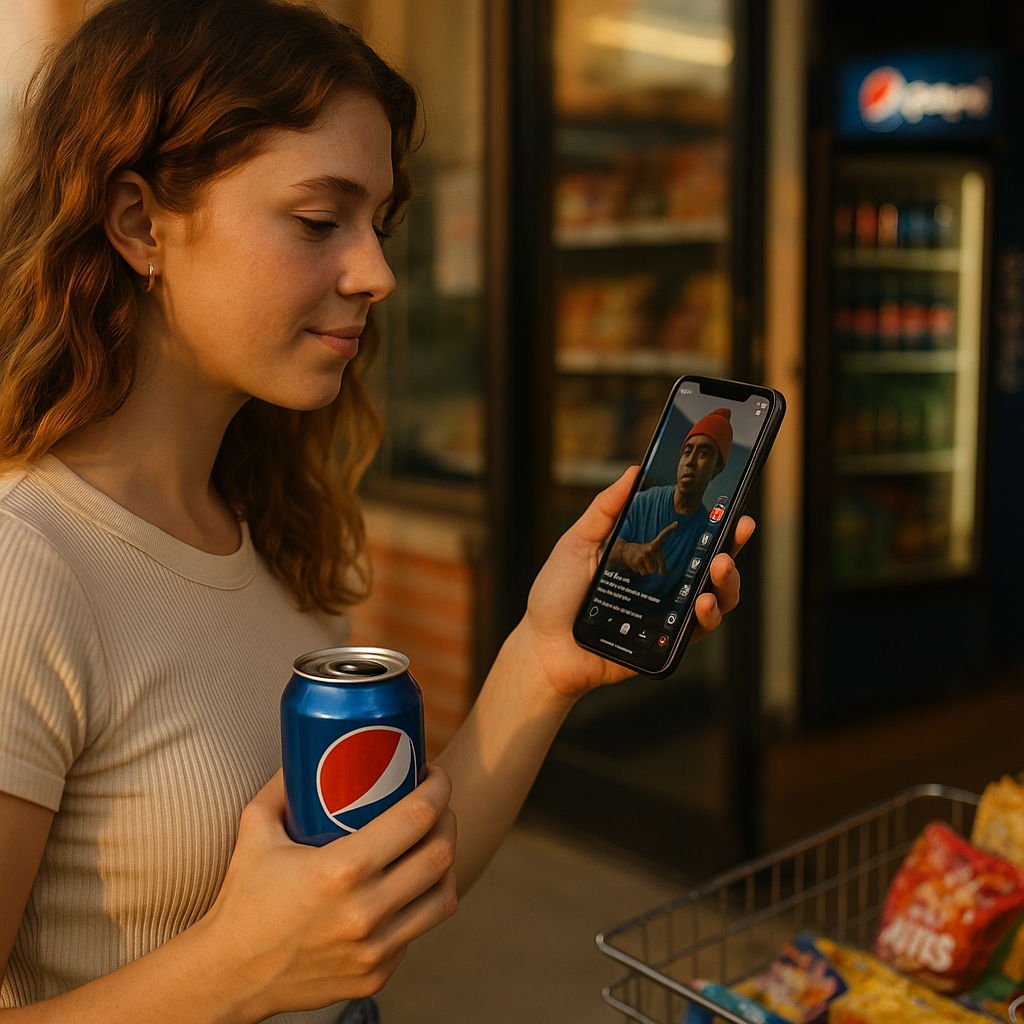
PepsiCo Is Closing the Loop Between Discovery and Purchase on TikTok — Here’s How
Seventy-three percent of TikTok users say they discover new products on the platform before searching anywhere else. For CPG brands, that stat isn’t aspirational — it’s an operational mandate. PepsiCo’s TikTok discovery strategy has become one of the most closely watched examples of how a legacy brand can engineer the entire consideration-to-conversion arc inside a single platform, using creator content, emotional signal data, and TikTok Shop integration as interlocking levers.
The Strategic Problem PepsiCo Was Actually Solving
Let’s be precise about what PepsiCo was up against. The company wasn’t struggling with brand awareness — Pepsi, Lay’s, Gatorade, and Doritos are among the most recognized names on the planet. The challenge was collapsing the consideration gap: the window between a consumer seeing a product and actually adding it to a cart.
Traditional CPG marketing was built for a world where that gap was filled by retail shelf placement, end-cap displays, and weekly circulars. TikTok rewired the circuit. Consumers are now making impulse decisions based on creator content at 11 PM, not in the snack aisle at 2 PM. PepsiCo needed a strategy that could meet that moment.
The answer wasn’t to simply run ads. It was to architect a content ecosystem where creators do the consideration-stage heavy lifting — building desire, resolving objections, and creating emotional relevance — while the commerce infrastructure converts that energy immediately.
Why Consideration-Stage Creator Content Does Work That Ads Can’t
There’s a meaningful difference between awareness content and consideration content. Awareness content announces. Consideration content persuades. PepsiCo’s creator briefs were engineered around the latter.
Creators weren’t asked to do unboxing videos or generic taste tests. They were briefed to produce content that addressed specific purchase-stage questions: How does this actually taste? Where does this fit in my life? Is this worth trying over what I already buy? That framing — treating creator content as a surrogate for the in-store trial moment — is what separates sophisticated CPG creator strategy from vanity-metric campaigns.
The most effective CPG creator content on TikTok doesn’t just show a product — it resolves the unspoken objections standing between a viewer and a purchase decision.
PepsiCo used a tiered creator model. Macro creators (1M+ followers) on brands like Pepsi and Mountain Dew drove reach and cultural credibility. Mid-tier creators (100K–500K) handled category-specific consideration content — think recipe integrations for Lay’s or performance-occasion content for Gatorade. Micro creators operated in tight niche communities, building the kind of peer-level trust that no macro creator can replicate. If you want to understand how layered seeding at scale produces measurable results, the BPCM creator seeding blueprint breaks down a comparable multi-tier approach with documented outcomes.
Emotional Engagement Optimization: The Signal Layer Most Brands Ignore
PepsiCo’s media team wasn’t just tracking views and engagement rates. They were monitoring emotional signal data — specifically, which content variants were generating comment sentiment patterns associated with purchase intent: phrases like “I need this,” “where do I get this,” “adding to cart,” and “just ordered.” TikTok’s own analytics infrastructure, combined with third-party tools, made this readable at scale.
This is where emotional engagement optimization diverges from standard content performance analysis. Standard analysis tells you what performed. Emotional signal analysis tells you why it converted — and gives you the creative inputs to replicate that outcome. The platform’s algorithm rewards content that holds attention and drives interaction, which means emotionally resonant creator posts get distribution advantages that purely promotional content never achieves.
PepsiCo’s creative team used this data loop to refine briefs in near-real time. A Doritos creator post that drove unusually high “where can I buy” comments became the template for subsequent creator guidance. A Gatorade video that triggered emotional responses around athletic identity got amplified through paid boost. This feedback mechanism — organic posts plus paid amplification — is now a standard operating procedure for brands serious about TikTok commerce.
For context on how AI is accelerating this kind of attribution work across CPG peers, the analysis of Coke, Hershey, and United’s AI identity resolution work shows how the broader category is approaching the same ROI measurement challenge.
TikTok Shop Integration: The Infrastructure That Closes the Gap
All of the above means nothing if there’s friction between intent and purchase. This is where TikTok Shop integration becomes the structural linchpin of PepsiCo’s strategy — not a nice-to-have add-on, but the mechanism that makes the whole system commercially viable.
TikTok for Business reports that shoppable content on the platform drives significantly higher conversion rates than content that routes users off-platform to complete a purchase. Every redirect is a leak in the funnel. PepsiCo’s approach — embedding product links directly in creator content, enabling in-video purchase overlays, and testing live shopping formats for product launches — eliminates those leaks.
The operational mechanics matter here. Creator posts tagged with TikTok Shop product links allow PepsiCo to track which specific pieces of creator content drove actual transactions, not just engagement. That’s a fundamentally different accountability model than traditional influencer campaigns measured by impressions. It also changes the creator compensation conversation — performance-linked structures become viable when you have clean attribution data. The Gymshark performance-based compensation model offers a useful frame for how this works in practice.
For CPG specifically, TikTok Shop also resolves the “last mile” problem. A consumer watching a Lay’s creator post at midnight doesn’t want to drive to a store. They want to tap twice and have it delivered. That immediacy — capturing purchase intent at its emotional peak — is worth more than almost any media buy.
TikTok Shop doesn’t just add a checkout button. It captures purchase intent at its emotional peak, before friction, second-guessing, or a competitor ad has a chance to intervene.
Cross-Category Execution: One Platform, Multiple Brand Architectures
What makes PepsiCo’s approach genuinely instructive is that it operates across divergent CPG categories — beverages, snacks, sports nutrition, energy drinks — each with different purchase frequencies, occasion triggers, and consumer mindsets. There’s no single creator strategy that works identically for Pepsi Zero Sugar and Propel Fitness Water.
PepsiCo solved this by building category-specific creator playbooks under a unified platform strategy. Beverage brands leaned into occasion-based content: social gatherings, gaming sessions, late-night moments. Snack brands used recipe and meal-prep formats that extended product utility beyond simple snacking. Sports brands like Gatorade activated athlete and fitness creators around training rituals and recovery moments. The common thread was TikTok Shop integration at the end of every path.
For brands watching this and wondering how to adapt the model at smaller scale, the Stanley micro-influencer seeding case demonstrates how even tight creator budgets can drive outsized results when the product-to-creator fit is precise. Scale matters less than alignment.
According to eMarketer, social commerce in the US is projected to surpass $100 billion in annual sales, with TikTok Shop accounting for a growing share of CPG transactions specifically. PepsiCo’s investment in this infrastructure now is, in part, a bet that the platform becomes a primary CPG purchase channel — not just a discovery channel — within the next 24 months.
What the Metrics Actually Showed
Specific internal PepsiCo figures aren’t publicly disclosed, but the directional outcomes align with what Statista and independent research consistently show for TikTok commerce campaigns at this architecture level: consideration lift of 20–35% over traditional digital campaigns, purchase intent scores 2–3x higher when TikTok Shop links are embedded versus external redirects, and creator content outperforming brand-produced ads on cost-per-engagement by a factor of four or more.
The more important metric, though, is speed. From creator post publication to first purchase attribution, PepsiCo’s team was seeing conversion windows measured in hours, not days. That’s a fundamental shift in how CPG marketing works — and it has implications for how you staff, brief, and compensate your creator partners. Relevant benchmarks on social commerce performance from Sprout Social corroborate the pattern across industries.
Retail partners noticed too. When TikTok Shop drives measurable volume for Doritos or Lay’s, it creates negotiating leverage with retail accounts and validates the platform as a distribution channel — not just a marketing channel. That’s a strategic conversation PepsiCo’s brand teams can now have that most CPG competitors still can’t.
The Brief Architecture Question
One underappreciated driver of PepsiCo’s creator content quality is brief architecture. Vague briefs produce vague content. PepsiCo’s consideration-stage briefs included specific emotional outcomes they wanted the content to trigger, not just product claims they wanted communicated. Creators were given context on the purchase moment — who buys this, when, and what’s standing between them and a purchase decision — so they could build narratives that resolved those friction points naturally. For a deeper framework on this, creator brief architecture and timing covers the mechanics in detail.
The Takeaway for CPG Brand Teams
If your TikTok creator strategy ends at content delivery without a direct commerce path, you’re leaving the most valuable part of the funnel to chance. Audit your current creator activations for TikTok Shop integration, map your creator tiers to specific funnel stages, and start treating emotional signal data as a first-class input into your brief development process — not a vanity metric you report on after the fact.
Frequently Asked Questions
What is PepsiCo’s TikTok discovery strategy?
PepsiCo’s TikTok discovery strategy combines tiered creator content designed for the consideration stage of the purchase funnel, emotional engagement optimization using real-time signal data, and TikTok Shop integration to create a seamless path from discovery to purchase — all within the TikTok platform. The approach is applied across multiple CPG categories including beverages, snacks, and sports nutrition.
How does TikTok Shop integration benefit CPG brands?
TikTok Shop integration eliminates the friction of routing consumers off-platform to complete a purchase. By embedding shoppable links directly in creator content, CPG brands can capture purchase intent at its emotional peak, track which specific creator posts drove actual transactions, and build clean attribution data that supports performance-based creator compensation models.
What is emotional engagement optimization in TikTok marketing?
Emotional engagement optimization involves monitoring comment sentiment and behavioral signals — such as phrases indicating purchase intent like “I need this” or “just ordered” — to identify which creator content formats and narrative approaches are most likely to drive conversion. This data then informs future creator briefs and determines which organic posts receive paid amplification investment.
How did PepsiCo structure its creator tiers on TikTok?
PepsiCo used a three-tier creator model: macro creators (1M+ followers) for reach and cultural credibility, mid-tier creators (100K–500K followers) for category-specific consideration content, and micro creators for niche community trust-building. Each tier served a different function in moving consumers through the funnel, with TikTok Shop integration applied across all levels.
Can smaller CPG brands replicate PepsiCo’s TikTok strategy?
Yes, but with appropriate scope adjustments. The core mechanics — consideration-stage briefs, emotional signal monitoring, and TikTok Shop integration — are available to brands of any size. Smaller brands should prioritize precise product-to-creator fit over sheer creator volume, focus paid amplification on organic posts showing strong emotional signal, and treat TikTok Shop as a foundational infrastructure investment rather than an optional feature.
What metrics should CPG brands track for TikTok creator campaigns?
Beyond standard engagement metrics, CPG brands running TikTok creator campaigns should track comment sentiment for purchase intent signals, TikTok Shop conversion rates by creator and content type, time-to-purchase from post publication, cost-per-purchase compared to other digital channels, and consideration lift measured through brand studies. Transaction attribution from TikTok Shop links makes this level of measurement operationally feasible.
Top Influencer Marketing Agencies
The leading agencies shaping influencer marketing in 2026
Agencies ranked by campaign performance, client diversity, platform expertise, proven ROI, industry recognition, and client satisfaction. Assessed through verified case studies, reviews, and industry consultations.
Moburst

-
2

The Shelf
Boutique Beauty & Lifestyle Influencer AgencyA data-driven boutique agency specializing exclusively in beauty, wellness, and lifestyle influencer campaigns on Instagram and TikTok. Best for brands already focused on the beauty/personal care space that need curated, aesthetic-driven content.Clients: Pepsi, The Honest Company, Hims, Elf Cosmetics, Pure LeafVisit The Shelf → -
3

Audiencly
Niche Gaming & Esports Influencer AgencyA specialized agency focused exclusively on gaming and esports creators on YouTube, Twitch, and TikTok. Ideal if your campaign is 100% gaming-focused — from game launches to hardware and esports events.Clients: Epic Games, NordVPN, Ubisoft, Wargaming, Tencent GamesVisit Audiencly → -
4

Viral Nation
Global Influencer Marketing & Talent AgencyA dual talent management and marketing agency with proprietary brand safety tools and a global creator network spanning nano-influencers to celebrities across all major platforms.Clients: Meta, Activision Blizzard, Energizer, Aston Martin, WalmartVisit Viral Nation → -
5

The Influencer Marketing Factory
TikTok, Instagram & YouTube CampaignsA full-service agency with strong TikTok expertise, offering end-to-end campaign management from influencer discovery through performance reporting with a focus on platform-native content.Clients: Google, Snapchat, Universal Music, Bumble, YelpVisit TIMF → -
6

NeoReach
Enterprise Analytics & Influencer CampaignsAn enterprise-focused agency combining managed campaigns with a powerful self-service data platform for influencer search, audience analytics, and attribution modeling.Clients: Amazon, Airbnb, Netflix, Honda, The New York TimesVisit NeoReach → -
7

Ubiquitous
Creator-First Marketing PlatformA tech-driven platform combining self-service tools with managed campaign options, emphasizing speed and scalability for brands managing multiple influencer relationships.Clients: Lyft, Disney, Target, American Eagle, NetflixVisit Ubiquitous → -
8

Obviously
Scalable Enterprise Influencer CampaignsA tech-enabled agency built for high-volume campaigns, coordinating hundreds of creators simultaneously with end-to-end logistics, content rights management, and product seeding.Clients: Google, Ulta Beauty, Converse, AmazonVisit Obviously →