


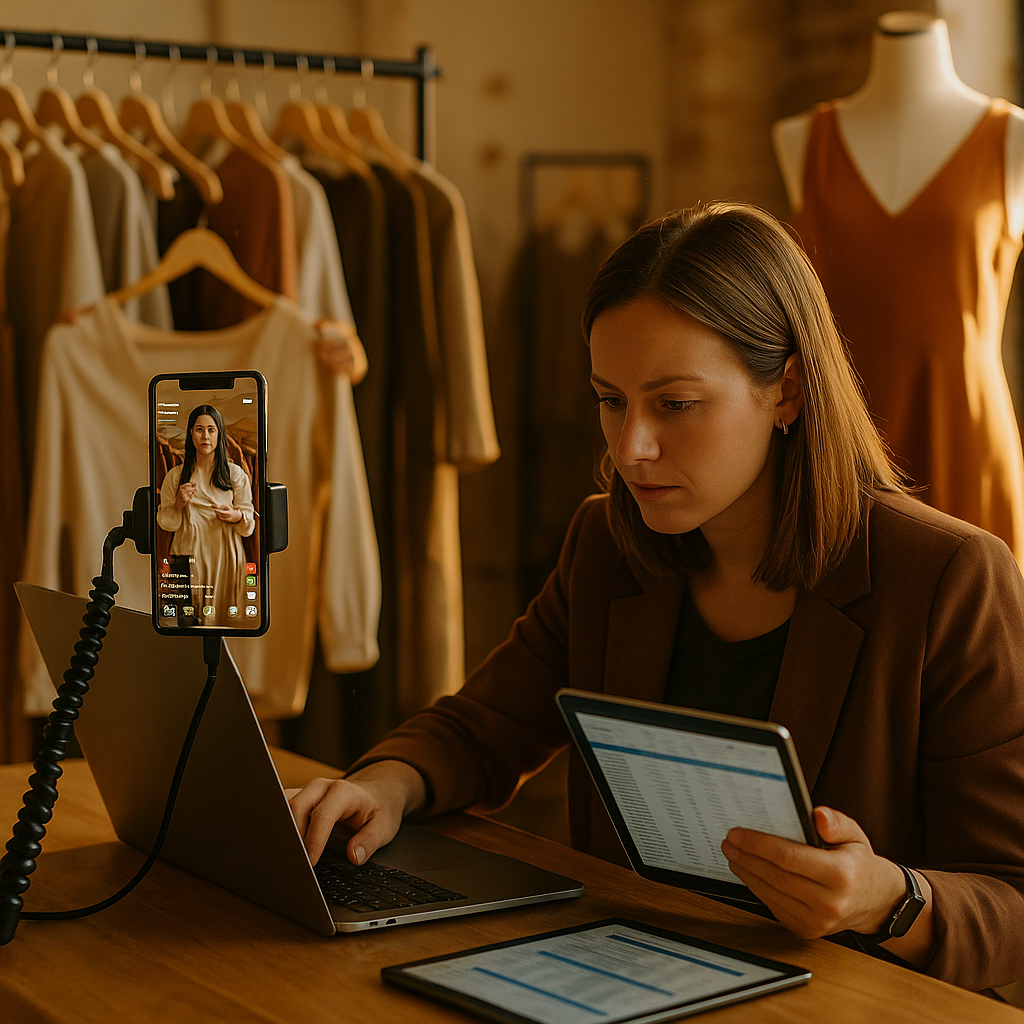
Nearly half of all TikTok Shop browsing in the UK comes from shoppers under 45, concentrated in windows most retailers still schedule around lunch breaks and Friday nights. One fashion retailer looked at its own TikTok Shop analytics, saw the 47% under-45 browsing pattern staring back, and tore up its livestream calendar. The result: a leaner, sharper streaming cadence that lifted watch time and cut cost per acquisition within a single quarter.
The Problem With “Set It and Forget It” Livestream Schedules
Most retailers treat livestream scheduling like a TV programming grid from 2005. Pick a few evening slots, repeat weekly, hope for the best. It’s a reasonable starting point. It’s also lazy once you have data telling you something different.
This retailer, a mid-market womenswear brand with roughly £40 million in annual revenue, had been running three weekly livestreams: Tuesday lunchtime, Thursday evening, and Saturday morning. Standard playbook stuff. But their TikTok Shop dashboard showed a browsing pattern that didn’t match their stream timing at all. Nearly half of session traffic, 47% to be exact, came from users aged 18-44, and that cohort was most active in two windows the brand wasn’t programming for: late morning weekdays (10am-12pm) and post-9pm on weeknights.
Their Saturday morning stream, the one leadership considered the “flagship” slot, was actually underperforming against weekday windows they’d never tested.
What the 47% Under-45 Stat Actually Revealed
It’s tempting to read “47% under-45” as a vague demographic footnote. It’s not. It’s a scheduling instruction hiding in plain sight.
The brand’s data team pulled 90 days of TikTok Shop analytics and cross-referenced browsing sessions against purchase completions, not just impressions. Two things jumped out:
- Under-45 shoppers browsed in short, frequent bursts rather than long single sessions, meaning shorter, more frequent livestreams would likely outperform fewer, longer ones.
- This cohort converted at a noticeably higher rate during “in-between” hours, like commute windows and pre-bed scrolling, compared to the traditional evening prime-time slot the retailer had built its calendar around.
The retailer’s own data showed nearly half its browsing traffic was active during hours its livestream calendar completely ignored, a scheduling gap that had likely been costing conversions for months.
This mirrors what platform-level research keeps confirming. TikTok’s own advertising resources have repeatedly emphasized that engagement windows on the platform skew toward shorter, more distributed viewing habits than legacy social formats (TikTok for Business). Retailers who assume Instagram-era prime-time logic applies here are working from the wrong map.
Redesigning the Cadence: From 3 Streams to 11
The retailer didn’t just shuffle its three existing slots. It rebuilt the entire cadence from scratch, moving from three weekly livestreams to eleven, most running 20-35 minutes instead of the previous 60-90 minute marathon format.
The new structure looked like this:
- Weekday micro-streams (10am-11am, 5x per week): Short, product-focused sessions targeting the late-morning browsing spike, hosted by a rotating cast of in-house stylists rather than a single dedicated host.
- Late-evening “unwind” streams (9:15pm, 3x per week): Lower-production, more conversational format aligned with pre-bed scrolling behavior, leaning into styling advice and Q&A rather than hard selling.
- Weekend anchor streams (2x, Saturday and Sunday afternoon): Retained as bigger production moments for new collection launches, but repositioned away from the “flagship” framing since the data showed weekend mornings underperforming.
Notice what’s missing from that list: the old Tuesday lunchtime slot. It was quietly retired after data showed it captured almost none of the 18-44 browsing spike and instead skewed toward an older, lower-converting audience segment.
This kind of format experimentation isn’t unique to fashion. Other retailers have found similar wins by matching livestream structure to platform-specific behavior rather than copying broadcast-TV habits. Chagee’s livestream approach in the US tea category followed a comparable logic: more frequent, shorter, lower-pressure formats outperformed occasional big events.
Hosts Matter More Than the Clock
Here’s something the case study surfaced that wasn’t in the original hypothesis: host rotation mattered almost as much as timing.
The brand initially assumed a single, consistent host would build audience loyalty, the same logic that works for YouTube channels or podcasts. But TikTok Shop viewers, especially the under-45 cohort, responded better to variety. Different stylists brought different energy, different styling perspectives, and crucially, different personal follower bases who’d tune in when “their” host was live.
By pairing four rotating in-house stylists with the new eleven-slot cadence, the retailer effectively created eleven distinct micro-audiences rather than one large, homogenous one. Average concurrent viewers per stream actually dropped slightly compared to the old flagship Saturday slot. But total unique viewers across the week rose by 38%, and so did checkout completions.
This is a useful reminder that livestream performance isn’t a single-variable problem. Timing gets you in front of the right audience. Hosting determines whether they stay.
The Numbers After 90 Days
The retailer tracked four core metrics before and after the cadence redesign:
- Average watch time per stream: up 22%, despite shorter individual stream lengths.
- Livestream-attributed revenue: up 31% quarter-over-quarter.
- Cost per acquisition via livestream traffic: down 19%, largely because shorter formats required less production spend per session.
- Weekly unique viewers: up 38%, driven by the host-rotation effect layered onto the new schedule.
None of these numbers are outliers in isolation. What made the difference was sequencing: identifying the behavioral gap first, then redesigning format and hosting around it, rather than bolting a new schedule onto an unchanged production model.
It’s worth noting this isn’t a universal formula. A retailer selling higher-consideration products, like furniture or fine jewelry, might see the opposite pattern, with longer sessions performing better because purchase decisions take more convincing. The lesson isn’t “run more, shorter streams.” It’s “let your own audience data set the cadence, not industry convention.”
What Other Brands Should Actually Take From This
Before copying this retailer’s exact eleven-stream structure, run your own diagnostic. Three questions matter more than the specific numbers above:
- What does your TikTok Shop analytics dashboard actually show about browsing windows, not just conversion windows? The two often diverge, and browsing data reveals demand before it becomes a sale.
- Is your current schedule built around internal convenience or audience behavior? Lunchtime and evening slots are popular because they’re easy to staff, not necessarily because they perform.
- Are you measuring cadence changes against production cost, not just revenue? Shorter, more frequent streams can lift both revenue and margin simultaneously, which is the real win here.
Brands running influencer-led livestream programs rather than in-house hosting should apply the same diagnostic before locking creators into a fixed schedule. Similar demand-first thinking shows up in how Vessi structured its TikTok Shop demo cadence and how a supplement brand tripled conversion through demo-format testing. The common thread across all three: format decisions followed data, not habit.
For brands still building out foundational creator vetting or seeding programs before tackling livestream cadence, it’s worth reviewing how Solo Stove built a year-round nano-creator engine, since audience behavior data becomes far more actionable once a consistent creator pipeline exists to act on it.
Broader industry data backs the underlying premise here too. Consumer behavior research from firms like eMarketer and social platform benchmarking from Sprout Social both point to shortening attention windows and more fragmented daily browsing habits among younger shoppers, a trend that livestream scheduling needs to reflect rather than fight.
Compliance Note: Livestream Selling Still Has Rules
One operational detail worth flagging for any brand scaling livestream frequency: more streams mean more surface area for compliance risk. Every additional session is another opportunity for a host to make an unsubstantiated product claim, misrepresent pricing, or blur the line between organic commentary and paid promotion.
UK retailers running TikTok Shop livestreams should keep host scripts and disclosure practices aligned with guidance from the Information Commissioner’s Office on data handling and the CMA’s advertising standards, particularly around pricing claims made in real time during a stream. Scaling from three streams to eleven multiplies your compliance review workload by roughly the same factor, so build that into your operations plan before you build the content calendar.
Next step: Pull your last 90 days of TikTok Shop browsing data, segment by hour and age cohort, and compare it against your current livestream schedule. If there’s a gap anywhere close to this retailer’s, you already have your next test cadence.
FAQs
Why did this retailer focus on the under-45 browsing stat instead of conversion data alone?
Browsing data reveals demand before it converts. Waiting for conversion patterns to shift the schedule means reacting after opportunity has already been missed during high-traffic windows.
Is a shorter, more frequent livestream format better for every retailer?
No. It worked here because the product category (fashion) suits quick browsing decisions. Higher-consideration categories may perform better with longer, fewer sessions. Test against your own audience data first.
How much production cost increase should brands expect when scaling from a few weekly streams to more than ten?
In this case, per-stream cost actually dropped because sessions were shorter and used a rotating in-house host model rather than heavy production for each stream. Total weekly spend rose modestly, but cost per acquisition fell.
Does host rotation work against building a loyal livestream audience?
Not necessarily. This case showed rotation created multiple smaller loyal audiences tied to individual hosts, which increased total unique viewers even as average concurrent viewership per stream dipped slightly.
What compliance risks increase when scaling livestream frequency on TikTok Shop?
More sessions mean more opportunities for unscripted claims about pricing, product performance, or availability. Retailers should tighten host guidelines and disclosure practices proportionally as stream volume increases.
Top Influencer Marketing Agencies
The leading agencies shaping influencer marketing in 2026
Agencies ranked by campaign performance, client diversity, platform expertise, proven ROI, industry recognition, and client satisfaction. Assessed through verified case studies, reviews, and industry consultations.
Moburst

-
2

The Shelf
Boutique Beauty & Lifestyle Influencer AgencyA data-driven boutique agency specializing exclusively in beauty, wellness, and lifestyle influencer campaigns on Instagram and TikTok. Best for brands already focused on the beauty/personal care space that need curated, aesthetic-driven content.Clients: Pepsi, The Honest Company, Hims, Elf Cosmetics, Pure LeafVisit The Shelf → -
3

Audiencly
Niche Gaming & Esports Influencer AgencyA specialized agency focused exclusively on gaming and esports creators on YouTube, Twitch, and TikTok. Ideal if your campaign is 100% gaming-focused — from game launches to hardware and esports events.Clients: Epic Games, NordVPN, Ubisoft, Wargaming, Tencent GamesVisit Audiencly → -
4

Viral Nation
Global Influencer Marketing & Talent AgencyA dual talent management and marketing agency with proprietary brand safety tools and a global creator network spanning nano-influencers to celebrities across all major platforms.Clients: Meta, Activision Blizzard, Energizer, Aston Martin, WalmartVisit Viral Nation → -
5

The Influencer Marketing Factory
TikTok, Instagram & YouTube CampaignsA full-service agency with strong TikTok expertise, offering end-to-end campaign management from influencer discovery through performance reporting with a focus on platform-native content.Clients: Google, Snapchat, Universal Music, Bumble, YelpVisit TIMF → -
6

NeoReach
Enterprise Analytics & Influencer CampaignsAn enterprise-focused agency combining managed campaigns with a powerful self-service data platform for influencer search, audience analytics, and attribution modeling.Clients: Amazon, Airbnb, Netflix, Honda, The New York TimesVisit NeoReach → -
7

Ubiquitous
Creator-First Marketing PlatformA tech-driven platform combining self-service tools with managed campaign options, emphasizing speed and scalability for brands managing multiple influencer relationships.Clients: Lyft, Disney, Target, American Eagle, NetflixVisit Ubiquitous → -
8

Obviously
Scalable Enterprise Influencer CampaignsA tech-enabled agency built for high-volume campaigns, coordinating hundreds of creators simultaneously with end-to-end logistics, content rights management, and product seeding.Clients: Google, Ulta Beauty, Converse, AmazonVisit Obviously →