


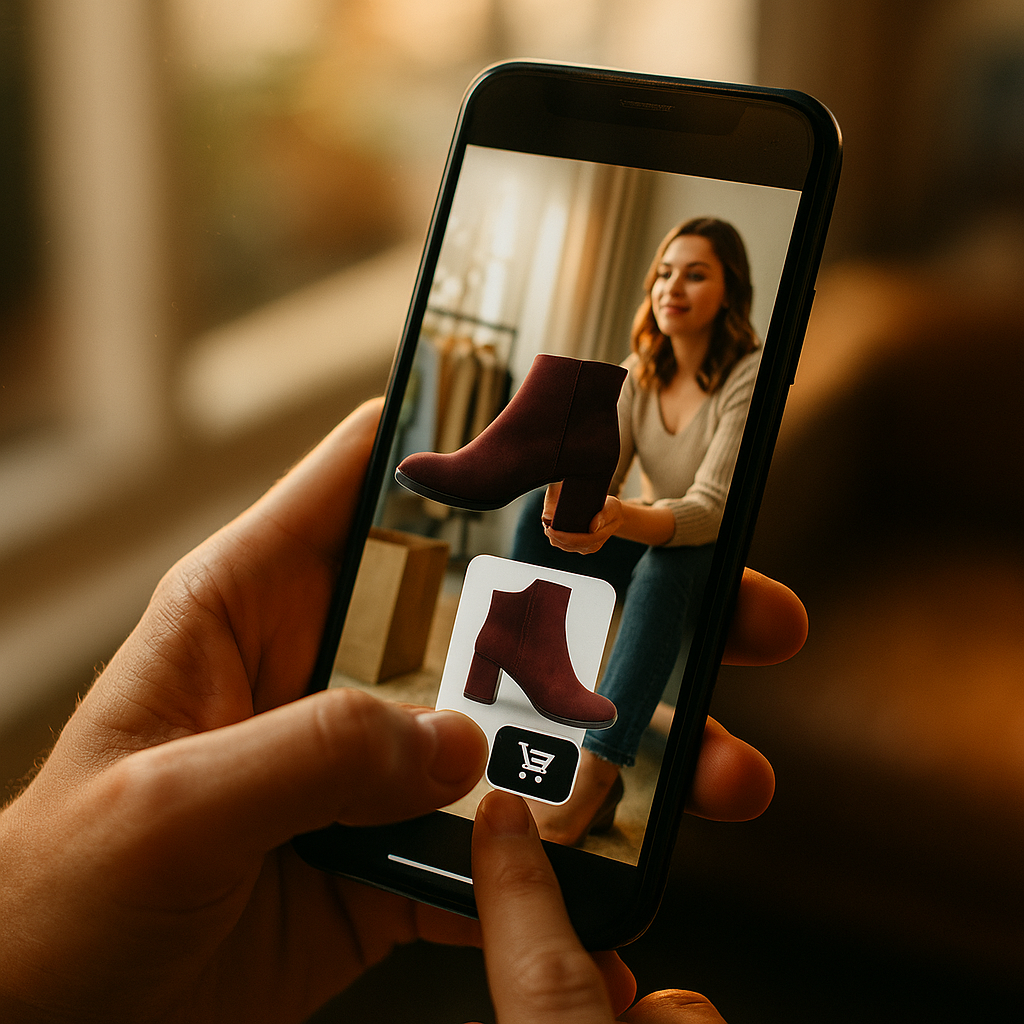
Seventy eight percent of shoppers say they’ve made a purchase directly from a video in the past six months, yet most brands are still bolting a static “shop now” link in their bio and calling it commerce. Interactive shoppable video overlays close that gap. They turn a creator’s video into a live storefront, clickable, taggable, and trackable, without forcing the viewer to leave the content they’re already engaged with. For direct response marketers tired of watching engagement spike while conversion stalls, this format deserves a serious look.
What Are Interactive Shoppable Video Overlays?
Strip away the jargon and it’s simple: an overlay is a clickable layer sitting on top of a video, letting viewers tap a product, add it to cart, or jump straight to checkout without pausing playback or switching apps. Think product hotspots that pulse when a creator picks up an item, sticky “buy” buttons that persist through a demo, or swipeable carousels that appear at the exact second a color or size gets mentioned.
This isn’t the same as a basic shoppable tag under a TikTok Shop video or a link sticker on Instagram. Overlays are contextual and timed. They respond to what’s happening on screen, second by second, rather than sitting static in a caption or bio link. That timing precision is exactly what separates a format that converts from one that just looks interactive.
Why Direct Response Teams Are Reallocating Budget Here
Performance marketers chase one thing above all: reduced friction between desire and purchase. Every extra tap, every app switch, every “wait, where do I buy this” moment costs conversions. Overlays remove steps from the funnel instead of adding creative polish on top of it.
Platforms have noticed. TikTok’s advertising ecosystem now leans heavily into in-video product tagging, and Meta continues expanding shoppable formats across Reels and Stories through its commerce tools for brands. When the platforms themselves are building infrastructure around a format, that’s a signal worth acting on, not ignoring.
Every tap saved between “I want this” and “I bought this” is a conversion rate lift you don’t need a bigger budget to achieve.
Data from eMarketer’s retail media research consistently shows shoppable video outperforming static shoppable posts on click through rate, and the gap widens further when the interactive elements are timed to specific moments in the content rather than dumped at the end as a single CTA card.
How Overlays Actually Work Across Platforms
The mechanics differ slightly by platform, but the principle holds everywhere: layer commerce onto content without breaking immersion.
- TikTok Shop overlays: Product cards appear as pop up tags synced to voiceover or on screen demonstration, letting viewers tap without leaving the For You feed.
- Instagram and Facebook Reels: Product stickers link directly into Meta’s checkout flow, reducing the redirect chain that used to kill mobile conversion rates.
- YouTube Shorts: Overlay tagging works alongside end screen product shelves, though timing still matters enormously for retention, a nuance covered well in this breakdown of shoppable tag timing.
- Livestream commerce: Overlays turn dynamic during live selling, updating stock counts or swapping featured products in real time as hosts move through a catalog.
What ties these together is that the overlay has to earn its place. Slap a tag on every frame and you train viewers to ignore all of them. The best performing campaigns time overlays to moments of peak product visibility, the unboxing beat, the “here’s what it looks like on” beat, the ingredient callout. Miss that window and the tap through rate collapses.
The Creative Trade Off Nobody Talks About
Here’s the tension direct response teams don’t love admitting: overlays work best on content that already performs well organically, and organic performance usually comes from content that doesn’t feel like an ad. Push too many clickable elements onto a video and it starts to look like a QVC segment wearing a creator’s face as a mask.
This is where format choice upstream matters. Silent, demo heavy formats tend to pair naturally with overlays because the product is already the visual focus. If you’ve briefed silent product demos for sound off environments, overlays slot in almost seamlessly since viewers are already scanning the frame for product detail rather than listening for a punchline.
Compare that to a comedic skit format, where inserting a shop button mid joke can tank the pacing and the comment sentiment along with it. Match the overlay to the format’s natural rhythm, don’t force it onto everything just because the tech is available.
Briefing Creators for Overlay Performance, Not Just Views
Most influencer briefs still optimize for watch time and shares. Shoppable overlays require a different lens: where in the video does purchase intent peak, and can the creative build toward that moment deliberately?
Practical brief additions worth testing:
- Flag the exact timestamp where the product should be visually isolated on screen, giving the overlay a clean anchor point.
- Ask creators to verbally cue the product (“this is the one I’m wearing”) right before the tag appears, reinforcing the visual with audio for sound-on viewers.
- Limit overlays to two or three moments per video. More than that and engagement data from Sprout Social’s social commerce benchmarks shows diminishing returns on tap through.
- Pair overlays with subtitle first design since a huge share of feed traffic still watches muted, and text reinforces the product cue when audio isn’t playing.
Approval workflows need adjusting too. Overlay placement often gets finalized in editing, after the creator has already delivered raw footage, which means brand teams need faster turnaround on sign off. If your process already struggles with creative approval bottlenecks, adding a second review pass for overlay placement will only compound the delay unless you build in a tighter SLA from the start.
Compliance: The Part Everyone Skips Until It’s a Problem
Shoppable overlays blur the line between content and advertising in a way regulators care about. If a tap through leads directly to purchase, that overlay is functionally an ad unit, and disclosure rules apply just as strictly as they would to a paid post.
The FTC’s endorsement guidance doesn’t carve out an exception for interactive commerce layers. Brands running overlay campaigns at scale should treat disclosure placement as part of the creative brief, not an afterthought bolted on by legal after the fact. Where the video shows a product being used, the sponsorship disclosure needs to be legible before the viewer reaches the point of tapping to buy, not buried in a caption they’ll never scroll to read.
Color accuracy and product representation matter here too, especially in beauty and apparel categories where overlay based purchases skip the “try before you buy” moment entirely. Brands that have already solved this with AR try on filters have a real advantage: pairing that shade matching tech with a shoppable overlay reduces the return rate risk that comes with impulse tap purchases made on a phone screen in bad lighting.
Measuring What Actually Matters
Vanity metrics won’t cut it for a format built around direct response. Track tap through rate on the overlay itself, not just video engagement. Track time from tap to add to cart. Track abandoned cart rate specifically for overlay-sourced traffic versus other channels, because the impulse nature of the format tends to produce a different completion pattern than a deliberate site visit.
Benchmarking data from Statista’s social commerce reports shows shoppable video consistently posting higher engagement to conversion ratios than standard link in bio traffic, but the spread between top and bottom performers within the format is wide. The difference usually comes down to timing discipline and creative fit rather than platform or budget size.
Use HubSpot’s attribution modeling resources if you’re trying to reconcile overlay driven sales with a broader multi touch attribution setup. Overlays complicate last click attribution because the purchase intent often forms earlier in a video than the actual tap, so single touch models will undercount their real impact.
Next Step
Pick one high performing organic video format you already run, silent demos or before and after content are strong starting points, and layer in two timed overlays on the next batch. Measure tap through against your current link in bio conversion rate for thirty days before scaling further.
Frequently Asked Questions
What makes interactive shoppable video overlays different from standard shoppable posts?
Overlays are timed to specific moments within the video content itself, appearing when a product is visually or verbally highlighted, rather than sitting as a single static link attached to the whole post.
Which platforms support shoppable video overlays right now?
TikTok, Instagram, and Facebook offer native in-video product tagging, while YouTube Shorts supports overlay tagging alongside end screen product shelves. Livestream commerce tools also support dynamic overlays that update in real time.
Do shoppable overlays require separate FTC disclosure from the rest of the sponsored content?
No, but the disclosure needs to be visible before the viewer reaches the tap to purchase moment. Treat overlay placement as part of the same compliance review as the sponsorship disclosure itself.
How many overlays should appear in a single video?
Most performance data suggests two to three well timed overlays outperform videos with overlays on every product mention. Overuse trains viewers to ignore the tags entirely.
Can shoppable overlays hurt organic reach or watch time?
Poorly timed or excessive overlays can disrupt pacing and lower completion rates, which in turn can hurt organic distribution. Matching overlay placement to the content’s natural rhythm minimizes this risk.
Top Influencer Marketing Agencies
The leading agencies shaping influencer marketing in 2026
Agencies ranked by campaign performance, client diversity, platform expertise, proven ROI, industry recognition, and client satisfaction. Assessed through verified case studies, reviews, and industry consultations.
Moburst

-
2

The Shelf
Boutique Beauty & Lifestyle Influencer AgencyA data-driven boutique agency specializing exclusively in beauty, wellness, and lifestyle influencer campaigns on Instagram and TikTok. Best for brands already focused on the beauty/personal care space that need curated, aesthetic-driven content.Clients: Pepsi, The Honest Company, Hims, Elf Cosmetics, Pure LeafVisit The Shelf → -
3

Audiencly
Niche Gaming & Esports Influencer AgencyA specialized agency focused exclusively on gaming and esports creators on YouTube, Twitch, and TikTok. Ideal if your campaign is 100% gaming-focused — from game launches to hardware and esports events.Clients: Epic Games, NordVPN, Ubisoft, Wargaming, Tencent GamesVisit Audiencly → -
4

Viral Nation
Global Influencer Marketing & Talent AgencyA dual talent management and marketing agency with proprietary brand safety tools and a global creator network spanning nano-influencers to celebrities across all major platforms.Clients: Meta, Activision Blizzard, Energizer, Aston Martin, WalmartVisit Viral Nation → -
5

The Influencer Marketing Factory
TikTok, Instagram & YouTube CampaignsA full-service agency with strong TikTok expertise, offering end-to-end campaign management from influencer discovery through performance reporting with a focus on platform-native content.Clients: Google, Snapchat, Universal Music, Bumble, YelpVisit TIMF → -
6

NeoReach
Enterprise Analytics & Influencer CampaignsAn enterprise-focused agency combining managed campaigns with a powerful self-service data platform for influencer search, audience analytics, and attribution modeling.Clients: Amazon, Airbnb, Netflix, Honda, The New York TimesVisit NeoReach → -
7

Ubiquitous
Creator-First Marketing PlatformA tech-driven platform combining self-service tools with managed campaign options, emphasizing speed and scalability for brands managing multiple influencer relationships.Clients: Lyft, Disney, Target, American Eagle, NetflixVisit Ubiquitous → -
8

Obviously
Scalable Enterprise Influencer CampaignsA tech-enabled agency built for high-volume campaigns, coordinating hundreds of creators simultaneously with end-to-end logistics, content rights management, and product seeding.Clients: Google, Ulta Beauty, Converse, AmazonVisit Obviously →