


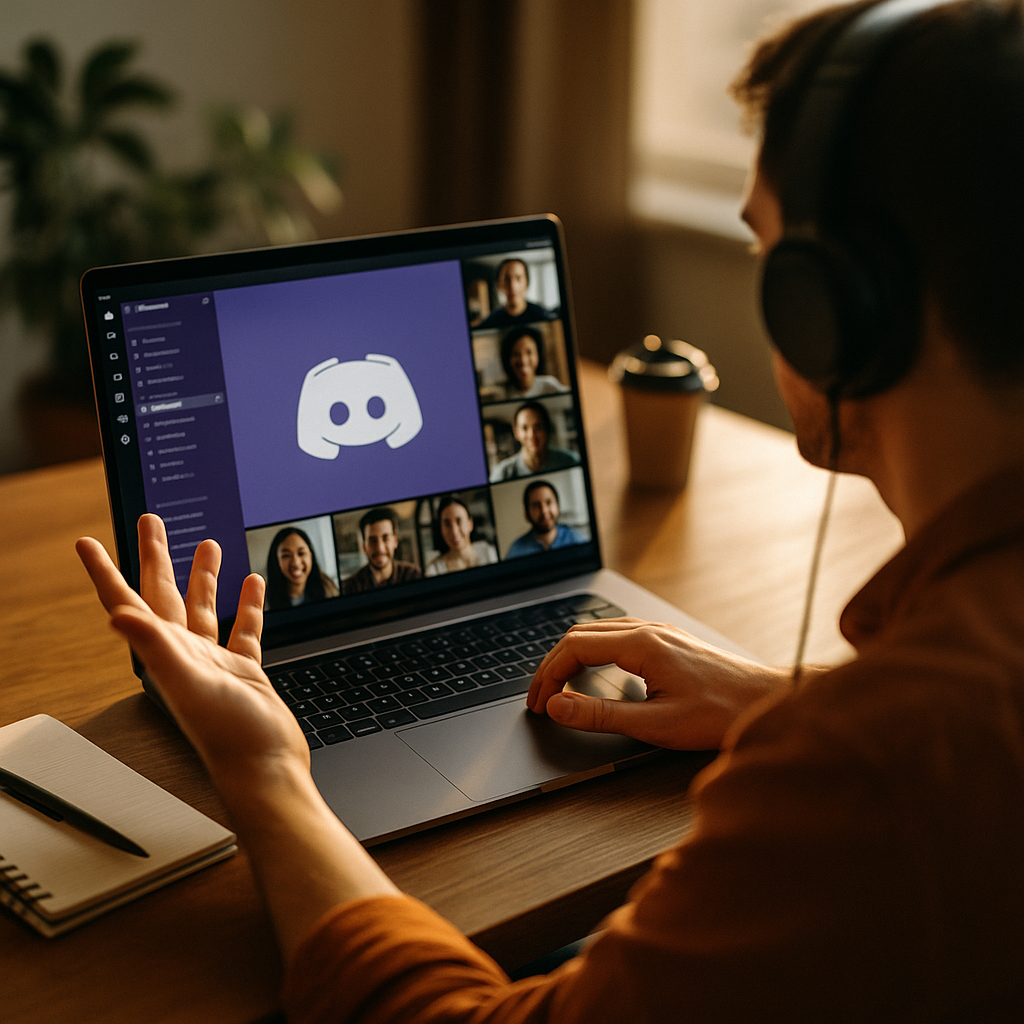
Building a branded community on Discord is no longer a niche tactic reserved for gaming brands. In 2026, it is a practical way to deepen loyalty, collect customer insight, support product education, and create real-time engagement at scale. The challenge is not opening a server. It is designing one people want to return to. Here is the playbook that makes that happen.
Define your Discord community strategy before launch
A successful server starts with strategy, not setup. Many brands fail on Discord because they copy another community’s channel list, add a few announcements, and expect momentum. That rarely works. Discord communities thrive when they are built around a clear member promise.
Start by answering four core questions:
- Who is the community for? Be specific. New customers, power users, creators, superfans, beta testers, or partners all need different experiences.
- Why should they join? Access, education, recognition, networking, support, or entertainment are common reasons.
- What business goal does the server support? Retention, product adoption, advocacy, customer feedback, and event participation are measurable examples.
- What behavior do you want to encourage? Posting user-generated content, attending AMAs, helping peers, testing features, or sharing ideas.
In practical terms, the best branded Discords do one or two things exceptionally well. They do not try to be a help desk, content hub, fan club, product lab, and social network all at once. If your brand is early in its community journey, choose a primary value proposition and build around it.
It also helps to define success in advance. Useful launch metrics include member activation rate, first-week retention, percentage of members who complete onboarding, event attendance, and the number of meaningful conversations per week. Vanity metrics like total members can be misleading if most people stay silent.
From an EEAT perspective, this planning stage matters because it demonstrates expertise and trustworthiness. A community that exists for a clear reason feels more credible to members. It also helps your internal team make better moderation, content, and staffing decisions after launch.
Set up Discord server structure and onboarding for retention
Your Discord server structure should reduce confusion and create immediate momentum for new members. If people join and do not know where to go, they leave. A clean onboarding flow improves activation and makes moderation easier.
Keep your initial server architecture simple. Most branded communities only need a focused set of channels at launch:
- Welcome: explains the purpose of the server and what members gain from joining
- Rules and guidelines: states expected behavior and enforcement clearly
- Announcements: brand updates, launches, events, and key news
- Start here: onboarding steps, role selection, and channel navigation
- General discussion: broad conversation and community bonding
- Topic-based channels: product use cases, creator showcases, feature ideas, or local groups
- Support or help: if your team can sustain it with clear response expectations
- Events or AMAs: a dedicated area for scheduled engagement
Role design is equally important. Use roles to personalize the experience without overcomplicating it. Examples include customer, prospect, VIP member, beta tester, event attendee, or creator. Let members self-select interests when possible. This improves relevance and gives your team better segmentation for announcements and programming.
Onboarding should be action-based, not passive. Ask new members to complete one or two easy steps:
- Read and accept community guidelines
- Select interest roles
- Introduce themselves in one sentence
- Visit the most relevant channel for their goal
That sequence creates immediate participation. It also answers the likely follow-up question many brands have: How do we get members to post? The answer is to ask for a low-friction first action that feels natural and rewarding.
Make moderation visible from day one. Publish rules in plain language, explain how reports work, and note what happens if guidelines are ignored. Clear governance builds trust, protects your brand, and gives members confidence that the space is worth investing in.
Create a branded community content plan that drives participation
A server needs a repeatable branded community content plan or it quickly turns into a static announcement board. Members stay when they know what kinds of conversations and experiences to expect each week.
Strong community content usually falls into five categories:
- Educational: tips, tutorials, office hours, and how-to sessions
- Interactive: polls, prompts, feedback requests, quizzes, and challenges
- Exclusive: early product access, insider updates, sneak peeks, and private Q&As
- Community-led: member showcases, peer support, and user stories
- Recognition: spotlights, badges, role upgrades, and rewards for helpful participation
The key is balance. If every post promotes your brand, participation drops. If every post is open-ended chat, the server loses direction. Aim for a rhythm that mixes value, interaction, and exclusivity.
A simple weekly cadence might look like this:
- Monday: industry insight or product tip
- Tuesday: discussion prompt tied to a member pain point
- Wednesday: live AMA or office hours
- Thursday: member spotlight or user-generated content feature
- Friday: poll, challenge, or feedback thread
Use events strategically. Discord communities often perform best when live moments anchor the experience. Product walkthroughs, expert sessions, creator panels, and launch previews give members a reason to show up at a specific time. Record outcomes in follow-up posts so members who missed the event still get value.
Do not ignore the importance of response quality. Helpful content on Discord should be accurate, timely, and created or reviewed by people with real knowledge. If your community discusses product workflows, feature roadmaps, compliance topics, or advanced use cases, involve subject matter experts. This reflects Google’s EEAT principles in practice: demonstrate experience, share expert insight, and maintain trustworthy information.
Community management and moderation best practices for Discord growth
Healthy community management is what turns a server from a campaign asset into a durable brand channel. Discord is conversational and fast-moving, so your team must actively shape the environment.
Begin with staffing. Most branded servers need at least one accountable owner plus trained moderators. Depending on your size, that may include community managers, customer support representatives, product marketers, developer advocates, or trusted ambassadors. Define responsibilities before launch:
- Community manager: programming, engagement, analytics, and member experience
- Moderator: rule enforcement, conflict resolution, and channel hygiene
- Subject matter expert: credible answers on product or industry topics
- Executive or brand representative: selective visibility for trust and momentum
Moderation should be consistent, documented, and humane. Publish escalation paths for spam, harassment, hate speech, impersonation, and misinformation. If your brand operates in a regulated space, create approval workflows for sensitive responses. Members notice when enforcement is uneven, and trust erodes quickly.
Another common question is: How do we encourage organic conversation without forcing it? The answer is to reward useful behavior and remove friction. Welcome new contributors quickly. Thank members who help others. Summarize great discussions. Ask narrower questions instead of vague prompts. And avoid posting so often that the community feels like a one-way content feed.
Ambassador programs can accelerate growth when they are earned, not handed out. Invite your most constructive members to help lead discussions, welcome newcomers, or host themed sessions. Give them clear expectations and visible recognition. This distributes community leadership and makes the server feel member-centric rather than brand-controlled.
For long-term trust, protect privacy and clarify boundaries. Tell members what data you collect, how you use feedback, and whether conversations may influence product decisions or public content. Transparency supports both trustworthiness and stronger participation.
Use Discord analytics and KPIs to measure community success
Without Discord analytics, it is difficult to know whether your server is truly successful. Brands often focus on membership growth, but growth without engagement can hide deeper problems such as weak onboarding, irrelevant content, or poor moderation.
Track metrics across the full member journey:
- Acquisition: invite clicks, join rate, source of new members
- Activation: completed onboarding, role selection, first message, first event attendance
- Engagement: active members, posts per active member, reactions, replies, thread participation
- Retention: weekly returning members, cohort retention, dormant member rate
- Business impact: support deflection, beta signups, feedback submissions, advocacy actions, renewals, or referrals
Pair quantitative data with qualitative analysis. Read conversations. Note recurring questions. Identify which events trigger deeper discussion, not just attendance. Watch for signals of trust such as members helping each other without staff prompting. These are often stronger indicators of community health than raw activity volume.
Run structured reviews monthly. Ask:
- Which channels are active and which are clutter?
- What content formats generate the best member response?
- Are moderators spending time on preventable issues?
- What member requests appear repeatedly?
- Which community actions connect most directly to business goals?
Then make changes deliberately. Archive unused channels. Simplify permissions. Test new event formats. Adjust your onboarding copy. Community building on Discord is not a one-time setup project. It is an operating discipline that improves through observation and iteration.
Scale a branded Discord community without losing trust
As your member count grows, the challenge shifts from launch to scale. Sustainable Discord community growth depends on preserving relevance, culture, and trust while expanding participation.
The first step is segmentation. Not every member needs the same experience. Create role-based or interest-based paths so the server remains usable as activity increases. A crowded general channel should not be the only place where important conversations happen.
Second, document your operating model. Build internal playbooks for moderation, event production, crisis response, tone of voice, and escalation. This reduces inconsistency as new team members or volunteer ambassadors join. It also protects the quality of the member experience during busy product launches or campaigns.
Third, keep exclusivity meaningful. Brands often dilute community value by promising access they cannot sustain. If you offer early previews, direct feedback loops, or member-only sessions, maintain quality and consistency. Members can tell when “exclusive” becomes generic.
Fourth, integrate the community with broader brand systems carefully. Discord can feed product teams with insight, support teams with common issues, and marketing teams with community stories. But do not extract value without giving it back. When member feedback leads to a change, say so. When a suggestion cannot be implemented, explain why. Closing the loop is one of the strongest trust signals a brand can send.
Finally, prepare for risk. As your server grows, so do impersonation attempts, spam attacks, conflict, and operational strain. Set up moderator coverage, permissions hygiene, verification where needed, and documented response protocols. A scalable community is not just active. It is resilient.
FAQs about launching a branded community on Discord
Why should a brand choose Discord instead of another community platform?
Discord works well when your brand benefits from real-time conversation, role-based segmentation, live events, and ongoing peer interaction. It is especially effective for products, creator ecosystems, education, gaming-adjacent audiences, and brands with active fan communities.
How many channels should a branded Discord server have at launch?
Start lean. Most brands should launch with a small set of essential channels and expand only when usage patterns justify it. Too many channels split attention and make onboarding harder.
What is the ideal team structure for managing a brand Discord?
At minimum, assign one owner, one or more moderators, and access to subject matter experts. If the server supports product education or customer questions, involve people who can provide accurate answers quickly.
How do brands get members to participate instead of lurk?
Use clear onboarding, ask for a simple first action, post prompts with low effort entry, run regular live events, and recognize helpful contributors. Participation rises when members know where to start and feel noticed.
How can a brand measure ROI from a Discord community?
Define business outcomes in advance. Common ROI signals include higher retention, stronger product adoption, useful customer feedback, support deflection, event attendance, referral actions, and advocacy from active members.
What are the biggest mistakes brands make on Discord?
Launching without a strategy, overbuilding channels, treating the server like a broadcast feed, underinvesting in moderation, and failing to offer a clear reason for members to return are the most common mistakes.
Should brands offer incentives to join the Discord server?
Yes, but they should support the community’s purpose. Exclusive access, helpful education, direct feedback opportunities, and member recognition usually work better than generic giveaways that attract low-intent members.
How often should a branded Discord community host events?
Consistency matters more than volume. For many brands, one recurring weekly or biweekly event is enough to create momentum, especially when paired with strong follow-up content and discussion prompts.
A successful branded Discord community is built with purpose, structured for easy participation, and managed with consistency. Brands that win on Discord do not chase noise. They create a useful, trustworthy space where members gain real value and want to return. If you define clear goals, invest in onboarding and moderation, and measure what matters, Discord can become a lasting growth channel.
Top Influencer Marketing Agencies
The leading agencies shaping influencer marketing in 2026
Agencies ranked by campaign performance, client diversity, platform expertise, proven ROI, industry recognition, and client satisfaction. Assessed through verified case studies, reviews, and industry consultations.
Moburst

-
2

The Shelf
Boutique Beauty & Lifestyle Influencer AgencyA data-driven boutique agency specializing exclusively in beauty, wellness, and lifestyle influencer campaigns on Instagram and TikTok. Best for brands already focused on the beauty/personal care space that need curated, aesthetic-driven content.Clients: Pepsi, The Honest Company, Hims, Elf Cosmetics, Pure LeafVisit The Shelf → -
3

Audiencly
Niche Gaming & Esports Influencer AgencyA specialized agency focused exclusively on gaming and esports creators on YouTube, Twitch, and TikTok. Ideal if your campaign is 100% gaming-focused — from game launches to hardware and esports events.Clients: Epic Games, NordVPN, Ubisoft, Wargaming, Tencent GamesVisit Audiencly → -
4

Viral Nation
Global Influencer Marketing & Talent AgencyA dual talent management and marketing agency with proprietary brand safety tools and a global creator network spanning nano-influencers to celebrities across all major platforms.Clients: Meta, Activision Blizzard, Energizer, Aston Martin, WalmartVisit Viral Nation → -
5

The Influencer Marketing Factory
TikTok, Instagram & YouTube CampaignsA full-service agency with strong TikTok expertise, offering end-to-end campaign management from influencer discovery through performance reporting with a focus on platform-native content.Clients: Google, Snapchat, Universal Music, Bumble, YelpVisit TIMF → -
6

NeoReach
Enterprise Analytics & Influencer CampaignsAn enterprise-focused agency combining managed campaigns with a powerful self-service data platform for influencer search, audience analytics, and attribution modeling.Clients: Amazon, Airbnb, Netflix, Honda, The New York TimesVisit NeoReach → -
7

Ubiquitous
Creator-First Marketing PlatformA tech-driven platform combining self-service tools with managed campaign options, emphasizing speed and scalability for brands managing multiple influencer relationships.Clients: Lyft, Disney, Target, American Eagle, NetflixVisit Ubiquitous → -
8

Obviously
Scalable Enterprise Influencer CampaignsA tech-enabled agency built for high-volume campaigns, coordinating hundreds of creators simultaneously with end-to-end logistics, content rights management, and product seeding.Clients: Google, Ulta Beauty, Converse, AmazonVisit Obviously →