


The Platform Has Changed. Most Briefs Haven’t.
Over 40% of Gen Z now uses TikTok as their primary search engine, according to data from Statista. That’s not a trend to monitor — it’s a structural shift that makes most influencer briefs written before this decade functionally obsolete. Gen Z social media isn’t social anymore, and the brands still optimizing for engagement rates on posts designed for feed discovery are playing the wrong game entirely.
When “Social” Becomes “Search and Entertainment”
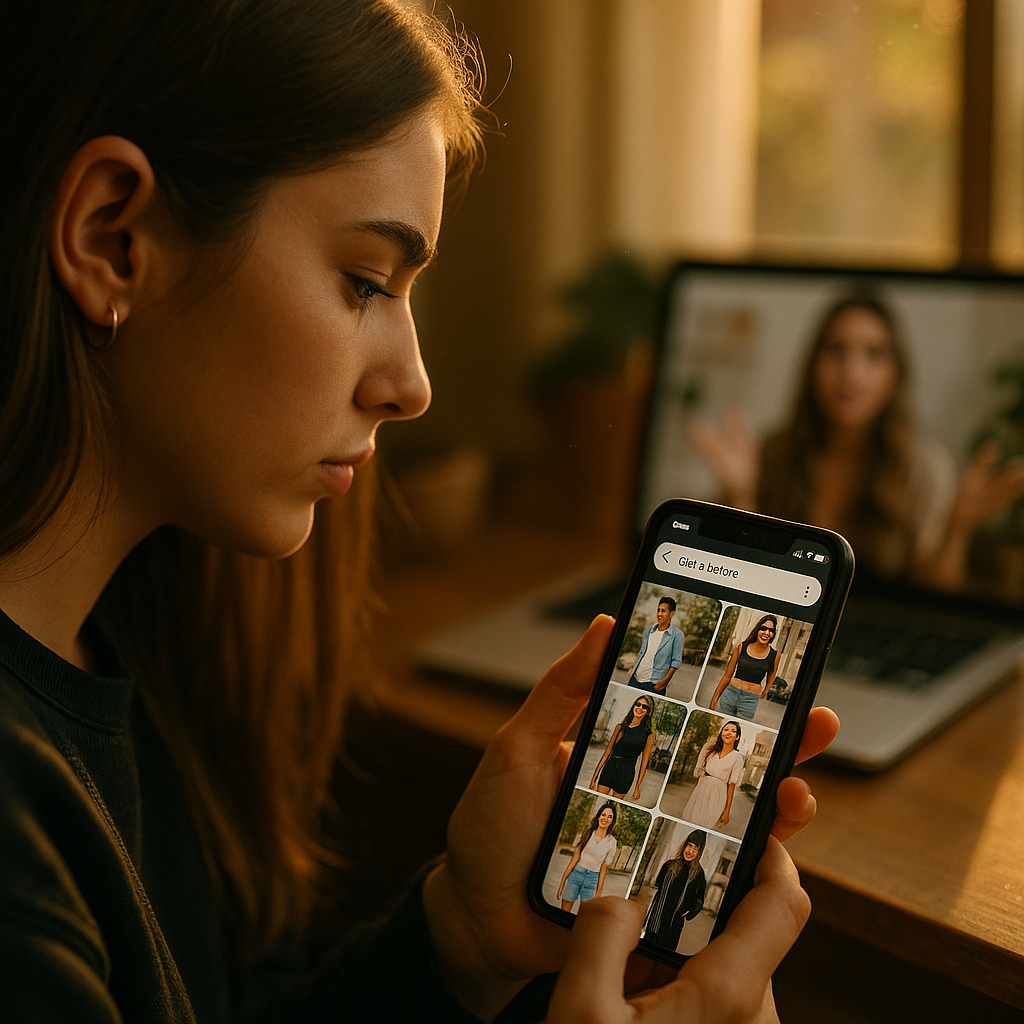
Think about how a 22-year-old actually uses Instagram or TikTok today. She’s not scrolling her friends’ updates — she’s searching “best retinol for sensitive skin” or watching long-form cooking breakdowns from a creator she’s never interacted with. The social graph is largely irrelevant to her experience. The algorithm has replaced it.
This distinction matters enormously for brand strategy. A platform experienced as a search engine rewards different creator attributes than one experienced as a social network. Discovery behavior, intent signals, and content consumption patterns are all different. If you’re still briefing creators as though their primary job is to “reach their audience,” you’re missing the mechanism entirely.
YouTube has been a search-and-entertainment hybrid for years. TikTok and Instagram Reels have converged toward the same model faster than most brand teams anticipated. The implications for creator briefs built for search intent are significant: keyword-informed scripts, problem-solution narrative structures, and content that earns replay value aren’t nice-to-haves anymore. They’re table stakes.
When a platform functions as a search engine, your creator content is no longer a broadcast — it’s a permanent, indexed asset. Brief it like one.
What This Means for Creator Selection
The old selection logic went something like: reach, engagement rate, brand fit, audience demographics. That framework still has a role, but it’s incomplete for a search-and-entertainment context.
The new question isn’t “how big is this creator’s audience?” It’s “does this creator’s content surface for high-intent queries in categories we care about?” A creator with 180,000 followers whose videos consistently rank in TikTok search results for “protein powder comparison” or “skincare routine for acne” is more strategically valuable to a CPG or beauty brand than a creator with 900,000 followers whose content lives and dies in the 48-hour feed window.
This reframes the entire niche creator curation conversation. Niche used to mean smaller audience, narrower appeal. Now it means higher search relevance, more durable content, and a tighter alignment between creator authority and category intent. These are exactly the attributes that compound over time — which matters when you’re thinking about creator content as indexed inventory, not a one-time blast.
Practically, your creator evaluation process should now include:
- In-platform search visibility testing — actually search your category keywords on TikTok and YouTube and note which creators surface organically
- Content longevity analysis — what percentage of a creator’s views come from traffic older than 30 days? Tools like Sprout Social and native analytics can surface this directionally
- Replay and save rates, not just likes — these signal utility value, which is the currency of search-driven content
- Script and narrative structure review — does the creator naturally build content around questions and answers, or are they pure personality-driven?
Format Strategy Isn’t Optional Anymore
Here’s where a lot of brand teams are leaving performance on the table. The same creator posting the same content across TikTok, Reels, and YouTube Shorts is not a multi-platform strategy. Each platform’s algorithmic context — and therefore the user intent it rewards — is distinct.
YouTube Shorts feeds into YouTube’s broader search ecosystem. A 55-second Short that addresses a specific question can earn discovery months after posting through YouTube search and suggested video placement. TikTok’s search algorithm rewards caption text, on-screen text, and voiceover transcription. Instagram Reels still tilts more toward social graph and aesthetic-driven discovery, though this is shifting.
Understanding content format ROI by vertical is now inseparable from understanding platform intent architecture. A skincare brand running the same creator brief on YouTube and TikTok will see dramatically different results — not because the creator is performing differently, but because the platform’s content consumption logic is different. Briefs need to account for this explicitly.
Long-form is making a quiet comeback, too. Not because attention spans have grown, but because longer content has more indexable surface area — more keyword moments, more opportunity to answer follow-up questions, more reasons for an algorithm to surface it in multiple discovery contexts. For YouTube creator partnerships, this argues strongly for 8–15 minute formats with strong structural hooks, not just sub-60-second clips.
The Community Investment Problem
Here’s the uncomfortable question most brand strategists are avoiding: if the platforms are no longer primarily social, where does community actually live?
The answer, increasingly, is off-platform. Discord servers, Substack communities, creator-owned newsletters, WhatsApp groups, Reddit threads, and closed communities like Geneva are where genuine two-way interaction happens for Gen Z. The platforms have become consumption surfaces. Community has migrated to the edges.
This creates a real strategic gap. Brands that invested in building Instagram community five years ago discovered that the algorithm effectively dismantled it. The same risk exists today for brands that treat TikTok comments sections as their community strategy. It’s not community — it’s an audience that an algorithm loans you.
The smarter play is using creator relationships to build brand presence in off-platform spaces where community genuinely operates. That might mean co-creating a Discord with a creator, sponsoring a newsletter segment, or activating within a Reddit community through authentic creator presence rather than ad units. The dark social attribution challenge is real, but so is the engagement quality differential — and brands chasing measurable surface metrics are often missing where the actual relationship-building happens.
Community isn’t where the most impressions are. It’s where the conversation continues after the content stops.
Budget Allocation in a Search-Entertainment Context
Most influencer budgets were structured for a social-first world: pay for reach, measure engagement, track conversions within a 7-day click window. That model doesn’t capture the value of content that drives search discovery weeks or months post-publication.
Reframing creator content as long-duration indexed assets has direct budget implications. It argues for fewer, higher-quality pieces over high-volume short-shelf-life posts. It argues for content licensing terms that allow brands to amplify and repurpose creator content through paid media — extending the search-discoverable surface area beyond the creator’s organic reach. And it argues for attribution frameworks that track assisted conversions and search-driven touchpoints, not just last-click.
The shift toward amplified creator spend is partly driven by exactly this logic. Organic reach is increasingly algorithmic charity. Amplification turns creator content into a controllable, durable media asset. When your brief is built around search intent and your content is structured to answer genuine queries, paid amplification compounds that value rather than just pushing impressions.
For practical guidance on how platforms reward this kind of content investment, TikTok for Business has published research on the performance differential between search-optimized creator content and standard feed posts — the gap in conversion intent is significant.
Meanwhile, teams evaluating measurement infrastructure should look at how platforms like eMarketer are tracking the convergence of social and search behavior as a unified category, because the old channel silos don’t reflect how Gen Z actually moves through a purchase journey.
Rethinking Creator Cultural Relevance in a Non-Social Context
One final shift deserves attention. In a social network, cultural relevance was largely about community participation — the creator was embedded in conversations, reacting to trends, part of a discourse. In a search-and-entertainment engine, cultural relevance operates differently. It’s about authority, trust, and editorial consistency.
A creator who built their following by being the funniest person on FYP may not be the right creator to own a category in search. A creator with deep topical authority, consistent publishing cadence, and a track record of producing content people actually save and return to — that’s the profile that compounds in value as platforms continue their search-entertainment evolution.
Your cultural relevance scoring process needs to account for this distinction explicitly. Virality and authority are different signals. For brands making long-term creator partnership decisions, authority in the search-entertainment context is the more durable investment.
If you haven’t audited your current creator roster against search visibility in your core category yet, that’s the single most actionable next step — run the search yourself, on-platform, and see whose content is actually showing up for your customers’ real queries. The results are usually surprising.
Frequently Asked Questions
Why is Gen Z using social media platforms as search engines?
Gen Z prefers visual, short-form answers over traditional text search results. TikTok and YouTube surface video content that feels more authentic and contextually rich than a list of links. Algorithmic curation also means these platforms surface highly relevant content based on past behavior, making them faster and more personalized than conventional search engines for many use cases.
How should brand strategists change their creator selection criteria?
Beyond reach and engagement rate, brands should evaluate whether a creator’s content surfaces organically for high-intent queries in their category. Look at content longevity (views older than 30 days), save and replay rates, and the creator’s track record of producing utility-driven content rather than purely personality-driven posts.
What content formats work best in a search-and-entertainment context?
Problem-solution narrative structures, question-and-answer formats, and longer-form content with strong structural hooks tend to perform well because they generate more indexable moments. The optimal format varies by platform: YouTube rewards longer, search-structured content; TikTok rewards keyword-rich captions and on-screen text; Instagram Reels still favors aesthetic and social signals more than pure search intent.
Where should brands invest in community-building if social platforms are no longer truly social?
Brands should follow community to where genuine two-way interaction happens — Discord servers, creator-led newsletters, Reddit threads, WhatsApp groups, and platforms like Geneva. Using creator relationships to establish brand presence in these off-platform spaces generates higher-quality engagement than relying on algorithm-dependent comment sections.
How does this shift affect influencer marketing budget allocation?
When creator content functions as a long-duration indexed asset, budget logic shifts toward fewer, higher-quality pieces rather than high-volume short-shelf-life posts. Content licensing for paid amplification becomes more important, and attribution models need to account for search-assisted and multi-touch conversions rather than relying solely on last-click windows.
Top Influencer Marketing Agencies
The leading agencies shaping influencer marketing in 2026
Agencies ranked by campaign performance, client diversity, platform expertise, proven ROI, industry recognition, and client satisfaction. Assessed through verified case studies, reviews, and industry consultations.
Moburst

-
2

The Shelf
Boutique Beauty & Lifestyle Influencer AgencyA data-driven boutique agency specializing exclusively in beauty, wellness, and lifestyle influencer campaigns on Instagram and TikTok. Best for brands already focused on the beauty/personal care space that need curated, aesthetic-driven content.Clients: Pepsi, The Honest Company, Hims, Elf Cosmetics, Pure LeafVisit The Shelf → -
3

Audiencly
Niche Gaming & Esports Influencer AgencyA specialized agency focused exclusively on gaming and esports creators on YouTube, Twitch, and TikTok. Ideal if your campaign is 100% gaming-focused — from game launches to hardware and esports events.Clients: Epic Games, NordVPN, Ubisoft, Wargaming, Tencent GamesVisit Audiencly → -
4

Viral Nation
Global Influencer Marketing & Talent AgencyA dual talent management and marketing agency with proprietary brand safety tools and a global creator network spanning nano-influencers to celebrities across all major platforms.Clients: Meta, Activision Blizzard, Energizer, Aston Martin, WalmartVisit Viral Nation → -
5

The Influencer Marketing Factory
TikTok, Instagram & YouTube CampaignsA full-service agency with strong TikTok expertise, offering end-to-end campaign management from influencer discovery through performance reporting with a focus on platform-native content.Clients: Google, Snapchat, Universal Music, Bumble, YelpVisit TIMF → -
6

NeoReach
Enterprise Analytics & Influencer CampaignsAn enterprise-focused agency combining managed campaigns with a powerful self-service data platform for influencer search, audience analytics, and attribution modeling.Clients: Amazon, Airbnb, Netflix, Honda, The New York TimesVisit NeoReach → -
7

Ubiquitous
Creator-First Marketing PlatformA tech-driven platform combining self-service tools with managed campaign options, emphasizing speed and scalability for brands managing multiple influencer relationships.Clients: Lyft, Disney, Target, American Eagle, NetflixVisit Ubiquitous → -
8

Obviously
Scalable Enterprise Influencer CampaignsA tech-enabled agency built for high-volume campaigns, coordinating hundreds of creators simultaneously with end-to-end logistics, content rights management, and product seeding.Clients: Google, Ulta Beauty, Converse, AmazonVisit Obviously →