


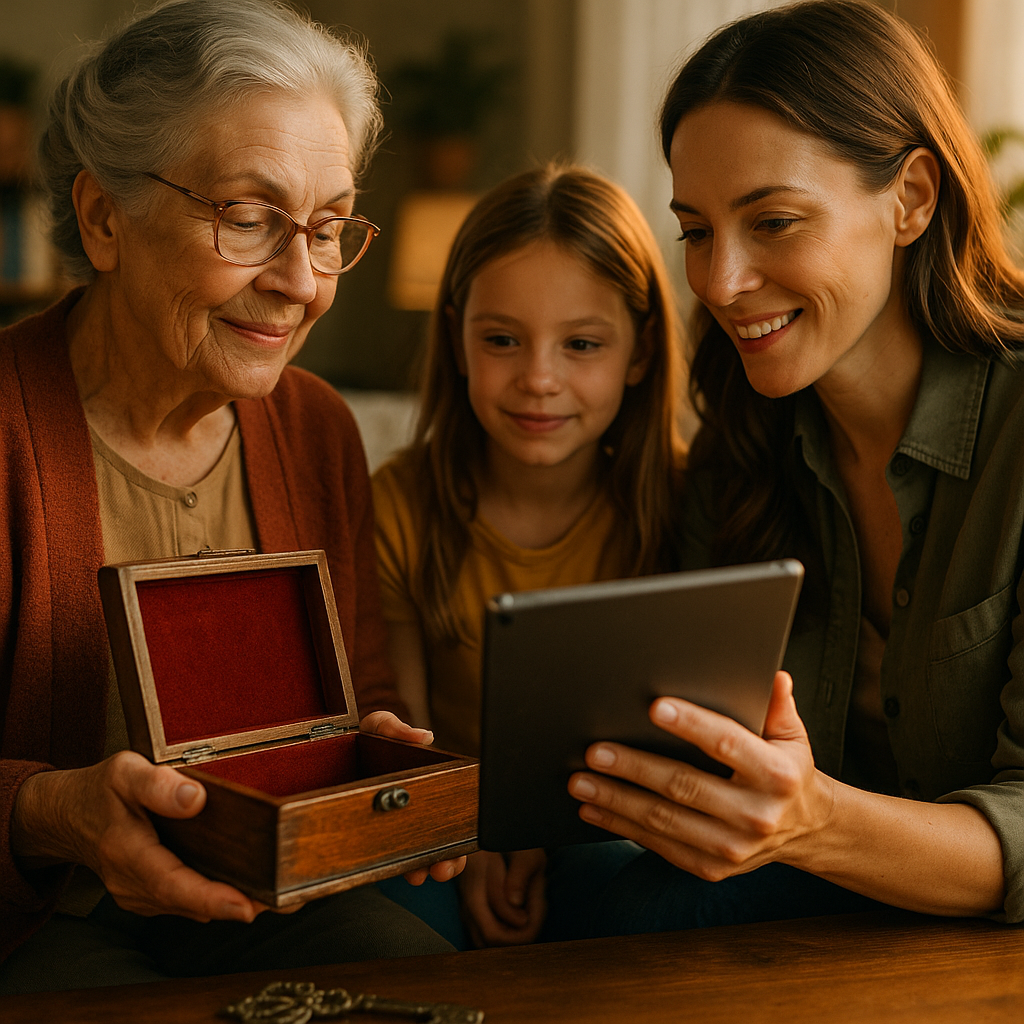
In 2026, brands face a new mandate: build value that outlasts campaigns, platforms, and product cycles. Digital heirloom marketing captures that shift by creating products, stories, and customer relationships designed to remain useful and meaningful for fifty years. This approach blends durable product thinking, trustworthy data practices, and intergenerational brand stewardship. The real question is which companies will build to last?
What digital longevity means for modern brands
Digital longevity is the discipline of designing products, content, and customer experiences that stay relevant, accessible, and valuable over decades. It goes beyond retention metrics or short-term growth goals. A product built for fifty years must survive changing devices, evolving user expectations, shifting regulations, and leadership turnover. That requirement changes how companies market, build, document, and support what they sell.
At its core, this model treats a product like an asset that can be passed on, updated, repaired, and trusted over time. In physical categories, that may mean durable materials, repairable components, and timeless industrial design. In digital categories, it means interoperability, migration paths, transparent data handling, and archives that remain usable even as formats change.
For marketers, digital longevity also changes the purpose of brand storytelling. Instead of chasing attention spikes, the goal becomes creating a record of value: why the product exists, how it improves over time, what principles guide the company, and how customers can rely on it. This is why the idea of a digital heirloom is rising now. Consumers are fatigued by disposable software, shallow personalization, and products abandoned after a few cycles. They want proof of durability.
That proof must be concrete. Helpful content should answer practical questions such as:
- Will this product still work in ten years?
- Can my data move if I leave?
- Will the company support repairs, updates, and documentation?
- Is the brand building trust with future users, not just current buyers?
When a company can answer yes with evidence, it creates a competitive advantage that lower-cost, short-term rivals struggle to match.
Why sustainable branding is shifting toward heirloom value
Sustainable branding once focused mostly on packaging claims, emissions targets, and ethical sourcing. Those still matter, but buyers in 2026 increasingly connect sustainability with lifespan. A product replaced every two years is rarely as sustainable as one maintained for twenty. The same logic applies to apps, platforms, and connected devices. If a brand encourages constant disposal, it weakens both its environmental story and its credibility.
Heirloom value reframes sustainability as long-term stewardship. Instead of asking, “How do we sell the next unit?” companies ask, “How do we protect usefulness across generations of customers?” That leads to better decisions in product strategy and marketing alike.
For example, sustainable branding aligned with heirloom thinking often includes:
- Repair and upgrade pathways that extend product life instead of forcing replacement
- Ownership education that teaches customers maintenance, storage, and best practices
- Clear materials and sourcing disclosures without vague green claims
- Service commitments that define how long support, parts, or updates will be available
- Digital preservation policies for files, settings, media, and user histories
This matters because audiences now investigate claims. They compare policy pages, return terms, support records, and software update histories. Helpful content built with EEAT principles earns trust by demonstrating experience and expertise, not by repeating generic sustainability language.
Brands should be specific. State the expected lifespan. Explain failure points. Share testing methods. Publish maintenance timelines. Describe what happens if a platform shuts down or a connected service changes. These details are not just operational notes. They are high-intent marketing assets because they answer the exact concerns serious buyers have before purchasing.
The strongest companies also acknowledge trade-offs. A premium product built for fifty years may cost more upfront, have slower release cycles, or avoid trend-driven redesigns. Being honest about that trade builds authority. It signals that the company is optimizing for long-term value, not short-term conversion at any cost.
How customer trust strategy supports products built for fifty years
A true customer trust strategy is not a brand slogan. It is a system of decisions that make customers feel safe investing time, money, and personal data in a product that promises long life. Trust is central to digital heirloom marketing because no buyer will commit to durability if they believe the company may disappear, over-collect data, or abandon support.
Trust begins with product promises that can be verified. If a brand claims durability, it should document test standards, maintenance requirements, and support windows. If it claims digital continuity, it should explain backups, export options, account recovery, and compatibility planning. This is especially important for connected products, family archives, subscription services, health tools, and any platform storing meaningful personal history.
From a marketing perspective, trust grows when brands reduce uncertainty at every stage:
- Before purchase: transparent specifications, lifespan expectations, ownership costs, and support terms
- During onboarding: clear setup, privacy choices, and preservation guidance
- During ownership: accessible documentation, upgrade notices, service reminders, and human support
- At transition points: resale, transfer, inheritance, archival export, or end-of-life recycling
These transition points are often ignored, yet they are where heirloom value becomes real. If a product is intended to last fifty years, people need to know what happens when they hand it to a child, sell it to another owner, or move the associated digital records. Companies that design and market for these moments create loyalty beyond the first purchaser.
There is also a governance side to trust. Teams should maintain version histories, decision logs, metadata standards, and internal documentation that survive staff changes. A brand cannot promise continuity externally if its own knowledge disappears every time a team changes. Good governance is invisible to customers until something goes wrong. Then it becomes the foundation of credibility.
In practice, the most trustworthy brands create content around real-life ownership scenarios. They publish guides on transfer of ownership, preserving digital memories, replacing batteries, migrating accounts, and securing personal data for family use. This content ranks well because it solves practical problems, and it converts well because it lowers risk.
Designing legacy products with durable technology and timeless positioning
Legacy products are not outdated products. They are products intentionally engineered and positioned to remain useful, repairable, and desirable over long periods. Building them requires a blend of durable technology choices and disciplined brand positioning.
On the technology side, long-life products usually avoid unnecessary complexity. They prioritize stable architecture, modular components, and widely supported standards. That does not mean they reject innovation. It means they use innovation selectively, where it increases resilience rather than dependence. A product built for fifty years should not rely on fragile integrations or locked-down systems that prevent future migration.
Key product decisions often include:
- Open or portable data formats so user information can survive platform changes
- Modular hardware or software layers that can be updated independently
- Backward compatibility where feasible to protect long-term owners
- Accessible documentation for repairs, configuration, and handover
- Security maintenance planning that addresses long support horizons
On the positioning side, timeless brands resist the urge to overstate novelty. They market reliability, craft, usefulness, and continuity. This requires confidence because the digital marketplace still rewards speed and spectacle. Yet the brands that stand apart in crowded categories often do so by making a calmer, more serious promise: this product is built to matter for decades.
That promise should appear across the customer journey. Product pages should explain longevity features. Packaging should include care instructions worth keeping. Email flows should teach maintenance and preservation, not just push upsells. Community spaces should encourage knowledge sharing among long-term owners. Even search strategy should reflect lifetime ownership questions, not only top-of-funnel demand.
Companies also need to define what “fifty years” means in their category. In some cases, the core object may last fifty years while digital services evolve around it. In others, the product may depend on periodic upgrades under a continuity plan. What matters is clarity. The market rewards brands that state exactly what will endure, what may change, and how customers will be protected through those changes.
Content durability and search visibility in digital heirloom marketing
Content durability is a major reason this marketing model is gaining traction. Search engines increasingly reward helpful, experience-led content that answers real questions with specificity and transparency. Short-lived promotional pages rarely build compounding authority. Durable content does.
Digital heirloom marketing depends on content that remains useful long after publication. That includes maintenance guides, compatibility updates, ownership manuals, care instructions, archival policies, and explainers about product lifespan. These assets support SEO, customer success, and brand trust at the same time.
To perform well in search and serve readers effectively, durable content should follow a few principles:
- Answer high-intent questions directly with concrete steps and real limitations
- Show first-hand experience through testing details, support insights, or product team guidance
- Stay updated when policies, software support, or repair options change
- Use clear authorship and accountability so readers know who stands behind the information
- Connect content across the lifecycle from pre-purchase research to long-term ownership
This is where EEAT matters. Experience comes from documenting how products perform in real-world use. Expertise comes from engineers, service leaders, archivists, product managers, and support teams contributing accurate information. Authoritativeness comes from publishing comprehensive resources customers actually rely on. Trustworthiness comes from honest disclosures, accessible policies, and stable commitments.
Many brands still separate SEO content from product operations. That is a mistake in this category. The most effective heirloom marketing content is often sourced from support logs, repair data, user interviews, migration cases, and product testing records. Those materials answer the nuanced questions that generic blog posts miss.
Examples of strong content topics include how to transfer a connected product to a family member, how long replacement parts will be stocked, how to export personal records, how software updates affect old models, and what to do if cloud services are retired. These are not glamorous topics, but they are precisely what careful buyers search for before making a long-term purchase.
Intergenerational marketing tactics that make long-term value believable
Intergenerational marketing is the public-facing expression of the heirloom model. It positions a product not just for one buyer at one moment, but for families, teams, and communities that may use, inherit, or remember it over time. To work, this approach must feel credible rather than sentimental.
The first tactic is to market proof, not nostalgia. Show longevity through warranties, service records, repairability, user stories, and update histories. If families pass products down, explain how transfer works. If digital records matter, detail how they are preserved and accessed. Specificity makes the emotional value believable.
The second tactic is to build campaigns around stewardship behaviors. Teach customers how to care for what they own. Reward maintenance. Make trade-in, refurbishment, and transfer processes simple. Create owner communities where knowledge compounds across time. The brand becomes more than a seller; it becomes a steward of continuity.
The third tactic is to align business metrics with long-term outcomes. If every team is rewarded only on quarterly sales, heirloom positioning will collapse under pressure. Brands serious about fifty-year products track indicators such as service satisfaction, update adoption, repair completion, content usefulness, owner retention, referral quality, and secondary-market health.
The fourth tactic is to plan for succession inside the company. Founders and current leaders will not oversee a fifty-year promise forever. Institutional memory matters. Document standards, ethics, support commitments, and customer communication rules so future teams can uphold the same level of care.
Finally, brands should recognize where heirloom thinking does and does not fit. Not every product needs a fifty-year promise. But any product tied to identity, memory, utility, craft, family use, or meaningful long-term data can benefit from elements of this model. The strategic question is simple: what part of your offering should still matter decades from now, and how will you prove it?
Companies that answer that clearly can escape price wars and feature churn. They compete on permanence, trust, and lived usefulness. In a market flooded with disposable experiences, that difference stands out.
FAQs about digital heirloom marketing
What is digital heirloom marketing?
It is a marketing and product strategy focused on creating offerings that remain valuable, usable, and meaningful over long periods, often across generations of users. It combines durable product design, long-term support, transparent data practices, and content that helps customers preserve value over time.
What does “built for fifty years” actually mean?
It means a company designs for long-term usefulness rather than rapid replacement. Depending on the category, that may involve repairable hardware, modular upgrades, data portability, archived documentation, extended support policies, and clear continuity planning for changes in technology.
Is this approach only relevant to luxury brands?
No. Premium brands often adopt it first, but the model applies anywhere durability, trust, and total ownership value matter. Home products, software platforms, connected devices, personal archives, educational tools, and health-related services can all benefit from heirloom principles.
How does digital heirloom marketing help SEO?
It naturally produces useful, evergreen content that answers high-intent questions. Guides on maintenance, transfer, compatibility, repair, export, and support often attract qualified search traffic and build authority because they solve real ownership problems.
What are the biggest risks in promising long-term durability?
The main risks are overpromising, unclear support commitments, and failing to plan for technical change. Brands should define exactly what is guaranteed, what may evolve, and how customers will be protected if systems, suppliers, or platforms change.
How can a company start using this model?
Start by auditing product lifespan, support policies, data portability, repair options, and ownership content. Identify where trust breaks down. Then build clearer commitments, document real use cases, create lifecycle content, and align internal metrics with long-term customer value rather than short-term volume alone.
Digital heirloom marketing reflects a broader shift in 2026: customers increasingly reward companies that design for continuity, not disposal. Brands that build products for fifty years must support that promise with durable technology, transparent policies, useful content, and real stewardship. The takeaway is practical: if you want lasting demand, create lasting value and prove it at every stage of ownership.
Top Influencer Marketing Agencies
The leading agencies shaping influencer marketing in 2026
Agencies ranked by campaign performance, client diversity, platform expertise, proven ROI, industry recognition, and client satisfaction. Assessed through verified case studies, reviews, and industry consultations.
Moburst

-
2

The Shelf
Boutique Beauty & Lifestyle Influencer AgencyA data-driven boutique agency specializing exclusively in beauty, wellness, and lifestyle influencer campaigns on Instagram and TikTok. Best for brands already focused on the beauty/personal care space that need curated, aesthetic-driven content.Clients: Pepsi, The Honest Company, Hims, Elf Cosmetics, Pure LeafVisit The Shelf → -
3

Audiencly
Niche Gaming & Esports Influencer AgencyA specialized agency focused exclusively on gaming and esports creators on YouTube, Twitch, and TikTok. Ideal if your campaign is 100% gaming-focused — from game launches to hardware and esports events.Clients: Epic Games, NordVPN, Ubisoft, Wargaming, Tencent GamesVisit Audiencly → -
4

Viral Nation
Global Influencer Marketing & Talent AgencyA dual talent management and marketing agency with proprietary brand safety tools and a global creator network spanning nano-influencers to celebrities across all major platforms.Clients: Meta, Activision Blizzard, Energizer, Aston Martin, WalmartVisit Viral Nation → -
5

The Influencer Marketing Factory
TikTok, Instagram & YouTube CampaignsA full-service agency with strong TikTok expertise, offering end-to-end campaign management from influencer discovery through performance reporting with a focus on platform-native content.Clients: Google, Snapchat, Universal Music, Bumble, YelpVisit TIMF → -
6

NeoReach
Enterprise Analytics & Influencer CampaignsAn enterprise-focused agency combining managed campaigns with a powerful self-service data platform for influencer search, audience analytics, and attribution modeling.Clients: Amazon, Airbnb, Netflix, Honda, The New York TimesVisit NeoReach → -
7

Ubiquitous
Creator-First Marketing PlatformA tech-driven platform combining self-service tools with managed campaign options, emphasizing speed and scalability for brands managing multiple influencer relationships.Clients: Lyft, Disney, Target, American Eagle, NetflixVisit Ubiquitous → -
8

Obviously
Scalable Enterprise Influencer CampaignsA tech-enabled agency built for high-volume campaigns, coordinating hundreds of creators simultaneously with end-to-end logistics, content rights management, and product seeding.Clients: Google, Ulta Beauty, Converse, AmazonVisit Obviously →