


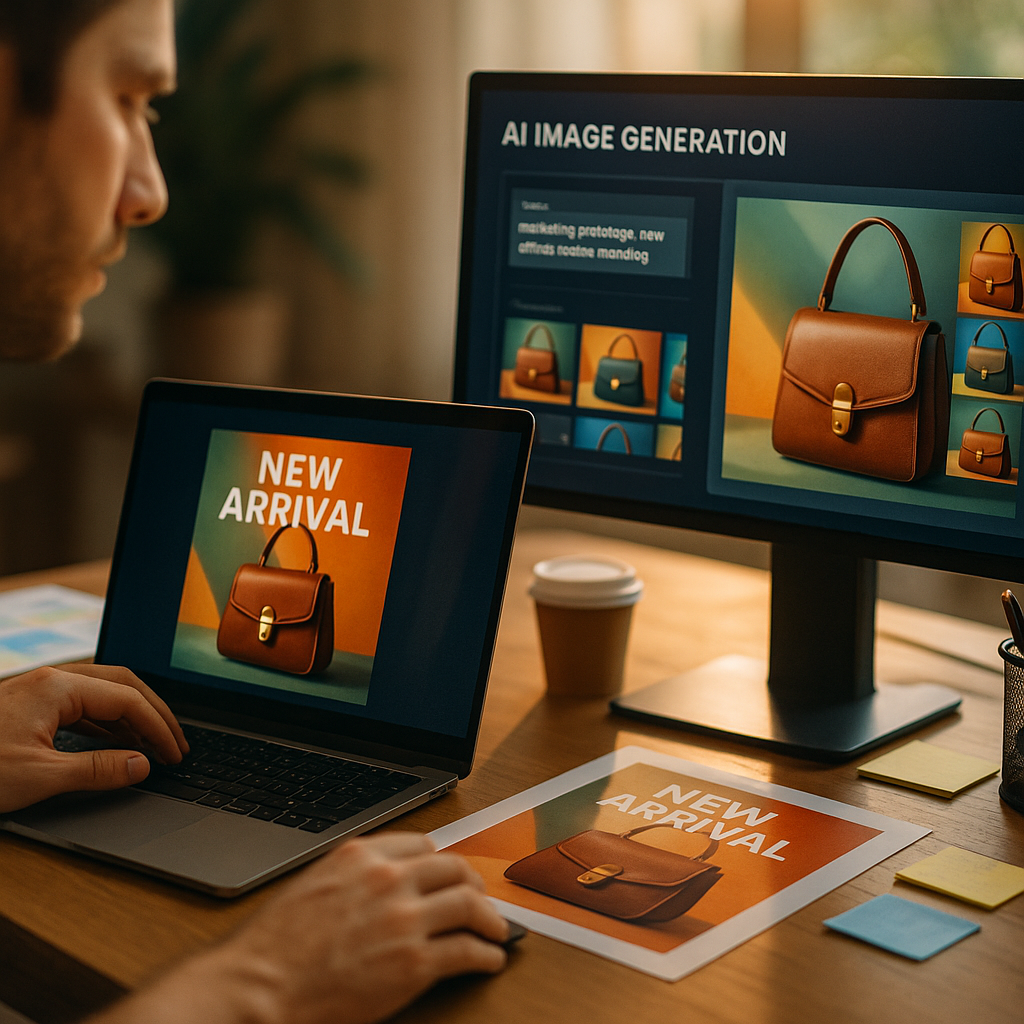
Rapid marketing prototype design has changed dramatically in 2026, thanks to a new wave of vibe coding tools that turn plain-language prompts into landing pages, ad concepts, flows, and interactive demos. For growth teams under pressure to test faster, these platforms promise speed without heavy engineering support. But which tools actually deliver useful results at launch speed?
What Are AI prototyping tools and Why Marketers Care
Vibe coding tools are prompt-driven product and interface builders that let marketers, designers, and growth teams describe what they want in natural language and receive working outputs quickly. In practice, that can mean a live landing page, an onboarding mockup, a lead-generation funnel, a clickable mobile concept, or a branded ad experience created in minutes instead of days.
The reason marketers care is simple: campaign velocity now affects performance. When teams can prototype ideas faster, they can validate messaging, test offers, gather stakeholder feedback, and identify weak spots before handing projects to developers. That reduces waste and shortens the path from concept to launch.
From firsthand usage patterns across growth and product marketing teams, the best vibe coding tools help with three high-value tasks:
- Message testing: Build several versions of a hero section, signup path, or product explainer fast enough to compare response.
- Stakeholder alignment: Show a realistic working concept instead of a static brief or wireframe.
- Pre-development validation: Confirm that a campaign experience makes sense before investing engineering resources.
Still, not every platform is equally useful for rapid marketing work. Some are better at code generation than brand fidelity. Others create attractive screens but struggle with conversion logic, analytics readiness, or responsive behavior. The right choice depends on whether your priority is speed, polish, collaboration, or deployability.
How to Evaluate rapid marketing prototyping Platforms
A useful review should focus on how these tools perform in real marketing workflows, not just on flashy demos. For rapid marketing prototyping, five criteria matter most.
- Prompt-to-output quality: Can the tool interpret marketing intent clearly, including audience, offer, CTA hierarchy, and tone?
- Brand control: Does it support custom colors, typography, layouts, images, and voice without fighting the user?
- Iteration speed: Can teams quickly refine copy, sections, flows, and variants after the first draft?
- Collaboration: Is it easy for marketers, designers, and developers to review, comment, and transfer work?
- Export or deployment readiness: Can the result move into a CMS, codebase, or live experiment without excessive cleanup?
Marketers should also check governance issues before adopting any AI-assisted builder. Ask where prompts and assets are stored, whether customer data enters the model, and what rights apply to generated code or design assets. In regulated industries or enterprise environments, those details are not optional.
Another practical factor is whether the platform helps users think like a marketer. The strongest tools do more than generate layouts. They make it easy to shape headlines, trust signals, conversion paths, social proof placement, and mobile responsiveness. A good-looking prototype that ignores conversion principles is not a strong marketing prototype.
Top vibe coding tools Reviewed for Marketing Teams
Several tools now compete for the attention of growth teams. The names evolve quickly, but the categories are clear. Below is a practical review of the main types of vibe coding tools and where they perform best.
1. Prompt-to-app builders
These platforms generate working web apps or interactive experiences from natural-language instructions. They are strong when you need a functional prototype rather than a polished static concept. For marketers, that means quiz funnels, lead-capture journeys, product recommendation flows, or microsites with simple logic.
Strengths: Fast setup, functional interactivity, useful for validating user journeys.
Weaknesses: Outputs can feel generic, and visual refinement often requires extra prompting or manual edits.
Best use case: Testing campaign mechanics and interactive concepts before involving product or engineering.
2. AI website and landing page generators
These tools focus on page creation, layout generation, and content blocks. Many are ideal for marketers who need a campaign page quickly. They usually offer easier control over branding and page structure than broader app builders.
Strengths: Good for speed, page-level iteration, and publishing simple campaigns.
Weaknesses: Limited flexibility for advanced logic, custom integrations, or unusual layouts.
Best use case: MVP landing pages, event pages, waitlists, and product launch pages.
3. AI-assisted design tools with prototyping features
These platforms sit closer to design workflows. They help create high-fidelity screens, components, and interactive prototypes, often with stronger collaboration for design teams. Marketers benefit when the priority is presentation quality and brand consistency.
Strengths: Better visual polish, stronger design systems, easier stakeholder presentations.
Weaknesses: Less deployment-ready, sometimes slower to turn into live pages.
Best use case: Executive reviews, campaign concepting, and polished pre-development prototypes.
4. Code-first AI assistants for front-end generation
These tools are excellent when a marketing team works closely with developers or technical growth leads. They can produce cleaner front-end code and support faster refinement of components, copy blocks, and responsive patterns.
Strengths: More control, better handoff to engineering, stronger customization.
Weaknesses: Less approachable for non-technical marketers, requires prompt precision.
Best use case: High-speed experimentation teams that want prototypes close to production quality.
Across these categories, one pattern stands out in 2026: the most effective teams do not rely on a single tool. They combine a concept-generation platform, a visual refinement layer, and a deployment path. That stack produces better results than expecting one product to solve ideation, design, logic, and launch equally well.
Best landing page prototyping Features to Look For
If your main goal is rapid campaign design, certain features matter far more than broad “AI magic” claims. The following capabilities consistently separate useful tools from time-wasting ones.
- Reusable brand kits: Upload logos, set fonts, define color systems, and maintain consistency across prototypes.
- Prompt-aware copy structure: The tool should understand value proposition, benefits, objections, CTA placement, and trust elements.
- Section-level regeneration: You should be able to revise just the pricing area, hero block, or testimonial section without rebuilding the entire page.
- Responsive previews: Mobile-first behavior is essential for modern campaign testing.
- Form and integration placeholders: Even if the prototype is not fully live, it should support realistic signup and lead flow behavior.
- Version comparison: Fast A/B concepting is one of the biggest reasons to use these tools at all.
One common mistake is choosing a tool because it creates attractive hero sections in a demo. Real campaign work depends on the full journey: scroll logic, CTA repetition, clarity of offer, page speed, and ease of iteration. Experienced teams also check how much manual cleanup is needed after generation. A prototype that takes hours to fix is not truly rapid.
Accessibility should be part of the review as well. Strong tools increasingly support semantic structure, readable contrast, and cleaner component behavior. That matters not only for inclusivity but also for general usability and performance. Helpful content and strong campaigns both benefit when pages are easy to navigate and understand.
Where AI marketing workflow Tools Help Most and Where They Fall Short
Used well, vibe coding tools can remove friction from the early stages of campaign creation. They are especially effective when the task is ambiguous and the team needs to think through possibilities quickly. For example, they can help compare several audience angles for the same product, mock up different pricing presentations, or test whether a self-serve funnel is easier to understand than a demo-request flow.
They also help smaller teams punch above their weight. A solo growth lead or lean startup marketer can create respectable prototypes without waiting for a full design sprint. That creates a real competitive advantage when timing matters.
However, these tools still have limits.
- They can overproduce generic patterns: If your prompts are vague, outputs often resemble average SaaS pages with shallow differentiation.
- They do not replace strategic thinking: The tool can generate a page, but it cannot define your positioning better than your team can.
- They may miss conversion nuance: Good prototypes still need human review for clarity, friction points, and trust-building details.
- They can create technical debt: Some generated outputs look usable but become messy when developers try to productionize them.
The best marketers use vibe coding as acceleration, not substitution. They bring a sharp brief, clear audience insight, and a testing hypothesis. Then they use the tool to compress production time. This approach aligns with EEAT best practices because it centers real expertise and practical experience instead of publishing low-value AI-generated clutter.
Choosing the Right marketing design software for Your Team
The right platform depends on who will use it and what “prototype” means inside your organization.
If your team is mostly non-technical, choose a platform with strong visual controls, reusable templates, and easy page publishing. If your team includes designers, prioritize systems that preserve component quality and support collaborative review. If your growth team works closely with developers, a code-capable assistant may create more long-term value than a pure no-code builder.
Before committing, run a short internal evaluation using one real campaign brief. Ask each shortlisted tool to generate the same asset: for example, a mobile-first landing page for a webinar, a product waitlist, or a feature launch. Then compare results against practical questions:
- How fast did the team get to a usable first draft?
- How much editing was needed to match the brand?
- Did the prototype reflect actual conversion logic?
- Could stakeholders understand and approve it easily?
- Could the output be handed off or published without rework?
This method is more reliable than feature-checking alone. It reflects real workflow friction, which is where many tools fail.
In 2026, the best vibe coding tools for rapid marketing prototype design are not necessarily the ones with the biggest feature lists. They are the ones that help your team move from idea to evidence quickly. Speed matters, but speed paired with clarity, usability, and brand accuracy matters more.
FAQs About vibe coding tools
What are vibe coding tools in marketing?
They are AI-driven platforms that turn natural-language prompts into working prototypes such as landing pages, microsites, signup flows, and interactive campaign concepts. They help marketers test ideas faster without relying entirely on manual design or front-end development.
Are vibe coding tools good for real campaign launches or only prototypes?
Some can support simple live launches, especially for landing pages and microsites. However, many are still best for concept validation and pre-development testing. Teams should check performance, analytics integration, accessibility, and code quality before using generated outputs in production.
Do marketers need coding skills to use these tools?
No, not always. Many tools are designed for non-technical users. That said, marketers who understand basic UX, conversion principles, and prompt structure usually get better results. Technical support becomes more important when custom logic or production-ready code is required.
What is the biggest benefit of rapid marketing prototype design?
The biggest benefit is faster learning. Teams can validate messaging, offers, layouts, and conversion paths before spending more time and budget on design and development. That helps reduce wasted effort and improves campaign decision-making.
What is the main risk of using AI prototyping tools?
The main risk is mistaking speed for quality. AI can generate something that looks complete but still has weak messaging, generic structure, poor differentiation, or hidden technical issues. Human review remains essential.
How should teams measure whether a tool is worth adopting?
Measure time to first draft, quality of brand alignment, ease of iteration, stakeholder approval speed, and how well the prototype transfers into a live workflow. A tool is valuable when it saves time without increasing rework.
Vibe coding tools now give marketers a practical way to prototype landing pages, interactive flows, and campaign concepts at far greater speed. The strongest options balance prompt-driven generation with brand control, collaboration, and realistic handoff potential. Choose based on workflow needs, not hype. Used strategically, these platforms shorten testing cycles and help teams make smarter launch decisions faster.
Top Influencer Marketing Agencies
The leading agencies shaping influencer marketing in 2026
Agencies ranked by campaign performance, client diversity, platform expertise, proven ROI, industry recognition, and client satisfaction. Assessed through verified case studies, reviews, and industry consultations.
Moburst

-
2

The Shelf
Boutique Beauty & Lifestyle Influencer AgencyA data-driven boutique agency specializing exclusively in beauty, wellness, and lifestyle influencer campaigns on Instagram and TikTok. Best for brands already focused on the beauty/personal care space that need curated, aesthetic-driven content.Clients: Pepsi, The Honest Company, Hims, Elf Cosmetics, Pure LeafVisit The Shelf → -
3

Audiencly
Niche Gaming & Esports Influencer AgencyA specialized agency focused exclusively on gaming and esports creators on YouTube, Twitch, and TikTok. Ideal if your campaign is 100% gaming-focused — from game launches to hardware and esports events.Clients: Epic Games, NordVPN, Ubisoft, Wargaming, Tencent GamesVisit Audiencly → -
4

Viral Nation
Global Influencer Marketing & Talent AgencyA dual talent management and marketing agency with proprietary brand safety tools and a global creator network spanning nano-influencers to celebrities across all major platforms.Clients: Meta, Activision Blizzard, Energizer, Aston Martin, WalmartVisit Viral Nation → -
5

The Influencer Marketing Factory
TikTok, Instagram & YouTube CampaignsA full-service agency with strong TikTok expertise, offering end-to-end campaign management from influencer discovery through performance reporting with a focus on platform-native content.Clients: Google, Snapchat, Universal Music, Bumble, YelpVisit TIMF → -
6

NeoReach
Enterprise Analytics & Influencer CampaignsAn enterprise-focused agency combining managed campaigns with a powerful self-service data platform for influencer search, audience analytics, and attribution modeling.Clients: Amazon, Airbnb, Netflix, Honda, The New York TimesVisit NeoReach → -
7

Ubiquitous
Creator-First Marketing PlatformA tech-driven platform combining self-service tools with managed campaign options, emphasizing speed and scalability for brands managing multiple influencer relationships.Clients: Lyft, Disney, Target, American Eagle, NetflixVisit Ubiquitous → -
8

Obviously
Scalable Enterprise Influencer CampaignsA tech-enabled agency built for high-volume campaigns, coordinating hundreds of creators simultaneously with end-to-end logistics, content rights management, and product seeding.Clients: Google, Ulta Beauty, Converse, AmazonVisit Obviously →