


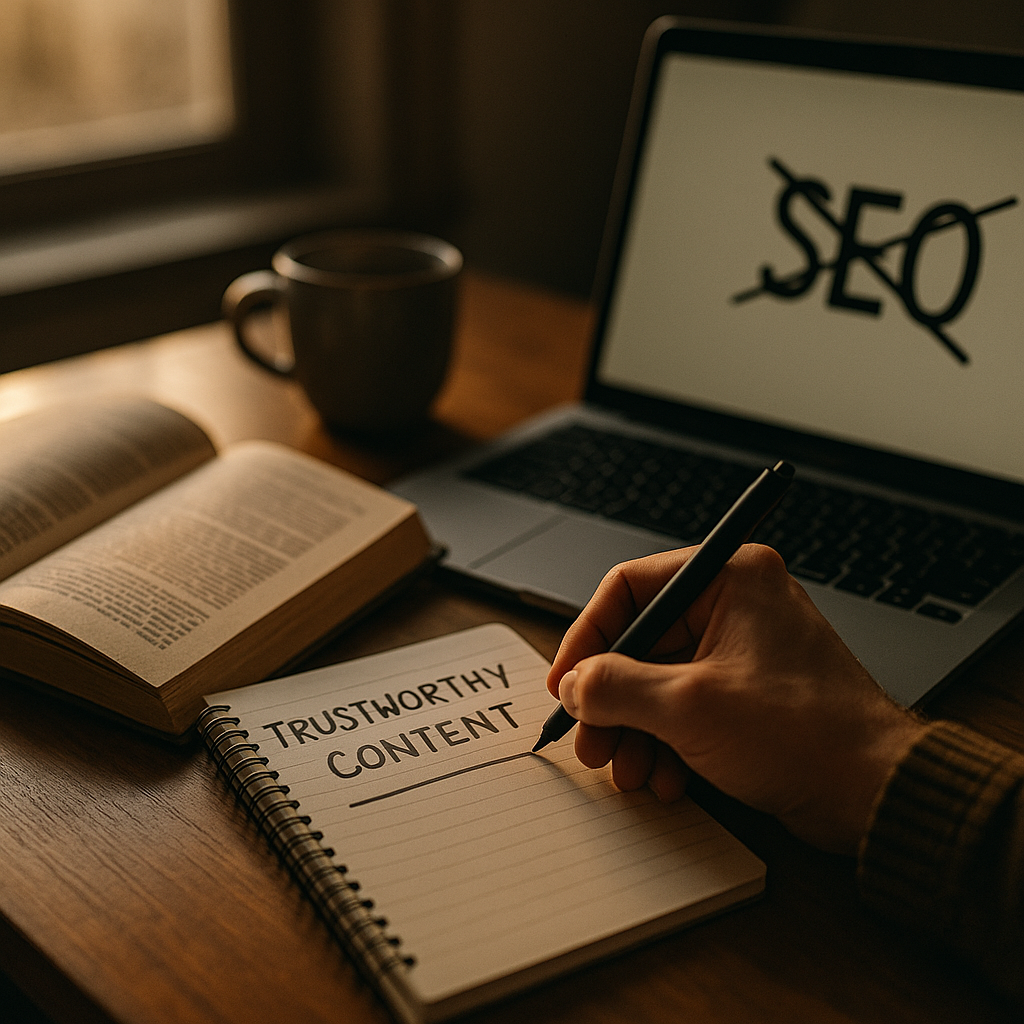
In 2026, brands win attention not by gaming algorithms but by earning trust. Anti SEO copywriting puts people first, using clear language, real expertise, and emotional resonance instead of keyword stuffing. Done well, it improves search performance because readers stay, act, and return. The real question is not whether this approach works, but why so many marketers still resist it.
Human-first writing and the shift beyond search tricks
Anti SEO copywriting does not mean ignoring search engines. It means rejecting manipulative tactics that make content unreadable, repetitive, or thin. For years, many teams wrote pages around formulas: exact-match keywords in every paragraph, awkward subheadings, and content stretched to hit a word count. That model now fails both readers and search systems that are better at evaluating usefulness.
Google’s helpful content guidance and broader EEAT thinking reward material that demonstrates experience, expertise, authoritativeness, and trustworthiness. In practice, that means content should solve a problem, reflect real-world understanding, and feel written by someone who knows the subject. Human-first writing supports this naturally because it starts with intent, not keyword density.
Writers who adopt this approach ask better questions:
- What is the reader worried about right now?
- What decision are they trying to make?
- What would help them trust this advice?
- What details would only an experienced practitioner include?
When those questions shape the draft, the content becomes easier to read and more likely to rank well over time. Readers do not separate “good writing” from “good SEO” as neatly as marketers do. If a page feels useful, credible, and emotionally intelligent, people engage with it. Those engagement signals often align with stronger organic performance.
Writing for the human soul through emotional resonance
Writing for the human soul is not poetic excess. It is the discipline of speaking to people as people, not as traffic sources. Every search has context. Someone looking up “best project management software” may be stressed, overwhelmed, or under pressure from a manager. Someone reading about financial planning may feel shame, fear, or confusion. Purely optimized copy often misses this emotional layer.
Emotional resonance improves content because it acknowledges lived experience. That can be as simple as naming a frustration honestly, reducing confusion with plain language, or reassuring the reader that the problem is common and solvable. This creates momentum. Readers keep going because they feel understood.
Strong anti SEO copywriting uses emotion carefully:
- Clarity over cleverness: readers should never work to decode your point.
- Specificity over abstraction: concrete examples build trust.
- Empathy over hype: honest framing beats exaggerated promises.
- Guidance over pressure: help the reader decide instead of forcing urgency.
This matters for conversion as much as discovery. People buy, subscribe, share, and return when content reduces uncertainty. A page that respects their emotional state often outperforms one that merely checks technical SEO boxes. The goal is not sentimentality. The goal is relevance at the human level.
EEAT content strategy that builds trust and authority
If anti SEO copywriting sounds loose or artistic, EEAT provides the structure. Helpful content still needs standards. In 2026, credible content is not just readable; it is accountable. Readers want to know why they should trust what they are reading, especially in topics that affect money, health, legal choices, careers, or safety.
An effective EEAT content strategy includes several practical moves:
- Show real experience. Include observations from actual use, client work, testing, or field knowledge. First-hand insight separates helpful pages from generic summaries.
- Demonstrate expertise. Explain ideas accurately and with enough depth to answer follow-up questions. Surface-level advice rarely satisfies intent.
- Support claims responsibly. If you mention data, use recent and reliable sources where possible. Avoid filler statistics that add noise without meaning.
- Make authorship clear. Readers should understand who created the content and why that person or brand is qualified.
- Keep content current. Refresh pages when standards, tools, laws, or audience expectations change.
These practices fit naturally with anti SEO copywriting because both prioritize substance. Instead of asking, “How many times should this keyword appear?” ask, “What evidence would make this page genuinely useful?” Instead of writing to satisfy a template, write to eliminate doubt.
Trust also comes from restraint. If a topic is nuanced, say so. If there are trade-offs, explain them. If a tactic works only in certain situations, make the limits clear. Authority is not built by pretending every answer is simple. It is built by helping readers navigate complexity without confusion.
Organic traffic growth without keyword stuffing
Many teams still fear that if they stop writing for algorithms, rankings will collapse. In reality, the opposite often happens. Pages improve when they become cleaner, more readable, and more aligned with intent. Organic traffic growth without keyword stuffing is possible because modern search evaluates context, relationships between terms, topical completeness, and user satisfaction more effectively than older ranking models did.
This does not mean keywords no longer matter. They still help you understand audience language and organize page focus. The difference is how you use them. A strong writer lets the primary topic guide the article, then uses natural variations where they fit. Secondary phrases appear because the subject demands them, not because a plugin insists on a density target.
To create content that performs without sounding robotic:
- Map the main search intent before drafting.
- Answer the obvious question early, then expand into nuance.
- Use related concepts, examples, and definitions naturally.
- Break information into logical sections that reduce cognitive load.
- Remove repetition that exists only for ranking superstition.
User behavior often improves when content is written this way. Time on page may increase. Bounce behavior may become healthier because the page actually fulfills intent. More importantly, readers are more likely to remember the brand behind the content. Search visibility matters, but memorability compounds its value.
There is also a strategic advantage here. Over-optimized content is easier to imitate. Human-centered content is harder to copy because it reflects judgment, voice, and lived knowledge. That makes it a stronger long-term asset.
Authentic brand voice as a competitive advantage
Authentic brand voice is not a cosmetic layer added after optimization. It is part of how a company earns trust. When every article sounds interchangeable, readers have no reason to prefer one source over another. Anti SEO copywriting helps brands sound like themselves again.
A real voice does not require being casual, edgy, or emotional in every industry. It requires consistency and intention. A cybersecurity firm can sound precise and calm. A wellness brand can sound reassuring and grounded. A B2B SaaS company can sound direct, useful, and intelligent. What matters is that the tone fits the audience and remains stable across channels.
Voice also shapes comprehension. If your audience is sophisticated, you can use technical language where needed, but define terms when ambiguity could slow the reader down. If your audience is broad, choose accessible wording without becoming vague. Good voice never gets in the way of meaning.
To strengthen authentic brand voice:
- Document principles, not scripts. Define what your brand sounds like and what it avoids.
- Write from conviction. Say something clear instead of hiding behind generic phrasing.
- Use examples from reality. Real scenarios make voice credible.
- Edit for rhythm. Strong copy sounds human when read aloud.
The result is not just better content marketing. It is stronger brand recall. Readers begin to associate your company with a reliable way of thinking, not just with a set of search terms. That is powerful in crowded categories where attention is fragmented and trust is scarce.
Content strategy in 2026: how to practice anti SEO copywriting well
The best content strategy in 2026 combines technical discipline with human depth. Anti SEO copywriting should not be an excuse for ignoring structure, metadata, internal links, or accessibility. Those elements still matter. The difference is that they support the experience instead of dictating the writing.
A practical workflow looks like this:
- Start with audience intent. Identify what the reader wants to know, feel, avoid, or decide.
- Interview subject matter experts. Capture insights that generic AI or low-effort research cannot produce on their own.
- Outline around questions. Build sections that mirror the reader’s decision process.
- Draft naturally. Focus on clarity, logic, and emotional truth before optimization.
- Optimize lightly. Add title elements, internal links, and semantically relevant language after the core value is strong.
- Edit aggressively. Cut filler, hedging, empty transitions, and any sentence written only for a bot.
- Review for EEAT. Check whether the content proves credibility and gives readers a reason to trust it.
Writers often ask whether AI has changed this equation. It has, but mostly by raising the value of human judgment. AI can accelerate drafts, summarize information, and suggest structure. It cannot replace genuine experience, ethical framing, or the subtle empathy that makes writing feel alive. In a world where content volume keeps rising, soul becomes a differentiator.
The strongest pages now do three things at once: they answer the query, demonstrate lived expertise, and create a feeling of being understood. That combination is difficult to fake, and that is exactly why it works.
FAQs about anti SEO copywriting and human-first content
What is anti SEO copywriting?
Anti SEO copywriting is a human-first approach to content creation that rejects manipulative optimization tactics such as keyword stuffing, formulaic writing, and empty word-count padding. It still respects search intent and technical best practices, but it prioritizes usefulness, readability, trust, and emotional relevance.
Does anti SEO copywriting hurt rankings?
No, not when done correctly. If the content still targets real search intent, uses clear structure, and includes relevant language naturally, it can improve rankings over time. Search systems increasingly reward helpful, trustworthy content that satisfies readers.
How is anti SEO copywriting different from regular SEO writing?
Traditional SEO writing often starts with keyword placement rules. Anti SEO copywriting starts with the reader’s need and emotional context. The writing is then lightly optimized, rather than built around rigid formulas. The result is more natural and often more persuasive.
What does writing for the human soul actually mean?
It means recognizing that readers bring emotions, pressure, uncertainty, and personal stakes to their searches. Writing for the human soul acknowledges those realities through empathy, clarity, specificity, and honest guidance. It is less about style and more about depth of connection.
Can brands use this approach in technical or regulated industries?
Yes. In fact, it is especially valuable there. Technical and regulated topics require trust, precision, and clear explanation. Human-first writing helps readers understand complex information without reducing accuracy. It also supports EEAT by showing expertise and responsible communication.
How do I measure whether human-first content is working?
Track organic traffic, engagement quality, conversions, return visits, assisted conversions, and keyword spread across related queries. Also review qualitative signals such as sales feedback, customer questions, and whether readers seem less confused after engaging with the content.
Should I stop using keywords completely?
No. Keywords remain useful for understanding how people search and what language they use. The point is to use them naturally and strategically, not mechanically. They should guide the topic, not dominate the prose.
Can AI help with anti SEO copywriting?
Yes, but only as a tool. AI can help with research summaries, outlines, and draft acceleration. Human writers and editors must still provide judgment, brand voice, factual care, and the lived insight that makes content credible and emotionally intelligent.
Anti SEO copywriting works because people can feel the difference between content made to rank and content made to help. When you combine human insight, emotional clarity, and EEAT-driven credibility, search performance becomes a byproduct of usefulness. The takeaway is simple: write for real people with real stakes, then optimize with restraint. That is how content earns trust and keeps it.
Top Influencer Marketing Agencies
The leading agencies shaping influencer marketing in 2026
Agencies ranked by campaign performance, client diversity, platform expertise, proven ROI, industry recognition, and client satisfaction. Assessed through verified case studies, reviews, and industry consultations.
Moburst

-
2

The Shelf
Boutique Beauty & Lifestyle Influencer AgencyA data-driven boutique agency specializing exclusively in beauty, wellness, and lifestyle influencer campaigns on Instagram and TikTok. Best for brands already focused on the beauty/personal care space that need curated, aesthetic-driven content.Clients: Pepsi, The Honest Company, Hims, Elf Cosmetics, Pure LeafVisit The Shelf → -
3

Audiencly
Niche Gaming & Esports Influencer AgencyA specialized agency focused exclusively on gaming and esports creators on YouTube, Twitch, and TikTok. Ideal if your campaign is 100% gaming-focused — from game launches to hardware and esports events.Clients: Epic Games, NordVPN, Ubisoft, Wargaming, Tencent GamesVisit Audiencly → -
4

Viral Nation
Global Influencer Marketing & Talent AgencyA dual talent management and marketing agency with proprietary brand safety tools and a global creator network spanning nano-influencers to celebrities across all major platforms.Clients: Meta, Activision Blizzard, Energizer, Aston Martin, WalmartVisit Viral Nation → -
5

The Influencer Marketing Factory
TikTok, Instagram & YouTube CampaignsA full-service agency with strong TikTok expertise, offering end-to-end campaign management from influencer discovery through performance reporting with a focus on platform-native content.Clients: Google, Snapchat, Universal Music, Bumble, YelpVisit TIMF → -
6

NeoReach
Enterprise Analytics & Influencer CampaignsAn enterprise-focused agency combining managed campaigns with a powerful self-service data platform for influencer search, audience analytics, and attribution modeling.Clients: Amazon, Airbnb, Netflix, Honda, The New York TimesVisit NeoReach → -
7

Ubiquitous
Creator-First Marketing PlatformA tech-driven platform combining self-service tools with managed campaign options, emphasizing speed and scalability for brands managing multiple influencer relationships.Clients: Lyft, Disney, Target, American Eagle, NetflixVisit Ubiquitous → -
8

Obviously
Scalable Enterprise Influencer CampaignsA tech-enabled agency built for high-volume campaigns, coordinating hundreds of creators simultaneously with end-to-end logistics, content rights management, and product seeding.Clients: Google, Ulta Beauty, Converse, AmazonVisit Obviously →