


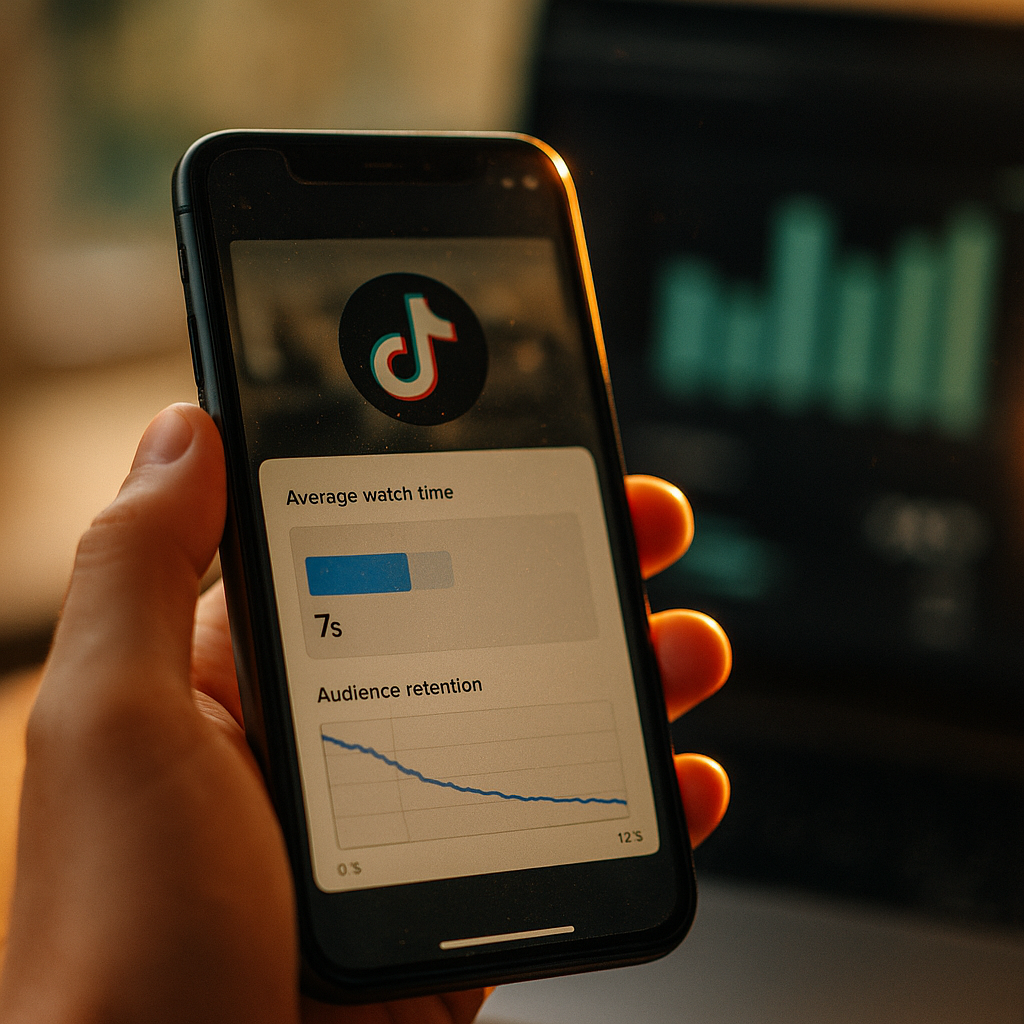
If your last brand campaign nailed 2 million views but nobody watched past the three-second mark, TikTok’s new ranking logic just made that number worthless. The platform’s watch-time-weighted algorithm overhaul is not a minor tweak. It is a signal that the entire industry is quietly abandoning reach as the metric that matters and replacing it with something harder to fake: attention.
What Actually Changed in TikTok’s Ranking Logic
TikTok has always leaned on engagement signals, but the recent shift puts significantly more weight on completion rate, rewatch behavior, and total watch time relative to video length. A 90-second video that holds viewers for 70 seconds now outperforms a 15-second video with a higher raw view count, even if the shorter clip technically racked up more impressions. That is a fundamental change in what “performing well” means on the platform.
This mirrors what we covered when TikTok’s recommendation engine started beating follower count as the primary driver of reach. The pattern is consistent: distribution is increasingly decoupled from audience size and increasingly tied to how the content actually performs once it hits a feed. Follower count told you nothing about retention. Watch time tells you everything.
A video that holds attention for 70% of its runtime will now outrank one with triple the views but a 10% completion rate. Retention is the new reach.
Why Brands Got Caught Off Guard
Most influencer briefs were written for a reach-first world. Hook in the first three seconds, get the view, move on. That playbook optimized for the algorithm’s old priorities: quick scroll-stopping and high impression counts. Under watch-time weighting, a video optimized purely for the hook and then abandoned by 80% of viewers by second ten gets throttled, not boosted.
Agencies running dozens of creator campaigns simultaneously are now finding that their best-performing creators by view count are sometimes their worst performers by retention. That is an uncomfortable gap to explain to a CMO who has spent two years reporting on impressions.
Retention Metrics Brands Should Be Tracking Now
If reach was the vanity metric of the last five years, retention is becoming the accountability metric of this one. Practitioners need to shift reporting frameworks toward:
- Average watch time as a percentage of video length, not just total watch time.
- Rewatch rate, which signals content dense enough to reward a second pass.
- Drop-off timestamps, pinpointing exactly where viewers bail.
- Completion rate segmented by traffic source, since For You Page traffic behaves differently than profile-driven traffic.
None of this is exotic. TikTok’s own analytics dashboard, along with the creator-facing tools inside TikTok Ads Manager, already surfaces most of these numbers. The problem is not access. It is that most brand scorecards were built around reach and engagement rate, and nobody updated the template.
Sprout Social’s own benchmarking work through Sprout Social has flagged similar attention-based shifts across platforms, not just TikTok, which suggests this is bigger than one algorithm update.
The Reach to Retention Shift Is Bigger Than One Platform
TikTok is the loudest signal, but it is not the only one. YouTube has rewarded session duration for years. Instagram’s Reels ranking has quietly shifted toward completion and share rate. Even LinkedIn’s feed algorithm, per guidance from LinkedIn for Business, now weights dwell time on posts more heavily than reaction counts.
Put simply: every major platform is converging on the same idea. Attention is scarce, users have infinite scroll options, and the platforms that keep people watching longest win the ad dollars. Algorithms are being tuned to reward whatever keeps users on-platform, and reach-optimized content that gets abandoned instantly does not do that job.
This is also why micro-communities are outperforming mega-influencer reach plays in several APAC markets. Smaller, more engaged audiences tend to watch longer and rewatch more often, which is exactly the behavior the new weighting rewards. Scale without stickiness is losing value fast.
What This Means for Creator Selection
Brands vetting creators for retention-driven placements need a different scouting process than the one built for reach. Follower count and average views per post are now weak proxies. What matters more:
- Historical completion rate on the creator’s recent content, not just view totals.
- Content format fit (storytelling and tutorial formats tend to retain better than pure hook-and-cut editing).
- Whether the creator’s audience rewatches or shares content, which correlates with algorithmic favor.
This ties directly into the broader trend of average creators reshaping the playbook. Retention-optimized content does not require a celebrity-tier production budget. It requires pacing, narrative structure, and a reason to keep watching, all things a well-briefed mid-tier creator can deliver as effectively as a top-tier one.
Rewriting the Creative Brief for Watch Time
Here is the operational reality: creative briefs built for hooks and view counts need a rewrite. A retention-first brief should specify pacing beats, not just an opening hook. It should require a mid-video “re-hook,” something that resets attention around the 40 to 60% mark where most drop-off happens. And it should explicitly deprioritize front-loaded CTAs that push viewers to swipe away before the algorithm has registered meaningful watch time.
Some brands are already testing longer-form TikTok content (60 to 90 seconds) specifically because the format rewards depth over brevity when retention holds. That is a reversal of the “shorter is always better” logic that dominated the platform’s early years.
This also connects to production economics. As covered in our piece on how AI production shifts are moving creator budgets to the long tail, brands can now test multiple pacing structures and hook variations cheaply, using AI-assisted editing to identify which cuts hold attention longest before committing spend to paid amplification.
Risk and Compliance: The Retention Metric Is Harder to Game
From a risk mitigation standpoint, this shift is actually good news for brands tired of inflated reach numbers. View counts and follower totals have long been vulnerable to bot inflation and pod-based engagement schemes. Watch time and completion rate are much harder to fabricate at scale. You cannot bot your way into a genuine 65% completion rate across thousands of organic views.
That does not eliminate fraud risk entirely, but it raises the cost of faking performance, which should make vetting easier for brand safety and compliance teams reviewing creator partnerships.
It is worth pairing this shift with continued scrutiny on disclosure practices. Retention-optimized content that blurs the line between organic and sponsored still carries regulatory risk, as seen in ongoing disclosure enforcement covered in our report on the YouTube FTC probe into sponsored content gaps. The Federal Trade Commission has not softened its stance on disclosure just because algorithms have changed how content gets distributed.
Budget Implications for the Rest of the Year
Media planners should expect this to affect paid amplification strategy too. Boosting a low-retention organic post no longer makes sense when the algorithm itself is penalizing weak completion rates. Smart teams are now running small organic tests to identify retention winners before committing ad spend, essentially using TikTok’s own ranking signals as a free pre-flight check on creative quality.
Platforms like eMarketer have tracked rising CPMs across short-form video generally, which makes wasted spend on low-retention creative even more costly. Every dollar boosting content that gets abandoned at second eight is a dollar that could have gone toward creative that actually holds.
The practical next step: audit your last quarter of TikTok creator content for average completion rate, not view count, identify the outliers that held attention past the halfway mark, and rebuild your next brief around whatever those winners did differently in the first ten seconds and the ten seconds after that.
Frequently Asked Questions
What is TikTok’s watch-time-weighted algorithm?
It is an update to TikTok’s ranking system that prioritizes how long viewers watch a video, including completion rate and rewatch behavior, over raw view counts or follower size when deciding distribution.
Does this mean follower count no longer matters on TikTok?
Follower count still matters for initial distribution and brand credibility, but it is a much weaker predictor of reach than it used to be. Content performance now depends heavily on how well a video retains viewers once it starts playing.
How should brands adjust influencer briefs for this change?
Briefs should specify pacing structure, include a mid-video re-hook to prevent drop-off, and avoid front-loading CTAs that push viewers away before meaningful watch time accrues. Retention, not just an opening hook, should be the creative priority.
Are other platforms making similar changes?
Yes. YouTube has long rewarded session duration, Instagram Reels ranking now favors completion and share rate, and LinkedIn has increased weighting on dwell time. The shift from reach to retention is an industry-wide pattern, not a TikTok-only event.
Can brands still measure success using view counts?
View counts remain useful for top-line awareness reporting, but they should no longer be the primary success metric. Completion rate, average watch time percentage, and rewatch rate are now better indicators of whether content is actually resonating and being rewarded by the algorithm.
Top Influencer Marketing Agencies
The leading agencies shaping influencer marketing in 2026
Agencies ranked by campaign performance, client diversity, platform expertise, proven ROI, industry recognition, and client satisfaction. Assessed through verified case studies, reviews, and industry consultations.
Moburst

-
2

The Shelf
Boutique Beauty & Lifestyle Influencer AgencyA data-driven boutique agency specializing exclusively in beauty, wellness, and lifestyle influencer campaigns on Instagram and TikTok. Best for brands already focused on the beauty/personal care space that need curated, aesthetic-driven content.Clients: Pepsi, The Honest Company, Hims, Elf Cosmetics, Pure LeafVisit The Shelf → -
3

Audiencly
Niche Gaming & Esports Influencer AgencyA specialized agency focused exclusively on gaming and esports creators on YouTube, Twitch, and TikTok. Ideal if your campaign is 100% gaming-focused — from game launches to hardware and esports events.Clients: Epic Games, NordVPN, Ubisoft, Wargaming, Tencent GamesVisit Audiencly → -
4

Viral Nation
Global Influencer Marketing & Talent AgencyA dual talent management and marketing agency with proprietary brand safety tools and a global creator network spanning nano-influencers to celebrities across all major platforms.Clients: Meta, Activision Blizzard, Energizer, Aston Martin, WalmartVisit Viral Nation → -
5

The Influencer Marketing Factory
TikTok, Instagram & YouTube CampaignsA full-service agency with strong TikTok expertise, offering end-to-end campaign management from influencer discovery through performance reporting with a focus on platform-native content.Clients: Google, Snapchat, Universal Music, Bumble, YelpVisit TIMF → -
6

NeoReach
Enterprise Analytics & Influencer CampaignsAn enterprise-focused agency combining managed campaigns with a powerful self-service data platform for influencer search, audience analytics, and attribution modeling.Clients: Amazon, Airbnb, Netflix, Honda, The New York TimesVisit NeoReach → -
7

Ubiquitous
Creator-First Marketing PlatformA tech-driven platform combining self-service tools with managed campaign options, emphasizing speed and scalability for brands managing multiple influencer relationships.Clients: Lyft, Disney, Target, American Eagle, NetflixVisit Ubiquitous → -
8

Obviously
Scalable Enterprise Influencer CampaignsA tech-enabled agency built for high-volume campaigns, coordinating hundreds of creators simultaneously with end-to-end logistics, content rights management, and product seeding.Clients: Google, Ulta Beauty, Converse, AmazonVisit Obviously →