


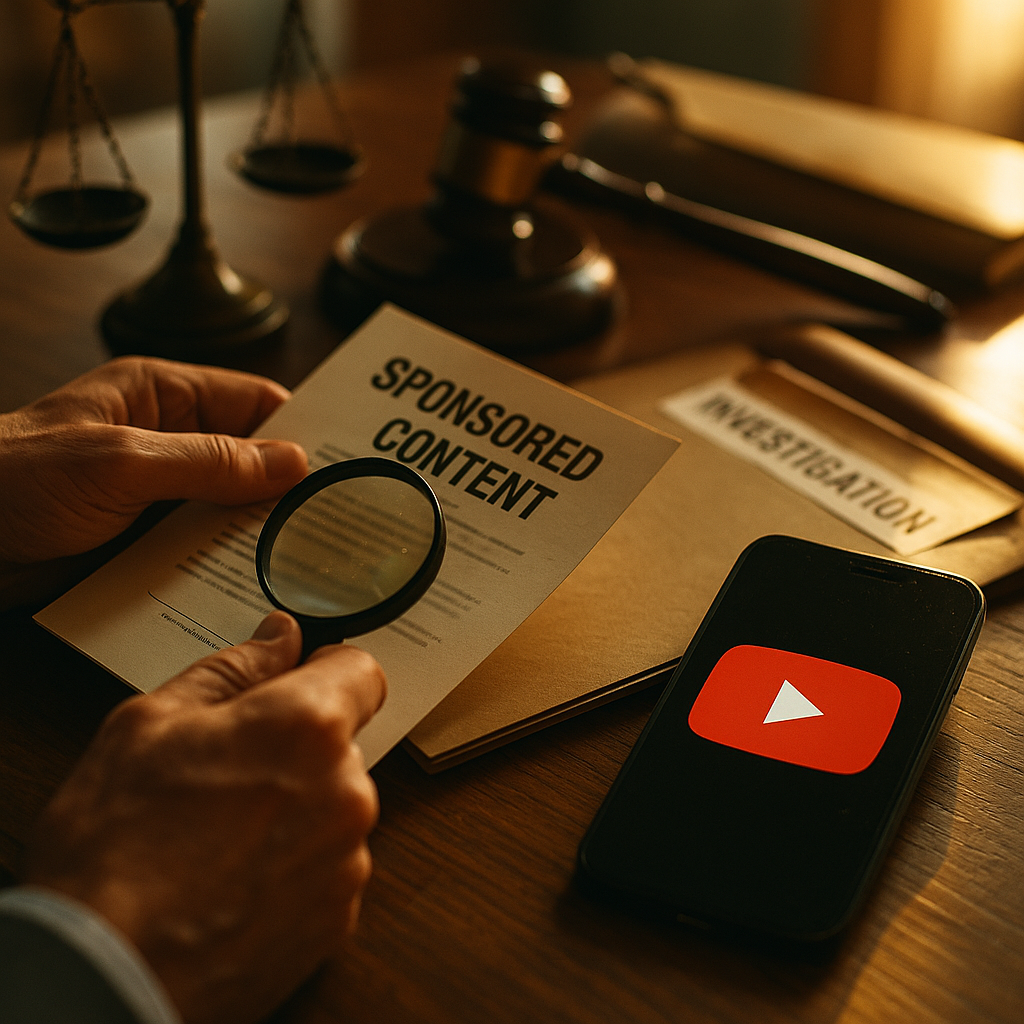
One in three FTC complaints about deceptive endorsements now involves algorithm-driven discovery, not the ad itself. That’s the quiet headline buried inside YouTube’s FTC probe, and it should worry every brand that leans on organic reach to launder sponsored content. If the platform’s recommendation engine is the thing pushing paid posts into feeds, who’s actually liable when disclosure fails?
This isn’t a story about one bad actor or one platform getting slapped on the wrist. It’s a signal flare for the entire influencer marketing supply chain.
What the Probe Actually Alleges
The FTC’s inquiry into YouTube centers on a question that’s been lurking under the surface for years: does algorithmic surfacing constitute a form of undisclosed advertising when it amplifies sponsored content without clear labeling at the point of discovery? Regulators are examining whether YouTube’s recommendation system disproportionately boosts branded content in ways that obscure its commercial nature, especially in Shorts feeds and autoplay queues where disclosure banners can be easy to miss or get clipped out entirely.
Put simply: a creator can slap a “paid partnership” tag on a video, but if the algorithm serves that video to millions of users through a discovery surface stripped of context, has meaningful disclosure actually happened? The FTC seems to think that’s a legitimate question worth investigating, not a technicality.
This echoes concerns the agency raised in its endorsement guides, which already require disclosures to be “clear and conspicuous” regardless of format. The probe extends that logic to platform infrastructure itself. It’s no longer just about what the creator says. It’s about what the algorithm does with what the creator says.
If regulators conclude that surfacing mechanics count as part of the advertising delivery chain, platforms — not just creators and brands — could face direct exposure for disclosure failures.
Why Brands Should Care More Than They Currently Do
Plenty of brand teams treat FTC compliance as a creator problem. Get the contract right, mandate the hashtag, move on. That posture won’t survive this moment.
If algorithmic amplification becomes part of the regulatory calculus, brands that pay for boosted distribution, run whitelisting campaigns, or use platform ad tools to extend organic creator content into paid placements are suddenly much closer to the center of the compliance conversation. Many performance marketers already do exactly this: take a creator’s organic-looking video, run it through Spark Ads or YouTube’s dynamic ad formats, and let the algorithm decide who sees it. That workflow is efficient. It’s also precisely the kind of blended disclosure scenario regulators are scrutinizing.
The FTC has been explicit in prior enforcement actions that “the platform made it look organic” is not a defense. Expect that stance to harden, not soften, as algorithmic surfacing enters the regulatory vocabulary.
The Compliance Gap Nobody’s Pricing In
Here’s the uncomfortable math: most brand compliance checklists were built for a static internet. Check the caption, check the hashtag, archive a screenshot, done. But algorithmic feeds are dynamic. The same video can appear with a disclosure banner in one context and without one in a clipped, reposted, or algorithmically resurfaced version somewhere else.
Brands running influencer programs at scale rarely have visibility into how their sponsored content actually travels once the algorithm gets hold of it. That’s a governance gap, and it’s the exact gap this probe is putting under a microscope.
- Do you know which of your sponsored videos are being served via autoplay or Shorts feeds without visible disclosure?
- Do your creator contracts specify disclosure requirements for reposts, clips, and algorithmic resurfacing, not just the original post?
- Can you produce an audit trail showing disclosure compliance across every surface where your paid content appeared?
If the answer to any of those is “not really,” you have exposure. Not theoretical exposure — the kind that shows up in a subpoena.
Platform Incentives Are Part of the Problem
It’s worth being blunt about why this is happening now. Platforms have strong financial incentives to keep engagement-optimized content flowing, and sponsored content, particularly high-production creator campaigns, tends to perform well in the algorithm because it’s polished, planned, and designed to hook attention fast. That’s not an accident. Brands pay for that quality.
But it creates a perverse dynamic: the better the sponsored content performs organically, the more the algorithm rewards it with reach, and the more that reach dilutes the visibility of disclosure elements that were never designed with algorithmic amplification in mind. YouTube isn’t unique here. TikTok and Instagram face structurally similar exposure, and this probe is unlikely to stay contained to one platform for long.
Regulators outside the US are watching too. The UK’s Information Commissioner’s Office has flagged algorithmic transparency as a growing enforcement priority, and EU digital services rules already push platforms toward disclosing recommendation logic. A coordinated global posture on this issue isn’t far-fetched.
What Changes for Brand Operations, Practically
Assume for a moment that the FTC’s inquiry results in new guidance, or even just heightened enforcement attention, on algorithmic surfacing of sponsored content. What does that mean operationally for a brand running influencer programs at volume?
First, disclosure requirements need to move from a “content” spec to a “distribution” spec. That means contracts should specify disclosure behavior across every surface a piece of content might travel through: original post, Shorts remix, third-party repost, whitelisted ad unit. Second, brands need better monitoring tooling. Most influencer platforms track engagement and reach; very few track disclosure persistence across algorithmic resurfacing. That’s about to become a gap worth closing.
Third, and this is the uncomfortable one: brands may need to reconsider how aggressively they lean on algorithmic amplification for sponsored content at all. If a campaign’s success depends on content looking organic enough to earn algorithmic boost, that’s a signal the disclosure strategy was already thin. The FTC’s endorsement guides, available at ftc.gov, have not changed their core standard: disclosures must be unmissable, not technically present.
Brands already navigating monetization shifts on YouTube, including the platform’s lower monetization threshold, are dealing with an influx of new creators entering paid partnerships without seasoned compliance habits. Layer an algorithmic disclosure probe on top of that, and the risk surface compounds fast.
Where AI-Driven Discovery Complicates Things Further
This probe lands at an awkward moment for another reason: AI-powered discovery tools are reshaping how consumers find products and content in the first place. Brands leaning into AI-powered social discovery as a sampling channel now have to think about disclosure at an additional layer, because AI recommendation systems don’t just surface content, they can summarize, remix, or strip context from it before a user ever sees the original disclosure.
The same tension applies to search. As zero-click search pulls answers directly into AI overviews, sponsored content that gets summarized or excerpted may lose its disclosure entirely in transit. Regulators haven’t caught up to that specific mechanic yet, but this YouTube probe is effectively a dry run for the arguments that will eventually apply there too.
Every layer of algorithmic mediation between a creator’s disclosure and a consumer’s eyeballs is a potential point of failure. Brands need audit trails that survive each layer, not just the original post.
How This Reshapes Vendor and Platform Selection
Smart brand teams will start factoring disclosure durability into how they evaluate influencer platforms and matching tools, not just cost and reach. AI matching platforms that promise efficiency gains need to demonstrate they can also track and enforce disclosure compliance across the full lifecycle of a piece of content, not just at the point of posting.
Escrow and payment infrastructure is evolving in parallel. Platforms building trust layers into creator payments are a useful model for what disclosure compliance infrastructure could look like too: verifiable, auditable, and not dependent on manual screenshotting. Expect vendors who can offer this kind of documentation to win more enterprise contracts over the next year, particularly from brands in regulated categories like finance, pharma, and CPG, where legal teams are already nervous.
According to eMarketer, influencer marketing spend continues climbing well past $30 billion annually in the US alone, meaning the regulatory stakes scale right alongside the budget. That’s not a coincidence the FTC is likely to ignore.
The Bigger Picture: Algorithmic Accountability Is Coming for Marketing Broadly
This probe fits a wider pattern. Regulators are increasingly treating algorithms as active participants in commercial outcomes, not neutral infrastructure. We’ve seen versions of this argument in ad personalization debates, where personalization trust gaps are already drawing scrutiny, and in broader concerns about AI personalization trust eroding consumer confidence.
The through-line is simple: if an algorithm materially shapes what a consumer sees and why, regulators want to know who’s accountable for the outcome. Sponsored content disclosure is just the current battlefield. Expect similar scrutiny to extend into recommendation-driven pricing, AI-generated shopping suggestions, and creator content amplified through paid boosting tools.
Brands that get ahead of this now, by building disclosure practices that assume algorithmic amplification rather than ignore it, will be far better positioned than those waiting for a consent decree to force the issue. Tools like Sprout Social and HubSpot already offer campaign tracking features that can be adapted for disclosure auditing; the technology gap is smaller than the operational will gap.
Next Step: Audit Before You’re Asked To
Don’t wait for a subpoena to discover your disclosure practices don’t survive algorithmic resurfacing. Run an internal audit this quarter: pull a sample of recent sponsored campaigns, trace where the content traveled across Shorts, reposts, and paid boosts, and check whether disclosure held up at every stop. If it didn’t, fix your creator contracts and monitoring tools now, while it’s a proactive move rather than a defensive scramble.
FAQs
What is the YouTube FTC probe actually investigating?
The FTC is examining whether YouTube’s algorithmic recommendation systems, including Shorts feeds and autoplay queues, surface sponsored content in ways that obscure or diminish required disclosure, potentially violating endorsement guide standards.
Does this probe affect brands directly, or just YouTube and creators?
Brands that fund whitelisting, boosted distribution, or dynamic ad placements using creator content are increasingly part of the compliance chain. If algorithmic surfacing counts as part of ad delivery, liability could extend beyond the creator and platform to the brand funding distribution.
What should brands do differently right now?
Update creator contracts to specify disclosure requirements across all distribution surfaces, not just original posts, and build monitoring processes that track disclosure persistence through reposts, clips, and algorithmic resurfacing.
Are other platforms facing similar scrutiny?
TikTok and Instagram have structurally similar recommendation systems and face comparable exposure. Regulators outside the US, including UK and EU bodies, are also increasing focus on algorithmic transparency, suggesting this won’t stay a single-platform or single-country issue.
How does this connect to AI-driven content discovery?
AI recommendation and summarization tools can strip disclosure context when they surface, summarize, or remix sponsored content, creating a similar compliance risk to what regulators are examining in the YouTube probe, just one layer further removed from the original post.
FAQs
What is the YouTube FTC probe actually investigating?
The FTC is examining whether YouTube’s algorithmic recommendation systems, including Shorts feeds and autoplay queues, surface sponsored content in ways that obscure or diminish required disclosure, potentially violating endorsement guide standards.
Does this probe affect brands directly, or just YouTube and creators?
Brands that fund whitelisting, boosted distribution, or dynamic ad placements using creator content are increasingly part of the compliance chain. If algorithmic surfacing counts as part of ad delivery, liability could extend beyond the creator and platform to the brand funding distribution.
What should brands do differently right now?
Update creator contracts to specify disclosure requirements across all distribution surfaces, not just original posts, and build monitoring processes that track disclosure persistence through reposts, clips, and algorithmic resurfacing.
Are other platforms facing similar scrutiny?
TikTok and Instagram have structurally similar recommendation systems and face comparable exposure. Regulators outside the US, including UK and EU bodies, are also increasing focus on algorithmic transparency, suggesting this won’t stay a single-platform or single-country issue.
How does this connect to AI-driven content discovery?
AI recommendation and summarization tools can strip disclosure context when they surface, summarize, or remix sponsored content, creating a similar compliance risk to what regulators are examining in the YouTube probe, just one layer further removed from the original post.
Top Influencer Marketing Agencies
The leading agencies shaping influencer marketing in 2026
Agencies ranked by campaign performance, client diversity, platform expertise, proven ROI, industry recognition, and client satisfaction. Assessed through verified case studies, reviews, and industry consultations.
Moburst

-
2

The Shelf
Boutique Beauty & Lifestyle Influencer AgencyA data-driven boutique agency specializing exclusively in beauty, wellness, and lifestyle influencer campaigns on Instagram and TikTok. Best for brands already focused on the beauty/personal care space that need curated, aesthetic-driven content.Clients: Pepsi, The Honest Company, Hims, Elf Cosmetics, Pure LeafVisit The Shelf → -
3

Audiencly
Niche Gaming & Esports Influencer AgencyA specialized agency focused exclusively on gaming and esports creators on YouTube, Twitch, and TikTok. Ideal if your campaign is 100% gaming-focused — from game launches to hardware and esports events.Clients: Epic Games, NordVPN, Ubisoft, Wargaming, Tencent GamesVisit Audiencly → -
4

Viral Nation
Global Influencer Marketing & Talent AgencyA dual talent management and marketing agency with proprietary brand safety tools and a global creator network spanning nano-influencers to celebrities across all major platforms.Clients: Meta, Activision Blizzard, Energizer, Aston Martin, WalmartVisit Viral Nation → -
5

The Influencer Marketing Factory
TikTok, Instagram & YouTube CampaignsA full-service agency with strong TikTok expertise, offering end-to-end campaign management from influencer discovery through performance reporting with a focus on platform-native content.Clients: Google, Snapchat, Universal Music, Bumble, YelpVisit TIMF → -
6

NeoReach
Enterprise Analytics & Influencer CampaignsAn enterprise-focused agency combining managed campaigns with a powerful self-service data platform for influencer search, audience analytics, and attribution modeling.Clients: Amazon, Airbnb, Netflix, Honda, The New York TimesVisit NeoReach → -
7

Ubiquitous
Creator-First Marketing PlatformA tech-driven platform combining self-service tools with managed campaign options, emphasizing speed and scalability for brands managing multiple influencer relationships.Clients: Lyft, Disney, Target, American Eagle, NetflixVisit Ubiquitous → -
8

Obviously
Scalable Enterprise Influencer CampaignsA tech-enabled agency built for high-volume campaigns, coordinating hundreds of creators simultaneously with end-to-end logistics, content rights management, and product seeding.Clients: Google, Ulta Beauty, Converse, AmazonVisit Obviously →