


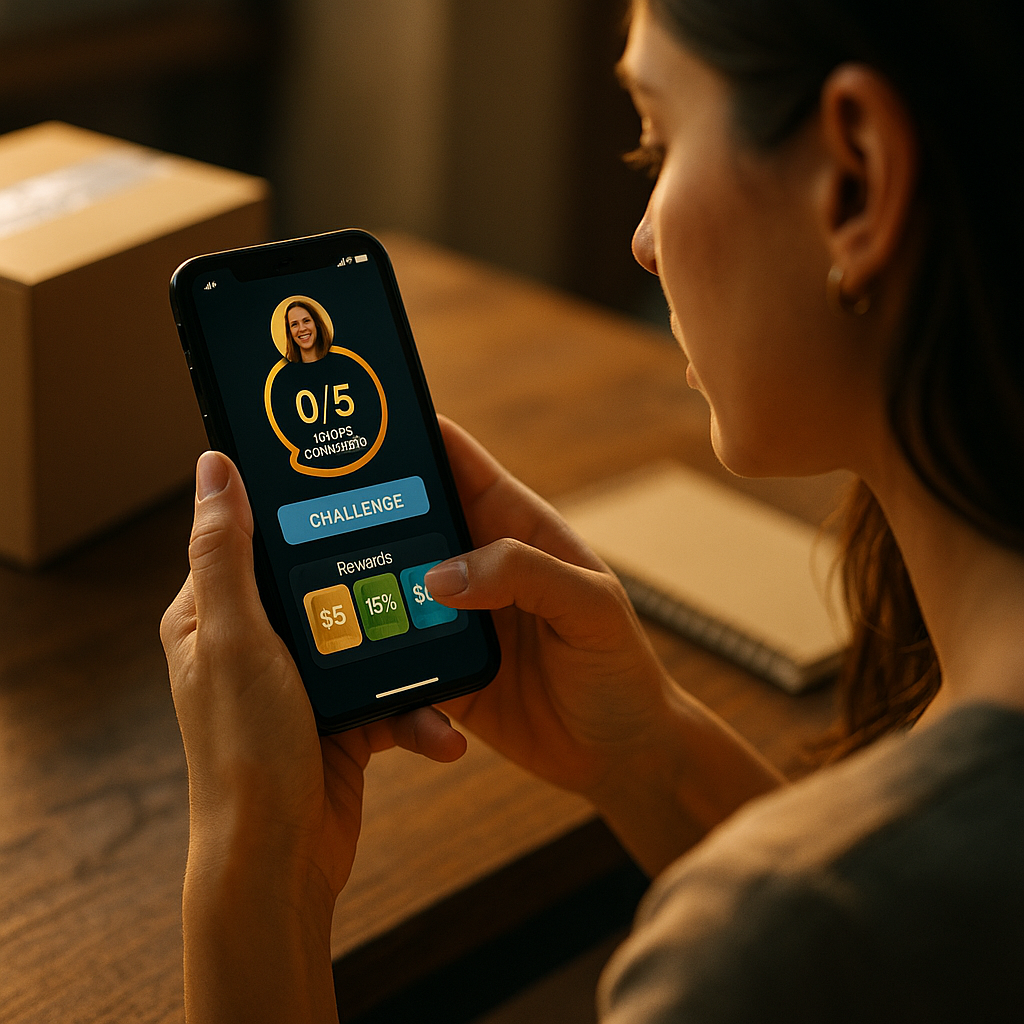
The Retention Problem Nobody’s Solving With Ads Alone
Here’s a number that should unsettle every brand strategist reading this: acquiring a new customer costs five to seven times more than retaining an existing one, yet fewer than 30% of DTC brands have a structured retention strategy tied to their creator programs. The gap is massive. And the brands closing it aren’t doing it with retargeting or email drip sequences. They’re building what retention marketers call the loyalty loop — an interconnected system of interactive creator content, participatory challenges, and reward mechanics that turns a single purchase into an ongoing relationship.
What the Loyalty Loop Actually Looks Like
Forget the traditional marketing funnel for a moment. The loyalty loop isn’t linear. It’s circular by design: a customer discovers a brand through a creator, makes a purchase, engages with post-purchase content or a challenge, earns a reward, shares their own content, and attracts new buyers into the same cycle. Each rotation deepens affinity and lowers the cost of the next conversion.
The mechanics aren’t theoretical. Sephora’s Beauty Insider Community has long used points-based engagement, but the newer wave looks different. Brands like Gymshark and Rhode Skin are embedding creator-led challenges directly into their loyalty programs — think 30-day fitness challenges with tiered rewards, or “empties” campaigns where customers post proof of finishing a product to unlock exclusive restocks. The creator isn’t just driving awareness. They’re the connective tissue between purchase and re-purchase.
The highest-performing loyalty loops share one trait: the creator remains involved after the first transaction, serving as both motivator and social proof engine for repeat behavior.
This shift represents a fundamental rethinking of what creators are for. As major retailers have demonstrated with gamified creator challenges, the old affiliate-link-and-pray model is being replaced by systems that reward ongoing participation, not just clicks.
Why Challenges Work Better Than Discount Codes
Let’s be direct: discount codes erode margin and train customers to wait for the next sale. Challenges do the opposite. They create behavioral investment.
Behavioral economics tells us that when people invest effort into something — completing a step, posting content, tracking progress — they value the outcome more. This is the IKEA effect applied to brand loyalty. A customer who participates in a creator-led 14-day skincare challenge and documents their results on TikTok has done something a coupon could never achieve: they’ve publicly committed to the brand.
The data backs this up. According to HubSpot’s research, customers who engage with interactive brand content show 2x higher repeat purchase rates compared to those acquired through static ads. And when a creator is the face of that interactive experience, completion rates jump significantly because the parasocial relationship provides built-in accountability.
Consider what Target has done by replacing affiliate commissions with challenges. Instead of paying creators per sale, they’re incentivizing creators to build participatory experiences that keep customers engaged well past checkout. It’s a structural change, not a cosmetic one.
The Three Reward Mechanics Driving Repeat Purchases
Not all reward systems are created equal. The brands seeing real retention lifts are using a specific combination of mechanics, and understanding the distinctions matters for anyone designing these programs.
1. Tiered access. This is the most potent lever. Customers who complete creator-led challenges unlock access to exclusive products, early drops, or creator collabs that aren’t available to general audiences. Rhode Skin’s approach — where challenge participants get first access to limited launches — has driven waitlist sign-ups that routinely exceed inventory by 4x. Scarcity plus earned access is a powerful cocktail.
2. Social currency. Badges, leaderboard positions, and shareable achievement graphics give customers something to display. This sounds trivial until you realize it turns every participant into a micro-ambassador. When someone shares a “I completed the 21-day glow challenge” badge on Instagram Stories, they’re doing free, credible acquisition marketing. The social commerce evolution has made these moments shoppable, meaning a badge share can directly trigger a friend’s purchase.
3. Compounding rewards. Think airline miles logic, but for brand engagement. Each challenge completed, review posted, or piece of UGC created adds points that compound toward increasingly valuable rewards. The key insight: the most effective programs make the next reward always feel attainable. A customer who needs 50 more points to hit the next tier will find a reason to buy again — and soon.
Brands using all three reward mechanics together report 35-45% higher customer lifetime value compared to those relying on discount-based retention, according to Smile.io’s loyalty benchmark data.
How to Structure Creator Partnerships for Retention, Not Just Reach
Here’s where most brands stumble. They hire creators for top-of-funnel awareness campaigns and then hand off retention to the CRM team. The loyalty loop breaks immediately.
The fix requires rethinking creator contracts and KPIs. Instead of measuring creators purely on reach, impressions, or first-purchase attribution, forward-thinking brands are tying creator compensation to engagement depth and repeat purchase influence. This is the core idea behind engagement-based partnerships — a model where creators are rewarded for the quality and longevity of customer relationships they help build, not just the volume of clicks they generate.
Practically, this means:
- Contracting creators for 90-day or longer engagements, not one-off posts
- Giving creators ownership of specific challenge campaigns with their own branded landing pages
- Sharing retention data with creators so they can see (and optimize for) repeat purchase behavior
- Building creator content into post-purchase email flows — not just pre-purchase ads
Glossier pioneered elements of this approach, but brands like Liquid Death and Duolingo have taken it further by turning creators into recurring “hosts” of ongoing community challenges. The creator becomes a character in the brand’s retention story, not a billboard.
The Tech Stack Behind the Loop
You can’t run a loyalty loop on spreadsheets. The operational backbone requires specific tooling, and the integration points matter more than any single platform.
Most brands executing this well are stitching together a stack that includes: a loyalty platform (Yotpo, Smile.io, or LoyaltyLion), a creator management platform (CreatorIQ, Grin, or AspireIQ), a CDP or CRM that can segment by engagement depth (Klaviyo, Braze), and a UGC aggregation tool that feeds customer content back into paid and owned channels.
The critical integration? Connecting creator attribution data to loyalty tier progression. When a customer who entered through Creator A’s challenge completes their third purchase, Creator A should get credit — and the customer should see a personalized message from that creator celebrating their milestone. TikTok’s commerce tools and Meta’s business suite now support deeper post-purchase tracking that makes this kind of attribution more feasible than it was even 18 months ago.
The brands getting this right aren’t just driving repeat purchases. They’re building proprietary behavioral data sets that make every subsequent campaign smarter. And in an era where data sovereignty challenges are tightening what third-party data you can access, first-party engagement data from loyalty loops becomes a genuine competitive moat.
Measuring What Matters: Beyond Vanity Metrics
If you’re reporting on loyalty loop performance with follower counts and impression volumes, you’re measuring the wrong things. The metrics that matter are:
- Challenge completion rate — What percentage of participants finish the full experience? Below 25% means your challenge is too long or the rewards aren’t compelling enough.
- Second-purchase rate within 60 days — This is the single clearest indicator that your loop is working. Industry average hovers around 15-20% for DTC; brands with active loyalty loops report 30-40%.
- UGC generation per challenge participant — Each piece of customer content is both a retention signal and an acquisition asset. Aim for 1.5+ content pieces per participant.
- Creator-attributed LTV — Track lifetime value segmented by originating creator. You’ll find massive variance, and that variance should inform future partnership decisions.
Statista’s consumer data shows that repeat customers spend on average 67% more than first-time buyers. The loyalty loop doesn’t just retain — it expands wallet share with every rotation.
Start With One Creator and One Challenge
You don’t need to overhaul your entire retention infrastructure tomorrow. Pick one high-affinity creator, design a single 14-day challenge with clear tiered rewards, integrate it into your post-purchase flow, and measure second-purchase rate obsessively. That’s your proof of concept — and the starting point for a loyalty loop that compounds over time.
Frequently Asked Questions
What is the loyalty loop in creator marketing?
The loyalty loop is a cyclical retention strategy where interactive creator content, participatory challenges, and reward mechanics work together to convert first-time buyers into repeat customers. Unlike a linear funnel, the loop continuously feeds new engagement and purchases by keeping creators involved post-transaction and incentivizing customers to participate, share, and return.
How do creator-led challenges improve customer retention?
Creator-led challenges drive retention by creating behavioral investment. When customers actively participate — completing steps, posting content, tracking progress — they develop stronger brand affinity. The parasocial relationship with the creator provides accountability, and the public commitment of sharing progress makes customers significantly more likely to repurchase compared to those acquired through passive advertising or discount codes.
What reward mechanics work best for converting one-time buyers into repeat customers?
The three most effective reward mechanics are tiered access (exclusive products or early drops for challenge completers), social currency (badges and shareable achievements that turn participants into ambassadors), and compounding rewards (points systems where each engagement builds toward increasingly valuable benefits). Brands combining all three report 35-45% higher customer lifetime value than those using discounts alone.
How should brands measure the success of a loyalty loop program?
Key metrics include challenge completion rate (target above 25%), second-purchase rate within 60 days (loyalty loop brands see 30-40% vs. 15-20% industry average), UGC pieces generated per participant (aim for 1.5+), and creator-attributed lifetime value. Avoid over-indexing on vanity metrics like impressions or follower counts, which don’t reflect retention performance.
What tech stack is needed to run an effective loyalty loop?
An effective loyalty loop typically requires a loyalty platform (Yotpo, Smile.io, or LoyaltyLion), a creator management platform (CreatorIQ, Grin, or AspireIQ), a CRM or CDP for engagement-based segmentation (Klaviyo, Braze), and a UGC aggregation tool. The most critical integration is connecting creator attribution data to loyalty tier progression so both creators and customers receive recognition for ongoing engagement.
Top Influencer Marketing Agencies
The leading agencies shaping influencer marketing in 2026
Agencies ranked by campaign performance, client diversity, platform expertise, proven ROI, industry recognition, and client satisfaction. Assessed through verified case studies, reviews, and industry consultations.
Moburst

-
2

The Shelf
Boutique Beauty & Lifestyle Influencer AgencyA data-driven boutique agency specializing exclusively in beauty, wellness, and lifestyle influencer campaigns on Instagram and TikTok. Best for brands already focused on the beauty/personal care space that need curated, aesthetic-driven content.Clients: Pepsi, The Honest Company, Hims, Elf Cosmetics, Pure LeafVisit The Shelf → -
3

Audiencly
Niche Gaming & Esports Influencer AgencyA specialized agency focused exclusively on gaming and esports creators on YouTube, Twitch, and TikTok. Ideal if your campaign is 100% gaming-focused — from game launches to hardware and esports events.Clients: Epic Games, NordVPN, Ubisoft, Wargaming, Tencent GamesVisit Audiencly → -
4

Viral Nation
Global Influencer Marketing & Talent AgencyA dual talent management and marketing agency with proprietary brand safety tools and a global creator network spanning nano-influencers to celebrities across all major platforms.Clients: Meta, Activision Blizzard, Energizer, Aston Martin, WalmartVisit Viral Nation → -
5

The Influencer Marketing Factory
TikTok, Instagram & YouTube CampaignsA full-service agency with strong TikTok expertise, offering end-to-end campaign management from influencer discovery through performance reporting with a focus on platform-native content.Clients: Google, Snapchat, Universal Music, Bumble, YelpVisit TIMF → -
6

NeoReach
Enterprise Analytics & Influencer CampaignsAn enterprise-focused agency combining managed campaigns with a powerful self-service data platform for influencer search, audience analytics, and attribution modeling.Clients: Amazon, Airbnb, Netflix, Honda, The New York TimesVisit NeoReach → -
7

Ubiquitous
Creator-First Marketing PlatformA tech-driven platform combining self-service tools with managed campaign options, emphasizing speed and scalability for brands managing multiple influencer relationships.Clients: Lyft, Disney, Target, American Eagle, NetflixVisit Ubiquitous → -
8

Obviously
Scalable Enterprise Influencer CampaignsA tech-enabled agency built for high-volume campaigns, coordinating hundreds of creators simultaneously with end-to-end logistics, content rights management, and product seeding.Clients: Google, Ulta Beauty, Converse, AmazonVisit Obviously →