


The AI Ad Dollar Decision Nobody’s Talking About
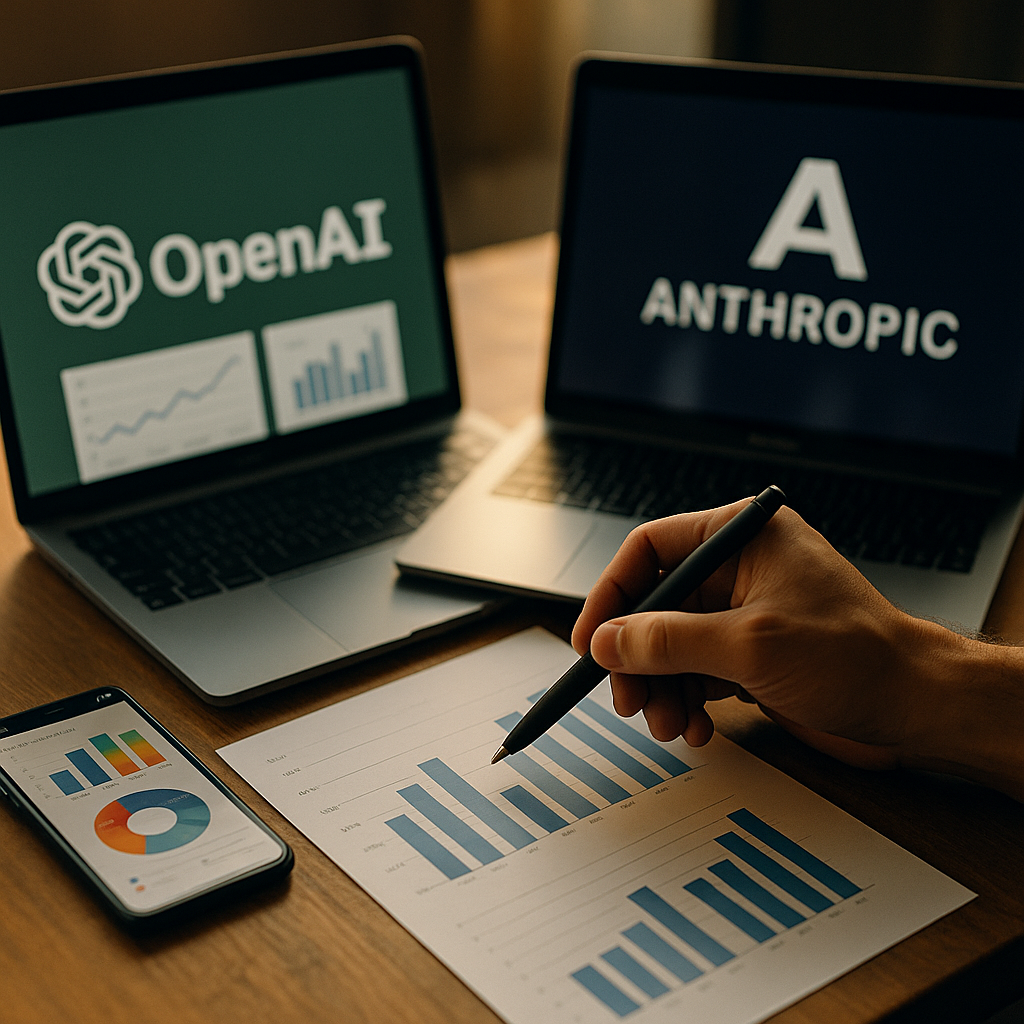
By Q2 of this year, Statista estimates that global AI-related ad spend surpassed $12 billion — a figure that would have been absurd three years ago. Yet most brand advertisers still treat “AI” as a monolith when allocating media budgets. That’s a costly mistake. OpenAI and Anthropic have diverged sharply in their ad strategies, model behavior, and platform ambitions, and the gap between them is widening every quarter. If you’re planning your media mix, the OpenAI vs. Anthropic distinction isn’t academic. It’s operational.
Two Very Different Philosophies on Advertising
OpenAI has leaned into advertising. Hard. Since launching sponsored placements inside ChatGPT’s browsing and shopping features in late 2025, the company has built a self-serve ad platform that bears more than a passing resemblance to Google’s early search ads. Brands can now bid on intent signals — not keywords, but inferred user needs — and serve contextual recommendations inside conversational flows. Microsoft’s existing ad infrastructure powers much of the backend, which means if you’re already running campaigns through Microsoft Advertising, the onboarding friction is minimal.
Anthropic has taken the opposite path. CEO Dario Amodei has repeatedly stated that Anthropic’s Claude models will not serve ads or monetize user conversations. Their revenue model relies on API licensing, enterprise contracts, and partnerships with platforms like Amazon (via Bedrock). For brand advertisers, this creates a paradox: you can’t buy placement inside Claude, but Claude increasingly powers the tools your customers use to make purchase decisions.
The real strategic question isn’t “which AI model is better.” It’s “which AI ecosystem will my customers trust when they’re ready to buy?”
That trust question has direct budget implications. If your audience skews toward privacy-conscious professionals — think financial services, healthcare, B2B SaaS — their AI assistant of choice is more likely to be Claude or a Claude-powered tool. If you’re targeting mass-market consumers doing product research, ChatGPT’s ad-supported experience captures a far larger share of those moments.
Model Behavior: Why It Matters for Brand Safety
Brand safety in AI isn’t just about where your ad appears. It’s about what the model says about your brand when a user asks.
OpenAI’s GPT models are optimized for engagement and helpfulness, which makes them more willing to generate product comparisons, recommendations, and persuasive content. This is great for advertisers who want their brand surfaced in AI-generated shopping advice. But it also means GPT models are more susceptible to generating confident-sounding misinformation about your products — or your competitors’ products — when training data is outdated or incomplete.
Anthropic’s Claude models, built around what the company calls “Constitutional AI,” tend to be more cautious. Claude is more likely to hedge, cite limitations, and refuse to make definitive product recommendations without clear sourcing. For brands, this means fewer hallucinated endorsements (good) but also less organic visibility in purchase-intent conversations (potentially bad).
The practical upshot: if you’re running a creator risk audit, extend that framework to AI model behavior. Monitor what both GPT and Claude say about your brand. Tools like Originality.ai, Patronus AI, and custom API monitoring setups can track brand mentions and sentiment across model outputs. This isn’t optional anymore — it’s table stakes for any brand with significant search-driven revenue.
Where Each Platform Is Headed — and Why You Should Care
OpenAI’s ambitions are unmistakably platform-shaped. ChatGPT now has a plugin ecosystem, a GPT Store, and an ad network. It wants to be the next Google — the default interface between consumer intent and commercial fulfillment. Their partnership with Apple (Siri integration) and Microsoft (Copilot across Office, Edge, and Windows) gives them distribution that no other AI company can match.
For media buyers, this means OpenAI’s ecosystem is becoming a must-buy for top-of-funnel and mid-funnel campaigns, especially in categories like consumer electronics, travel, financial products, and DTC brands. The targeting capabilities are still maturing, but the intent data is extraordinarily rich. When someone asks ChatGPT “What’s the best running shoe for flat feet under $150?”, that’s a buying signal that rivals Google Shopping in specificity.
Anthropic’s platform play is subtler but arguably more defensible. By positioning Claude as the “enterprise-safe” AI, Anthropic has embedded itself into procurement workflows, internal tools, and B2B platforms. Amazon’s integration of Claude into AWS Bedrock means that thousands of enterprise applications — from customer service bots to internal knowledge bases — run on Anthropic’s models. Your brand may already be interacting with Claude-powered systems without knowing it.
This has a direct implication for AI discoverability. If Claude powers the AI assistant your B2B prospect uses to research vendors, your brand’s representation in Claude’s training data and retrieval-augmented generation (RAG) pipelines becomes a critical SEO-adjacent concern.
Rethinking Your Media Mix: A Practical Framework
So how should you actually allocate budget between these two ecosystems? Here’s a framework based on three variables:
- Audience AI preference. Survey your customers. Which AI tools do they use daily? If you sell to enterprises, Claude’s footprint matters more. If you sell to consumers, ChatGPT dominates.
- Purchase journey stage. OpenAI’s ad products are strongest at the consideration and conversion stages — when users are actively asking for recommendations. Anthropic’s influence is more diffuse, shaping how enterprise buyers evaluate options inside their existing workflows.
- Brand safety tolerance. If your category is heavily regulated (pharma, finance, alcohol), Claude’s cautious model behavior is actually an asset — fewer hallucinated claims, lower legal risk. OpenAI’s more freewheeling outputs require more monitoring overhead.
A reasonable starting allocation for a mid-market brand with both B2B and B2C exposure: 60-70% of your AI-specific media budget toward OpenAI’s ecosystem (ChatGPT ads, Microsoft Copilot placements, GPT Store sponsorships), 20-30% toward optichannel strategies that ensure your brand data is optimized for Claude-powered tools, and 10% held in reserve for whichever platform launches the next disruptive ad format.
Treat AI media allocation like you treated social platform diversification in 2018 — get in early, measure obsessively, and don’t let any single ecosystem own more than 70% of your AI budget.
The Measurement Problem (and How to Solve It)
Neither OpenAI nor Anthropic offers the attribution infrastructure that mature ad platforms like Meta or Google Ads provide. OpenAI’s ad platform gives you impressions, clicks, and basic conversion tracking via Microsoft’s pixel. Anthropic gives you nothing — because there’s no ad product to measure.
This means you need to build your own measurement layer. Start by closing conversion benchmarking gaps across your existing stack, then layer in AI-specific signals: brand mention frequency in model outputs, referral traffic from AI-powered browsers, and changes in branded search volume that correlate with AI assistant adoption curves.
The brands that win in AI-influenced commerce won’t be the ones that spend the most. They’ll be the ones that measure the fastest. If your team isn’t already running A/B tests on AI-optimized product descriptions and monitoring model outputs weekly, you’re behind.
Don’t Sleep on the Regulatory Angle
The FTC has signaled increased scrutiny of AI-generated advertising disclosures, and the EU AI Act’s transparency requirements apply to both OpenAI and Anthropic’s models when used in commercial contexts. If you’re placing ads inside ChatGPT, you need clear disclosure frameworks. If your brand information is being surfaced by Claude inside enterprise tools, you need to understand how RAG pipelines handle sponsored versus organic content.
This regulatory layer is another reason to invest in AI governance capabilities now — before enforcement actions create expensive compliance scrambles.
Your Next Move
Audit your brand’s representation in both GPT-4o and Claude 4 outputs this month. Ask each model 20 purchase-intent questions related to your category and document the results. That exercise alone will tell you more about your AI media strategy than any analyst report.
FAQs
Can brand advertisers buy ads directly inside Anthropic’s Claude?
No. Anthropic does not currently offer an advertising product. Claude is monetized through API licensing and enterprise contracts. Brands can influence their visibility in Claude’s outputs through structured data optimization and ensuring accurate brand information is available in public sources that feed retrieval-augmented generation pipelines.
How does OpenAI’s ad platform compare to Google Ads for brand campaigns?
OpenAI’s ChatGPT ad platform targets inferred intent from conversational queries rather than keyword matching. It offers strong mid-funnel and consideration-stage targeting but lacks the mature attribution, audience segmentation, and bidding sophistication that Google Ads provides. Most brands should treat it as a complementary channel, not a replacement.
Which AI model is safer for regulated industries like healthcare or finance?
Anthropic’s Claude models tend to be more cautious in their outputs, hedging claims and refusing to make unsupported product recommendations. This makes Claude-powered experiences generally lower-risk for regulated industries. However, brands should still monitor outputs from both models and implement compliance review processes for any AI-generated content that references their products.
How should brand advertisers measure ROI from AI-driven media spend?
Since neither OpenAI nor Anthropic offers full-funnel attribution, brands need to build custom measurement layers. Key metrics include brand mention frequency in model outputs, referral traffic from AI-powered browsers, changes in branded search volume, and conversion benchmarking across AI-influenced touchpoints compared to traditional channels.
What percentage of media budget should go toward AI platforms versus traditional digital channels?
Most mid-market brands should allocate 5-15% of their total digital media budget to AI-specific channels, depending on category and audience. Within that AI allocation, a 60-70% split toward OpenAI’s ecosystem and 20-30% toward Claude-optimization strategies is a reasonable starting point for brands with both B2B and B2C exposure.
Top Influencer Marketing Agencies
The leading agencies shaping influencer marketing in 2026
Agencies ranked by campaign performance, client diversity, platform expertise, proven ROI, industry recognition, and client satisfaction. Assessed through verified case studies, reviews, and industry consultations.
Moburst

-
2

The Shelf
Boutique Beauty & Lifestyle Influencer AgencyA data-driven boutique agency specializing exclusively in beauty, wellness, and lifestyle influencer campaigns on Instagram and TikTok. Best for brands already focused on the beauty/personal care space that need curated, aesthetic-driven content.Clients: Pepsi, The Honest Company, Hims, Elf Cosmetics, Pure LeafVisit The Shelf → -
3

Audiencly
Niche Gaming & Esports Influencer AgencyA specialized agency focused exclusively on gaming and esports creators on YouTube, Twitch, and TikTok. Ideal if your campaign is 100% gaming-focused — from game launches to hardware and esports events.Clients: Epic Games, NordVPN, Ubisoft, Wargaming, Tencent GamesVisit Audiencly → -
4

Viral Nation
Global Influencer Marketing & Talent AgencyA dual talent management and marketing agency with proprietary brand safety tools and a global creator network spanning nano-influencers to celebrities across all major platforms.Clients: Meta, Activision Blizzard, Energizer, Aston Martin, WalmartVisit Viral Nation → -
5

The Influencer Marketing Factory
TikTok, Instagram & YouTube CampaignsA full-service agency with strong TikTok expertise, offering end-to-end campaign management from influencer discovery through performance reporting with a focus on platform-native content.Clients: Google, Snapchat, Universal Music, Bumble, YelpVisit TIMF → -
6

NeoReach
Enterprise Analytics & Influencer CampaignsAn enterprise-focused agency combining managed campaigns with a powerful self-service data platform for influencer search, audience analytics, and attribution modeling.Clients: Amazon, Airbnb, Netflix, Honda, The New York TimesVisit NeoReach → -
7

Ubiquitous
Creator-First Marketing PlatformA tech-driven platform combining self-service tools with managed campaign options, emphasizing speed and scalability for brands managing multiple influencer relationships.Clients: Lyft, Disney, Target, American Eagle, NetflixVisit Ubiquitous → -
8

Obviously
Scalable Enterprise Influencer CampaignsA tech-enabled agency built for high-volume campaigns, coordinating hundreds of creators simultaneously with end-to-end logistics, content rights management, and product seeding.Clients: Google, Ulta Beauty, Converse, AmazonVisit Obviously →