


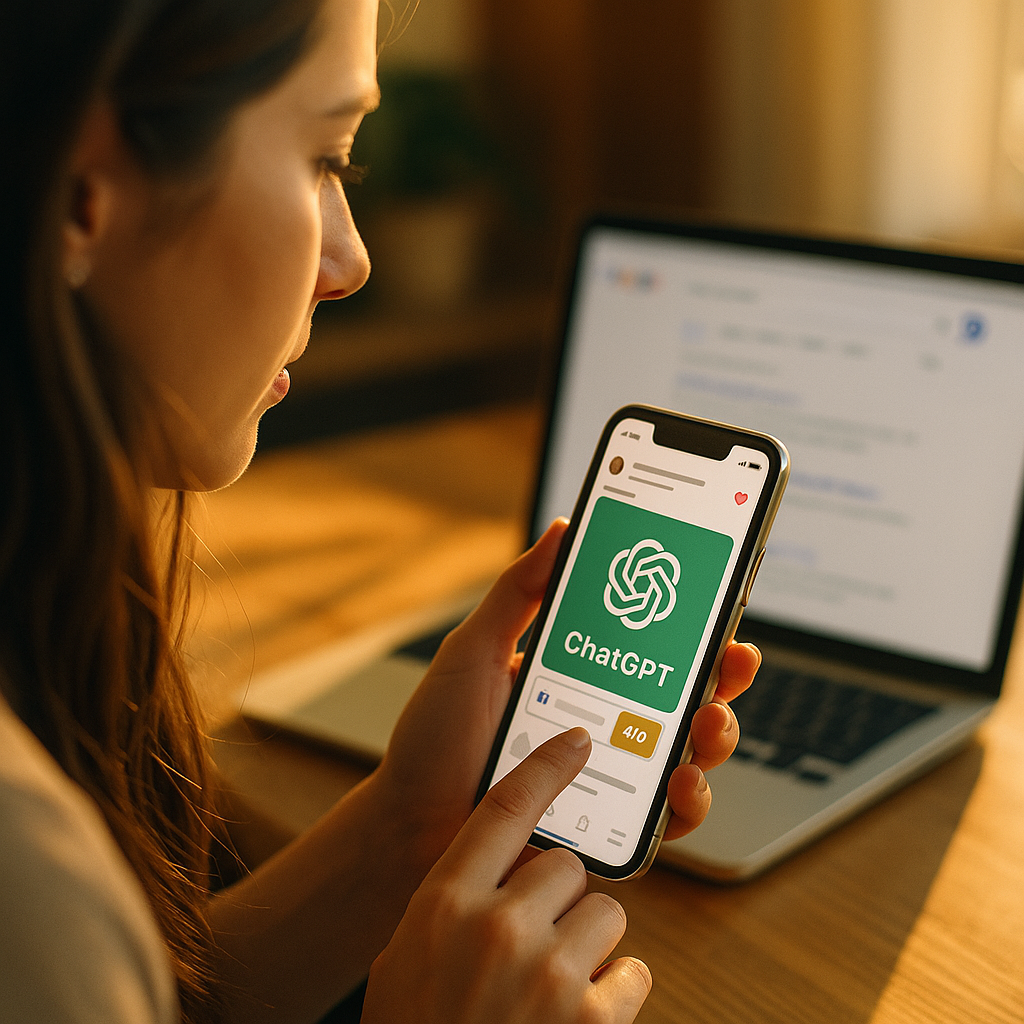
Click-Based Ads Inside ChatGPT Are Here — and They’re Rewriting the Funnel
OpenAI’s ad product already reaches over 400 million weekly active users. That’s not a forecast — it’s the current baseline. When the company quietly rolled out click-based ads inside ChatGPT, it didn’t just add another channel to the media mix. It inserted a monetization layer directly into the conversational interface where millions of consumers now start their purchase research. For advertisers and brand strategists managing influencer programs, the implications are immediate and structural.
What OpenAI Actually Built
Let’s strip away the hype. OpenAI’s ad product serves sponsored links and product recommendations within ChatGPT responses. These aren’t banner ads shoved into a sidebar. They’re contextual placements woven into the conversational output — positioned where a user would naturally encounter a recommendation. Think of it as a hybrid between Google Shopping ads and a trusted advisor’s suggestion, delivered at the exact moment of intent.
The initial format is click-based, meaning advertisers pay when a user engages with the ad unit, not for impressions. This is significant. It aligns the cost model with measurable action, which should appeal to performance marketers who’ve grown frustrated with CPM-based influencer campaigns that struggle to prove downstream impact.
OpenAI has partnered with select ad-tech intermediaries to manage inventory, though the company retains tight control over placement quality. Early reports from eMarketer suggest initial CPCs are competitive with mid-funnel Google Search ads, though this will inevitably shift as demand scales.
Click-based ads inside ChatGPT don’t compete with search ads. They compete with the trust layer that influencers currently own — the moment a consumer asks “what should I buy?” and gets a conversational answer.
Early Targeting Mechanics: What We Know So Far
This is where it gets interesting — and where brand strategists need to pay close attention.
OpenAI’s targeting doesn’t work like Meta’s interest graph or Google’s keyword bidding. Instead, the early targeting mechanics rely on three primary signals:
- Conversational context: What the user is actively discussing. If someone asks ChatGPT to compare protein powders for marathon training, a sports nutrition brand can surface contextually. The ad relevance is derived from the conversation thread, not a pre-built audience segment.
- User-declared preferences: ChatGPT Plus and Enterprise users who’ve stored preferences (dietary restrictions, budget ranges, professional roles) provide a layer of declared-data targeting that’s richer than most cookie-based alternatives.
- Session intent signals: OpenAI distinguishes between research-mode sessions (“help me understand options”) and decision-mode sessions (“which one should I buy”). Advertisers can reportedly weight bids toward higher-intent sessions, though granular controls are still rolling out.
Notice what’s missing. There’s no demographic targeting in the traditional sense — no age brackets, no zip codes (yet). This forces a fundamentally different creative and bidding strategy. You’re not buying an audience. You’re buying a moment of intent.
For teams already running creator partnerships at scale, this is a wake-up call. The conversational intent data OpenAI captures may ultimately prove more valuable than the behavioral data social platforms sell, because it reflects what people are actually considering — not just what they scrolled past.
How This Changes the Influencer-to-Search Funnel
Here’s the part most coverage misses.
The traditional influencer-to-search funnel works like this: a creator generates awareness, the consumer becomes curious, they search Google, they click a paid or organic result, and (hopefully) they convert. Every stage has leakage. Attribution is messy. The handoff from social to search is where brands lose 40-60% of the intent they generated.
ChatGPT ads collapse that funnel.
A user who watched a creator’s video about skincare routines might go to ChatGPT — not Google — and ask, “What’s the best retinol serum for sensitive skin under $40?” The influencer created the intent. But ChatGPT now captures and monetizes the decision moment. The creator doesn’t get credit. The brand’s influencer spend drove the inquiry, but the conversion gets attributed to the ChatGPT ad.
This is an attribution nightmare waiting to happen. And it’s also an opportunity.
Brands that recognize this shift can deliberately design influencer content to drive ChatGPT queries. Imagine a creator saying, “Ask ChatGPT about [brand] for your skin type.” That’s a new CTA paradigm — one that routes intent to a channel where you’ve already placed a click-based ad waiting to catch it.
The brands that win aren’t the ones who choose between influencer marketing and ChatGPT ads. They’re the ones who architect the handoff between the two.
Practical Implications for Budget Allocation
So where should the money come from? That’s the question every VP of Marketing is going to face in the next planning cycle.
Don’t gut your influencer budget. That would be shortsighted. Influencers still generate the upstream demand that ChatGPT ads monetize. Instead, think about rebalancing your mid-funnel spend. The dollars currently going to branded search defense — those campaigns where you bid on your own name to prevent competitors from stealing clicks — may be partially redirectable toward ChatGPT ad placements, where the intent is arguably higher quality.
Early benchmarks suggest ChatGPT ad click-through rates run between 2-5% for well-matched conversational contexts, compared to the 1.5-3% range typical for Google Search ads in competitive verticals. Conversion rate data is still sparse, but directionally positive for considered-purchase categories like SaaS, financial products, and premium DTC.
If your team is exploring niche newsletter sponsorships or micro-influencer syndicates, consider how those channels feed queries that ChatGPT can intercept. The strategic play is owning the full chain: awareness through creators and niche media, decision capture through conversational AI ads.
Compliance, Disclosure, and the FTC Question
This wouldn’t be an Influencers Time article without the compliance angle.
The FTC has been clear that advertising must be identifiable as advertising. OpenAI’s current implementation labels sponsored results, but the labeling is subtle — a small “Sponsored” tag that blends with the conversational tone. Consumer advocacy groups have already raised concerns.
For brands, this means two things. First, ensure your ad creative within ChatGPT doesn’t make claims that could be interpreted as editorial endorsement by an AI. The line between “ChatGPT recommended this” and “a brand paid to appear here” is blurry for average consumers. Second, if you’re coordinating influencer campaigns that deliberately drive users to ChatGPT (the CTA strategy mentioned above), you need to document the connection for FTC disclosure requirements. An influencer saying “ask ChatGPT about Brand X” where Brand X has a paid placement could be construed as an undisclosed material connection.
Legal teams should be looped in now, not after the first complaint.
What Smart Brands Are Testing Right Now
The early movers aren’t waiting for perfect data. Here’s what forward-leaning brand teams are doing:
- Running parallel attribution tests. They’re launching influencer campaigns with unique product descriptors (specific shade names, bundle labels) that they can track when those terms appear in ChatGPT ad click data. It’s crude, but it works.
- Seeding ChatGPT-friendly content. Because ChatGPT’s training data and retrieval-augmented generation pull from public sources, brands are ensuring their product information, comparison data, and FAQ content is structured and accessible. This increases the odds of organic mention alongside paid placement.
- Testing conversational ad copy. Traditional ad copy — punchy, benefit-driven, keyword-stuffed — falls flat in a conversational interface. The winning creative reads more like a helpful recommendation than an ad. Brands experienced with thought leadership strategy are adapting faster here.
- Monitoring competitive presence. Tools from SEMrush and emerging AI-specific monitoring platforms are beginning to track which brands surface in ChatGPT responses. If your competitor shows up when a user asks about your category, you’ve got a problem — and now you’ve got a paid lever to address it.
The Bottom Line for Your Next Quarter
Click-based ads inside ChatGPT represent the first serious monetization of conversational AI at scale. For influencer marketers and brand strategists, the shift isn’t theoretical — it’s happening in the same sessions where your target audience already makes decisions. Start testing with 5-10% of your mid-funnel search budget, coordinate your AI-driven brand strategy with your creator program, and build attribution bridges between the two before your competitors do.
Frequently Asked Questions
How do click-based ads inside ChatGPT differ from traditional search ads?
Click-based ads inside ChatGPT are embedded within conversational responses rather than displayed alongside search results. They target users based on real-time conversational context, declared preferences, and session intent signals — not keywords or demographic profiles. This means advertisers are buying moments of active decision-making rather than broad search queries, which often results in higher-quality intent matching.
Will ChatGPT ads cannibalize influencer marketing budgets?
Not if brands approach it strategically. Influencer content still drives the upstream awareness and consideration that generates the queries ChatGPT monetizes. The smart play is to coordinate both channels: use creators to generate demand and ChatGPT ads to capture the decision moment. Budget should shift from mid-funnel search defense, not from influencer programs that feed the top of the funnel.
What targeting options are available for ChatGPT ads?
Early targeting mechanics include conversational context (what the user is currently discussing), user-declared preferences stored in their profile, and session intent signals that distinguish research from purchase-ready behavior. Traditional demographic targeting like age or location is not yet available, which requires advertisers to rethink their approach around intent moments rather than audience segments.
Are there FTC compliance risks with ChatGPT advertising?
Yes. The FTC requires all advertising to be clearly identifiable as such. OpenAI labels sponsored content, but the labeling is subtle within conversational formats. Brands must ensure their ad creative cannot be mistaken for organic AI recommendations. Additionally, influencer campaigns that deliberately drive users to ChatGPT where the brand has a paid placement may require explicit disclosure of the material connection under existing FTC guidelines.
How can brands measure ROI on ChatGPT ad placements?
Early adopters are using parallel attribution tests with unique product identifiers that can be tracked across influencer content and ChatGPT ad click data. Standard CPC metrics apply, but brands should also monitor assisted conversions where ChatGPT ads capture intent originally generated by influencer or social campaigns. Emerging AI monitoring tools are adding capabilities to track brand visibility within ChatGPT responses alongside paid performance.
Top Influencer Marketing Agencies
The leading agencies shaping influencer marketing in 2026
Agencies ranked by campaign performance, client diversity, platform expertise, proven ROI, industry recognition, and client satisfaction. Assessed through verified case studies, reviews, and industry consultations.
Moburst

-
2

The Shelf
Boutique Beauty & Lifestyle Influencer AgencyA data-driven boutique agency specializing exclusively in beauty, wellness, and lifestyle influencer campaigns on Instagram and TikTok. Best for brands already focused on the beauty/personal care space that need curated, aesthetic-driven content.Clients: Pepsi, The Honest Company, Hims, Elf Cosmetics, Pure LeafVisit The Shelf → -
3

Audiencly
Niche Gaming & Esports Influencer AgencyA specialized agency focused exclusively on gaming and esports creators on YouTube, Twitch, and TikTok. Ideal if your campaign is 100% gaming-focused — from game launches to hardware and esports events.Clients: Epic Games, NordVPN, Ubisoft, Wargaming, Tencent GamesVisit Audiencly → -
4

Viral Nation
Global Influencer Marketing & Talent AgencyA dual talent management and marketing agency with proprietary brand safety tools and a global creator network spanning nano-influencers to celebrities across all major platforms.Clients: Meta, Activision Blizzard, Energizer, Aston Martin, WalmartVisit Viral Nation → -
5

The Influencer Marketing Factory
TikTok, Instagram & YouTube CampaignsA full-service agency with strong TikTok expertise, offering end-to-end campaign management from influencer discovery through performance reporting with a focus on platform-native content.Clients: Google, Snapchat, Universal Music, Bumble, YelpVisit TIMF → -
6

NeoReach
Enterprise Analytics & Influencer CampaignsAn enterprise-focused agency combining managed campaigns with a powerful self-service data platform for influencer search, audience analytics, and attribution modeling.Clients: Amazon, Airbnb, Netflix, Honda, The New York TimesVisit NeoReach → -
7

Ubiquitous
Creator-First Marketing PlatformA tech-driven platform combining self-service tools with managed campaign options, emphasizing speed and scalability for brands managing multiple influencer relationships.Clients: Lyft, Disney, Target, American Eagle, NetflixVisit Ubiquitous → -
8

Obviously
Scalable Enterprise Influencer CampaignsA tech-enabled agency built for high-volume campaigns, coordinating hundreds of creators simultaneously with end-to-end logistics, content rights management, and product seeding.Clients: Google, Ulta Beauty, Converse, AmazonVisit Obviously →