


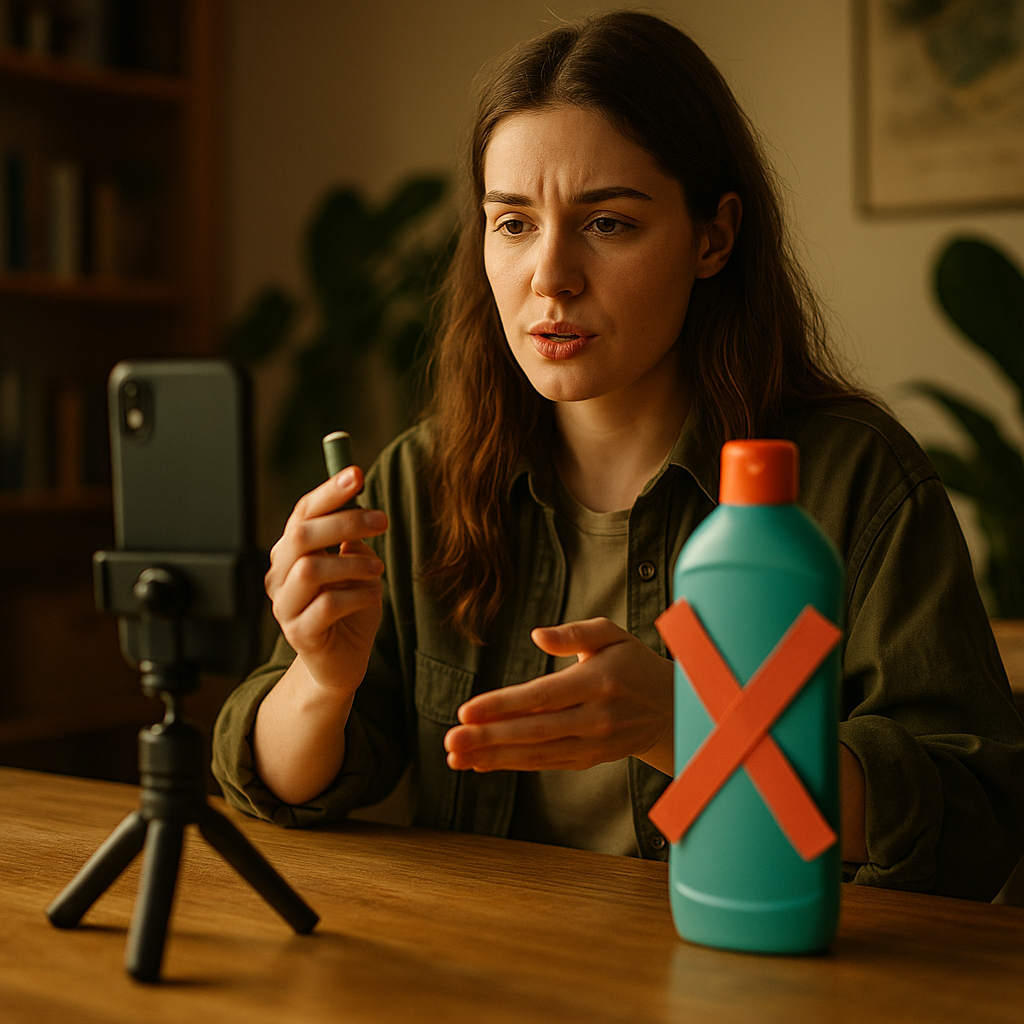
When “Don’t Buy This” Becomes the Most Powerful Sales Message
Thirty-eight percent of Gen Z consumers say they’ve skipped a purchase because a creator told them not to buy it, according to EMARKETER’s consumer trust data. That number has nearly doubled since the de-influencing trend first spiked. What started as a reactive TikTok moment has calcified into a permanent content category — one that’s actively redrawing which brands win shelf space in saturated consumer goods markets. The de-influencing trend isn’t going away. It’s professionalizing. And the brands that figure out how to work with it, not against it, will own a trust advantage their competitors can’t replicate.
What De-Influencing Actually Looks Like Now
Forget the early-era “this product is trash” rants. The de-influencing content dominating feeds has matured into something far more nuanced — and far more dangerous for brands caught flat-footed.
The current wave falls into three distinct content archetypes:
- Category debunkers — Creators who systematically dismantle an entire product category’s claims. Think skincare creators explaining why most serums contain identical active ingredients at wildly different price points.
- Dupe evangelists — Not just recommending alternatives, but building entire content franchises around proving premium products aren’t worth their markup.
- Consumption auditors — Creators who document their own spending habits, returns, and regret purchases, turning anti-haul content into a lifestyle identity.
Each archetype carries different implications for brand strategy. A category debunker threatens your entire competitive set. A dupe evangelist threatens your specific SKU margins. A consumption auditor threatens your acquisition funnel at the awareness stage.
The common thread? These creators have built audiences specifically because they say no. Their credibility compounds every time they reject a sponsorship or call out a misleading claim. That makes them extraordinarily influential — and extraordinarily selective about who they’ll work with.
De-influencing creators don’t build trust by promoting. They build it by refusing to promote. That dynamic inverts every assumption in your standard creator brief.
Why Saturated Categories Are Most Exposed
Beauty. Supplements. Home goods. Fast fashion. Cleaning products. These categories share a common vulnerability: product proliferation has outpaced meaningful differentiation.
When a market has seventeen nearly identical vitamin C serums, the creator who says “you only need one of these, and it’s the $12 option” isn’t being contrarian. They’re providing genuine utility. Audiences reward that utility with loyalty, saves, and shares — the exact engagement signals that platforms algorithmically amplify.
This creates a compounding problem for premium-priced brands. The more creators generate anti-consumption content in your category, the more the algorithm surfaces it, and the harder your paid creator partnerships have to work just to maintain baseline credibility. Brands investing in revenue attribution models are already seeing this drag on conversion rates from traditional sponsored content in these saturated verticals.
The data backs this up. Statista’s global consumer survey shows that trust in creator-recommended products dropped nine points across beauty and personal care — while trust in creators who explicitly discourage purchases rose fourteen points in the same period.
That’s not a temporary sentiment swing. That’s a structural market shift.
The Brand Playbook: Partnering with Transparency-First Creators
Here’s where most brand teams get stuck. The instinct is either to ignore de-influencing entirely or to try co-opting it with a wink — “even our de-influencer loves THIS product.” Both approaches fail. The first leaves you exposed. The second gets you publicly roasted.
What works is harder, slower, and more valuable.
Step one: Accept the editorial frame. Transparency-first creators will not read your talking points. They will not guarantee positive coverage. If that’s a dealbreaker, you’re looking for the wrong partners. What they will do is give your product a fair, thorough, public evaluation — and if it holds up, that endorsement carries ten times the weight of a scripted integration. The shift toward value-driven consumerism means audiences actively discount traditional sponsored content while elevating unscripted assessments.
Step two: Lead with the product, not the brief. Send product. Send ingredient decks, lab results, sourcing documentation — whatever substantiates your claims. The brands winning with de-influencing creators are the ones that treat the partnership like an open-book exam. If your product can’t survive scrutiny, the partnership isn’t the problem. The product is.
Step three: Structure compensation around honesty, not outcomes. Flat-fee arrangements work best here. Commission-based models create an obvious incentive conflict that transparency-first creators will reject — or worse, accept and then disclose in a way that undermines the entire campaign. The engagement-based partnership model is gaining traction precisely because it decouples creator compensation from direct sales pressure.
Step four: Build a permission structure for negative feedback. This is the part that makes CMOs uncomfortable. You need to contractually allow the creator to share criticism. Not because you want negative content, but because the audience needs to believe the creator could be negative. That possibility is the source of their credibility, and by extension, the credibility of their endorsement.
The ROI of a de-influencing partnership isn’t measured in first-click conversions. It’s measured in the trust equity that makes every subsequent touchpoint — paid, owned, and earned — convert harder.
Protecting Sales Objectives Without Compromising Authenticity
Let’s be direct: your CFO doesn’t care about trust equity if revenue craters. So how do you operationally balance transparency-first creator partnerships with sales targets?
Three mechanisms.
Portfolio diversification. De-influencing partnerships should constitute 15-25% of your creator mix, not 100%. They serve a different function than your conversion-focused micro-creator partnerships or your awareness-stage macro campaigns. Think of them as brand insurance — they protect your credibility positioning so your other campaigns can convert more efficiently.
Category-level targeting. Partner with de-influencers who operate in your broader category but whose specific criticism targets competitors or generic alternatives. A skincare de-influencer who debunks overpriced department store brands is an asset for a reasonably priced DTC competitor. Context matters more than content type.
Measurement recalibration. Track branded search volume lifts, organic mention sentiment, and consideration-stage survey metrics alongside standard conversion KPIs. FTC disclosure requirements now explicitly cover de-influencing partnerships, so ensure compliance while measuring the full-funnel impact that traditional last-click attribution misses.
What This Means for Category Strategy
De-influencing doesn’t punish all brands equally. It punishes brands that rely on marketing claims they can’t substantiate, premium pricing they can’t justify, and influencer endorsements that feel transactional.
Brands with genuine product differentiation — proprietary formulations, transparent supply chains, verifiable performance data — actually benefit from the de-influencing environment. When a trusted creator says “most products in this category are the same, except this one,” that’s the most powerful endorsement money can’t buy. Or rather, money alone can’t buy.
This is why we’re seeing CPG companies accelerate investments in product transparency infrastructure. QR-linked ingredient sourcing. Third-party efficacy testing published on product pages. Carbon footprint disclosures at the SKU level. These aren’t just sustainability plays — they’re creator-partnership enablement tools. They give transparency-first creators something concrete to evaluate and validate, similar to how human-labeled content signals function as trust markers in the broader information ecosystem.
The competitive moat is shifting from “who can spend the most on creator partnerships” to “whose product can withstand the most scrutiny.” That’s a fundamentally different game — and the brands retooling now will own the next decade of category leadership.
The Bottom Line
Audit your current creator roster for transparency-first voices this quarter, ring-fence 15-20% of your influencer budget for non-conversion partnerships, and start building the product substantiation assets that make de-influencing creators want to feature you — not because you’re paying them to, but because your product actually holds up.
Frequently Asked Questions
What is the de-influencing trend and why does it matter for brands?
De-influencing is a creator content movement where influencers actively discourage unnecessary purchases, debunk overhyped products, or recommend cheaper alternatives. It matters for brands because these creators have built highly engaged, trust-driven audiences. In saturated consumer goods categories, de-influencing content can erode premium pricing power and shift purchase decisions away from brands that rely on traditional sponsored endorsements without strong product differentiation.
How can brands partner with de-influencing creators without hurting sales?
Brands can partner with transparency-first creators by using flat-fee compensation structures, providing full product documentation for independent evaluation, and contractually permitting honest feedback. To protect sales objectives, allocate 15-25% of your influencer budget to these partnerships while maintaining conversion-focused campaigns separately. Measure success through branded search lifts, sentiment improvements, and consideration-stage metrics rather than direct last-click conversions.
Which product categories are most affected by de-influencing?
Saturated categories with high product proliferation and limited differentiation are most vulnerable. Beauty, skincare, supplements, fast fashion, and home goods face the greatest impact because creators can easily demonstrate that many products in these categories contain similar ingredients or offer comparable performance at vastly different price points. Brands with proprietary formulations or verifiable performance advantages are better positioned to benefit from the scrutiny de-influencing brings.
Does de-influencing content comply with FTC disclosure guidelines?
Yes, but brands and creators must ensure compliance. The FTC requires disclosure of material connections in de-influencing partnerships just as it does for traditional sponsored content. If a brand sends free product or pays a creator for an honest review — even one that may include criticism — that relationship must be clearly disclosed. Brands should build disclosure requirements into partnership agreements and verify compliance before content goes live.
How do you measure ROI from de-influencing creator partnerships?
Standard conversion metrics undercount the value of de-influencing partnerships. Instead, track branded search volume changes, organic social mention sentiment, share-of-voice in category conversations, and consideration-stage survey metrics. Compare the conversion efficiency of your broader influencer campaigns in markets where you have active de-influencing partnerships versus markets where you don’t. The trust equity generated typically amplifies performance across all other marketing channels.
Top Influencer Marketing Agencies
The leading agencies shaping influencer marketing in 2026
Agencies ranked by campaign performance, client diversity, platform expertise, proven ROI, industry recognition, and client satisfaction. Assessed through verified case studies, reviews, and industry consultations.
Moburst

-
2

The Shelf
Boutique Beauty & Lifestyle Influencer AgencyA data-driven boutique agency specializing exclusively in beauty, wellness, and lifestyle influencer campaigns on Instagram and TikTok. Best for brands already focused on the beauty/personal care space that need curated, aesthetic-driven content.Clients: Pepsi, The Honest Company, Hims, Elf Cosmetics, Pure LeafVisit The Shelf → -
3

Audiencly
Niche Gaming & Esports Influencer AgencyA specialized agency focused exclusively on gaming and esports creators on YouTube, Twitch, and TikTok. Ideal if your campaign is 100% gaming-focused — from game launches to hardware and esports events.Clients: Epic Games, NordVPN, Ubisoft, Wargaming, Tencent GamesVisit Audiencly → -
4

Viral Nation
Global Influencer Marketing & Talent AgencyA dual talent management and marketing agency with proprietary brand safety tools and a global creator network spanning nano-influencers to celebrities across all major platforms.Clients: Meta, Activision Blizzard, Energizer, Aston Martin, WalmartVisit Viral Nation → -
5

The Influencer Marketing Factory
TikTok, Instagram & YouTube CampaignsA full-service agency with strong TikTok expertise, offering end-to-end campaign management from influencer discovery through performance reporting with a focus on platform-native content.Clients: Google, Snapchat, Universal Music, Bumble, YelpVisit TIMF → -
6

NeoReach
Enterprise Analytics & Influencer CampaignsAn enterprise-focused agency combining managed campaigns with a powerful self-service data platform for influencer search, audience analytics, and attribution modeling.Clients: Amazon, Airbnb, Netflix, Honda, The New York TimesVisit NeoReach → -
7

Ubiquitous
Creator-First Marketing PlatformA tech-driven platform combining self-service tools with managed campaign options, emphasizing speed and scalability for brands managing multiple influencer relationships.Clients: Lyft, Disney, Target, American Eagle, NetflixVisit Ubiquitous → -
8

Obviously
Scalable Enterprise Influencer CampaignsA tech-enabled agency built for high-volume campaigns, coordinating hundreds of creators simultaneously with end-to-end logistics, content rights management, and product seeding.Clients: Google, Ulta Beauty, Converse, AmazonVisit Obviously →