


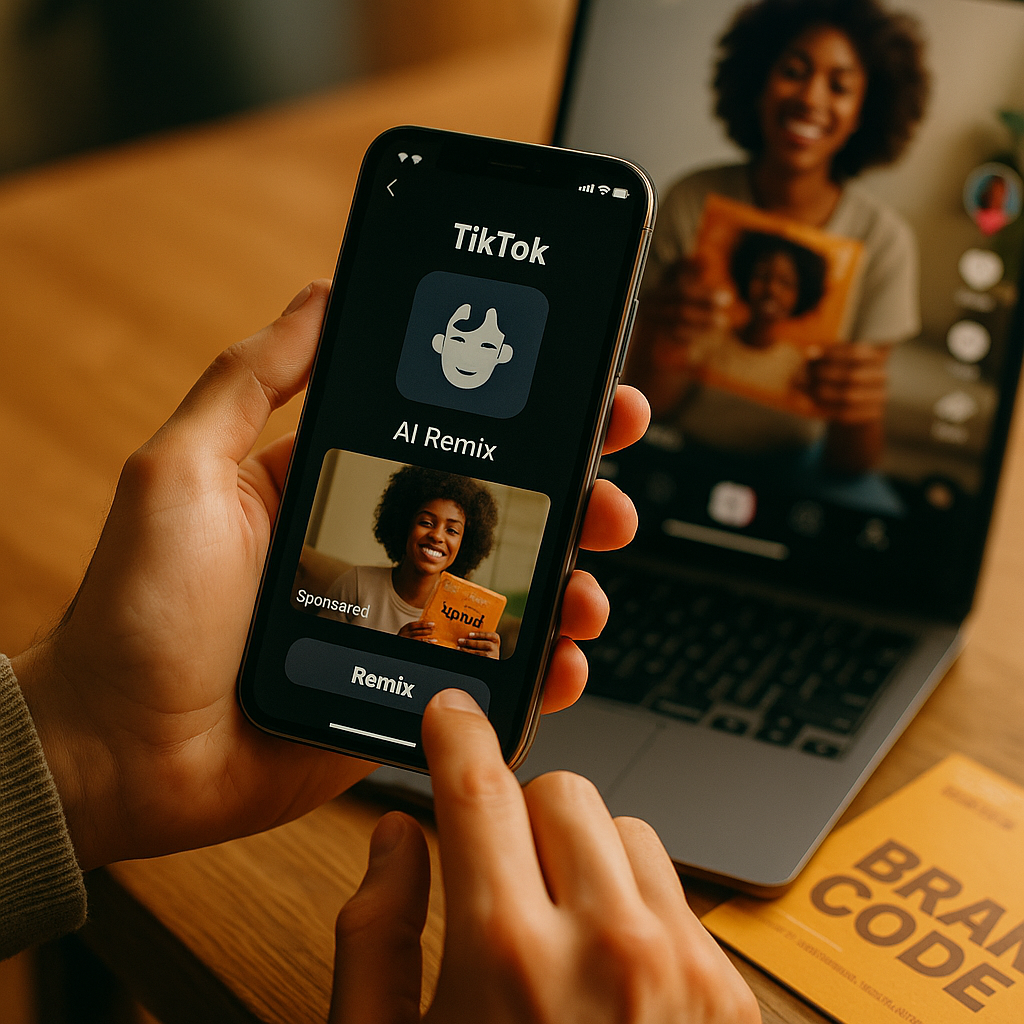
The Remix Economy Is Here — and Most Brands Are Fumbling It
According to TikTok’s business platform, generative AI remixes now account for an estimated 18% of all branded content interactions on the platform. That’s a staggering number — and it’s climbing. Yet fewer than one in five brand strategists have a documented playbook for how their sponsored content should behave once it enters the TikTok generative AI remix ecosystem. The gap between opportunity and operational readiness is wide, expensive, and fixable.
If you’re running influencer programs, this is the single biggest earned-media lever you’re probably ignoring.
What Generative AI Remixes Actually Change for Sponsored Content
Let’s get specific. TikTok’s generative AI remix tools let users take an existing video — including branded creator content — and transform it with AI-generated overlays, scene extensions, character swaps, audio re-mixes, and contextual mashups. The original content becomes a launchpad. It’s not duetting. It’s not stitching. It’s a fundamentally new creative primitive.
For brands, that means a single piece of sponsored content can spawn dozens, sometimes hundreds, of derivative works. Each one carries residual brand association. Some carry it well. Some carry it catastrophically.
The core strategic shift: your sponsored content is no longer a finished asset. It’s a creative seed. And how you design that seed determines whether AI remixes amplify your message or distort it beyond recognition.
This is different from the traditional “hope it goes viral” approach. You’re not waiting for organic reshares. You’re structuring content so the platform’s own AI tools actively encourage and reward remixing — on your terms.
Designing for Remixability: The Five Structural Principles
After analyzing campaigns from brands like Fenty Beauty, Duolingo, and Liquid Death — plus insights from agencies running seven-figure TikTok influencer budgets — five structural principles consistently separate high-remix campaigns from dead-on-arrival ones.
1. Modular Visual Architecture. The best-performing remix seeds use distinct visual “zones” — a clear foreground action, a separable background, and at least one graphically isolated brand element (logo placement, product shot, color block). AI remix tools parse these zones. When your content is visually muddy, the AI produces muddy derivatives. When it’s modular, remixes retain brand identifiers even after heavy transformation.
2. Audio That Travels. TikTok’s AI audio remix features work best with content that has a rhythmic hook, a memorable vocal phrase, or a distinctive sonic signature. Think of it like designing a sample for a producer. If your creator’s audio is generic background music over a talking-head, there’s nothing for the AI — or users — to grab. The brands winning at TikTok remix amplification are briefing creators with specific audio cues baked into the deliverable.
3. A Clear “Invitation Point.” Every high-remix piece of content contains a moment — visual, verbal, or narrative — that implicitly asks: “What would you do with this?” It might be a dramatic pause, an unfinished sentence, a before/after structure with an obvious gap. This isn’t accidental. It’s briefed.
4. Emotional Specificity Over Brand Generality. Content that triggers a specific emotion (surprise, cringe, aspiration, absurdity) gets remixed at 3-4x the rate of content that’s merely “on brand.” Your brief should name the target emotion, not just the target audience.
5. Technical Remix-Readiness. This is the boring one that separates professionals from amateurs. Ensure your creator content is uploaded at maximum resolution, uses clean cuts (not heavily filtered transitions that confuse AI frame detection), and avoids burned-in text overlays that restrict how AI tools can manipulate the visual layer. If you’re scaling creator partnerships at scale, add remix-readiness specs to your standard deliverable requirements.
The Disclosure Problem No One Wants to Talk About
Here’s where it gets legally thorny.
When a creator posts sponsored content with proper #ad or #sponsored disclosure, that disclosure lives on the original post. When someone uses TikTok’s AI tools to remix that content into a new video, the disclosure doesn’t transfer. The derivative work may carry your brand prominently — product visible, logo intact, maybe even the creator’s voice — but zero sponsorship disclosure.
The FTC’s endorsement guidelines are clear: material connections must be disclosed. But they were written for a world where content had a single author. AI remixes create a gray zone that regulators haven’t fully addressed — which means the enforcement risk sits squarely with the brand, not the remixer.
Your legal exposure isn’t in the content you publish. It’s in the content you inspire. And generative AI remixes are accelerating derivative creation faster than compliance frameworks can keep up.
So what do you do?
Embed disclosure into the content itself. Don’t rely solely on caption-level hashtags. Work with creators to include verbal or on-screen disclosure within the first three seconds of the video — the portion most likely to survive remixing. “Partnered with [Brand]” spoken aloud or displayed as a persistent on-screen element is significantly more durable than a caption hashtag.
Use TikTok’s branded content tools aggressively. The platform’s built-in partnership label creates metadata that persists through some remix workflows. It’s not bulletproof, but it adds a compliance layer. Push your agency partners to verify this is activated on every sponsored post.
Create a remix monitoring protocol. Tools like Brandwatch and CreatorIQ offer content derivative tracking. Set up alerts for AI-remixed content featuring your brand assets. When a derivative gains traction without disclosure, you need a rapid-response playbook — not a legal review that takes two weeks.
Document your good-faith compliance efforts. The FTC evaluates advertiser intent and process, not just outcomes. If you can demonstrate you briefed creators on remix-durable disclosure, used platform tools, and actively monitored derivatives, your risk posture improves dramatically.
Balancing Creative Integrity With Earned Chaos
This is the tension that keeps brand managers up at night: you want remixes (free amplification), but you don’t want your brand contorted into something off-strategy or offensive.
You cannot control what people create. Full stop.
But you can influence the probability distribution of outcomes. Think of it like landscape architecture — you’re not controlling where every person walks, but you’re designing the paths that most people will naturally follow.
Practically, this means:
- Brief for “remix corridors.” Give creators a narrative structure that channels remixes in predictable directions. A strong before/after format, for example, almost always gets remixed with alternative “afters” — keeping your brand in the “before” frame every time.
- Identify and pre-seed positive remix patterns. Commission 3-5 “first remix” pieces from smaller creators in your network. These establish the creative template that organic remixers tend to follow. The first few remixes disproportionately shape the trajectory of all subsequent ones.
- Set brand safety tripwires, not brand safety walls. Work with your social listening team to flag remixes that cross defined thresholds (hate speech, competitive placement, explicit content). React surgically to those. Don’t try to prevent remixing broadly — that kills the amplification effect entirely.
For deeper thinking on how cultural moment content drives earned amplification on short-form video, our analysis of cultural moment Reels strategies translates well to TikTok’s remix environment.
Measuring What Matters: Beyond Vanity Metrics
Standard influencer campaign reporting — views, likes, engagement rate — doesn’t capture remix value. You need a measurement framework that accounts for derivative reach.
Here’s a starting model:
- Seed Content Performance: Standard metrics on the original sponsored post.
- First-Order Remix Volume: How many AI remixes were created directly from your seed content within 14 days.
- Derivative Reach Multiplier: Total impressions across all remix derivatives divided by seed content impressions. Healthy campaigns see 2x-8x multipliers.
- Brand Retention Score: Percentage of remix derivatives where brand elements (logo, product, brand name audio) remain identifiable. Manually audit a sample of 50+ remixes to calculate this.
- Disclosure Durability Rate: Percentage of remix derivatives where sponsorship disclosure remains present or detectable. This is your compliance KPI.
If you’re also exploring how AI product discovery intersects with creator strategy, combining remix amplification data with search-driven attribution gives you a more complete picture of how generative AI is reshaping your funnel.
The analytics infrastructure for this is still maturing. Sprout Social and similar platforms are beginning to integrate derivative content tracking, but expect to do some manual work in the near term. Budget for it. The brands that build this measurement muscle now will have a structural advantage as AI remix volume continues to compound.
Your Next Move
Pull your last three TikTok sponsored content briefs. Score each one against the five structural principles above. If none of them include remix-readiness specs, audio hook requirements, or embedded disclosure language, you’ve found the gap — and your competitive opening. Retrofit one campaign this quarter, measure derivative reach, and you’ll have the data to justify a full playbook rollout.
Frequently Asked Questions
What is a TikTok generative AI remix, and how does it differ from duets or stitches?
A TikTok generative AI remix uses artificial intelligence to transform an existing video with AI-generated overlays, scene extensions, audio re-mixes, and visual mashups. Unlike duets or stitches — which place content side by side or sequentially — AI remixes fundamentally alter and rebuild the original creative, producing derivative works that can look and sound significantly different while retaining elements of the source material.
How do I maintain FTC disclosure compliance when my sponsored content gets remixed by other users?
Embed sponsorship disclosure directly into the video content — spoken aloud or as a persistent on-screen element within the first three seconds — rather than relying solely on caption hashtags. Activate TikTok’s branded content partnership labels for metadata persistence, monitor derivative content with social listening tools, and document all compliance efforts to demonstrate good-faith adherence to FTC endorsement guidelines.
What metrics should I track to measure the ROI of AI remix amplification?
Track five key metrics: seed content performance (standard engagement), first-order remix volume (number of AI remixes created within 14 days), derivative reach multiplier (total remix impressions divided by seed impressions), brand retention score (percentage of remixes where brand elements remain identifiable), and disclosure durability rate (percentage of remixes where sponsorship disclosure persists).
How do I brief creators to produce content that remixes well?
Brief creators for modular visual architecture with separable foreground, background, and brand elements. Specify audio hooks or distinctive sonic signatures. Include a clear “invitation point” — a dramatic pause, unfinished sentence, or structural gap. Require maximum resolution uploads with clean cuts and no burned-in text overlays. Name the target emotion explicitly in the brief, and add remix-readiness specs to your standard deliverable requirements.
Can I prevent my branded content from being remixed in ways that damage my brand?
You cannot fully prevent off-brand remixes, but you can influence the direction of derivative content. Pre-seed positive remix patterns by commissioning first remixes from trusted creators, brief for “remix corridors” that channel creative output in predictable directions, and set brand safety tripwires with social listening tools to flag and respond to remixes that cross defined thresholds like hate speech or explicit content.
Top Influencer Marketing Agencies
The leading agencies shaping influencer marketing in 2026
Agencies ranked by campaign performance, client diversity, platform expertise, proven ROI, industry recognition, and client satisfaction. Assessed through verified case studies, reviews, and industry consultations.
Moburst

-
2

The Shelf
Boutique Beauty & Lifestyle Influencer AgencyA data-driven boutique agency specializing exclusively in beauty, wellness, and lifestyle influencer campaigns on Instagram and TikTok. Best for brands already focused on the beauty/personal care space that need curated, aesthetic-driven content.Clients: Pepsi, The Honest Company, Hims, Elf Cosmetics, Pure LeafVisit The Shelf → -
3

Audiencly
Niche Gaming & Esports Influencer AgencyA specialized agency focused exclusively on gaming and esports creators on YouTube, Twitch, and TikTok. Ideal if your campaign is 100% gaming-focused — from game launches to hardware and esports events.Clients: Epic Games, NordVPN, Ubisoft, Wargaming, Tencent GamesVisit Audiencly → -
4

Viral Nation
Global Influencer Marketing & Talent AgencyA dual talent management and marketing agency with proprietary brand safety tools and a global creator network spanning nano-influencers to celebrities across all major platforms.Clients: Meta, Activision Blizzard, Energizer, Aston Martin, WalmartVisit Viral Nation → -
5

The Influencer Marketing Factory
TikTok, Instagram & YouTube CampaignsA full-service agency with strong TikTok expertise, offering end-to-end campaign management from influencer discovery through performance reporting with a focus on platform-native content.Clients: Google, Snapchat, Universal Music, Bumble, YelpVisit TIMF → -
6

NeoReach
Enterprise Analytics & Influencer CampaignsAn enterprise-focused agency combining managed campaigns with a powerful self-service data platform for influencer search, audience analytics, and attribution modeling.Clients: Amazon, Airbnb, Netflix, Honda, The New York TimesVisit NeoReach → -
7

Ubiquitous
Creator-First Marketing PlatformA tech-driven platform combining self-service tools with managed campaign options, emphasizing speed and scalability for brands managing multiple influencer relationships.Clients: Lyft, Disney, Target, American Eagle, NetflixVisit Ubiquitous → -
8

Obviously
Scalable Enterprise Influencer CampaignsA tech-enabled agency built for high-volume campaigns, coordinating hundreds of creators simultaneously with end-to-end logistics, content rights management, and product seeding.Clients: Google, Ulta Beauty, Converse, AmazonVisit Obviously →