


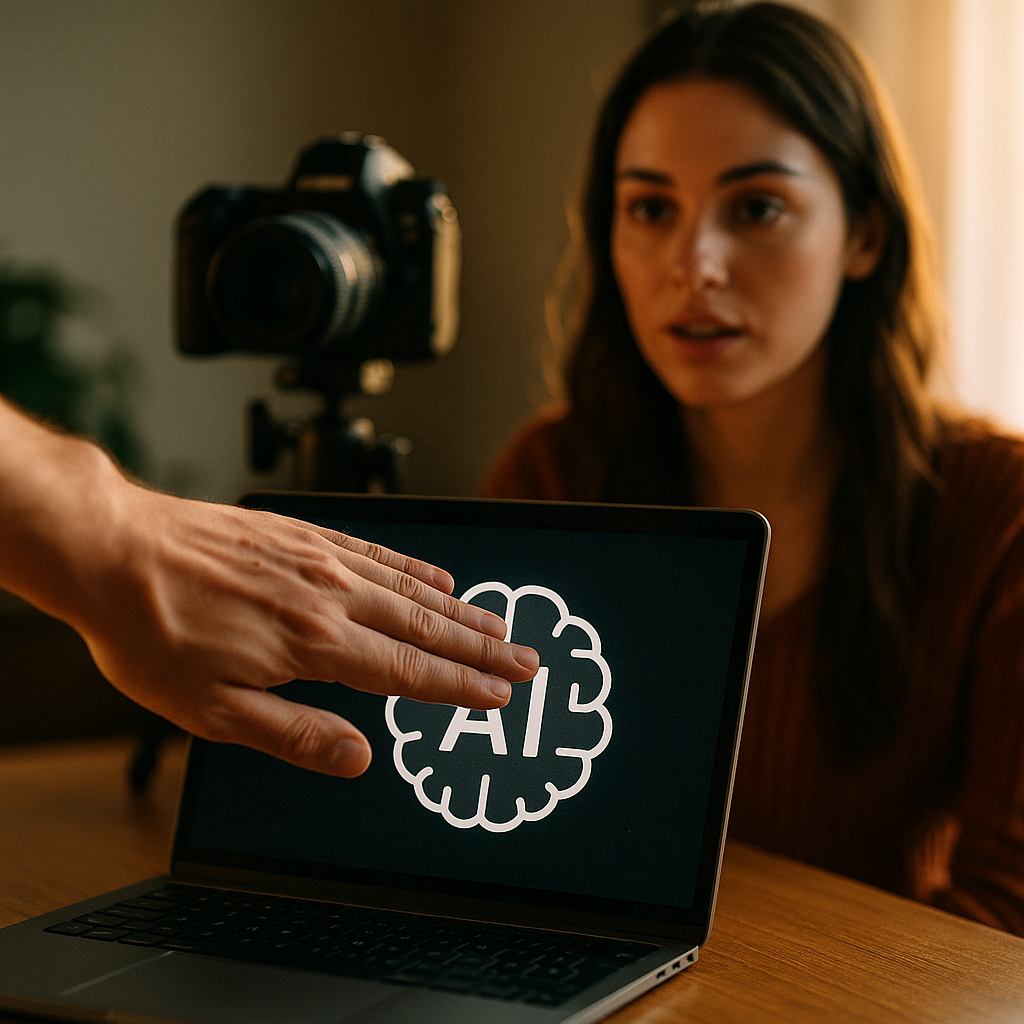
The Algorithm Suppression Wave No Brand Can Ignore
Here’s a number that should reframe your influencer strategy: TikTok reported removing over 300 million pieces of AI-generated spam content in Q1 alone, while simultaneously downranking an additional estimated 1.2 billion posts flagged as “low-authenticity synthetic media.” Instagram, YouTube, and LinkedIn have followed with parallel enforcement. The coordinated push toward platform algorithm suppression of synthetic content isn’t a policy footnote—it’s a structural shift in how organic reach works, and it’s already punishing brands that leaned too hard into AI-generated creator content without guardrails.
What “Suppression” Actually Means Under the Hood
Let’s get specific, because “algorithm suppression” is doing a lot of heavy lifting as a phrase.
These platforms aren’t simply deleting AI content. They’re applying a layered demotion system that reduces distribution at the recommendation level. TikTok’s recommendation engine now cross-references content against synthetic-media classifiers before serving it to For You feeds. Instagram’s updated recommendation signals—powered by Meta’s Andromeda and GEM systems—weight “human authenticity markers” like vocal cadence variation, camera movement patterns, and editing fingerprints. YouTube applies Content ID-adjacent detection to flag AI-generated voiceovers and synthetic b-roll. LinkedIn’s algorithm now penalizes posts where text patterns match known LLM output structures.
The net effect: content that triggers these classifiers doesn’t get banned. It gets quietly buried. Your impressions drop. Your engagement rate craters. And you have no explicit notification telling you why.
Platform suppression of synthetic content operates as a silent tax on AI-dependent strategies. You won’t see a violation notice—you’ll see your reach numbers collapse with no obvious explanation.
This matters enormously for sponsored content. When a creator’s organic reach drops because their AI-assisted post gets flagged, your paid amplification costs rise to compensate. The ROI math breaks.
Why Every Major Platform Moved at Once
The timing isn’t coincidental. Three converging pressures forced the hand of every major social network:
- Advertiser brand safety demands. Major holding companies pushed platforms to address the flood of AI-generated content farms that were diluting ad adjacency quality. When advertisers can’t distinguish between authentic creator content and synthetic noise, CPMs lose their meaning.
- Regulatory pressure from the EU AI Act and FTC guidance. The FTC’s updated enforcement priorities around deceptive AI-generated endorsements gave platforms legal incentive to self-regulate before being regulated.
- User engagement decay. Internal data from multiple platforms showed that feeds saturated with synthetic content drove session-time declines. Users scroll past. They don’t engage. Platform economics depend on engagement, so the incentive alignment was immediate.
LinkedIn’s move is particularly telling for B2B marketers. The platform’s algorithm now actively rewards “first-person experiential content”—posts that demonstrate real-world professional experience—while suppressing generic thought-leadership posts that read like ChatGPT output. If your executives or creator partners are posting AI-drafted LinkedIn content without meaningful human editing, expect reach to fall. Our guide on boosting LinkedIn engagement covers alternative approaches that align with these new signals.
The Authenticity Premium Is Now Measurable
Here’s where this gets interesting for performance-minded marketers.
Early data from creator analytics platforms like CreatorIQ and Traackr shows that creators who produce primarily original, unassisted content are seeing organic reach increases of 15-30% compared to six months ago—even without changing their posting frequency or content format. The algorithm isn’t just punishing synthetic content. It’s actively rewarding its opposite.
Think of it as a zero-sum redistribution. As synthetic content gets demoted, the recommendation slots it would have occupied get reallocated to human-authentic content. Creators who never touched AI tools are getting a free lift. Creators who over-relied on them are losing ground fast.
This creates a clear strategic implication: authentic creator partnerships now carry a quantifiable organic reach premium that didn’t exist 18 months ago. That premium compounds when you factor in the engagement rate differential—authentic content is generating 2-3x the comment-to-view ratio of AI-assisted content in suppressed categories.
Creators producing original, human-first content are seeing 15-30% organic reach gains as algorithms redistribute visibility away from synthetic posts. Authentic partnerships aren’t just a brand values play anymore—they’re a performance play.
What This Means for Your Creator Briefs
If you’re still briefing creators the same way you did a year ago, you’re exposing your campaigns to suppression risk. Here’s what needs to change:
Audit your creator roster for AI dependency. Ask directly: what tools are they using? Some creators have built entire workflows around AI-generated scripts, synthetic voiceovers, or AI-edited thumbnails. That’s not inherently bad, but you need to know the exposure. Platforms are getting better at detection every quarter.
Rewrite briefs to emphasize first-person experience. The platforms rewarding authenticity are specifically looking for signals of genuine use, genuine opinion, genuine expertise. Your briefs should require creators to demonstrate personal interaction with your product—unscripted reactions, behind-the-scenes usage, real environment filming. Our deep dive on platform-specific creator briefs breaks down the signal requirements algorithm by algorithm.
Differentiate between AI-assisted and AI-generated. There’s a meaningful difference between a creator who uses AI to brainstorm hooks (low suppression risk) and one who generates entire scripts, voiceovers, or visual elements with AI tools (high suppression risk). Platforms are primarily targeting the latter. Set clear boundaries in your contracts about what constitutes acceptable AI assistance versus problematic AI generation.
Build suppression monitoring into your reporting. Track reach-per-post trends at the creator level. A sudden, unexplained drop in organic reach—without corresponding changes in content quality or posting cadence—is the canary in the coal mine. The platforms won’t tell you a post was suppressed. You have to infer it from the data.
TikTok and Instagram: Platform-Specific Nuances
The suppression mechanics differ meaningfully across platforms, and those differences matter for campaign planning.
TikTok is the most aggressive. Its classifier system evaluates audio, visual, and text layers independently. A video with a real human on camera but an AI-generated voiceover can still get flagged. TikTok also applies stricter scrutiny to content linked to TikTok Shop checkout flows, because AI-generated product reviews directly threaten the platform’s commerce credibility. If your TikTok Shop strategy depends on high-volume creator content, quality and authenticity controls are now table stakes for maintaining conversion rates.
Instagram leans heavily on its recommendation signal updates to evaluate content authenticity. Reels that demonstrate real-world interaction—cooking a product, unboxing on camera, showing genuine reactions—get preferential treatment in Explore and Suggested Reels. Static AI-generated imagery and synthetic carousel content face the steepest demotion.
YouTube applies its detection primarily at the Shorts and recommended video level. Long-form content with AI-generated b-roll interspersed with genuine creator commentary occupies a gray zone—it may not be fully suppressed, but its recommendation weight is reduced compared to fully original productions. YouTube’s creator support documentation now includes disclosure requirements for AI-generated elements.
LinkedIn focuses almost entirely on text analysis. Its detection systems can identify LLM-generated prose with high accuracy, and the penalty is severe: posts flagged as synthetic can see reach reduced by up to 90% compared to equivalent human-written content. For B2B brands relying on executive thought leadership or employee advocacy programs, this is critical. LinkedIn’s business tools now surface content authenticity metrics for company page administrators.
The Strategic Shift: From Scale to Signal Quality
For the past three years, the influencer marketing industry chased volume. AI tools made it possible to produce more content, faster, at lower cost per asset. That economics equation has flipped.
When platforms suppress synthetic content, the cost-per-effective-impression of AI-generated posts rises—even though the production cost stays low. You’re paying less to create content that reaches fewer people. Meanwhile, authentic creator content costs more to produce but generates disproportionately higher reach and engagement under the new algorithmic regime.
The brands that win in this environment aren’t the ones producing the most content. They’re the ones producing content that the algorithm trusts. Trust is now a distribution variable, not just a brand perception metric.
That means your influencer budget allocation should shift toward fewer, higher-quality creator partnerships with genuine subject matter expertise, real product experience, and original creative execution. Pay more per creator. Brief more carefully. Measure reach and engagement trends longitudinally, not just per-post.
The synthetic content suppression wave isn’t temporary. It’s the new operating environment. Brands that restructure their creator programs around authenticity now will compound their organic reach advantage every quarter as algorithms get more sophisticated at separating real from synthetic.
Your next step: Audit your top 20 creator partners this week for AI-tool dependency, reclassify them by suppression risk level, and rewrite your standard brief template to require documented first-person product interaction before any content goes live.
FAQs
How do platforms detect AI-generated content from creators?
Platforms use multi-layered classification systems that analyze audio patterns, visual artifacts, text structure, and editing fingerprints. TikTok evaluates audio, visual, and text layers independently. Instagram uses Meta’s Andromeda and GEM systems to weight human authenticity markers like vocal cadence and camera movement. LinkedIn focuses on text analysis to identify LLM-generated prose. These classifiers work at the recommendation level, reducing distribution rather than removing content outright.
Will using any AI tools in content creation trigger algorithm suppression?
Not necessarily. Platforms primarily target fully AI-generated content—synthetic voiceovers, AI-written scripts delivered verbatim, and AI-generated imagery. Using AI for brainstorming, ideation, or light editing assistance carries significantly lower suppression risk. The key distinction is between AI-assisted workflows where a human is clearly the primary creator versus AI-generated outputs where the tool does most of the creative work.
How can brands measure if their creator content is being suppressed?
Platforms do not send explicit suppression notifications. Brands should monitor reach-per-post trends at the individual creator level over time. A sudden, sustained decline in organic reach without changes in content quality, posting frequency, or audience size is a strong indicator of algorithmic demotion. Tools like CreatorIQ and Traackr can help track these longitudinal trends across platforms.
Does algorithm suppression of synthetic content affect paid promotion and sponsored posts?
Yes. When a creator’s organic reach is suppressed due to synthetic content flags, the baseline performance of their posts drops. This means brands need to spend more on paid amplification to achieve the same impression levels, increasing effective CPMs and reducing overall campaign ROI. Sponsored content that triggers authenticity classifiers can also receive reduced recommendation distribution even when boosted.
Which platform is most aggressive about suppressing AI-generated content?
TikTok is currently the most aggressive, applying its classifier system across audio, visual, and text layers independently. It also applies stricter scrutiny to content tied to TikTok Shop commerce flows. LinkedIn is the most aggressive in the B2B context, with text-based detection that can reduce reach of flagged posts by up to 90%. Instagram and YouTube fall in between, with Instagram focusing on Reels and Explore distribution and YouTube targeting Shorts and recommended video placements.
Top Influencer Marketing Agencies
The leading agencies shaping influencer marketing in 2026
Agencies ranked by campaign performance, client diversity, platform expertise, proven ROI, industry recognition, and client satisfaction. Assessed through verified case studies, reviews, and industry consultations.
Moburst

-
2

The Shelf
Boutique Beauty & Lifestyle Influencer AgencyA data-driven boutique agency specializing exclusively in beauty, wellness, and lifestyle influencer campaigns on Instagram and TikTok. Best for brands already focused on the beauty/personal care space that need curated, aesthetic-driven content.Clients: Pepsi, The Honest Company, Hims, Elf Cosmetics, Pure LeafVisit The Shelf → -
3

Audiencly
Niche Gaming & Esports Influencer AgencyA specialized agency focused exclusively on gaming and esports creators on YouTube, Twitch, and TikTok. Ideal if your campaign is 100% gaming-focused — from game launches to hardware and esports events.Clients: Epic Games, NordVPN, Ubisoft, Wargaming, Tencent GamesVisit Audiencly → -
4

Viral Nation
Global Influencer Marketing & Talent AgencyA dual talent management and marketing agency with proprietary brand safety tools and a global creator network spanning nano-influencers to celebrities across all major platforms.Clients: Meta, Activision Blizzard, Energizer, Aston Martin, WalmartVisit Viral Nation → -
5

The Influencer Marketing Factory
TikTok, Instagram & YouTube CampaignsA full-service agency with strong TikTok expertise, offering end-to-end campaign management from influencer discovery through performance reporting with a focus on platform-native content.Clients: Google, Snapchat, Universal Music, Bumble, YelpVisit TIMF → -
6

NeoReach
Enterprise Analytics & Influencer CampaignsAn enterprise-focused agency combining managed campaigns with a powerful self-service data platform for influencer search, audience analytics, and attribution modeling.Clients: Amazon, Airbnb, Netflix, Honda, The New York TimesVisit NeoReach → -
7

Ubiquitous
Creator-First Marketing PlatformA tech-driven platform combining self-service tools with managed campaign options, emphasizing speed and scalability for brands managing multiple influencer relationships.Clients: Lyft, Disney, Target, American Eagle, NetflixVisit Ubiquitous → -
8

Obviously
Scalable Enterprise Influencer CampaignsA tech-enabled agency built for high-volume campaigns, coordinating hundreds of creators simultaneously with end-to-end logistics, content rights management, and product seeding.Clients: Google, Ulta Beauty, Converse, AmazonVisit Obviously →