


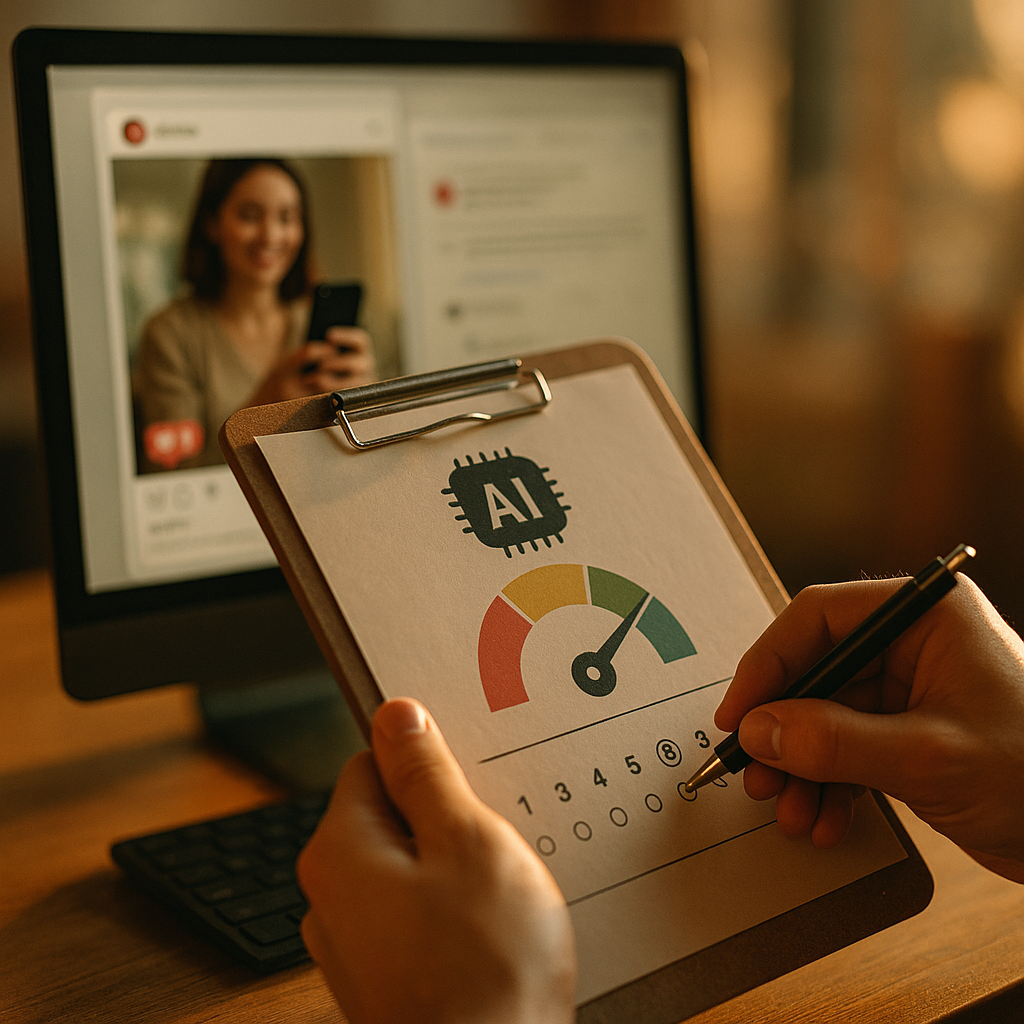
Your Paid Amplification Budget Is One Bad Post Away From a Brand Crisis
Brands collectively lost an estimated $2.6 billion in wasted influencer spend last year due to brand safety failures — and most of those failures happened after paid budget was already committed. AI-powered contextual brand safety has moved from nice-to-have to non-negotiable for any brand amplifying organic creator content at scale. The question isn’t whether you need it. It’s whether the platform you’re evaluating actually works.
Why Boosting Organic Posts Without AI Safety Scoring Is a Liability
The creator amplification workflow sounds simple: a creator posts organically, the content performs well, you whitelist it and put paid dollars behind it. But that organic post exists inside an ecosystem you don’t fully control. The caption may reference a competitor. The comment thread may have turned toxic in the 48 hours since it went live. The creator may have posted something inflammatory the same morning you queued the boost.
Manual review doesn’t scale. A mid-size brand running 50 creator partnerships simultaneously might be evaluating 200+ posts per week for amplification eligibility. No compliance team is reading every caption, parsing every frame of video, and auditing every comment thread in real time. That’s where computer vision and NLP-driven scoring engines earn their budget.
The risk isn’t just reputational. Platforms like Meta Business and TikTok Ads have their own brand safety layers, but those operate at the ad delivery level — they don’t assess the organic post you’re amplifying at the content level before your money is committed. You’re on the hook for what you boost.
Platform-level brand safety tools protect ad delivery. They don’t protect you from amplifying a creator post that contains embedded adjacency risks invisible to a human reviewer scanning at speed.
What “Contextual Brand Adjacency” Actually Means in Practice
Brand adjacency risk isn’t just about the obvious stuff — a creator drinking a competitor’s product, or a thumbnail with profanity. Contextual risk is subtler and more insidious. It’s the fitness creator whose recent content has quietly shifted toward supplement brands with contested health claims. It’s the parenting influencer whose comment section is being brigaded by a political faction. It’s the travel blogger whose posts are increasingly adjacent to gambling tourism content that doesn’t fit your brand’s values framework.
Sophisticated platforms use a layered model:
- Computer vision to analyze frame-by-frame visual content — objects, settings, logos, gestures, and scene context within video
- NLP to assess caption sentiment, keyword clusters, hashtag associations, and embedded text within images
- Audience signal analysis to flag when a creator’s follower base is shifting toward demographics or behavioral cohorts misaligned with your brand
- Temporal scoring to track how a creator’s content profile has evolved over the past 30, 60, and 90 days — not just the post you’re evaluating
This is meaningfully different from static keyword blocklists, which remain the dominant safety tool used by brands operating without dedicated creator intelligence infrastructure. Blocklists are reactive. Contextual AI scoring is predictive.
Evaluating Walled-Garden Intelligence Platforms: The Right Questions
The market for creator brand safety platforms has matured quickly. Tools like Zefr, Integral Ad Science (IAS), DoubleVerify, and newer entrants purpose-built for the creator economy all claim contextual scoring capability. But “contextual AI” is doing a lot of marketing work in their pitch decks. Here’s how to cut through it.
Does the platform score at the post level or the creator level? Creator-level scoring tells you whether a creator’s historical content profile is brand-safe. Post-level scoring tells you whether the specific post you’re about to boost is safe right now. You need both, and they’re not the same capability.
What is the training data provenance? Computer vision models for brand safety are only as good as the labeled datasets they were trained on. Ask vendors directly: who labeled the training data, what was the labeling rubric, and how frequently is the model retrained? A model trained primarily on YouTube may have poor recall on TikTok’s visual grammar.
How does the platform handle video versus static? Frame-level video analysis is computationally expensive and technically harder to do well. Some platforms sample frames rather than analyzing complete video content — which means they can miss brand risk that only appears in a specific segment. For Reels and TikToks, this is a significant gap.
Can the scoring rubric be customized to your brand’s specific risk categories? A pharmaceutical brand and a CPG snack brand have completely different adjacency risk profiles. Platforms offering only generic GARM-aligned categories (though GARM’s framework remains a useful baseline from WFA) may not capture the nuanced risk dimensions specific to your category, competitors, or regulated content areas.
For a deeper look at how AI scoring applies at the discovery stage — before amplification is even on the table — the work being done around UGC sorting and brand adjacency mapping provides a useful upstream frame.
The Walled-Garden Problem
Here’s what the platform vendors don’t lead with in their demos: their contextual intelligence is bounded by what the walled gardens give them access to. Meta’s API access tiers, TikTok’s data restrictions, and YouTube’s content ID architecture all create genuine ceiling effects on what third-party AI can actually see and score in real time.
This matters operationally. When you’re evaluating a platform’s brand safety claims, you need to understand the latency of their data access. Are they scoring content in near real-time, or are there 12-24 hour gaps during which a post could go viral — and your boost could be live — before their safety score updates?
Platforms with direct API partnerships (like DoubleVerify’s integrations with Meta and Google) have structural advantages here over platforms relying on scraped or delayed data. This is a due-diligence question, not a feature-sheet question. Ask for the SLA on score refresh rates before signing anything.
Related to this: the real-time monitoring infrastructure challenge isn’t unique to brand safety — it affects every layer of creator campaign intelligence. But the stakes are highest when paid budget is contingent on it.
Score refresh latency is the hidden variable in brand safety platform SLAs. A platform that refreshes adjacency scores every 24 hours is not a real-time safety tool — it’s a delayed audit tool dressed up in AI language.
Integrating Brand Safety Scoring Into Your Amplification Workflow
Buying the platform is the easy part. Operationalizing it into your boost approval workflow is where brands consistently underinvest. The technical integration needs to sit between the creator content submission step and the paid media trafficking step — with clear rules for what a failing score triggers.
Best-practice workflow design looks something like this:
- Creator submits post for amplification consideration (or you identify it via social listening)
- Brand safety platform runs post-level contextual scoring across visual, text, and audience dimensions
- Posts below a threshold score are auto-rejected or flagged for human review depending on score severity
- Posts above threshold are cleared for trafficking with score logged for audit trail
- Continuous re-scoring runs while the boost is live, with automatic pause triggers if score degrades
Step 5 is where most brands drop the ball. They treat brand safety as a pre-flight check, not an ongoing control. Creators keep posting while your boost is live. Their content environment changes. You need the scoring to run continuously, not just at approval time.
This connects directly to how paid social governance workflows need to be restructured when creator content enters the amplification pipeline — the creator content isn’t the same as a brand-produced ad, and the governance model can’t treat it as if it is.
For teams also navigating vendor risk in their broader AI stack, the frameworks outlined around AI vendor risk and MarTech oversight apply directly to brand safety platform evaluation — especially given how quickly these vendors are updating their underlying models.
Compliance context also matters here. The FTC’s endorsement guidelines and evolving disclosure requirements mean that brand safety scoring increasingly needs to include a compliance dimension — not just risk avoidance around brand values, but regulatory risk from inadequately disclosed paid amplification of creator content.
Teams optimizing amplification budget allocation alongside safety scoring will also find value in aligning with AI-driven budget rebalancing tools — the safety score should feed directly into spend allocation decisions, not sit in a parallel workflow that nobody checks against the media plan.
For the attribution side of the equation — understanding what your amplified creator posts are actually driving — the identity resolution and paid attribution challenge becomes considerably more complex when organic creator content is mixed with paid boosting. Get that infrastructure right before you scale.
Finally, vendor evaluation itself is evolving. The eMarketer data on brand safety investment trends consistently shows that brands with dedicated MarTech evaluation processes outperform those running ad hoc vendor selections — and brand safety platforms are too consequential to buy on a demo and a referral alone.
The Minimum Viable Safety Stack for Creator Amplification
Not every brand needs enterprise-grade brand safety infrastructure on day one. But there is a minimum viable configuration below which you’re operating with unacceptable risk:
- Post-level NLP scoring for caption and comment content, refreshed at least every 6 hours while boosts are live
- Frame-level computer vision for video content — not sampled, analyzed
- Creator-level profile drift monitoring covering at minimum 90 days of historical content
- Automated pause rules tied to score thresholds, not manual review queues
- An audit trail of safety scores at time of approval for each boosted post
Anything less than this isn’t brand safety. It’s brand safety theater.
Frequently Asked Questions
What is AI-powered contextual brand safety for creator amplification?
It refers to the use of artificial intelligence — specifically computer vision and natural language processing — to analyze creator posts at the content level before brands commit paid budget to boost them. The goal is to identify brand adjacency risks that manual review would miss: visual elements, caption sentiment, hashtag associations, and audience profile signals that could create reputational, competitive, or regulatory exposure for the brand.
How is contextual brand safety different from standard platform brand safety tools?
Platform-native brand safety tools (on Meta, TikTok, Google, etc.) primarily operate at the ad delivery level — they control where your ads appear across the platform’s inventory. Contextual brand safety platforms assess the specific creator post you’re planning to amplify, evaluating its content, surrounding signals, and creator profile for risk before your budget is committed. They’re complementary, not interchangeable.
What should brands look for when evaluating brand safety platforms?
Key evaluation criteria include: whether the platform scores at post level versus creator level (you need both); the provenance and recency of the AI model’s training data; how the platform handles video analysis (frame sampling versus complete analysis); whether scoring rubrics are customizable to your brand’s specific risk categories; and the latency of score refresh rates — especially while paid boosts are live.
Why does score refresh latency matter?
Because the content environment around a creator post changes continuously after it goes live. A post that scores clean at the time of boost approval may be surrounded by a toxic comment thread six hours later, or the creator may post inflammatory content on the same day your boost is running. Platforms that only score at approval time — rather than continuously while the boost is live — leave brands exposed to evolving risks they have no visibility into.
Do AI brand safety platforms work equally well across TikTok, Instagram, and YouTube?
Not always. Training data provenance matters significantly here: a model trained primarily on one platform’s visual and language patterns may have weaker performance on another’s. Additionally, API access restrictions vary by platform, creating ceiling effects on what third-party tools can see and how quickly they can score content. Brands should ask vendors specifically about per-platform performance benchmarks and data access arrangements before committing to a platform.
Top Influencer Marketing Agencies
The leading agencies shaping influencer marketing in 2026
Agencies ranked by campaign performance, client diversity, platform expertise, proven ROI, industry recognition, and client satisfaction. Assessed through verified case studies, reviews, and industry consultations.
Moburst

-
2

The Shelf
Boutique Beauty & Lifestyle Influencer AgencyA data-driven boutique agency specializing exclusively in beauty, wellness, and lifestyle influencer campaigns on Instagram and TikTok. Best for brands already focused on the beauty/personal care space that need curated, aesthetic-driven content.Clients: Pepsi, The Honest Company, Hims, Elf Cosmetics, Pure LeafVisit The Shelf → -
3

Audiencly
Niche Gaming & Esports Influencer AgencyA specialized agency focused exclusively on gaming and esports creators on YouTube, Twitch, and TikTok. Ideal if your campaign is 100% gaming-focused — from game launches to hardware and esports events.Clients: Epic Games, NordVPN, Ubisoft, Wargaming, Tencent GamesVisit Audiencly → -
4

Viral Nation
Global Influencer Marketing & Talent AgencyA dual talent management and marketing agency with proprietary brand safety tools and a global creator network spanning nano-influencers to celebrities across all major platforms.Clients: Meta, Activision Blizzard, Energizer, Aston Martin, WalmartVisit Viral Nation → -
5

The Influencer Marketing Factory
TikTok, Instagram & YouTube CampaignsA full-service agency with strong TikTok expertise, offering end-to-end campaign management from influencer discovery through performance reporting with a focus on platform-native content.Clients: Google, Snapchat, Universal Music, Bumble, YelpVisit TIMF → -
6

NeoReach
Enterprise Analytics & Influencer CampaignsAn enterprise-focused agency combining managed campaigns with a powerful self-service data platform for influencer search, audience analytics, and attribution modeling.Clients: Amazon, Airbnb, Netflix, Honda, The New York TimesVisit NeoReach → -
7

Ubiquitous
Creator-First Marketing PlatformA tech-driven platform combining self-service tools with managed campaign options, emphasizing speed and scalability for brands managing multiple influencer relationships.Clients: Lyft, Disney, Target, American Eagle, NetflixVisit Ubiquitous → -
8

Obviously
Scalable Enterprise Influencer CampaignsA tech-enabled agency built for high-volume campaigns, coordinating hundreds of creators simultaneously with end-to-end logistics, content rights management, and product seeding.Clients: Google, Ulta Beauty, Converse, AmazonVisit Obviously →