


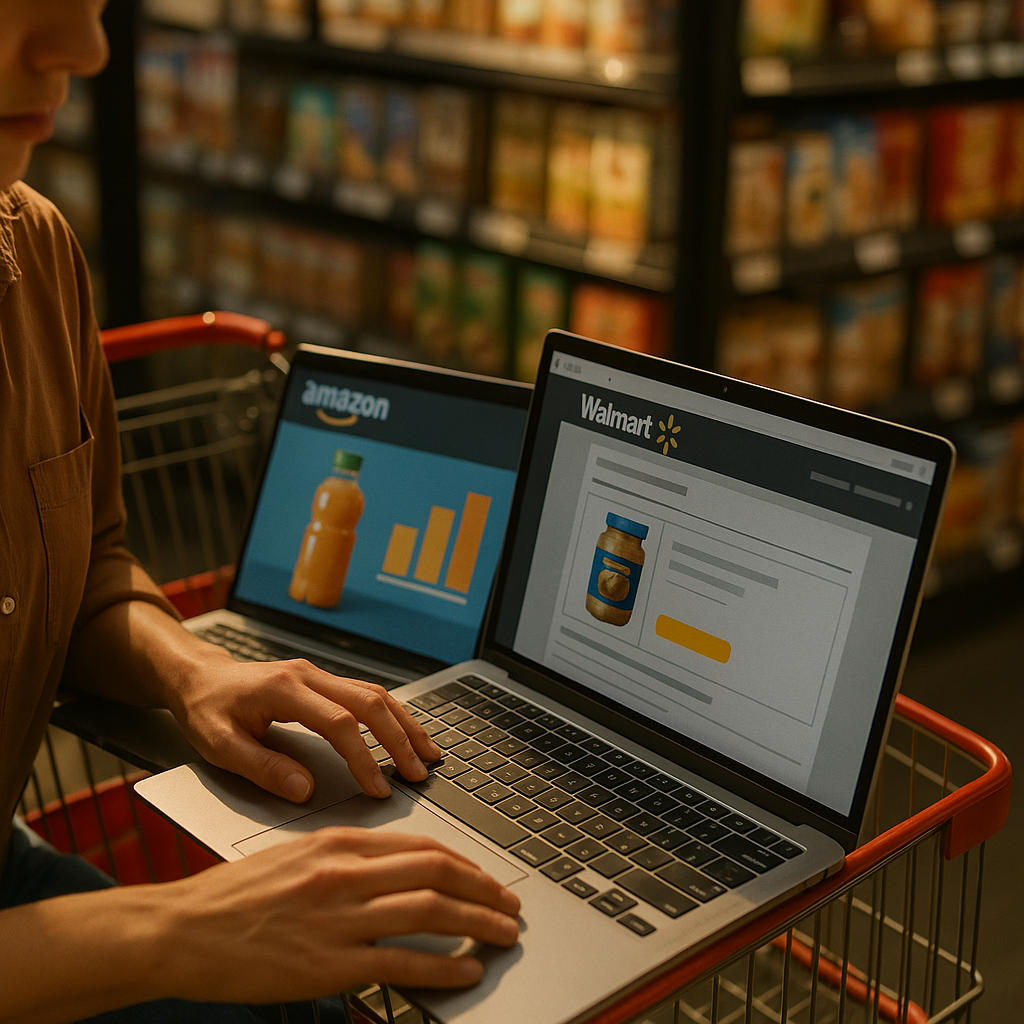
One Asset. Three Placements. Zero Duplicate Budgets.
Retail media ad spend is projected to surpass $60 billion in the U.S. alone, yet most CPG brands are still funding creator content and retail media placements as separate line items. That’s a structural budget problem — and the brands solving it are pulling ahead fast.
The convergence of paid creator content and retail media isn’t a trend. It’s a fundamental redesign of how CPG marketing budgets should be allocated. The core idea: a single creator asset — produced once, licensed correctly, and formatted for multiple surfaces — can function as an Instagram Reel, an Amazon DSP video unit, and a Walmart Connect sponsored placement without triggering a second production invoice.
Here’s how the leading CPG programs are actually pulling this off.
Why the Old Model Is Burning Money
The traditional CPG workflow looks like this: brief a creator for organic social, run the campaign, maybe boost top performers, then separately brief a production house for retail media creative. Two budgets. Two timelines. Often two completely different aesthetic directions. The consumer sees a creator talking enthusiastically about a product on TikTok and then encounters a sterile banner ad on Amazon that feels like it was made by a different company — because it was.
The inefficiency is measurable. Brands running siloed creative operations routinely spend 30–40% of their paid media production budget on assets that never get repurposed. When you factor in the content licensing fees that weren’t negotiated upfront, the number climbs higher. The creator contract structure is where most brands first lose control of this equation.
Retail media networks like Amazon DSP and Walmart Connect have expanded their video and display inventory to accept UGC-style creative — the kind creators produce naturally. That’s the opening. But capturing it requires intentional production design, not luck.
Designing for Multi-Surface From the Brief Stage
The fix starts before a camera is turned on. The brief itself has to carry the technical requirements for every intended surface simultaneously. That means specifying safe zones for retail placements (Amazon DSP requires specific text-free zones in video frames), aspect ratio deliverables (9:16 for social, 16:9 and 1:1 for DSP inventory), and brand compliance elements that satisfy both FTC disclosure guidelines and Amazon’s creative policies.
A well-designed brief for a multi-surface asset typically specifies:
- Multiple aspect ratios shot in the same session — not cropped after the fact, which degrades quality and loses context
- A “clean” version without on-screen text overlays, enabling the retail media team to apply compliant ad copy separately
- Extended usage rights language in the creator contract covering retail media placements, DSP inventory, and programmatic distribution
- A call-to-action variant tailored to purchase intent (“Shop now on Amazon”) vs. awareness intent (“Learn more”) — same footage, different ending
Brands like Procter & Gamble and Unilever have been piloting this approach through their retail media teams, working directly with creator agencies to standardize production specs. The operational overhead of getting this right upfront is real — but it’s a fraction of the cost of reshooting.
The most expensive creative mistake in CPG retail media isn’t a bad idea. It’s a good idea that wasn’t licensed for the surfaces that would have driven the most measurable return.
How Amazon DSP and Walmart Connect Actually Accept Creator Content
Both platforms have loosened their creative specifications meaningfully. Amazon DSP’s video inventory now accepts creator-style content across its display network, Fire TV, and streaming TV placements — provided the asset meets minimum resolution requirements (typically 1920×1080 for full-screen) and avoids prohibited content categories. The platform’s Streaming TV (STV) inventory, in particular, responds well to authentic UGC-style creative because it breaks pattern against polished studio ads.
Walmart Connect operates similarly. Its onsite video placements, sponsored product video, and offsite programmatic inventory through The Trade Desk integration can all serve creator-originated video. Walmart’s audience data — tied directly to purchase behavior — makes the targeting precision on creator content particularly strong for CPG. A snack brand’s creator video targeted at Walmart’s loyalty buyer segment often outperforms a studio-produced equivalent because the format matches consumer expectations for that category.
The key operational requirement: assets must be submitted through each platform’s respective creative management system with compliant specs. Errors at this stage — wrong file format, missing closed captions, incorrect safe zones — are the most common reason dual-purpose creator assets fail to launch on schedule. Build in a two-week technical QA buffer when running assets across both platforms simultaneously.
The Licensing Math That Makes This Work
None of this functions without watertight rights management. Standard creator contracts typically cover organic social posting and sometimes paid social amplification. Retail media placements — specifically DSP and programmatic inventory — require an explicit extension. That extension isn’t free, but it’s significantly cheaper than a separate production.
When negotiating for dual-purpose assets, structure the creator fee as a base rate for organic social, plus a retail media rights premium (typically 20–35% of the base fee, depending on the creator’s tier and exclusivity terms). This approach — part of a broader hybrid sponsorship model — makes the incremental cost explicit and auditable, which matters enormously when justifying the integrated budget to retail media buyers and brand finance teams simultaneously.
Some brands are now building evergreen asset libraries. A creator produces six to eight multi-surface assets under a 12-month exclusivity window. The brand rotates those assets across organic, paid social, DSP, and retail media throughout the year. The cost-per-impression on the hundredth retail media impression from a single licensed asset is approaching zero. That’s the model.
Measuring the Unified Asset — Without Attribution Chaos
This is where most integrated programs stall. When the same asset runs on Instagram as organic, gets boosted as paid social, and simultaneously serves as an Amazon DSP unit, attributing performance becomes genuinely complex. Each surface has different measurement infrastructure. Amazon’s advertising console measures against ROAS and new-to-brand metrics. Walmart Connect reports on attributed sales through its own dashboard. Meta reports on reach, engagement, and click-through.
The practical solution isn’t a single unified dashboard — not yet, at least. It’s a shared asset ID system that tags the creator asset at the source, so every downstream performance report can be filtered by that identifier. Platforms like Sprinklr and CreativeIQ are building toward this, but most brands are currently managing it through spreadsheet-linked naming conventions until unified retail media measurement matures.
For CPG brands serious about proving the model, connecting creator asset performance to actual retail sales lift — not just impressions — requires clean creator attribution infrastructure built before the campaign launches, not retrofitted after.
Retail media measurement and social creator measurement were built by different teams, for different objectives. The brands winning at convergence have stopped waiting for the platforms to reconcile this — they’ve built their own connective layer.
Organizational Friction Is the Real Blocker
The technology exists. The platform specs allow it. The licensing structures can support it. So why aren’t more CPG brands doing this at scale?
Because retail media teams and influencer marketing teams typically sit in different organizational silos with different budget owners, different agency relationships, and different success metrics. Retail media buyers are optimizing for ROAS and category share. Creator teams are optimizing for engagement and brand sentiment. Getting them to co-own a production brief requires executive mandate, not just good intentions.
The brands executing this well have typically created a dedicated “content commerce” function — sometimes a single senior person, sometimes a small team — with a mandate that crosses both domains. This role owns the brief, manages the creator relationship and the retail media trafficking simultaneously, and reports to a CMO or VP who controls both budgets. Without that structural alignment, the dual-purpose asset stays a pilot that never scales. Understanding how to build creator operations in-house is the prerequisite for making this convergence sustainable.
For brands considering the broader budget implications, reviewing a multi-year creator budget model that accounts for amplification spend across retail and social surfaces is the right starting point before committing to this architecture.
The FTC’s disclosure guidelines apply to creator content regardless of where it’s served — organic social, paid amplification, or retail media placements. Brands need to confirm their disclosure approach is consistent and compliant across every surface before scaling this model. “Ad” or “Sponsored” labeling requirements don’t disappear because the content looks authentic.
Start here: Audit your last five creator campaigns. Identify which assets had the creative quality to serve as retail media placements. Then calculate what you spent on retail media creative for the same period. That gap is your business case.
Frequently Asked Questions
Can creator content really meet Amazon DSP’s technical specs?
Yes — with the right production brief. Amazon DSP accepts video content in standard broadcast formats (MP4, MOV) at resolutions up to 1920×1080. The key requirements are text-free safe zones in specific frame areas, closed caption files for video, and minimum bitrate thresholds. Creator content shot on modern smartphones meets these specs easily if the brief specifies the requirements upfront. The most common failure point is post-production overlays added for social that violate DSP creative policies.
How do you handle FTC disclosure across organic social and retail media placements?
The FTC’s endorsement guidelines apply regardless of placement. For organic social, standard hashtag disclosures (#ad, #sponsored) are typically sufficient. For Amazon DSP and Walmart Connect placements, the platforms apply their own “Sponsored” labels to the ad unit — but brands should confirm that the creator’s verbal or on-screen disclosure within the video content itself also complies with FTC requirements, since the content originated as a creator endorsement.
What does it cost to add retail media rights to a creator contract?
Retail media usage rights typically add 20–35% to a creator’s base organic social fee, depending on the creator’s tier, the exclusivity terms, and the duration of the licensing window. For a mid-tier creator earning $5,000 for an organic post, a 12-month retail media rights extension including Amazon DSP and Walmart Connect distribution would typically add $1,000–$1,750 to the contract. That’s still significantly less than commissioning a separate retail media production asset.
Which CPG categories see the strongest performance from creator content in retail media placements?
Food and beverage, personal care, and household cleaning products consistently perform well because the product use case is demonstrable in a short video format — the same quality that makes creator content compelling on social. Categories where creator content underperforms in retail media tend to be ones where consumers need detailed technical specifications before purchasing, such as supplements or medical devices, where regulatory restrictions also limit creative flexibility.
How do you measure the ROI of a dual-purpose creator asset versus single-channel assets?
The cleanest methodology is a cost-per-outcome comparison across surfaces. Calculate the total production and licensing cost of the multi-surface asset, then divide by attributed outcomes (sales, new-to-brand conversions, ROAS) separately reported by each platform. Compare that to the production cost of equivalent single-surface assets. Most brands running this comparison find that dual-purpose assets deliver 40–60% lower blended cost-per-outcome once licensing amortization is applied over the full 12-month usage window.
Top Influencer Marketing Agencies
The leading agencies shaping influencer marketing in 2026
Agencies ranked by campaign performance, client diversity, platform expertise, proven ROI, industry recognition, and client satisfaction. Assessed through verified case studies, reviews, and industry consultations.
Moburst

-
2

The Shelf
Boutique Beauty & Lifestyle Influencer AgencyA data-driven boutique agency specializing exclusively in beauty, wellness, and lifestyle influencer campaigns on Instagram and TikTok. Best for brands already focused on the beauty/personal care space that need curated, aesthetic-driven content.Clients: Pepsi, The Honest Company, Hims, Elf Cosmetics, Pure LeafVisit The Shelf → -
3

Audiencly
Niche Gaming & Esports Influencer AgencyA specialized agency focused exclusively on gaming and esports creators on YouTube, Twitch, and TikTok. Ideal if your campaign is 100% gaming-focused — from game launches to hardware and esports events.Clients: Epic Games, NordVPN, Ubisoft, Wargaming, Tencent GamesVisit Audiencly → -
4

Viral Nation
Global Influencer Marketing & Talent AgencyA dual talent management and marketing agency with proprietary brand safety tools and a global creator network spanning nano-influencers to celebrities across all major platforms.Clients: Meta, Activision Blizzard, Energizer, Aston Martin, WalmartVisit Viral Nation → -
5

The Influencer Marketing Factory
TikTok, Instagram & YouTube CampaignsA full-service agency with strong TikTok expertise, offering end-to-end campaign management from influencer discovery through performance reporting with a focus on platform-native content.Clients: Google, Snapchat, Universal Music, Bumble, YelpVisit TIMF → -
6

NeoReach
Enterprise Analytics & Influencer CampaignsAn enterprise-focused agency combining managed campaigns with a powerful self-service data platform for influencer search, audience analytics, and attribution modeling.Clients: Amazon, Airbnb, Netflix, Honda, The New York TimesVisit NeoReach → -
7

Ubiquitous
Creator-First Marketing PlatformA tech-driven platform combining self-service tools with managed campaign options, emphasizing speed and scalability for brands managing multiple influencer relationships.Clients: Lyft, Disney, Target, American Eagle, NetflixVisit Ubiquitous → -
8

Obviously
Scalable Enterprise Influencer CampaignsA tech-enabled agency built for high-volume campaigns, coordinating hundreds of creators simultaneously with end-to-end logistics, content rights management, and product seeding.Clients: Google, Ulta Beauty, Converse, AmazonVisit Obviously →