


Most Creator Budgets Are Structured Backward
Brands spent an estimated $34 billion on influencer marketing globally — and a disproportionate share of that went to flat production-fee sponsorships where the creator got paid whether the content performed or not. If your finance team is asking why influencer ROI is hard to prove, start there.
The sponsor-to-amplifier budget rebalance isn’t a trend. It’s a structural correction — shifting creator program investment from guaranteed flat fees toward hybrid models where amplification budget scales proportionally with organic post performance. This article gives brand finance and marketing leaders a practical quarterly planning framework to execute that shift without blowing up creator relationships or compliance guardrails.
Why Flat Sponsorship Fees Are a Finance Problem, Not Just a Marketing One
Here’s the core issue: when you pay a flat fee upfront, you’ve socialized the financial risk entirely to the brand. The creator delivers the content, collects the check, and the post either lands or it doesn’t. You have no lever to pull either way.
Finance teams increasingly recognize this as a fixed-cost exposure with variable-outcome liability. A $75,000 sponsorship package that generates 2% engagement on a 400K-follower account isn’t just disappointing — it’s a misallocated asset. Worse, brands often lock that creator in for exclusivity windows, compounding the cost of a flat miss.
The shift toward performance-contingent amplification isn’t about punishing creators — it’s about aligning incentive structures so that brand dollars follow demonstrated audience resonance, not projected reach.
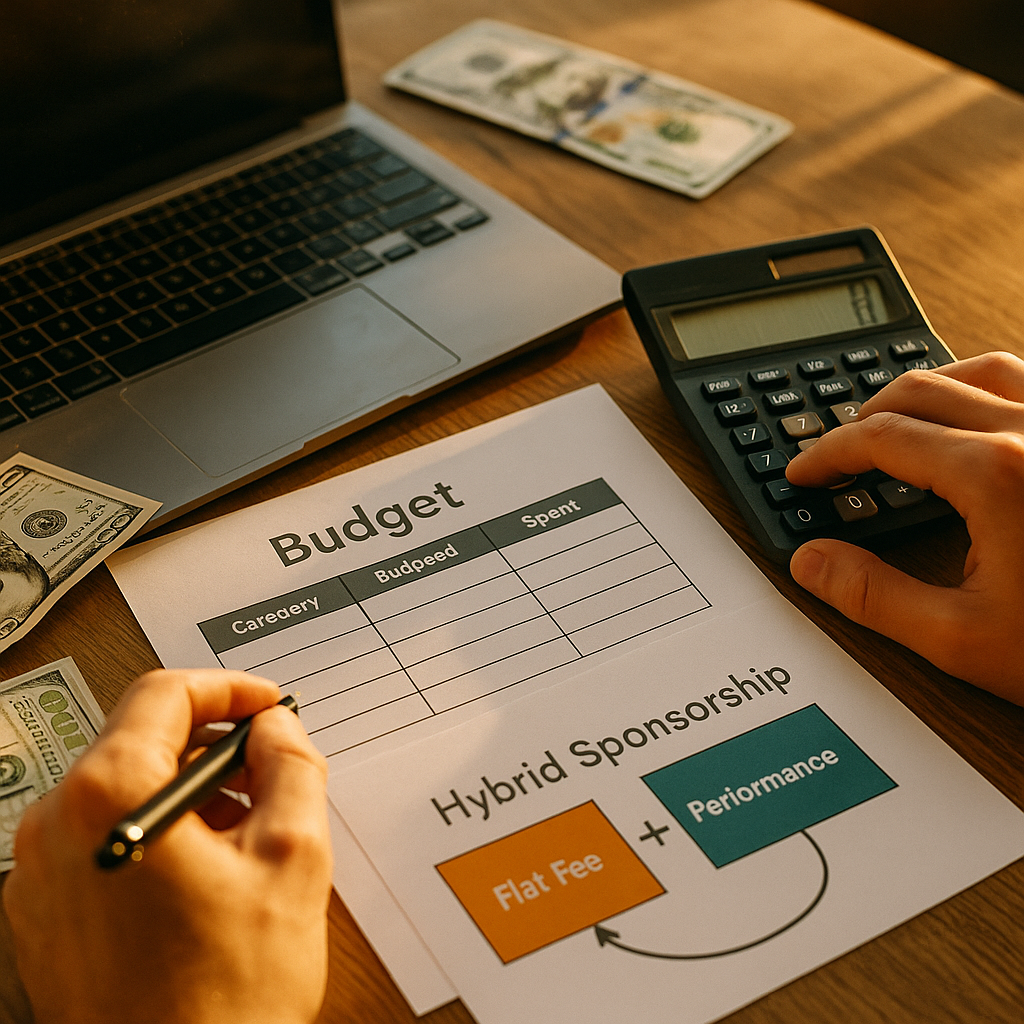
Compare this to a hybrid model where you cap the base production fee at 60–70% of the previous flat rate and hold the remaining 30–40% as a conditional amplification reserve. If the organic post hits a predefined performance threshold — say, a video view rate above 25% or a save rate above 3% within 48 hours — that reserve activates and goes into paid boost decisions for that specific post. If it doesn’t, the reserve rolls into the next creator activation. That’s budget allocation with a feedback loop.
The Quarterly Planning Architecture
Executing this rebalance requires coordinating across brand finance, media buying, and creator partnerships — typically three teams with misaligned planning cycles. Here’s how to structure it across four quarters.
Q1: Audit and Baseline. Pull the previous year’s creator spend and segment it by production fees vs. amplification. For most brands running traditional sponsorship models, amplification represents less than 20% of total creator spend. Document your historical organic performance benchmarks by creator tier and format — Reels, TikTok, long-form YouTube. This is your baseline. Use platforms like Sprout Social or Traackr to extract post-level performance data systematically.
Q2: Pilot the Hybrid Model. Select 8–12 creators from your active roster — ideally a mix of nano, micro, and mid-tier — and restructure their agreements to the 65/35 split (65% base fee, 35% conditional amplification reserve). Define your activation triggers clearly in the contract: what metric, what threshold, what measurement window. If a post hits threshold, your media team gets an automatic brief to amplify within 72 hours. This speed requirement is non-negotiable; organic reach decay happens fast, and amplifying a 5-day-old post wastes budget.
Q3: Scale and Calibrate. By Q3, you have pilot data. Which creators hit threshold consistently? Which formats triggered amplification most often? Use this to recalibrate your performance thresholds — early pilots often set the bar too high or too low. Also revisit your reserve split. Creators who hit threshold 80%+ of the time should see their base fee restored closer to full rate; they’ve earned the trust. Creators who rarely hit threshold get a conversation about content strategy, not a punitive contract revision.
Q4: Integrate Into Annual Planning. Build the hybrid model into your standard creator contracts and media plan as the default structure going forward. Present to finance with full-year comparative data: blended cost per engaged view, amplified post ROAS vs. non-amplified, and — critically — the reserve rollover figure, which shows dollars that didn’t get wasted on underperforming content. That last number tends to get CFO attention fast.
Setting Performance Thresholds That Actually Work
Threshold-setting is where most pilots fail. Brands either set a vanity metric (total views) or set the bar so high that no content qualifies and the model loses creator buy-in within one quarter.
The metrics that matter most for amplification triggers depend on your campaign objective. For awareness programs, focus on video completion rate and shares. For conversion-oriented programs, prioritize save rate, link clicks, and comment sentiment velocity. For brand lift objectives, track mentions and unprompted brand associations in comments — this requires a tool like Brandwatch or Sprinklr to automate at scale.
A useful starting framework: set your threshold at the 60th percentile of your category’s historical organic performance for that format. Not the top 10% — that will produce a nearly empty amplification queue. Not the median — that will amplify mediocre content. The 60th percentile rewards genuine above-average performance while keeping your amplification budget concentrated on content with real upside. For the most rigorous approach, rank creator formats by ROI using AI-driven audience data before setting thresholds by vertical.
The Creator Relationship Question Everyone Asks
Will creators push back on this model? Some will. The ones who push back hardest are usually the ones most reliant on guaranteed flat fees regardless of performance — which tells you something useful.
Frame the conversation correctly and most professional creators accept hybrid structures, especially when you emphasize the upside. A creator who consistently hits threshold effectively earns more than they would have under the old flat-fee model, because the amplification reserve flowing into paid promotion increases their total reach and often their follower growth. That’s a genuine value exchange, not a gimmick.
The practical language that works in negotiation: “We’re allocating budget to amplify your best-performing content. This puts more media spend behind the work you’re most proud of.” That framing lands better than any performance-clause language your legal team might draft. For deeper guidance on renegotiating existing agreements, the blended CPA and contract renegotiation framework covers the mechanics in detail.
Budget Modeling: What the Math Actually Looks Like
Take a brand running $1.2M annually in creator spend, currently structured as 85% production fees and 15% amplification. Under the hybrid model with a 65/35 split, amplification potential rises to $420K — nearly three times the previous amplification budget — with no increase in total spend. The catch is that not all of that $420K gets spent; underperforming content means its reserve rolls forward.
In pilot data from brands that have executed this rebalance, typical amplification activation rates run between 45–65% of reserved budget. That means 35–55% of the conditional reserve gets reallocated or saved — which is the efficiency story you tell finance. You can also model this against a three-year amplified spend ROI model to project compounding returns as your threshold data matures and creator selection improves.
In a well-calibrated hybrid model, the amplification reserve becomes a self-correcting mechanism: the better your creator selection gets, the higher your activation rate, and the more efficiently your amplification budget compounds over time.
For brands running always-on programs specifically, the interaction between boost logic and roster size adds another variable. The always-on program boost logic framework addresses how to maintain amplification discipline across a large, continuously active creator pool without losing budget control.
Compliance and Disclosure Implications
One operational detail that gets overlooked: when you amplify organic creator content through paid promotion, disclosure requirements shift. Under FTC guidelines, boosted organic posts that were originally disclosed as sponsored generally retain their disclosure status — but if the original post lacked proper disclosure and you amplify it, you’ve now distributed non-compliant content at scale with brand dollars behind it.
Build a compliance checkpoint into your amplification workflow. Before any post enters the paid boost queue, confirm it carries correct disclosure language. This is a 60-second check that prevents significant regulatory exposure. Platforms like Meta Business Suite and TikTok Ads Manager have creator content partnership tools that log the original disclosure status — use them.
Also check your creator contracts for whitelist permissions. Many standard influencer agreements don’t automatically grant brands the right to amplify organic posts. If your hybrid model requires paid amplification rights, those need to be explicit in the contract before Q2 pilot launches, not added retroactively.
Start Here Before Your Next Budget Cycle
Pull your last four quarters of creator spend and calculate your current production-to-amplification ratio. If amplification is below 25% of total creator budget, you have structural inefficiency worth fixing before you approve another flat-fee sponsorship. Use that number as your opening slide in the next finance and marketing alignment meeting — not as an accusation, but as a planning benchmark.
—
Frequently Asked Questions
What is the sponsor-to-amplifier budget rebalance?
It’s a structural shift in how brands allocate creator program budgets — moving away from flat, upfront production-fee sponsorships toward hybrid models where a portion of creator budget is held in reserve and deployed as paid amplification only when organic posts hit predefined performance thresholds. The goal is to align spending with demonstrated audience resonance rather than projected reach.
What performance metrics should trigger the amplification reserve?
It depends on your campaign objective. For awareness programs, video completion rate and share rate are the most reliable signals. For conversion-focused campaigns, prioritize save rate, link clicks, and comment engagement velocity. A practical starting benchmark is setting your threshold at the 60th percentile of your category’s historical organic performance for the specific content format.
How should the base fee vs. amplification reserve be split?
A commonly used starting split is 65% base production fee and 35% conditional amplification reserve. This preserves enough of the creator’s guaranteed income to maintain the relationship while creating meaningful amplification budget that activates on performance. Creators who consistently hit threshold can see their base fee renegotiated upward over time as trust is established.
Will creators agree to hybrid performance models?
Most professional creators will accept hybrid structures when the upside is clearly explained. Creators who consistently hit performance thresholds effectively earn more than a flat fee because paid amplification increases their content’s reach and audience growth. The negotiation framing matters: position it as the brand committing to amplify the creator’s best-performing work, not as a punitive performance clause.
Are there compliance risks when amplifying organic creator posts?
Yes. When you run paid promotion behind organic creator content, FTC disclosure requirements apply. If the original post was properly disclosed as sponsored content, that disclosure generally carries through. However, boosting undisclosed or improperly disclosed content at scale with brand media dollars creates regulatory exposure. Build a disclosure compliance check into your amplification workflow before any post enters the paid boost queue.
How long does it take to see ROI from the hybrid model?
Most brands running structured pilots see meaningful comparative data within one quarter. Full model calibration — where your performance thresholds are tuned to your category benchmarks and your creator roster is optimized for the hybrid structure — typically takes two to three quarters. The long-term ROI compounding, where improved creator selection raises activation rates and amplification efficiency, becomes evident in a two-to-three-year model.
Top Influencer Marketing Agencies
The leading agencies shaping influencer marketing in 2026
Agencies ranked by campaign performance, client diversity, platform expertise, proven ROI, industry recognition, and client satisfaction. Assessed through verified case studies, reviews, and industry consultations.
Moburst

-
2

The Shelf
Boutique Beauty & Lifestyle Influencer AgencyA data-driven boutique agency specializing exclusively in beauty, wellness, and lifestyle influencer campaigns on Instagram and TikTok. Best for brands already focused on the beauty/personal care space that need curated, aesthetic-driven content.Clients: Pepsi, The Honest Company, Hims, Elf Cosmetics, Pure LeafVisit The Shelf → -
3

Audiencly
Niche Gaming & Esports Influencer AgencyA specialized agency focused exclusively on gaming and esports creators on YouTube, Twitch, and TikTok. Ideal if your campaign is 100% gaming-focused — from game launches to hardware and esports events.Clients: Epic Games, NordVPN, Ubisoft, Wargaming, Tencent GamesVisit Audiencly → -
4

Viral Nation
Global Influencer Marketing & Talent AgencyA dual talent management and marketing agency with proprietary brand safety tools and a global creator network spanning nano-influencers to celebrities across all major platforms.Clients: Meta, Activision Blizzard, Energizer, Aston Martin, WalmartVisit Viral Nation → -
5

The Influencer Marketing Factory
TikTok, Instagram & YouTube CampaignsA full-service agency with strong TikTok expertise, offering end-to-end campaign management from influencer discovery through performance reporting with a focus on platform-native content.Clients: Google, Snapchat, Universal Music, Bumble, YelpVisit TIMF → -
6

NeoReach
Enterprise Analytics & Influencer CampaignsAn enterprise-focused agency combining managed campaigns with a powerful self-service data platform for influencer search, audience analytics, and attribution modeling.Clients: Amazon, Airbnb, Netflix, Honda, The New York TimesVisit NeoReach → -
7

Ubiquitous
Creator-First Marketing PlatformA tech-driven platform combining self-service tools with managed campaign options, emphasizing speed and scalability for brands managing multiple influencer relationships.Clients: Lyft, Disney, Target, American Eagle, NetflixVisit Ubiquitous → -
8

Obviously
Scalable Enterprise Influencer CampaignsA tech-enabled agency built for high-volume campaigns, coordinating hundreds of creators simultaneously with end-to-end logistics, content rights management, and product seeding.Clients: Google, Ulta Beauty, Converse, AmazonVisit Obviously →