


The Format That’s Killing Your Budget May Be Your Most-Used One
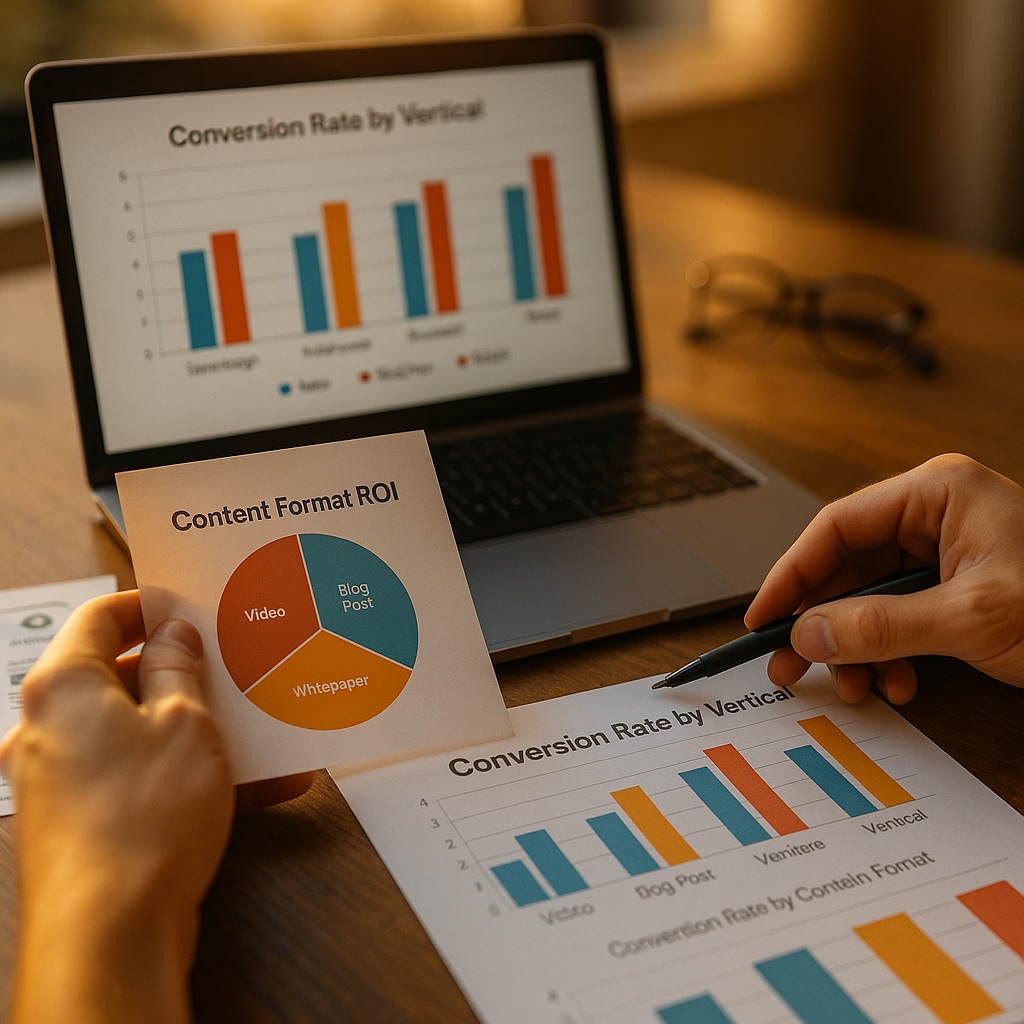
Brands collectively wasted an estimated $4.2 billion on mismatched content formats last year—deploying vertical video where newsletters convert, or newsletters where livestreams dominate. Format ROI benchmarks for the creator economy are finally sharp enough to make smarter calls. Here’s what the current platform performance data actually shows.
Why Format-Category Fit Is the New Media Efficiency Metric
The old debate was about influencer tier. Mega vs. micro, vanity reach vs. engaged niche. That conversation hasn’t ended—micro-creators still outperform on CPA—but the smarter efficiency lever in most brand programs right now is format selection. Same creator, same audience, different format: conversion rates can swing 3x to 8x depending on vertical and purchase intent stage.
Format fit is not intuitive. A health supplement brand might assume TikTok vertical video is the play because the audience skews young and the category is trending. But if the average consideration window is 14 days and the product requires trust-building, a podcast mid-roll or a newsletter deep-dive will out-convert a 30-second reel by a factor that makes the CPM comparison irrelevant.
Format fit—not follower count—is now the primary driver of conversion efficiency in creator-led campaigns. A mismatched format can erode 60–80% of potential ROI before a single dollar is attributed.
Vertical Video: Dominant, But Misread
Vertical video remains the highest-volume format in the creator economy, and shoppable video integrations have made it genuinely transactional. But its ROI story is deeply vertical-specific.
Fashion is where vertical video earns its hype. TikTok Shop and Instagram Reels with native checkout are delivering conversion-per-dollar figures that outpace every other format in the category—particularly for sub-$80 impulse items. TikTok for Business data shows fashion as the top-performing category for in-app purchase events, with creator-led content converting at 2.4x the rate of brand-produced vertical video.
CPG shows a more complicated picture. Vertical video drives strong awareness and product discovery, but conversion-per-dollar is pulled down by retail friction—most CPG purchases still happen in-store or across multiple sessions. The format works best when paired with a retailer-specific promo code that bridges online discovery to offline conversion. Without that bridge, you’re subsidizing awareness for Amazon’s benefit.
Finance? Vertical video is largely a brand-building play, not a conversion tool. Regulatory constraints limit what creators can say, and the average financial product has a multi-week decision cycle. Brands treating short-form finance content as a direct-response vehicle are reading the format wrong.
Technology (specifically SaaS and consumer electronics) has found a middle lane: vertical video for top-of-funnel discovery, with a hard redirect to a long-form review or a creator-hosted demo. Standalone vertical video converts poorly for tech products above $200—attention spans aren’t long enough to handle the consideration load.
Podcast: Slow Burn, Exceptional LTV
Podcast mid-rolls are the most underrated format in the creator economy for finance and health verticals. The numbers from eMarketer show podcast advertising delivering average conversion rates of 4–6% for financial services offers (personal finance apps, investing platforms, insurance), compared to 0.8–1.2% for display equivalents. That’s not a small delta.
Why does audio work so well here? Context and trust. A host who has built 18 months of credibility with an audience talking about a financial product carries weight that a 15-second pre-roll never will. The consideration window matches the format’s natural dwell time. Format fit and audience depth compound each other—and podcasts maximize both in long-cycle categories.
Health and wellness brands (supplements, fitness platforms, mental health apps) are seeing similar dynamics. The format allows nuanced claims disclosure, which matters enormously post-FTC tightening. A 60-second read with a host’s personal testimonial is both more persuasive and more compliant than a 30-second vertical video trying to fit a disclaimer in the caption.
The weakness: attribution. Podcast conversion is notoriously hard to track without vanity URLs or promo codes, and many brand teams are still misattributing podcast-sourced revenue to organic search or direct. Don’t let attribution gaps fool you into underinvesting here.
Newsletter, Carousel, Livestream: Where They Win and Where They Don’t
Newsletter is the quiet over-performer for technology and finance. Substack and Beehiiv creator newsletters with 50,000–200,000 subscribers are delivering CPAs that rival or beat paid search for SaaS trials and fintech signups. The audience is self-selected, intent-rich, and accustomed to clicking through. For tech brands running creator programs, newsletter placements are chronically underweighted relative to their actual performance. Creator spend allocation research supports this—brands that shift 10–15% of creator budget from social formats to owned-audience formats see measurable CPA improvement within two quarters.
Carousel is the workhorse format for educational CPG and fashion-adjacent lifestyle brands. Instagram carousels with swipe-through storytelling—ingredient education, styling guides, how-to sequences—generate save rates and share rates that outperform single-image and video posts for mid-funnel nurturing. They don’t close purchases at the rate of vertical video, but they drive the consideration that makes the eventual conversion possible. Treat them as mid-funnel infrastructure, not a direct-response tool.
Livestream is the most format-moment-dependent of the five. It’s delivering real conversion numbers in fashion (particularly through TikTok Live and emerging platforms like Whatnot) and in CPG for limited-edition or scarcity-driven drops. The mechanics of live selling—urgency, social proof, host engagement—are genuine conversion drivers. But livestream ROI collapses for evergreen products without a live-specific incentive. If you’re running a livestream without a time-limited offer or exclusive bundle, you’re paying production costs for what amounts to an expensive awareness video.
Cross-Vertical Format ROI Summary
- Fashion: Vertical video leads on conversion-per-dollar. Livestream second for drop-driven SKUs. Carousel supports mid-funnel consideration.
- CPG: Vertical video drives discovery; podcast and newsletter are underused for premium CPG. Promo code bridging is essential for attribution.
- Finance: Podcast and newsletter dominate on conversion quality. Vertical video is brand-building only. Compliance is the primary format constraint.
- Health: Podcast leads for supplement and wellness brands. Vertical video works for habit-based apps (fitness, sleep) where friction is low.
- Technology: Newsletter converts best for SaaS. Vertical video for hardware discovery. Long-form YouTube for high-consideration tech purchases.
The highest-ROI format shift most brand teams can make right now: move 15% of creator video budget into newsletter and podcast placements for any product with a purchase consideration window longer than seven days.
What This Means for Budget Allocation Right Now
The platform data is clear enough to act on. If you’re allocating creator budgets based on format familiarity or historical habit rather than category-specific conversion benchmarks, you’re leaving efficiency on the table. Renegotiating creator rates matters less than renegotiating which formats those creators are producing.
Run a format audit before your next campaign brief. Pull conversion-per-dollar by format across the last two quarters. If vertical video is consuming more than 60% of your creator budget and you’re selling a product with a consideration cycle longer than a week, the reallocation math will be uncomfortable but unavoidable.
The brands winning on creator ROI right now aren’t necessarily spending more—they’re spending on the right format for the right category. Sprout Social and HubSpot both track format-level engagement benchmarks that can anchor your internal reporting. Use them. Statista maintains category-level digital advertising conversion data worth cross-referencing against your own program numbers.
Also worth flagging: creator briefs built for search intent are increasingly shaping which formats index well algorithmically—format selection now affects organic discovery, not just paid conversion. That’s a compounding efficiency argument for getting format-category fit right.
The immediate next step: Map your top five creator partnerships against this framework—format used, product category, consideration cycle length—and identify where the mismatches are. One format swap in a misaligned partnership will tell you more than another month of A/B testing creative.
Frequently Asked Questions
Which content format delivers the best ROI for fashion brands?
Vertical video—particularly through TikTok Shop and Instagram Reels with native checkout—consistently delivers the highest conversion-per-dollar for fashion brands, especially for products priced under $80. Livestream formats are a strong secondary option for limited-edition or drop-driven product launches where urgency and scarcity can be built into the live event.
Why do podcasts outperform other formats for finance and health brands?
Podcasts align with the longer consideration cycles typical of financial products and health supplements. Host credibility, extended ad read formats, and self-selected audiences combine to produce conversion rates of 4–6% for financial services offers—significantly above display and social format averages. The format also allows for more compliant, nuanced messaging, which is critical in regulated categories.
Is newsletter creator content worth investing in for technology brands?
Yes—newsletter placements are one of the most underweighted formats in technology brand creator programs. For SaaS trials and fintech signups, creator newsletters with engaged audiences of 50,000–200,000 subscribers are delivering CPAs that rival paid search. The audience is intent-rich and accustomed to clicking through to product pages or free trials.
How should brands track conversion from podcast creator placements?
Vanity URLs, unique promo codes, and post-purchase surveys (“How did you hear about us?”) remain the most reliable attribution methods for podcast. Many brands undercount podcast-sourced revenue because it appears as direct or organic in last-click models. Multi-touch attribution models that include upper-funnel audio exposure will give a more accurate picture of podcast’s contribution to conversion.
When does livestream format deliver strong ROI, and when does it fail?
Livestream ROI is heavily dependent on product mechanics and live-specific incentives. It performs well for fashion drops, limited-edition CPG, and collectibles—categories where urgency, scarcity, and social proof drive in-session purchases. For evergreen products without a time-limited offer or exclusive bundle, livestream typically underperforms on conversion-per-dollar relative to vertical video or newsletter placements.
Top Influencer Marketing Agencies
The leading agencies shaping influencer marketing in 2026
Agencies ranked by campaign performance, client diversity, platform expertise, proven ROI, industry recognition, and client satisfaction. Assessed through verified case studies, reviews, and industry consultations.
Moburst

-
2

The Shelf
Boutique Beauty & Lifestyle Influencer AgencyA data-driven boutique agency specializing exclusively in beauty, wellness, and lifestyle influencer campaigns on Instagram and TikTok. Best for brands already focused on the beauty/personal care space that need curated, aesthetic-driven content.Clients: Pepsi, The Honest Company, Hims, Elf Cosmetics, Pure LeafVisit The Shelf → -
3

Audiencly
Niche Gaming & Esports Influencer AgencyA specialized agency focused exclusively on gaming and esports creators on YouTube, Twitch, and TikTok. Ideal if your campaign is 100% gaming-focused — from game launches to hardware and esports events.Clients: Epic Games, NordVPN, Ubisoft, Wargaming, Tencent GamesVisit Audiencly → -
4

Viral Nation
Global Influencer Marketing & Talent AgencyA dual talent management and marketing agency with proprietary brand safety tools and a global creator network spanning nano-influencers to celebrities across all major platforms.Clients: Meta, Activision Blizzard, Energizer, Aston Martin, WalmartVisit Viral Nation → -
5

The Influencer Marketing Factory
TikTok, Instagram & YouTube CampaignsA full-service agency with strong TikTok expertise, offering end-to-end campaign management from influencer discovery through performance reporting with a focus on platform-native content.Clients: Google, Snapchat, Universal Music, Bumble, YelpVisit TIMF → -
6

NeoReach
Enterprise Analytics & Influencer CampaignsAn enterprise-focused agency combining managed campaigns with a powerful self-service data platform for influencer search, audience analytics, and attribution modeling.Clients: Amazon, Airbnb, Netflix, Honda, The New York TimesVisit NeoReach → -
7

Ubiquitous
Creator-First Marketing PlatformA tech-driven platform combining self-service tools with managed campaign options, emphasizing speed and scalability for brands managing multiple influencer relationships.Clients: Lyft, Disney, Target, American Eagle, NetflixVisit Ubiquitous → -
8

Obviously
Scalable Enterprise Influencer CampaignsA tech-enabled agency built for high-volume campaigns, coordinating hundreds of creators simultaneously with end-to-end logistics, content rights management, and product seeding.Clients: Google, Ulta Beauty, Converse, AmazonVisit Obviously →