


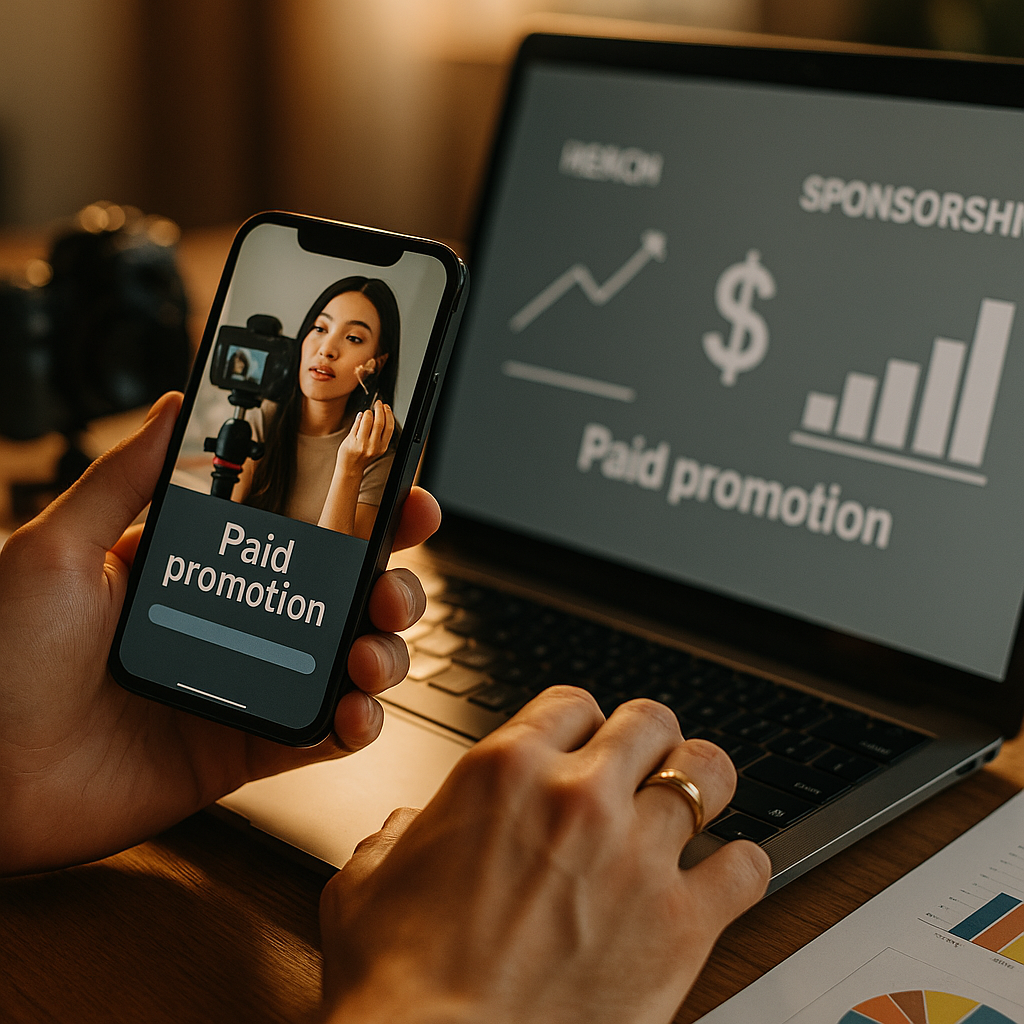
By 2028, the Biggest Line Item in Your Creator Budget Won’t Be Creator Fees
EMARKETER projects that amplified creator spend — paid media layered on top of organic creator content — will overtake raw sponsorship spend by 2028. That inflection point is roughly 24 months away. CMOs who treat this as a future problem are already behind.
What “Amplification Overtaking Sponsorship” Actually Means
Let’s be precise about the shift. Raw sponsorship spend is the creator fee: the flat rate, the gifting budget, the long-term partnership retainer. Amplified creator spend is everything you pay to distribute that content beyond the creator’s organic reach — TikTok Spark Ads, Meta’s Partnership Ads, YouTube BrandConnect boosting, whitelisted content running as paid social inventory.
The EMARKETER forecast says amplification spend will cross the sponsorship line. That means, dollar-for-dollar, brands will be spending more turning creator content into media assets than they spend acquiring that content in the first place.
This isn’t just a budget allocation footnote. It rewrites the operational logic of your entire creator program. Content that was built for organic posting needs to be built for paid performance. Creators who were selected for audience fit now need to be evaluated for whitelisting cooperation and content format versatility. Your vendor contracts, your internal org chart, and your measurement frameworks all need to catch up — before the spend curve forces your hand.
When amplification spend overtakes creator fees, every piece of creator content becomes a media asset first and a social post second. That reordering changes who briefs creators, who approves content, and who owns the budget.
The Operational Gap Most Programs Haven’t Addressed
Here’s the uncomfortable question: does your current creator program operate like a content acquisition function or a media production function? Most don’t. Most are still structured around talent sourcing — find a creator, negotiate a rate, approve a post, report on engagement. That model made sense when organic reach was the primary distribution mechanism.
When amplification dominates, the workflows invert. You need content that performs as a paid unit before you care whether it performs organically. That means briefing for ad creative standards, not just brand guidelines. It means reviewing content through a CPA lens before approving it for the creator’s feed. It means your paid media team needs a seat at the creator strategy table — not as a downstream recipient of assets, but as a co-architect of the program.
Teams that haven’t built this integration are creating a painful bottleneck: creators deliver content, organic teams approve it for brand safety, and then paid teams look at the same asset and reject it for ad creative reasons. Two review cycles, delayed go-lives, and frustrated creators who didn’t understand the brief to begin with.
For a practical model of how creator programs operate at scale, the operational staffing decisions become clear: paid media integration isn’t optional infrastructure, it’s a core function.
Vendor Contracts Need a Rewrite — Now
Most creator contracts were drafted in the organic era. They specify usage rights that cover the creator’s owned channels, a defined campaign window, and maybe one round of repurposing. That’s inadequate for an amplification-first model.
Whitelisting rights. Paid media usage permissions. Extended exclusivity windows. Geographic amplification carve-outs. Performance-based extension clauses. These aren’t edge case additions — they’re the core terms your legal and procurement teams need to standardize across every new creator agreement.
The brands getting this right are building master service agreements that bake in amplification rights by default, with tiered usage fees that scale with actual spend rather than negotiating permissions on a campaign-by-campaign basis. It’s more complex upfront. It eliminates enormous friction downstream. And it gives your paid media team the flexibility to allocate budget against top-performing content without waiting for a contract amendment.
On rate renegotiation specifically — understanding how to renegotiate creator rates in this environment is essential context before you attempt to bundle amplification rights into existing agreements.
The Competency Gap Inside Your Organization
Contracts aside, there’s a harder problem: most marketing organizations don’t have people who understand both creator culture and paid media mechanics at a deep level. These have historically been separate skill stacks.
Creator program managers understand talent relationships, content briefing, and campaign narratives. Paid social managers understand bid strategies, audience targeting, creative fatigue, and attribution windows. The amplification-first model needs people who can hold both simultaneously — or it needs a structural handoff protocol that is tight enough that neither side loses context when they hand off responsibility.
The competencies to start building or hiring now:
- Creative performance analysis — the ability to read a creator asset for paid media potential before it goes live, not after
- Whitelisting workflow management — understanding platform-specific requirements across Meta, TikTok, and YouTube for creator-authorized paid distribution
- Amplification budget modeling — building spend scenarios that optimize across creator fee and media budget as a combined CAC input, not siloed line items
- Cross-functional briefing design — writing creator briefs that satisfy both brand narrative requirements and paid creative specifications simultaneously
The broader implications for how brands plan around amplified spend extend into budget cycle planning — this is a multi-quarter change management problem, not a one-quarter experiment.
Platform Strategy Shifts When Amplification Leads
Not all platforms are equally suited to the amplification model. TikTok’s Spark Ads and Meta’s Partnership Ads have the most mature infrastructure for turning creator content into paid inventory. YouTube’s BrandConnect boosting is improving. Pinterest and Snapchat have meaningful but less operationally mature creator amplification products.
The platform weighting in your creator program should start reflecting amplification efficiency, not just organic audience size. A creator with 200,000 highly engaged followers on a platform with weak amplification tooling may deliver lower total program ROI than a creator with 80,000 followers on TikTok where Spark Ads can multiply reach by 10x at acceptable CPMs.
This reframing is directly relevant to format decisions too. Content format ROI by vertical becomes even more critical when the same asset needs to function as both organic content and paid ad creative — format mismatches are expensive when you’re amplifying at scale.
Platform selection criteria is shifting from “where does our audience live organically?” to “where can we amplify creator content at the best cost-per-outcome?” These are different questions with different answers.
The Measurement Framework That Needs to Exist Before 2028
Here’s where most CMOs will feel the sharpest pain if they wait: measurement. Today, many creator programs are measured on earned media metrics — impressions, engagement rate, earned reach, EMV (earned media value). These are organic-era metrics. They don’t capture the value created when you amplify a creator asset at scale through paid channels.
An amplification-first program needs a unified measurement model that attributes performance across both the organic touchpoint and the paid distribution. That means connecting your influencer marketing platform data — whether that’s Sprout Social, Grin, CreatorIQ, or a similar tool — directly to your paid media attribution stack. It means agreeing on whether CAC is calculated on total program spend (fees plus amplification) or just the paid media portion. It means setting creator-level performance thresholds that determine which assets get amplification budget and which don’t.
This measurement architecture takes time to build. It requires buy-in from finance, paid media, and the creator team. Starting the design process now, before amplification spend is your dominant line item, means you’ll have clean data when the transition happens rather than scrambling to retrofit measurement after the fact.
Understanding micro-creator amplification strategies at the CPA level is a useful practical anchor — these programs are often where amplification-first measurement gets battle-tested before it’s applied to full-scale programs.
Start Here, Not Everywhere
The restructuring agenda is large. Don’t try to run it all simultaneously. Pick one active creator program, retrofit it with amplification-first contracts, integrate your paid media manager into the next briefing cycle, and build the measurement model around that single program as a proof of concept. That’s your roadmap for the next two quarters — and the organizational blueprint you’ll scale from when amplification spend crosses the line.
Frequently Asked Questions
What does EMARKETER’s amplification forecast mean for creator program budgets?
The EMARKETER forecast projects that by 2028, brands will spend more amplifying creator content through paid media channels than they spend on creator fees and sponsorships combined. For budget planning, this means the total investment in a creator program can no longer be modeled as just the creator fee — paid distribution costs need to be budgeted as a primary line item alongside talent spend, often at equal or greater magnitude.
What is “amplified creator spend” versus raw sponsorship spend?
Raw sponsorship spend refers to direct creator compensation: flat fees, gifting budgets, long-term partnership payments. Amplified creator spend refers to paid media investment used to distribute creator content beyond its organic reach — including TikTok Spark Ads, Meta Partnership Ads, YouTube boosting, and whitelist-enabled paid social placements. The EMARKETER forecast tracks these as distinct spend categories and projects amplification will overtake sponsorship as the larger category by 2028.
How should CMOs restructure creator contracts to support an amplification-first model?
Creator contracts should be updated to include default whitelisting rights, extended paid media usage windows, geographic amplification permissions, and tiered usage fees that scale with actual media spend rather than negotiated on a per-campaign basis. Master service agreements that standardize these terms across all creator partnerships reduce legal friction and give paid media teams the operational flexibility to allocate amplification budget against top-performing content without waiting for contract amendments.
Which platforms offer the strongest infrastructure for creator content amplification?
TikTok (Spark Ads) and Meta (Partnership Ads) currently have the most mature and operationally efficient infrastructure for amplifying creator content through paid channels. YouTube’s BrandConnect boosting capability is improving. When evaluating platforms for an amplification-first creator program, brands should weight amplification tooling quality alongside organic audience size — a creator on a platform with strong amplification infrastructure can often deliver better total program ROI than a larger creator on a platform with weaker paid distribution capabilities.
What internal competencies should brands build ahead of the amplification shift?
The key competencies include: creative performance analysis (evaluating creator assets for paid media potential before publication), whitelisting workflow management (platform-specific requirements for creator-authorized paid distribution), amplification budget modeling (optimizing creator fees and media spend as a combined cost-per-acquisition input), and cross-functional brief design (writing creator briefs that satisfy both brand narrative and paid creative specifications simultaneously). Most organizations will need either new hires with dual expertise or tighter structural handoff protocols between creator and paid media teams.
Top Influencer Marketing Agencies
The leading agencies shaping influencer marketing in 2026
Agencies ranked by campaign performance, client diversity, platform expertise, proven ROI, industry recognition, and client satisfaction. Assessed through verified case studies, reviews, and industry consultations.
Moburst

-
2

The Shelf
Boutique Beauty & Lifestyle Influencer AgencyA data-driven boutique agency specializing exclusively in beauty, wellness, and lifestyle influencer campaigns on Instagram and TikTok. Best for brands already focused on the beauty/personal care space that need curated, aesthetic-driven content.Clients: Pepsi, The Honest Company, Hims, Elf Cosmetics, Pure LeafVisit The Shelf → -
3

Audiencly
Niche Gaming & Esports Influencer AgencyA specialized agency focused exclusively on gaming and esports creators on YouTube, Twitch, and TikTok. Ideal if your campaign is 100% gaming-focused — from game launches to hardware and esports events.Clients: Epic Games, NordVPN, Ubisoft, Wargaming, Tencent GamesVisit Audiencly → -
4

Viral Nation
Global Influencer Marketing & Talent AgencyA dual talent management and marketing agency with proprietary brand safety tools and a global creator network spanning nano-influencers to celebrities across all major platforms.Clients: Meta, Activision Blizzard, Energizer, Aston Martin, WalmartVisit Viral Nation → -
5

The Influencer Marketing Factory
TikTok, Instagram & YouTube CampaignsA full-service agency with strong TikTok expertise, offering end-to-end campaign management from influencer discovery through performance reporting with a focus on platform-native content.Clients: Google, Snapchat, Universal Music, Bumble, YelpVisit TIMF → -
6

NeoReach
Enterprise Analytics & Influencer CampaignsAn enterprise-focused agency combining managed campaigns with a powerful self-service data platform for influencer search, audience analytics, and attribution modeling.Clients: Amazon, Airbnb, Netflix, Honda, The New York TimesVisit NeoReach → -
7

Ubiquitous
Creator-First Marketing PlatformA tech-driven platform combining self-service tools with managed campaign options, emphasizing speed and scalability for brands managing multiple influencer relationships.Clients: Lyft, Disney, Target, American Eagle, NetflixVisit Ubiquitous → -
8

Obviously
Scalable Enterprise Influencer CampaignsA tech-enabled agency built for high-volume campaigns, coordinating hundreds of creators simultaneously with end-to-end logistics, content rights management, and product seeding.Clients: Google, Ulta Beauty, Converse, AmazonVisit Obviously →