


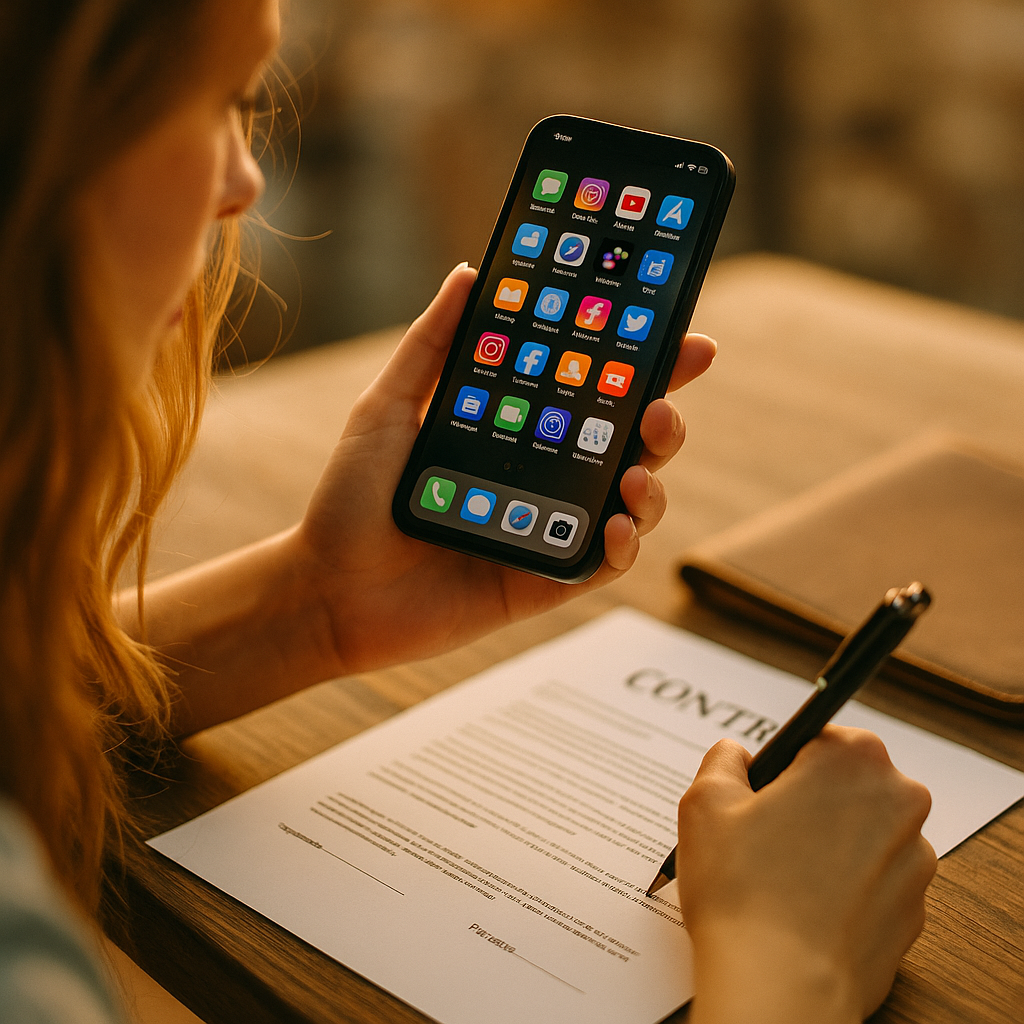
What happens to your brand’s audience relationship when the creator you’ve invested six figures in launches their own app — and takes the community with them? This is the creator proprietary app economy, and most influencer contracts aren’t written to address it.
The Shift Brands Are Ignoring
Platform dependency has always been a risk. Algorithms change. TikTok gets banned. Instagram throttles reach. Savvy creators — especially those with audiences in the millions — have started solving this problem themselves by building proprietary apps, membership platforms, and DTC storefronts that sit entirely outside social media infrastructure. Think along the lines of what Fanfix, Geneva, or community-layer apps like Patreon have enabled at scale, but now with white-label app builders making bespoke creator apps accessible to mid-tier influencers.
The creator is solving their platform risk. Your contract probably isn’t solving yours.
When a creator migrates their audience to a proprietary app, they gain first-party data, direct purchase relationships, and push notification access — three assets that your brand sponsorship may have helped build, but your contract never claimed.
Exclusivity Provisions: Where Most Agreements Fall Apart
Standard influencer contracts address exclusivity in one of two ways: category exclusivity (the creator won’t work with your direct competitors) or platform exclusivity (content is posted on specified channels). Neither framework contemplates a creator launching a competing commerce environment.
Consider the scenario: your brand has a 12-month ambassador deal with a fitness creator. You’re paying a monthly retainer for content, product integrations, and audience access. Six months in, the creator launches a fitness app with in-app product recommendations — including brands in your category. Are they in breach? Probably not, under a standard agreement. The app isn’t a competitor. The creator isn’t “working with” a rival brand. They’ve simply built infrastructure that routes audience intent away from your products.
What you need instead is platform-agnostic exclusivity language that ties restrictions to audience monetization channels, not just named platforms. This means defining exclusivity by vertical and commerce context — any environment where the creator directly recommends, sells, or earns commission on products in a named category — regardless of where that environment lives.
For cross-border influencer contracts, this complexity compounds further, since app-based commerce may trigger different regulatory obligations depending on jurisdiction.
Data Ownership: The Clause Nobody Negotiates
This is where brand legal teams are most exposed. When a creator posts branded content on Instagram, the engagement data — impressions, saves, shares — technically belongs to Meta. Brands have largely accepted this. But a creator-owned app is a different situation entirely.
In a creator’s proprietary app environment, first-party data flows directly to the creator: email addresses, purchase histories, behavioral data, notification open rates. If your brand ran a campaign that drove users to that app — a co-branded launch, a sponsored feature, a “download the app” CTA in sponsored content — you contributed to populating that database. And unless your contract specifies otherwise, you have no claim to it.
There are three data categories to address in contract negotiations:
- Campaign attribution data: Any user actions directly traceable to brand-sponsored content, including installs, sign-ups, and first purchases driven by a specific campaign
- Aggregate audience insights: Demographic and behavioral profiles derived from audiences built during the contract term — even if the brand isn’t identified as the source
- Co-created audience assets: Lists, segments, or communities explicitly built around a brand partnership (e.g., a branded creator community within the app)
Your contract should include a data rights clause that specifies what happens to each category upon contract expiration. At minimum, brands should negotiate access to campaign attribution data and the right to receive aggregate audience reports for any co-branded segments. The UK ICO and FTC guidance both treat data handling obligations as tied to the party who directed collection — meaning brands who fund campaigns driving app installs may bear compliance responsibilities they haven’t accounted for.
The Audience Asset Problem
Here’s the harder question brands aren’t asking: when you fund a creator’s growth, do you have any equitable claim to the audience they’ve built?
Legally, no — at least not under current standard agreements. But strategically, the answer should be yes, and the mechanism is contract design, not litigation. The creator’s app-based audience is what investor decks would call a “platform-independent audience asset.” It has real commercial value. It’s portable. And if a creator migrates their community to a proprietary environment during your partnership term, they’re effectively building a business asset that your marketing spend helped capitalize.
Brands with sophisticated legal teams are beginning to negotiate what some practitioners call “audience continuity rights” — provisions that grant the brand a right of first refusal on any new distribution channel the creator launches during the contract term, a notice requirement (typically 30-60 days) before a creator launches a consumer-facing app or commerce platform, and a carve-out that ensures branded audiences or communities created within the app remain accessible to the brand for a defined period post-contract.
This isn’t about owning the creator’s business. It’s about ensuring your marketing investment doesn’t inadvertently capitalize a competitor’s distribution channel.
Contract Language That Actually Protects You
Contracts for creator partnerships at this level need to evolve beyond the standard content deliverable model. Legal counsel experienced in both IP and digital commerce should be drafting or reviewing these agreements — not just marketing operations teams working from recycled templates.
Key provisions to include or strengthen:
- New channel notification clause: Creator must disclose any intent to launch a consumer-facing digital product (app, subscription service, DTC storefront) within the contract period, with a defined notice window
- Commerce environment exclusivity: Category restrictions apply to all owned-and-operated commerce surfaces, not just third-party platform sponsorships
- Data access right: Brand receives campaign-level attribution data within a specified timeframe post-campaign, including install and conversion data from any creator-owned platform
- Co-created asset definition: Any audience segment, list, or community explicitly tied to the brand partnership is classified as a co-created asset with defined post-contract access terms
- Audit right: Brand retains the right to request documentation verifying compliance with exclusivity provisions across all owned creator platforms
These provisions aren’t adversarial — framed correctly, they’re protective for both parties. Creators benefit from clear boundaries too. Ambiguity is what creates disputes.
For context on how disclosure and compliance obligations interact with creator-led commerce environments, the FTC’s framework around FTC-compliant creator briefs offers a starting template for the transparency requirements that should accompany these arrangements. And as creator-brand relationships grow more complex, understanding creative control and brand liability dynamics becomes essential context for any negotiation.
The brands most exposed in the creator app economy aren’t those with bad contracts — they’re those with no contract language addressing this scenario at all. A silent agreement defaults to creator advantage.
Operational Steps Before Your Next Significant Creator Deal
Before signing any ambassador or long-term creator agreement above a certain spend threshold (many brands are using $25K+ as the trigger), run a pre-contract due diligence check that includes:
- Research whether the creator has existing proprietary platforms, apps, or subscription products
- Ask directly during negotiation whether they plan to launch any owned digital products during the contract term
- Have legal review any existing creator app terms of service to understand data flow and commerce capabilities
- Align with your data privacy team on GDPR/CCPA implications if the creator’s app collects user data in connection with your campaign
Resources like eMarketer’s creator commerce data consistently show that first-party audience ownership is accelerating as a creator monetization priority. This isn’t a fringe behavior — it’s the direction of the industry. Brands that treat it as an edge case in contract negotiations will face increasing leverage disadvantages as creator-owned platforms mature.
The liability exposure isn’t just financial — it’s strategic. Losing audience access, losing attribution data, and losing commerce exclusivity in the same deal is a compounding failure that no post-campaign report will surface clearly.
For further reading on how data collection practices on creator-adjacent platforms should inform your brand agreements, see our coverage of TikTok ad network data compliance and how those principles translate to owned creator environments.
One final note: as AI-driven creator matching and campaign automation become standard tools, the speed at which creators are identified and contracted is increasing — often outpacing the contract review process. Statista’s influencer market data projects continued creator economy growth through the decade, meaning deal volume will rise while legal review cycles face pressure to shrink. Build the proprietary app review checklist now, before it becomes a reactive scramble.
Your next step: pull your three most active long-term creator agreements and check them against the five clauses listed above. If more than two are missing, your legal team has work to do before the next renewal cycle.
Frequently Asked Questions
What is the creator proprietary app economy?
The creator proprietary app economy refers to the growing trend of influencers and content creators building their own apps, DTC platforms, subscription services, and community tools that operate independently of social media platforms like Instagram or TikTok. These owned platforms allow creators to capture first-party data, sell directly to their audiences, and reduce dependence on algorithm-controlled reach — creating significant legal and strategic implications for brand partners.
Does a standard influencer contract cover exclusivity if a creator launches their own app?
Typically, no. Standard influencer contracts define exclusivity by named platform or competitor category, neither of which covers a creator launching their own commerce environment. Brands need platform-agnostic exclusivity language that restricts a creator from recommending or selling competing products across any owned-and-operated channel, not just third-party platforms.
Who owns the audience data collected in a creator’s proprietary app?
Unless a contract explicitly states otherwise, audience data collected within a creator’s proprietary app belongs to the creator. If a brand’s campaign drove users to that app, the brand contributed to building that database without necessarily retaining any rights to it. Contracts should include data access rights, campaign attribution clauses, and definitions of co-created audience assets to protect brand interests.
What contract clauses should brands add to address creator-owned apps?
Brands should negotiate five key provisions: a new channel notification clause requiring advance notice of any planned digital product launch; commerce environment exclusivity covering all owned creator surfaces; data access rights for campaign-level attribution; a co-created asset definition for brand-tied audiences; and an audit right to verify exclusivity compliance across creator-owned platforms.
Are brands exposed to data privacy liability if a creator’s app collects user data?
Potentially, yes. Regulatory bodies including the FTC and the UK ICO have indicated that brands who fund campaigns directing users to data-collecting platforms may bear some compliance responsibility. Brands should conduct pre-deal due diligence on any creator app’s data practices and align with their privacy teams on GDPR and CCPA obligations before running campaigns that drive installs or sign-ups to creator-owned apps.
What spend threshold should trigger additional contract scrutiny for creator app risk?
Many brand legal teams are applying enhanced contract review — including proprietary app risk provisions — to creator deals exceeding $25,000 in total contract value. At this level, the potential audience and data assets at stake justify the additional legal review time and negotiation complexity.
Top Influencer Marketing Agencies
The leading agencies shaping influencer marketing in 2026
Agencies ranked by campaign performance, client diversity, platform expertise, proven ROI, industry recognition, and client satisfaction. Assessed through verified case studies, reviews, and industry consultations.
Moburst

-
2

The Shelf
Boutique Beauty & Lifestyle Influencer AgencyA data-driven boutique agency specializing exclusively in beauty, wellness, and lifestyle influencer campaigns on Instagram and TikTok. Best for brands already focused on the beauty/personal care space that need curated, aesthetic-driven content.Clients: Pepsi, The Honest Company, Hims, Elf Cosmetics, Pure LeafVisit The Shelf → -
3

Audiencly
Niche Gaming & Esports Influencer AgencyA specialized agency focused exclusively on gaming and esports creators on YouTube, Twitch, and TikTok. Ideal if your campaign is 100% gaming-focused — from game launches to hardware and esports events.Clients: Epic Games, NordVPN, Ubisoft, Wargaming, Tencent GamesVisit Audiencly → -
4

Viral Nation
Global Influencer Marketing & Talent AgencyA dual talent management and marketing agency with proprietary brand safety tools and a global creator network spanning nano-influencers to celebrities across all major platforms.Clients: Meta, Activision Blizzard, Energizer, Aston Martin, WalmartVisit Viral Nation → -
5

The Influencer Marketing Factory
TikTok, Instagram & YouTube CampaignsA full-service agency with strong TikTok expertise, offering end-to-end campaign management from influencer discovery through performance reporting with a focus on platform-native content.Clients: Google, Snapchat, Universal Music, Bumble, YelpVisit TIMF → -
6

NeoReach
Enterprise Analytics & Influencer CampaignsAn enterprise-focused agency combining managed campaigns with a powerful self-service data platform for influencer search, audience analytics, and attribution modeling.Clients: Amazon, Airbnb, Netflix, Honda, The New York TimesVisit NeoReach → -
7

Ubiquitous
Creator-First Marketing PlatformA tech-driven platform combining self-service tools with managed campaign options, emphasizing speed and scalability for brands managing multiple influencer relationships.Clients: Lyft, Disney, Target, American Eagle, NetflixVisit Ubiquitous → -
8

Obviously
Scalable Enterprise Influencer CampaignsA tech-enabled agency built for high-volume campaigns, coordinating hundreds of creators simultaneously with end-to-end logistics, content rights management, and product seeding.Clients: Google, Ulta Beauty, Converse, AmazonVisit Obviously →