


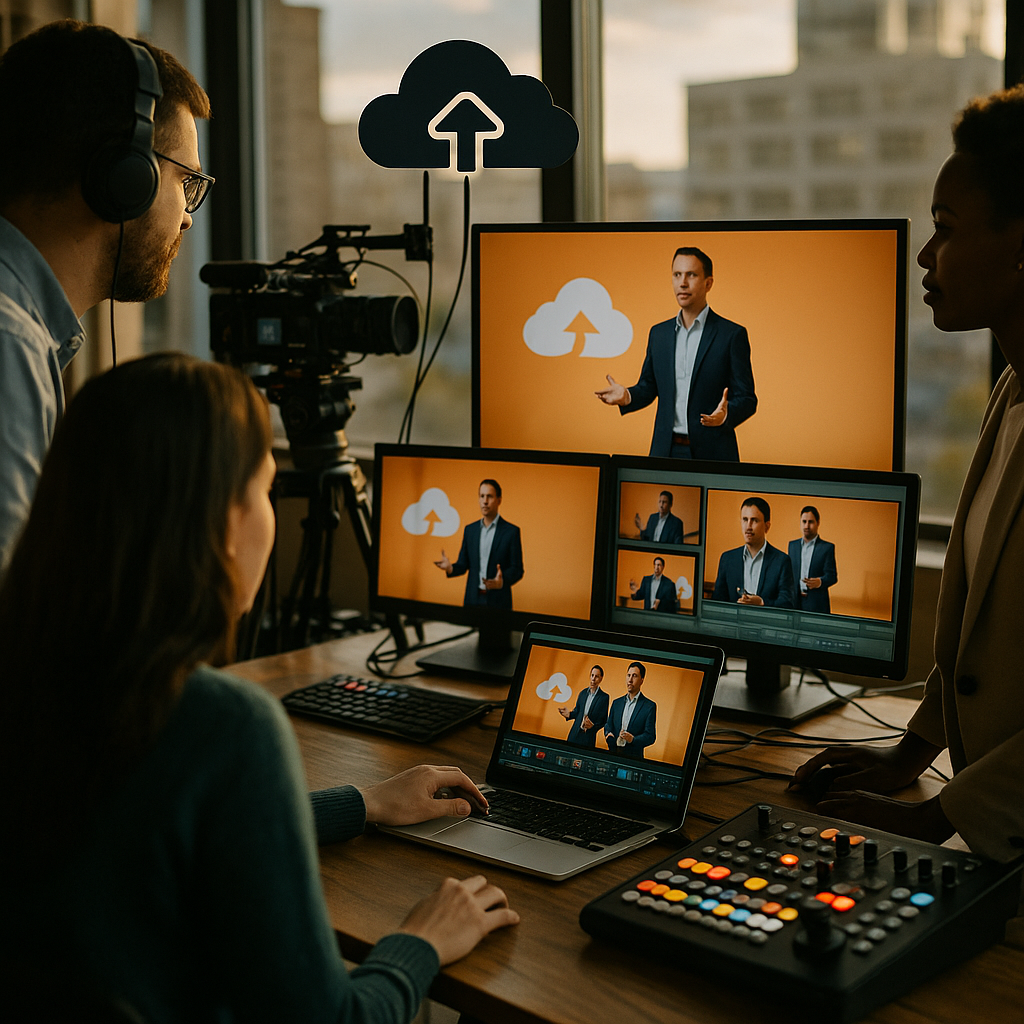
One Tap, Four Platforms: The Infrastructure Decision Most Brand Teams Are Getting Wrong
Seventy percent of live-stream viewers say they watch on multiple platforms simultaneously — yet most brand event teams are still managing simultaneous distribution through a patchwork of third-party encoders, manual RTMP keys, and prayers. One-tap multi-platform live distribution isn’t a luxury feature anymore. It’s table stakes for any creator program operating at scale.
The infrastructure decision underneath that capability — cloud-native vs. hardware-based, managed service vs. self-hosted — is where real budget and brand risk live. Here’s how to evaluate it properly.
What “Cloud-Native” Actually Means in a Live Streaming Context
The term gets misused constantly. A cloud-native streaming stack isn’t just software running on a server. It means the entire pipeline — ingest, transcoding, packaging, and distribution — is architected around elastic compute. No physical encoder rack. No fixed bandwidth ceiling. When a creator’s launch event spikes from 10,000 concurrent viewers to 400,000 in 90 seconds (which happens), the infrastructure scales without a phone call to an ops team.
Platforms like Restream, Switchboard Live, and Singular.live have built their entire value prop around this elasticity. Enterprise-grade options like AWS MediaLive and Wowza Streaming Cloud sit a layer deeper — they’re the infrastructure that some of those tools are built on. Knowing which layer your vendor operates at matters enormously for SLA negotiation.
For brand teams running product launches or sponsored creator events across Twitch, TikTok, X, and broadcast networks simultaneously, a single ingest point with one-tap multi-destination output is the only operational model that doesn’t require a dedicated streaming engineer on every activation.
The Four-Platform Problem Is Really a Latency + Rights Problem
Twitch, TikTok, X (formerly Twitter), and broadcast networks don’t just have different technical specs — they have fundamentally different latency tolerances, viewer interaction models, and rights environments. Twitch’s low-latency mode runs at 3-6 seconds. TikTok LIVE can push toward 10-15 seconds on some setups. Broadcast networks demand broadcast-quality encoding and often require SMPTE compliance. Trying to optimize for all four simultaneously without a proper multi-bitrate adaptive streaming layer is how brand teams end up with pixelated streams on one channel and audio sync issues on another.
The rights dimension is equally complex. Music clearance for a live creator event on Twitch doesn’t automatically extend to TikTok or broadcast. Your infrastructure needs to support scene-level or segment-level content controls — the ability to mute, swap, or interrupt a feed on specific platforms without killing the entire broadcast. Very few cloud platforms advertise this capability upfront. Ask directly.
This is also where content rights workflows become part of the infrastructure conversation, not an afterthought. The tooling decisions you make at the streaming layer will either constrain or enable your post-event content program.
Evaluating Cloud-Native Streaming Vendors: The Six Questions That Actually Matter
Most vendor scorecards for live streaming infrastructure focus on bitrate specs and uptime SLAs. Those matter, but they’re not the differentiators for brand and creator programs. Here’s the evaluation framework that gets to the real decision faster:
- Simultaneous destination count and RTMP/SRT support: Can the platform push to Twitch, TikTok, X, and a broadcast encoder simultaneously from a single ingest? Confirm the destination count isn’t rate-limited on your pricing tier.
- Per-destination content controls: Can you mute audio, apply overlays, or interrupt the feed on one platform without affecting others? This is non-negotiable for rights management.
- Transcoding profiles and adaptive bitrate: Does the platform generate multiple quality tiers per destination, or does it push a single output? Single-output systems will always underperform on platforms with variable viewer connection quality.
- API depth and integration with your existing stack: If your team uses a production platform like Singular.live for live graphics or integrates with a CRM for viewer data, the streaming infrastructure needs clean API connections. Siloed tools create operational friction that compounds at scale. See how cloud-native live production fits into creator brief workflows for context.
- Failover architecture: What happens when the ingest point drops? Does the platform auto-reconnect, hold the last frame, or kill the stream? For a sponsored live event, a 30-second outage is a brand incident.
- Data output and attribution hooks: Can the platform push concurrent viewer counts, engagement data, and platform-specific performance signals to your analytics stack in real time? This is where multi-CRM attribution architecture for live events becomes possible — or impossible.
The Broadcast Network Layer: Where Most Teams Underestimate Complexity
Adding a broadcast network to a multi-platform live distribution strategy isn’t just another RTMP destination. Broadcast delivery typically requires a contribution encoder (hardware like a Teradek or software like vMix), SMPTE-standard audio levels, closed caption compliance, and often a dedicated satellite or fiber uplink depending on the network. Cloud-native platforms handle the social destinations cleanly. The broadcast handoff usually requires a hybrid setup.
Vendors like Haivision and Zixi specialize in the secure, low-latency contribution links that bridge cloud-native social streaming with broadcast infrastructure. If your brand events include TV placement — think major product launches, award sponsorships, or sports integrations — factor this hybrid architecture into your infrastructure budget from day one. Retrofitting it post-contract is expensive.
Operational Efficiency: The Real ROI Driver
Brand teams rarely calculate the true cost of running a multi-platform live event manually. A conservative estimate: three to five hours of pre-event RTMP configuration across platforms, a dedicated stream operator during the event, and two to three hours of post-event troubleshooting and platform-specific clip extraction. Multiply that by ten activations per quarter and you’re looking at significant engineering and production overhead that cloud-native one-tap infrastructure eliminates entirely.
The efficiency argument is also a quality argument. Fewer manual touchpoints mean fewer points of failure. A single operator managing a one-tap distribution console can monitor all four destinations in real time through a unified dashboard — something that’s simply not possible when you’re managing four separate encoder sessions.
When evaluating total cost of ownership, include the production labor savings from consolidated distribution alongside the licensing fee. Teams that do this consistently find cloud-native multi-platform infrastructure pays for itself within two to three major activations.
For teams using AI-assisted tooling in their broader marketing stack, the same operational efficiency logic applies — scaling creator campaigns with AI requires that the infrastructure layer doesn’t become the bottleneck. A fragmented streaming setup will constrain what any downstream AI tool can actually do with live performance data.
Compliance, Brand Safety, and Platform-Specific Risk
Each destination platform carries its own compliance environment. TikTok has strict community guidelines that can auto-mute or terminate a stream. Twitch DMCA enforcement is aggressive around music. X’s content moderation is evolving rapidly. Broadcast networks carry FCC compliance requirements. Your streaming infrastructure needs to support rapid intervention — the ability to kill or modify a stream on a specific platform within seconds, not minutes.
Some platforms are building AI-assisted compliance monitoring directly into their streaming consoles. This is worth evaluating, particularly for creator programs where the talent isn’t always a trained broadcast professional. A creator who improvises a song mid-stream can trigger a platform ban that affects your entire channel relationship. The infrastructure layer should give your ops team the tools to intervene before the platform does.
For a broader look at how compliance failures cascade through creator tech stacks, the analysis on AI marketing deployment failures is directly applicable — governance gaps at the infrastructure level create the same compounding risk as governance gaps in AI tooling.
The Vendor Shortlist and What to Build Into Your RFP
The current market has a clear tier structure. Restream and Switchboard Live serve mid-market brand and creator teams with clean multi-destination output and reasonable API access. AWS MediaLive and Azure Media Services serve enterprise teams that need custom SLAs, dedicated ingest points, and deep API control. Wowza sits between those tiers. For broadcast-grade contribution, Haivision and Zixi are the standard. Twitch’s own broadcast guidelines and TikTok’s creator platform documentation are the starting points for platform-specific technical specs that any vendor RFP should reference.
Your RFP should require vendors to demonstrate: simultaneous four-destination output in a live test environment, per-destination content interrupt capability, real-time analytics API documentation, and a documented failover scenario. Don’t accept a demo that only shows a single destination with a promise that multi-destination works the same way. It often doesn’t.
Start your evaluation by auditing your current tech stack against these requirements before you talk to any vendor. Teams that skip this step end up buying infrastructure that technically delivers one-tap multi-platform distribution but can’t connect to their attribution stack or rights management workflow — which makes it far less valuable in practice.
Frequently Asked Questions
What is one-tap multi-platform live distribution?
One-tap multi-platform live distribution refers to a streaming infrastructure setup where a single video ingest point simultaneously delivers a live stream to multiple destinations — such as Twitch, TikTok, X, and broadcast networks — through a unified cloud-native platform, without requiring separate encoder configurations for each destination.
Which cloud-native streaming platforms support simultaneous multi-destination output?
Platforms including Restream, Switchboard Live, Wowza Streaming Cloud, AWS MediaLive, and Azure Media Services support simultaneous multi-destination streaming. The right choice depends on your destination count, required SLA, API integration needs, and whether your distribution includes broadcast networks, which typically require additional contribution encoding tools like Haivision or Zixi.
How do you manage content rights when streaming to multiple platforms at once?
Rights management in a multi-platform live stream requires infrastructure that supports per-destination content controls — the ability to mute audio, apply overlays, or interrupt the stream on one platform without affecting others. Music licensing, for example, may clear for Twitch but not for TikTok or broadcast. Your streaming platform should provide these controls natively or through API integration with your rights management system.
What is the typical latency difference between Twitch, TikTok, and broadcast when streaming simultaneously?
Twitch’s low-latency mode delivers streams at approximately 3–6 seconds of delay. TikTok LIVE can reach 10–15 seconds depending on infrastructure setup. Broadcast networks have their own contribution latency requirements and often demand near-real-time delivery via dedicated fiber or satellite uplinks. These differences mean a multi-platform stream will have variable viewer timing across destinations, which affects how real-time audience interaction (chat, polls) is managed.
How should brand teams calculate ROI on cloud-native streaming infrastructure?
Total cost of ownership should include platform licensing fees, production labor savings from consolidated operations (eliminating manual RTMP configuration and multi-session monitoring), reduced error rates from fewer manual touchpoints, and the downstream value of real-time performance data feeding your attribution stack. Teams that run five or more live activations per quarter typically find cloud-native infrastructure pays for itself within two to three major events when production labor is fully accounted for.
What failover capabilities should brand teams require from a streaming vendor?
At minimum, your streaming infrastructure vendor should offer automatic ingest reconnection on connection drop, a backup ingest point, last-frame hold to prevent black screens during brief outages, and documented recovery time objectives (RTOs). For high-stakes brand events, require a live failover demonstration during the vendor evaluation process rather than accepting documentation alone.
Top Influencer Marketing Agencies
The leading agencies shaping influencer marketing in 2026
Agencies ranked by campaign performance, client diversity, platform expertise, proven ROI, industry recognition, and client satisfaction. Assessed through verified case studies, reviews, and industry consultations.
Moburst

-
2

The Shelf
Boutique Beauty & Lifestyle Influencer AgencyA data-driven boutique agency specializing exclusively in beauty, wellness, and lifestyle influencer campaigns on Instagram and TikTok. Best for brands already focused on the beauty/personal care space that need curated, aesthetic-driven content.Clients: Pepsi, The Honest Company, Hims, Elf Cosmetics, Pure LeafVisit The Shelf → -
3

Audiencly
Niche Gaming & Esports Influencer AgencyA specialized agency focused exclusively on gaming and esports creators on YouTube, Twitch, and TikTok. Ideal if your campaign is 100% gaming-focused — from game launches to hardware and esports events.Clients: Epic Games, NordVPN, Ubisoft, Wargaming, Tencent GamesVisit Audiencly → -
4

Viral Nation
Global Influencer Marketing & Talent AgencyA dual talent management and marketing agency with proprietary brand safety tools and a global creator network spanning nano-influencers to celebrities across all major platforms.Clients: Meta, Activision Blizzard, Energizer, Aston Martin, WalmartVisit Viral Nation → -
5

The Influencer Marketing Factory
TikTok, Instagram & YouTube CampaignsA full-service agency with strong TikTok expertise, offering end-to-end campaign management from influencer discovery through performance reporting with a focus on platform-native content.Clients: Google, Snapchat, Universal Music, Bumble, YelpVisit TIMF → -
6

NeoReach
Enterprise Analytics & Influencer CampaignsAn enterprise-focused agency combining managed campaigns with a powerful self-service data platform for influencer search, audience analytics, and attribution modeling.Clients: Amazon, Airbnb, Netflix, Honda, The New York TimesVisit NeoReach → -
7

Ubiquitous
Creator-First Marketing PlatformA tech-driven platform combining self-service tools with managed campaign options, emphasizing speed and scalability for brands managing multiple influencer relationships.Clients: Lyft, Disney, Target, American Eagle, NetflixVisit Ubiquitous → -
8

Obviously
Scalable Enterprise Influencer CampaignsA tech-enabled agency built for high-volume campaigns, coordinating hundreds of creators simultaneously with end-to-end logistics, content rights management, and product seeding.Clients: Google, Ulta Beauty, Converse, AmazonVisit Obviously →