


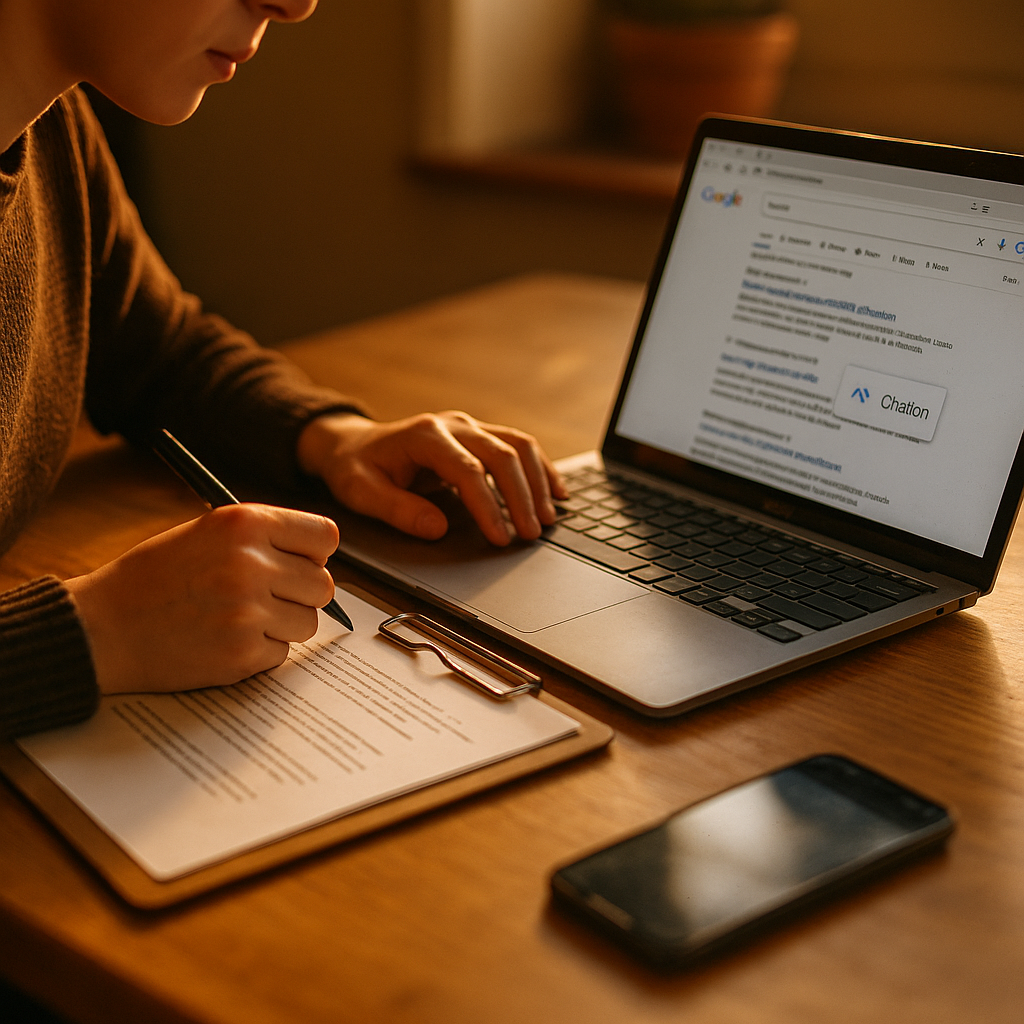
Over 65% of Google searches now return an AI-generated response before a single organic blue link. If your creator content isn’t structured for citation in Google AI Mode and AI Overviews, you’re producing assets that stop working the moment the campaign ends.
Why Generative Search Changes Creator Content Economics
Traditional influencer content was built for platform-native distribution: it lives on TikTok, Instagram, or YouTube, performs within an algorithm window, and depreciates. The implicit assumption was always that SEO belonged to the brand’s editorial team — not creators. Google AI Mode breaks that assumption completely.
When Google’s AI Mode synthesizes an answer, it pulls from sources it considers authoritative, specific, and well-attributed. Creator-produced content — particularly long-form YouTube reviews, Substack newsletters, personal blogs, and detailed Reddit write-ups — is now surfacing as cited sources inside AI Overviews. The citation includes the author’s name. That’s the structural shift brand teams have been slow to operationalize.
An author-attributed citation in Google AI Mode is effectively a persistent branded impression with third-party credibility — one that compounds over time rather than decaying like a paid placement.
This isn’t about gaming SEO. It’s about understanding that AI models reward depth, specificity, and identifiable human expertise. Creators have all three — if briefed correctly.
What Google’s AI Is Actually Rewarding
To structure creator content for AI citation, you need to understand what the model is optimizing for. Based on Google’s published guidance on helpful content signals and the observable behavior of AI Overviews, several patterns emerge.
First-person experience signals. AI Overviews heavily favor content where a named human describes a direct, personal experience. “I used this for 90 days” outperforms “this product has been proven to.” The former reads as lived expertise. The latter reads as marketing copy — and the model can tell.
Specific, verifiable claims. Vague superlatives (“incredible results”) get deprioritized. Specific, falsifiable statements (“my resting heart rate dropped 6 bpm over eight weeks, tracked via my Garmin Forerunner 265”) are the kind of claim AI models can synthesize into a useful answer. Brief your creators toward precision, not hyperbole.
Named authorship with a consistent digital footprint. AI citation favors creators with a coherent identity across platforms — a real name, consistent profile information, and a track record of content in a defined niche. Anonymous or pseudonymous accounts are cited far less frequently.
Structured content with clear semantic sections. Even on platforms without formal headings (like a YouTube description or a newsletter), content organized around clear topical units — problem, approach, outcome — is easier for AI to parse and attribute.
Rethinking the Creator Brief for AI Distribution
Most creator briefs are still written for human readers scrolling a feed. They specify visual aesthetics, caption tone, hashtag sets, and call-to-action placement. None of that is irrelevant — but it’s insufficient for AI distribution.
Add a dedicated “AI-Legibility Layer” to every brief. This is a short section that instructs the creator on structural elements that improve AI citability without compromising their authentic voice. Specifically:
- Author identification upfront. The creator’s name and area of expertise should appear in the first 100 words of any long-form piece. “I’m [Name], a certified nutritionist who’s been reviewing sports supplements for seven years” gives the AI a clean entity to attribute.
- Experience-forward framing. Ask creators to lead with what they personally did, tested, or observed — not with brand claims. The brand’s messaging integrates downstream into a narrative, not as the lede.
- Specific quantitative or qualitative outcomes. Build the brief around an outcome story: before state, intervention, after state, with concrete specifics. This is the narrative structure AI Overviews most reliably excerpt.
- Platform-specific long-form anchors. Short-form content (Reels, Shorts, TikToks) rarely gets cited directly. Brief creators to produce a longer companion piece — a YouTube video description, a Substack post, a personal blog entry — that carries the full narrative. The short-form content drives traffic; the long-form anchor earns the citation.
- Category-specific terminology. Help creators use the precise language that appears in real search queries in your category. Not brand language — category language. “Electrolyte replenishment for endurance athletes” rather than “hydration innovation.”
If you’re already thinking about how to align creator briefs with algorithmic logic, the same principles that inform YouTube paid partnership briefs apply here — structure and specificity reward you regardless of the distribution mechanism.
Platform Selection: Where AI Overviews Pull From
Not all platforms feed Google AI equally. Based on observed citation patterns, here’s the practical hierarchy for brand teams allocating creator content budgets with AI distribution in mind:
Highest citation frequency: Personal blogs (especially on established domains), YouTube (both video content and description text), Substack, and niche editorial sites where creators publish under their own byline.
Moderate citation frequency: Reddit (particularly detailed, upvoted posts in topically relevant subreddits — worth pairing with your Reddit media strategy), LinkedIn long-form articles, and Quora answers from verified experts.
Lower citation frequency: Instagram captions, TikTok descriptions, X posts. These platforms’ content structures and crawlability work against them in AI synthesis — for now.
This doesn’t mean abandoning short-form platforms. It means treating them as awareness and traffic drivers while your long-form content earns the citation. The brief architecture should connect these assets explicitly: the TikTok drives viewers to the YouTube video, the YouTube video drives viewers to the creator’s blog post, the blog post earns the AI citation.
Compliance and Disclosure in an AI-Cited World
This is the part most brand teams haven’t thought through. When a creator’s paid partnership content gets cited by Google AI Mode, the FTC disclosure that was technically visible in the original post may not appear in the AI-synthesized response. The AI quotes the useful information, not the disclaimer.
That creates two operational imperatives. First, ensure disclosures are embedded into the substantive text of creator content — not appended as a hashtag or a footer. “In partnership with [Brand], I tested…” integrates disclosure into the citeable content itself. Second, review your disclosure architecture against FTC endorsement guidelines with this specific scenario in mind: your legal team should assess whether brand-attributed AI citations without visible disclosure create any exposure.
The brand safety implications of AI-mediated content extend beyond platform-level whitelisting — they now touch how your brand appears in synthesized search results without your direct control.
Measuring Citation Performance
Standard influencer metrics — reach, engagement, EMV — don’t capture AI citation value. You need a parallel measurement framework.
Track branded and category queries in Google Search Console for impression signals that correlate with creator content publication windows. Use manual spot-checks on target queries to identify when creator content is appearing in AI Overviews. Tools like SEMrush and Ahrefs have begun tracking AI Overview appearances — build this into your reporting stack.
Assign a citation value metric: the number of times creator content surfaces as an attributed source in AI responses for your target queries. This becomes a KPI alongside engagement rate and conversion attribution. It’s nascent, but brands that establish this measurement infrastructure now will have a significant data advantage within 18 months.
For context on how organic distribution is evolving across channels, AI citation is the most under-measured organic channel in most influencer programs today.
The brands that win AI citation placements aren’t doing more SEO — they’re briefing creators to write like experts, not like brand ambassadors. That distinction is everything.
The Brief Checklist Before You Launch
Before any creator content goes live with AI distribution as an objective, run it against this operational checklist:
- Does the creator’s full name and area of expertise appear in the first 100 words?
- Does the content lead with first-person experience rather than brand claims?
- Are there at least two specific, quantifiable outcomes described?
- Is FTC disclosure embedded in citeable body text, not appended as a hashtag?
- Is there a long-form anchor asset (blog, YouTube, Substack) connected to any short-form content?
- Does the content use category-specific search language rather than brand-proprietary terminology?
- Is the creator’s digital identity consistent and verifiable across at least two platforms?
Brief against this checklist for every campaign where sustained distribution matters. The short-form content decisions you’re already wrestling with — covered in detail in frameworks like optimizing creator briefs for algorithm wins — now have a parallel consideration: will this content earn an AI citation six months from now?
Your next step: Audit your last five creator campaigns and identify which produced long-form anchor content with named authorship. Those are your baselines for AI citation potential. Everything else is a gap your next brief cycle should close.
FAQs
What is Google AI Mode and why does it matter for creator content?
Google AI Mode is a search experience that generates synthesized answers from multiple web sources rather than returning a traditional list of links. It matters for creator content because it actively cites sources — including creator-produced content — with author attribution. Brands can earn persistent, third-party-credible mentions in AI-generated responses if creator content is structured correctly.
Do creators need to do traditional SEO to appear in AI Overviews?
No. AI Overviews prioritize depth of first-person experience, specific verifiable claims, and identifiable author expertise over technical SEO signals like backlink counts or keyword density. A well-structured personal blog post from a niche creator can outperform a highly optimized brand page if it demonstrates genuine lived expertise.
Which content formats are most likely to be cited in Google AI Mode?
Long-form personal blogs, YouTube video descriptions, Substack newsletters, and detailed Reddit posts have the highest observed citation frequency. Short-form social content (TikTok, Instagram Reels) is rarely cited directly, but can drive traffic to long-form anchor assets that do earn citations.
How should brands handle FTC disclosure requirements when creator content is cited in AI responses?
FTC disclosures should be embedded in the substantive body text of creator content — not relegated to hashtags or footers — because AI synthesis often excerpts the useful content without appending disclaimers. Phrasing like “In partnership with [Brand], I tested…” integrates disclosure into the citeable text itself. Brands should review this scenario with legal counsel against current FTC endorsement guidance.
How do you measure the ROI of creator content that earns AI citation placements?
Track AI Overview appearances for branded and category queries using tools like SEMrush or Ahrefs, which have added AI Overview tracking features. Build a citation frequency KPI — the number of times creator content surfaces as an attributed source for target queries. Correlate this with Google Search Console impression data around creator content publication windows to establish baseline performance benchmarks.
Should brands change their creator selection criteria to prioritize AI citation potential?
Yes, partially. Creators with a consistent real-name digital identity, a track record of long-form content production, and an established niche expertise signal are significantly more likely to earn AI citations than anonymous or broad-niche creators. Add “AI citability profile” as a selection criterion alongside reach and engagement rate, particularly for campaigns where sustained distribution — not just launch-window performance — is a business objective.
Top Influencer Marketing Agencies
The leading agencies shaping influencer marketing in 2026
Agencies ranked by campaign performance, client diversity, platform expertise, proven ROI, industry recognition, and client satisfaction. Assessed through verified case studies, reviews, and industry consultations.
Moburst

-
2

The Shelf
Boutique Beauty & Lifestyle Influencer AgencyA data-driven boutique agency specializing exclusively in beauty, wellness, and lifestyle influencer campaigns on Instagram and TikTok. Best for brands already focused on the beauty/personal care space that need curated, aesthetic-driven content.Clients: Pepsi, The Honest Company, Hims, Elf Cosmetics, Pure LeafVisit The Shelf → -
3

Audiencly
Niche Gaming & Esports Influencer AgencyA specialized agency focused exclusively on gaming and esports creators on YouTube, Twitch, and TikTok. Ideal if your campaign is 100% gaming-focused — from game launches to hardware and esports events.Clients: Epic Games, NordVPN, Ubisoft, Wargaming, Tencent GamesVisit Audiencly → -
4

Viral Nation
Global Influencer Marketing & Talent AgencyA dual talent management and marketing agency with proprietary brand safety tools and a global creator network spanning nano-influencers to celebrities across all major platforms.Clients: Meta, Activision Blizzard, Energizer, Aston Martin, WalmartVisit Viral Nation → -
5

The Influencer Marketing Factory
TikTok, Instagram & YouTube CampaignsA full-service agency with strong TikTok expertise, offering end-to-end campaign management from influencer discovery through performance reporting with a focus on platform-native content.Clients: Google, Snapchat, Universal Music, Bumble, YelpVisit TIMF → -
6

NeoReach
Enterprise Analytics & Influencer CampaignsAn enterprise-focused agency combining managed campaigns with a powerful self-service data platform for influencer search, audience analytics, and attribution modeling.Clients: Amazon, Airbnb, Netflix, Honda, The New York TimesVisit NeoReach → -
7

Ubiquitous
Creator-First Marketing PlatformA tech-driven platform combining self-service tools with managed campaign options, emphasizing speed and scalability for brands managing multiple influencer relationships.Clients: Lyft, Disney, Target, American Eagle, NetflixVisit Ubiquitous → -
8

Obviously
Scalable Enterprise Influencer CampaignsA tech-enabled agency built for high-volume campaigns, coordinating hundreds of creators simultaneously with end-to-end logistics, content rights management, and product seeding.Clients: Google, Ulta Beauty, Converse, AmazonVisit Obviously →