


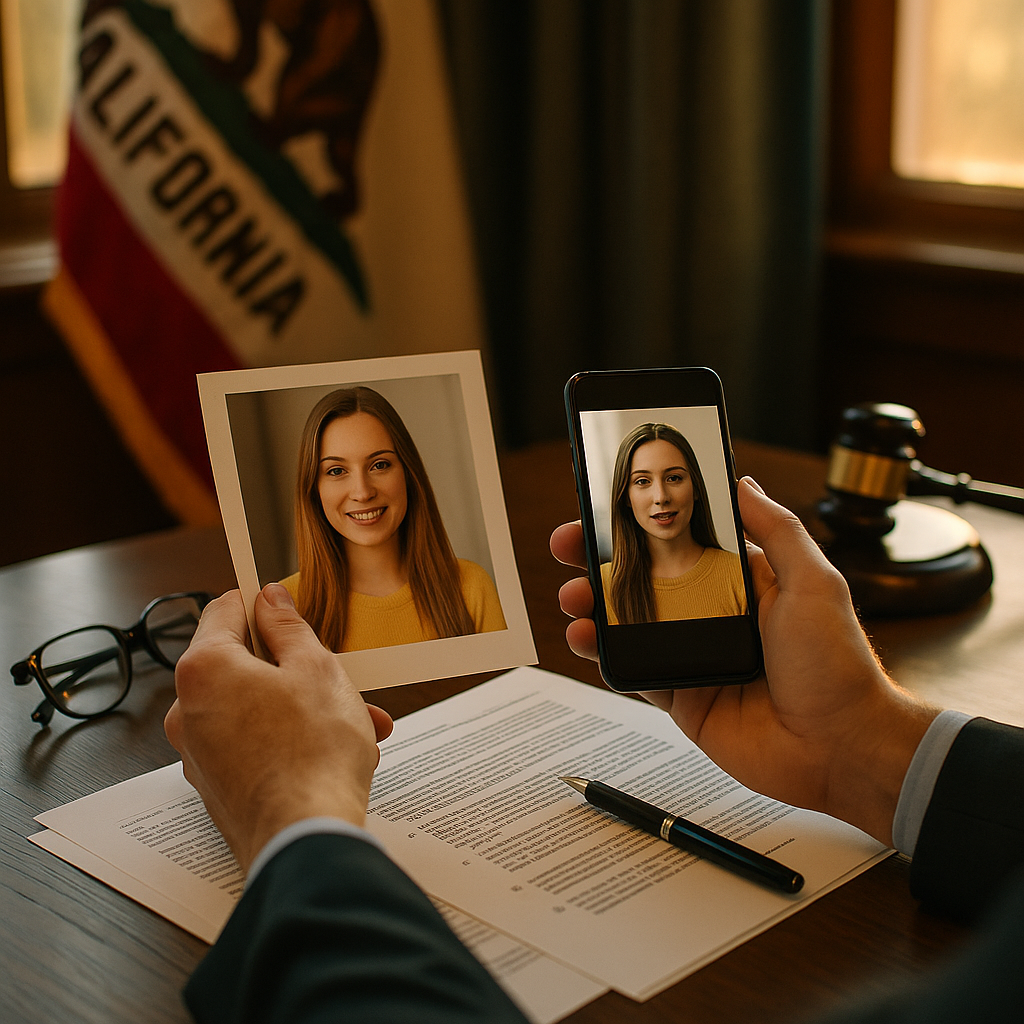
At least 19 states have enacted some form of synthetic media legislation targeting political advertising — and every one of them has a different definition of what “AI-generated content” actually means. That patchwork is exactly why California’s deepfake political ad law, and the First Amendment challenge currently working through the courts, should be on every brand legal team’s radar right now.
Why a Political Ad Law Is a Brand Problem
Here’s the uncomfortable truth: legislation drafted to regulate deepfake attack ads doesn’t stay neatly in the political lane. California’s AB 2839 and its predecessor AB 730 created disclosure requirements and outright prohibitions on synthetic media in political contexts — but the definitions written into those statutes are broad enough to create real ambiguity for commercial advertising that touches social issues, advocacy, or cause marketing.
The ongoing First Amendment challenge, brought by a content creator arguing the law impermissibly restricts protected speech, has already produced a preliminary injunction that partially blocked enforcement. Courts are now wrestling with where political speech ends and commercial speech begins. For brands running cause-led campaigns or creator content that touches electoral themes — think voter registration partnerships, civic engagement initiatives, or issue-based brand positioning — that line is uncomfortably thin.
The stakes are not abstract. FTC guidance on AI-generated endorsements already requires material disclosure. Layer a state-level synthetic media ban on top of that, and a brand running a deepfake-adjacent influencer campaign in California could face simultaneous state and federal exposure.
The Patchwork Problem Brands Can’t Wait Out
Waiting for federal standards to resolve the confusion is a losing strategy. Congress has moved slowly on synthetic media legislation — the closest vehicle, the NO FAKES Act, has stalled repeatedly. Meanwhile, states are not waiting. Texas, Florida, Minnesota, and Georgia have all passed or introduced their own AI disclosure or prohibition frameworks for political content, each with distinct carve-outs and enforcement mechanisms.
Brands operating across multiple states are effectively managing a different legal regime in each market — and most marketing teams don’t have the compliance infrastructure to track that in real time.
The operational implication is direct: brand legal teams cannot write a single national AI content policy and call it done. They need a tiered framework that accounts for the most restrictive state standards while preserving flexibility as federal rules eventually emerge. California, given its market size and legislative aggressiveness, is the logical floor.
If you’re already managing creator contract complexity around AI training rights or navigating AI remix tool disclosures, the synthetic media question plugs directly into the same governance infrastructure — it just requires a sharper geographic lens.
What “AI-Generated” Actually Triggers Under California’s Framework
The statute covers “materially deceptive” synthetic media — defined as audio or visual content depicting a candidate or elected official doing or saying something they did not do or say. The commercial advertising corollary is persona misrepresentation: a brand using a synthetic likeness of a real person without consent, or a creator deploying AI voice cloning of a public figure in a brand campaign.
Several practical scenarios put brands directly in scope:
- AI voice cloning in sponsored content — Creator uses a tool like ElevenLabs to produce a voiceover that mimics a recognizable public figure for comedic effect in a brand post.
- Synthetic face-swap in branded video — A brand’s agency uses RunwayML or a similar tool to place a celebrity’s likeness into an ad without a formal talent agreement.
- AI-generated “testimonials” — A brand deploys a realistic synthetic spokesperson that consumers could reasonably mistake for a real person.
- Deepfake parody in cause campaigns — A brand’s advocacy campaign uses satirical synthetic media of a politician — even with disclosure — in a state where the carve-out for satire is narrow or contested.
The question of whether commercial content falls under the statute’s political speech provisions is precisely what the litigation is testing. Until courts settle it, assume worst-case scope.
How to Structure Your AI Content Policy Before Federal Rules Land
The goal isn’t to write a policy that perfectly anticipates every future regulation — that’s impossible. The goal is to build a policy architecture flexible enough to absorb new requirements without requiring a full rebuild every time a new state passes something.
Start with four structural layers:
- Definition layer — Explicitly define what your organization considers “AI-generated,” “AI-assisted,” and “synthetic media.” Don’t let platforms or vendors define these terms for you. The definitions should align with the most expansive state-level definitions currently in force.
- Consent and rights layer — Require documented consent for any use of real human likenesses in AI-generated or AI-modified content, regardless of whether the campaign is political in nature. This is the single highest-leverage protection against both state synthetic media laws and FTC persona misrepresentation liability.
- Disclosure layer — Mandate disclosure of AI-generated or materially AI-modified content in all consumer-facing placements, regardless of platform requirements. Some platforms like Meta and Google have their own AI content labeling requirements — your policy should meet or exceed those, not defer to them.
- Geographic flag layer — Build a state-by-state compliance matrix into your campaign pre-flight process. If content runs in California, Texas, or any state with active synthetic media legislation, it triggers an additional legal review step before deployment.
For brands that have already invested in AI campaign human override protocols, this framework slots in as an additional checkpoint rather than a parallel system. The key is integration, not proliferation of separate policy documents.
Creator Contracts Need a Synthetic Media Rider — Now
If your standard creator agreement doesn’t already contain explicit language about synthetic media, AI-generated likenesses, and voice cloning, you have a contract gap that state-level legislation is actively exposing. The Take It Down Act created new nonconsensual intimate image liability — synthetic media legislation extends that logic into commercial and political content territory.
A synthetic media rider in creator contracts should address:
- Whether the creator consents to their likeness being used in AI-generated content as part of the brand collaboration
- Whether the brand or agency can use AI tools to modify, extend, or remix the creator’s original content
- Disclosure obligations if AI tools are used in post-production
- Indemnification provisions if a state regulator challenges content as synthetic media under applicable law
- Termination rights if the campaign is enjoined due to a synthetic media legal action
These aren’t hypothetical protections. As California’s litigation moves through the courts, the injunction itself demonstrates that campaigns can be disrupted mid-flight by synthetic media enforcement actions. Brands need contract language that addresses that operational risk explicitly. Review your contract leverage clauses with this specific exposure in mind.
The injunction in California’s deepfake ad case isn’t just a political story — it’s a proof of concept that synthetic media litigation can halt a campaign in progress. Brands need termination and indemnification language that accounts for exactly that scenario.
The Federal Horizon: Don’t Build Around It
It’s tempting to treat the current state-level patchwork as a temporary problem that federal legislation will eventually clean up. That’s optimistic to the point of being operationally dangerous. Even if a federal synthetic media standard passes, it will almost certainly set a floor rather than a ceiling — states with more restrictive regimes will likely be permitted to maintain them under preemption analysis, just as California has historically done with privacy law.
The FTC’s existing AI guidance and any forthcoming federal synthetic media rules will interact with, not replace, state regimes. Building your policy to California’s standard now means you’re compliant with the strictest current framework and well-positioned for whatever federal overlay arrives.
The brands that will be caught flat-footed are those treating this as a political advertising problem rather than a marketing operations problem. If your campaign pre-flight process doesn’t already include a synthetic media review step, that’s the immediate gap to close.
Run a legal audit of your current AI content pipeline against California AB 2839’s definitions this quarter. Identify every campaign touchpoint where synthetic media — even partial AI modification — is in use, and build your disclosure and consent documentation before a regulator or litigant does it for you.
Frequently Asked Questions
Does California’s deepfake political ad law apply to commercial brand advertising?
The statute is specifically drafted around political candidates and electoral content, but the legal challenge currently in courts is testing how broadly courts will interpret its definitions. Brands running cause marketing, civic engagement campaigns, or issue-based content that touches on political themes should treat the law as potentially in scope until courts provide clearer guidance. Commercial speech involving synthetic likenesses also faces separate FTC exposure regardless of state law.
What is the status of the legal challenge to California’s synthetic media law?
A federal court issued a preliminary injunction partially blocking enforcement of AB 2839, finding that the plaintiff demonstrated a likelihood of success on First Amendment grounds. The case is ongoing. Brands should monitor it closely because the court’s eventual ruling on the scope of protected synthetic media speech will shape how broadly future state and federal legislation can restrict AI-generated content.
How should brands disclose AI-generated content in influencer campaigns?
At minimum, brands should follow FTC guidance requiring clear and conspicuous disclosure when AI tools materially alter a creator’s likeness, voice, or statements. Platform-specific requirements from Meta, Google, and TikTok add additional layers. Brands operating in states with synthetic media legislation should adopt the most expansive disclosure standard applicable to any market where their content runs.
Do creator contracts need to address synthetic media specifically?
Yes. Standard influencer agreements drafted before AI content tools became widespread almost certainly lack adequate language covering synthetic likeness use, AI voice cloning, AI-assisted post-production, and the disclosure obligations that accompany those practices. Brands should add a synthetic media rider addressing consent, disclosure, indemnification, and termination rights tied to regulatory enforcement actions.
What happens if federal synthetic media legislation passes while California standards are already in place?
Federal legislation is likely to establish a floor, not a ceiling, for synthetic media regulation — similar to how federal privacy law interacts with California’s CCPA/CPRA regime. Brands that build their AI content policies to California’s current standard will be best positioned to absorb a federal overlay without requiring a full compliance rebuild.
Top Influencer Marketing Agencies
The leading agencies shaping influencer marketing in 2026
Agencies ranked by campaign performance, client diversity, platform expertise, proven ROI, industry recognition, and client satisfaction. Assessed through verified case studies, reviews, and industry consultations.
Moburst

-
2

The Shelf
Boutique Beauty & Lifestyle Influencer AgencyA data-driven boutique agency specializing exclusively in beauty, wellness, and lifestyle influencer campaigns on Instagram and TikTok. Best for brands already focused on the beauty/personal care space that need curated, aesthetic-driven content.Clients: Pepsi, The Honest Company, Hims, Elf Cosmetics, Pure LeafVisit The Shelf → -
3

Audiencly
Niche Gaming & Esports Influencer AgencyA specialized agency focused exclusively on gaming and esports creators on YouTube, Twitch, and TikTok. Ideal if your campaign is 100% gaming-focused — from game launches to hardware and esports events.Clients: Epic Games, NordVPN, Ubisoft, Wargaming, Tencent GamesVisit Audiencly → -
4

Viral Nation
Global Influencer Marketing & Talent AgencyA dual talent management and marketing agency with proprietary brand safety tools and a global creator network spanning nano-influencers to celebrities across all major platforms.Clients: Meta, Activision Blizzard, Energizer, Aston Martin, WalmartVisit Viral Nation → -
5

The Influencer Marketing Factory
TikTok, Instagram & YouTube CampaignsA full-service agency with strong TikTok expertise, offering end-to-end campaign management from influencer discovery through performance reporting with a focus on platform-native content.Clients: Google, Snapchat, Universal Music, Bumble, YelpVisit TIMF → -
6

NeoReach
Enterprise Analytics & Influencer CampaignsAn enterprise-focused agency combining managed campaigns with a powerful self-service data platform for influencer search, audience analytics, and attribution modeling.Clients: Amazon, Airbnb, Netflix, Honda, The New York TimesVisit NeoReach → -
7

Ubiquitous
Creator-First Marketing PlatformA tech-driven platform combining self-service tools with managed campaign options, emphasizing speed and scalability for brands managing multiple influencer relationships.Clients: Lyft, Disney, Target, American Eagle, NetflixVisit Ubiquitous → -
8

Obviously
Scalable Enterprise Influencer CampaignsA tech-enabled agency built for high-volume campaigns, coordinating hundreds of creators simultaneously with end-to-end logistics, content rights management, and product seeding.Clients: Google, Ulta Beauty, Converse, AmazonVisit Obviously →