


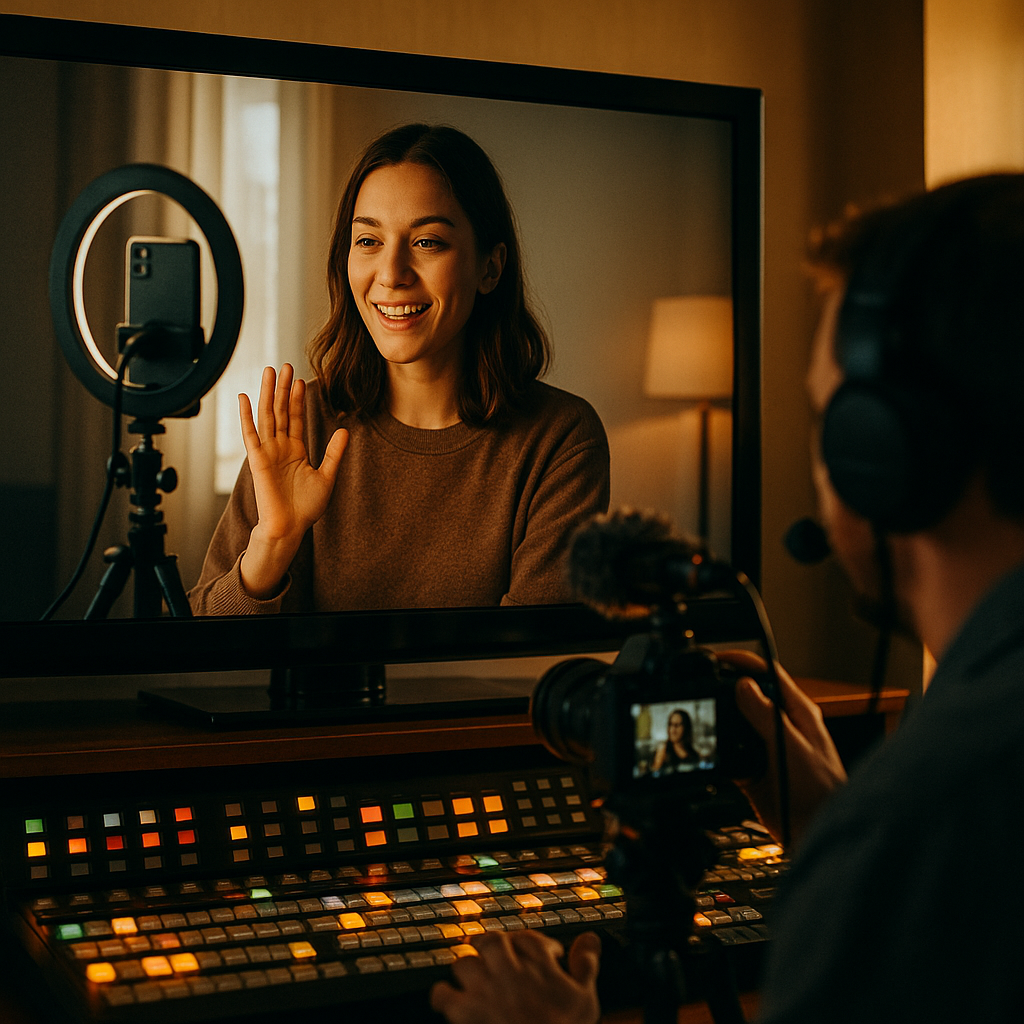
Broadcast TV is supposed to be the old guard. So why do the latest spots from Domino’s, Lowe’s, and Yeti feel like they were briefed by someone who spent the morning watching TikTok? The answer matters for every brand strategist still allocating budget to linear and CTV — because the creative grammar of television is changing fast, and established advertisers are leading the shift.
The Production Aesthetic Has Shifted — and It Wasn’t an Accident
Traditional broadcast creative was defined by polish: controlled lighting, professional talent, tightly scripted dialogue, and a visual language built to impress during a 30-second window between sitcom acts. That aesthetic is losing ground — not because quality fell out of fashion, but because audiences have been conditioned by a decade of creator content to read high production value as corporate distance.
Domino’s recent campaign leans into this deliberately. Instead of the aspirational food photography that dominated pizza advertising for thirty years, the spots feature handheld camera work, unflattering overhead angles that mirror food-content TikTok, and talent who talk to the camera like they’re addressing a friend rather than an audience. The effect is intentional dissonance: a national broadcast buy that aesthetically mimics organic creator content.
Lowe’s takes a different angle. Their current brand work blends cinematic wide shots of home improvement projects with jump-cut tutorial sequences that feel lifted directly from YouTube DIY culture. There’s a structural familiarity for anyone who’s watched episodic brand content on YouTube — the spots move like mini-episodes rather than traditional :30 commercials, using unresolved narrative tension to create recall.
Yeti’s approach is arguably the most sophisticated. The outdoor brand has always traded on lifestyle authenticity, but their broadcast creative now borrows directly from documentary filmmaking — documentary-style brand narrative techniques that creators pioneered on long-form YouTube. You’ll notice available light, location audio bleed, and subjects who clearly weren’t cast from a talent agency roster. It signals: this product lives where real people live.
When a brand’s TV spot is indistinguishable in tone from an organic creator post, that’s not a production shortcut — it’s a deliberate strategic signal to audiences trained to skip polished advertising.
What “Creator-Influenced Tone” Actually Means in a Broadcast Brief
Let’s be precise here, because “creator-influenced” gets thrown around loosely. It doesn’t mean lo-fi. It doesn’t mean amateur. It means the psychological contract between the screen and the viewer has changed.
Creator content operates on trust, specificity, and perceived honesty. When a creator recommends a product, the viewer’s brain encodes it differently than a brand ad — even if the creator is clearly paid. The reason? Parasocial familiarity, specificity of use case, and the visible personality of the endorser. Traditional broadcast creative has always struggled to replicate this because it was engineered for reach, not relationship.
What Domino’s, Lowe’s, and Yeti are doing is encoding creator trust signals into broadcast production without requiring actual creators. The signals include: direct-address camera work, visible imperfection (motion blur, ambient noise, non-neutral backgrounds), testimony-style delivery rather than scripted performance, and product interaction that looks functional rather than staged. These are learnable production conventions. They’re now being written into TV creative briefs by CMOs who understand that creator-optimized assets outperform traditional ad formats across more channels than just social.
According to eMarketer, CTV ad spend continues to grow as a share of total video budgets, which means creative produced for broadcast increasingly needs to perform across streaming environments where skip rates are punishing and contextual targeting is granular. Creator-influenced tone isn’t just a cultural preference — it’s an optimization strategy.
Platform-Specific Signals Bleeding Into Linear Creative
Here’s what’s fascinating from a strategic standpoint: these brands aren’t just borrowing creator aesthetics for their social cuts. They’re embedding platform-specific signals into the primary broadcast executions.
Consider aspect ratio psychology. Yeti’s recent spots include compositions that work natively in both 16:9 and 9:16 — the talent and product are centered in a way that survives a crop to vertical without reshooting. That’s a production decision made at brief stage, not in post. It means the broadcast buy and the social amplification are running from the same master asset, which has profound implications for production economics.
Lowe’s is doing something similar with text hierarchy. The spots include on-screen text callouts — price points, product names, step numbers — that mirror the text overlay conventions of TikTok and Reels. On a 65-inch living room TV, these read as graphic elements. On a phone screen during a CTV ad break, they function like native social content. Same asset, two different cognitive frames.
For brand strategists managing multi-platform campaigns, this is the operational unlock: if your broadcast creative brief includes platform-signal layers from the outset, you eliminate the downstream cost of reformatting for social. You also create creative coherence — consumers moving between a Domino’s TV spot and a Domino’s TikTok feel the same brand, not two different productions teams talking at them differently. Teams building multi-format creative briefs are already working this way for creator content — the same discipline now applies to traditional broadcast production.
The Risk Nobody’s Talking About
There’s a legitimate strategic risk embedded in this shift that brands need to address before it becomes a brand equity problem.
When broadcast creative mimics creator aesthetics, you’re borrowing credibility from a format built on individual authenticity. Audiences — particularly under-35 viewers — are increasingly fluent in detecting when that authenticity is performed rather than real. A Domino’s spot that feels too creator-ish can tip from “relatable” to “try-hard” if the tone isn’t calibrated precisely. Yeti probably has the most license here because their brand identity was built on genuine outdoor culture long before creator marketing existed. Domino’s is navigating more delicate territory.
The guardrail is specificity. The creator content that earns trust is specific — a particular person, a real opinion, a named use case. Broadcast creative that borrows creator tone but stays vague on product specifics ends up in an uncanny valley: it looks like a creator recommendation but delivers brand messaging. Audiences clock this. The brands executing this well are the ones pairing creator aesthetic with product specificity — concrete claims, visible use, real context.
For teams managing creator proof at the product level, this tension will be familiar. The same principle applies: specificity is what makes the creator-influenced format believable.
Creator aesthetics without creator specificity is just another production style. The brands winning in broadcast are the ones who understand the difference.
What This Means for Your Production Brief
If you’re a brand or agency managing a broadcast creative development process, the Domino’s, Lowe’s, and Yeti playbook offers concrete brief-level signals worth implementing now.
- Brief for multi-format natively. Specify in the production brief that compositions must survive a 9:16 crop. This is a production constraint, not a post decision.
- Define the “creator trust signals” you want to embed. Direct address, ambient audio, functional product interaction — these need to be explicit brief elements, not left to the director’s instinct.
- Set a specificity threshold. Every creator-tone executional element should be paired with a specific product claim or use case to avoid the uncanny valley problem.
- Audit your talent casting criteria. Creator-influenced broadcast work requires talent that can hold a direct-address delivery without it reading as scripted. This is a casting brief, not just a production note.
- Plan asset versioning at brief stage. The brands doing this well produce broadcast, :15 CTV, and social-native cuts from one shoot. The versioning logic needs to be in the original brief, not negotiated in post. This mirrors the approach teams use for modular creative briefs in creator programs.
Statista data consistently shows that ad recall and purchase intent scores are higher for content that matches the native format conventions of the environment it appears in. The brands adapting broadcast creative to carry platform-native signals are essentially buying themselves a recall premium on their existing media spend.
The production economics follow the same logic. According to HubSpot’s research on content production efficiency, brands that unify their creative asset strategy across formats reduce production costs significantly compared to brands running separate production processes for broadcast and digital. The creative brief is where that efficiency is either locked in or lost.
One final watch area: AI-assisted production is accelerating this convergence. Scaling AI creative without diluting authentic signals is now a live production challenge, not a theoretical one. Brands that figure out how to use AI generation for versioning while preserving the human-signal elements of creator-influenced tone will have a meaningful production cost advantage by the time the next upfront cycle arrives.
The FTC’s ongoing guidance on advertising disclosure also deserves a note here — as broadcast creative borrows more heavily from creator formats, questions about disclosure conventions (especially in CTV environments) will become more acute. Brands should have legal review any execution that blurs the line between paid broadcast advertising and organic-looking creator content.
The concrete next step: Pull your last three broadcast briefs and audit them against the five criteria above. If multi-format composition and creator trust signals aren’t explicit brief requirements, you’re producing two campaigns worth of creative for one campaign’s budget — and leaving recall performance on the table.
Frequently Asked Questions
Why are established TV advertisers adopting creator-influenced aesthetics in broadcast commercials?
Audiences conditioned by years of creator content have learned to associate high-production-value broadcast aesthetics with corporate distance and inauthenticity. Brands like Domino’s, Lowe’s, and Yeti are embedding creator trust signals — direct-address delivery, handheld camera work, functional product interaction — into their broadcast creative to generate the parasocial familiarity that drives recall and purchase intent. This is a deliberate strategic choice, not a production cost-cutting measure.
What is a “creator trust signal” in the context of TV commercial production?
A creator trust signal is a production convention borrowed from organic creator content that communicates authenticity and relatability to the viewer. Examples include direct-to-camera address, visible ambient audio, non-studio backgrounds, non-agency talent, and testimony-style delivery. When embedded in broadcast creative, these signals mimic the psychological contract that creator content establishes with audiences — trading corporate polish for perceived honesty.
How does this creative strategy affect production budgets?
Done correctly, it reduces them. Brands that brief multi-format composition and platform-native signal layers from the outset of production can generate broadcast, CTV, and social-native cuts from a single shoot. The key is that the versioning logic must be built into the original brief, not handled in post-production. Brands that wait until post to adapt broadcast assets for social are paying for two productions while briefing one.
What is the main risk of adopting creator aesthetics in broadcast advertising?
The primary risk is the “uncanny valley” effect — where broadcast creative borrows creator tone but remains vague on product specifics, causing audiences (especially under-35 viewers) to recognize the performed authenticity and disengage. The guardrail is specificity: every creator-aesthetic element should be paired with a concrete product claim or visible use case. Creator aesthetics without creator specificity becomes indistinguishable from a production style trend, not a trust-building strategy.
Should brands consider FTC compliance when TV creative mimics creator content?
Yes. As broadcast and CTV creative increasingly resembles organic creator content, disclosure questions become more acute — particularly in streaming environments. The FTC’s guidelines on advertising disclosure apply to any paid commercial communication, and executions that intentionally blur the line between brand advertising and creator-style organic content should receive legal review before airing.
Top Influencer Marketing Agencies
The leading agencies shaping influencer marketing in 2026
Agencies ranked by campaign performance, client diversity, platform expertise, proven ROI, industry recognition, and client satisfaction. Assessed through verified case studies, reviews, and industry consultations.
Moburst

-
2

The Shelf
Boutique Beauty & Lifestyle Influencer AgencyA data-driven boutique agency specializing exclusively in beauty, wellness, and lifestyle influencer campaigns on Instagram and TikTok. Best for brands already focused on the beauty/personal care space that need curated, aesthetic-driven content.Clients: Pepsi, The Honest Company, Hims, Elf Cosmetics, Pure LeafVisit The Shelf → -
3

Audiencly
Niche Gaming & Esports Influencer AgencyA specialized agency focused exclusively on gaming and esports creators on YouTube, Twitch, and TikTok. Ideal if your campaign is 100% gaming-focused — from game launches to hardware and esports events.Clients: Epic Games, NordVPN, Ubisoft, Wargaming, Tencent GamesVisit Audiencly → -
4

Viral Nation
Global Influencer Marketing & Talent AgencyA dual talent management and marketing agency with proprietary brand safety tools and a global creator network spanning nano-influencers to celebrities across all major platforms.Clients: Meta, Activision Blizzard, Energizer, Aston Martin, WalmartVisit Viral Nation → -
5

The Influencer Marketing Factory
TikTok, Instagram & YouTube CampaignsA full-service agency with strong TikTok expertise, offering end-to-end campaign management from influencer discovery through performance reporting with a focus on platform-native content.Clients: Google, Snapchat, Universal Music, Bumble, YelpVisit TIMF → -
6

NeoReach
Enterprise Analytics & Influencer CampaignsAn enterprise-focused agency combining managed campaigns with a powerful self-service data platform for influencer search, audience analytics, and attribution modeling.Clients: Amazon, Airbnb, Netflix, Honda, The New York TimesVisit NeoReach → -
7

Ubiquitous
Creator-First Marketing PlatformA tech-driven platform combining self-service tools with managed campaign options, emphasizing speed and scalability for brands managing multiple influencer relationships.Clients: Lyft, Disney, Target, American Eagle, NetflixVisit Ubiquitous → -
8

Obviously
Scalable Enterprise Influencer CampaignsA tech-enabled agency built for high-volume campaigns, coordinating hundreds of creators simultaneously with end-to-end logistics, content rights management, and product seeding.Clients: Google, Ulta Beauty, Converse, AmazonVisit Obviously →