


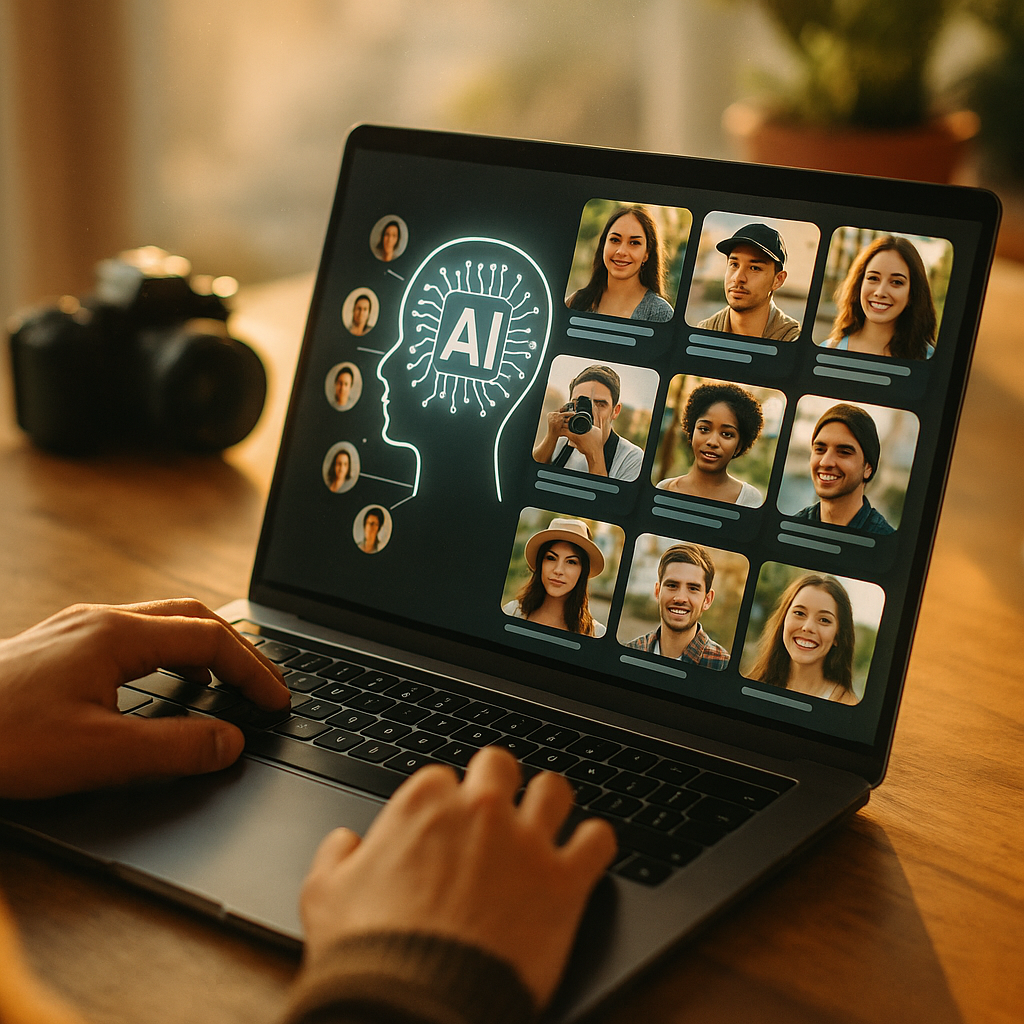
Micro-Influencers Are Outperforming Macro Talent — If You Know How to Find Them
Micro-influencers with under 50,000 followers now generate engagement rates up to 60% higher than macro-influencers, according to data from Sprout Social. The catch? Manually identifying the right ones across a fragmented creator landscape is operationally impossible at scale. That’s exactly what AI-enabled creator discovery solves — and why brands ignoring automated workflows are leaving serious budget efficiency on the table.
Why the Long Tail Finally Has Leverage
For years, “long-tail creator strategy” was a nice idea that collapsed under its own weight operationally. Your team could find five great micro-influencers in a day. Finding five hundred who actually matched your audience, brand safety thresholds, and content quality bar? That required an army of analysts or a lot of compromised standards.
What’s changed is platform-level algorithmic amplification. TikTok’s For You Page, Instagram’s Reels discovery surface, and YouTube’s recommendation engine no longer favor follower count as a primary ranking signal. They favor content-audience fit signals: watch time, save rate, shares, comment velocity. A creator with 12,000 followers making highly specific content about ketogenic meal prep for endurance athletes can reach 400,000 relevant eyeballs on a single post. That’s not a fluke. That’s the algorithm doing exactly what it was designed to do.
The implication for brands is significant. Reach is no longer purchased through follower proxies. It’s earned through relevance precision. And AI discovery tools are built to find relevance precision at scale.
Platform algorithms in 2026 reward content-audience fit over audience size — which means a well-matched micro-influencer can now generate macro-level reach for a fraction of the media spend.
What “AI-Enabled Discovery” Actually Means in Practice
Let’s be specific, because this term gets diluted fast. True AI-enabled creator discovery goes beyond keyword search and follower filters. It means your tooling is doing several things simultaneously:
- Semantic content analysis: NLP models read caption text, spoken audio transcripts, and comment threads to identify topical authority and audience intent signals — not just surface-level hashtag matching.
- Audience psychographic mapping: Tools like Upfluence, Modash, and CreatorIQ ingest first and third-party audience data to assess whether a creator’s actual followers match your customer persona, not just their self-reported niche.
- Performance trajectory modeling: AI surfaces creators whose engagement velocity is accelerating, not just those with strong historical averages. A creator trending upward is a better buy today than one plateauing.
- Brand safety scoring: Automated sentiment and content history analysis flags risk before human review, dramatically compressing due diligence time.
The key distinction from older search-and-filter tools is the system’s ability to learn from your past campaign performance. When you integrate AI creator matching with your historical conversion and engagement data, the discovery layer starts identifying creators who correlate with actual business outcomes, not just vanity metrics.
Configuring Your Automated Discovery Workflow
Getting AI discovery to work at operational scale requires deliberate workflow design. Here’s how sophisticated brand teams are structuring this:
Step 1: Define your discovery inputs tightly. Most teams fail here because they feed the AI overly broad parameters. “Women’s wellness, 10K-100K followers” is not a brief. Your discovery layer needs: specific topical clusters, audience demographic targets with psychographic overlays, geographic precision, content format preferences (short-form video vs. long-form vs. carousel), and minimum performance thresholds on saves and shares rather than just likes.
Step 2: Connect discovery to your data pipeline. AI discovery running in isolation from your broader marketing data is a missed opportunity. For this to generate compounding value, the discovery tool needs to read from your CRM, your paid media performance dashboards, and ideally your clean data pipeline. The system should know which audience segments are converting downstream, not just clicking.
Step 3: Build a tiered review queue, not a manual approval wall. The workflow breaks down when AI-generated creator shortlists hit a single human gatekeeper reviewing 200 profiles. Instead, structure a three-tier system: auto-approve creators scoring above threshold on all parameters; route borderline cases to a 15-minute human review with AI-generated rationale summaries; flag hard exclusions automatically. This keeps velocity without sacrificing brand control.
Step 4: Automate outreach sequencing, not relationship management. There’s a meaningful line between automating initial discovery and outreach (appropriate) versus automating creator relationship management (risky). Use platforms that enable templated but personalized outreach at scale, while routing actual negotiation and briefing to human team members. Check out how talent discovery workflows handle this distinction at the 67M+ creator scale.
Step 5: Feed performance back into the discovery model. This is where most teams stop and where the real efficiency gains are. Every completed campaign should generate structured performance feedback that re-trains your discovery scoring. Creators who drove attributable conversions should elevate similar profile types in future recommendations. This creates a closed-loop system that gets smarter with every activation.
The Real Cost Equation
A macro-influencer with 2 million followers on Instagram might quote $25,000 to $50,000 per post. A niche micro-influencer with 30,000 highly engaged followers in the same vertical typically runs $500 to $2,500. If algorithmic amplification can deliver comparable reach, the math is brutal. You can activate 20 targeted micro-influencers for the price of one macro post, with better audience matching and more content assets to repurpose.
The counterargument has always been operational cost: it takes resources to find, vet, brief, and manage 20 creators. That’s the exact inefficiency AI discovery workflows are designed to eliminate. AI audience refinement tools compress the identification and vetting phase from days to hours, fundamentally changing the cost-per-activation equation.
According to eMarketer, influencer marketing spend on micro and nano tiers has grown significantly as brands recognize the efficiency gains from programmatic-style creator activation. The category is maturing fast, and the brands building systematic discovery capabilities now are building a durable competitive advantage.
The operational cost objection to micro-influencer scale has been largely neutralized by AI discovery tooling. The question is no longer whether you can afford to run 20 micro-influencers — it’s whether you can afford not to.
Governance and Compliance: Don’t Skip This Step
Automated workflows create speed. Speed without governance creates FTC exposure. As you scale micro-influencer discovery and activation, your compliance framework needs to scale with it.
Every creator in an automated outreach sequence needs standardized disclosure requirements built into the brief template. Your brand safety scoring model needs documented criteria, both for internal accountability and for any regulatory inquiry. And if your AI discovery tools are pulling audience demographic data to power psychographic matching, your data handling needs to align with applicable privacy regulations. Review the FTC’s disclosure guidelines and ensure they’re embedded in your brief automation, not treated as an afterthought.
Also worth configuring: an automated content review checkpoint before any creator post goes live. This isn’t about over-controlling creative (that destroys authenticity), but about flagging content that might conflict with active claims, ongoing legal matters, or competitor partnership clauses. Build the review trigger into the workflow, not into the creator’s memory.
What This Looks Like at the Platform Level
For teams using TikTok’s Creator Marketplace or Meta’s Creator Marketplace, native AI recommendation features have improved but remain limited compared to third-party platforms. They prioritize their own platform’s signals, which creates blind spots if your audience lives cross-platform. For a truly cross-channel discovery strategy, purpose-built tools with agentic AI marketing systems provide better coverage. You can also reference TikTok for Business for platform-native creator tools as a supplement, not a replacement.
The brands winning this right are combining platform-native tools for initial access with third-party AI discovery layers for scoring and workflow automation, then feeding everything back into their central attribution model. That integration layer is where the operational leverage lives.
Start by auditing your current discovery process: count how many hours your team spent last quarter identifying and vetting creators manually. That number is your baseline cost. Your AI workflow should cut it by at least 60% within two campaign cycles — if it doesn’t, your configuration needs recalibration.
FAQ
What makes AI creator discovery different from traditional influencer search tools?
Traditional tools rely on keyword filters, follower ranges, and category tags. AI-enabled discovery uses semantic content analysis, audience psychographic matching, and performance trajectory modeling to surface creators whose audiences genuinely match your customer profile and who are trending upward — not just meeting static benchmarks.
How do I define “long-tail micro-influencers” for my brand’s discovery parameters?
There’s no universal definition, but most enterprise brand teams treat micro-influencers as creators with 10,000 to 100,000 followers, with “long-tail” referring to those operating in highly specific, underserved niches rather than broad lifestyle or entertainment categories. The more specific the niche, the stronger the algorithmic amplification potential for relevant audiences.
Which AI tools are best for micro-influencer discovery at scale?
Platforms like CreatorIQ, Modash, Upfluence, and Grin offer varying levels of AI-powered matching and audience analytics. The right choice depends on your integration requirements, your attribution stack, and whether you need cross-platform coverage or can focus on one or two channels. No single tool is universally superior — evaluate against your specific data pipeline architecture.
How does algorithmic amplification help micro-influencers compete with macro reach?
Platforms like TikTok and Instagram no longer use follower count as the primary distribution signal. Content that generates strong watch time, saves, shares, and comment velocity gets pushed to non-follower audiences by the recommendation engine. A highly specific micro-influencer creating content with strong engagement signals can reach audiences in the millions across multiple posts — rivaling the gross reach of a single macro-influencer post at a fraction of the cost per activation.
What compliance risks should I be aware of when automating influencer outreach?
Key risks include FTC disclosure compliance (all sponsored content must be clearly labeled), audience data privacy obligations under applicable regulations, and brand safety gaps if automated scoring misses contextual content issues. Build disclosure requirements directly into your brief templates and include a pre-publication content review checkpoint in your workflow to catch conflicts before they go live.
How do I measure ROI for a micro-influencer program using AI discovery?
Connect your discovery and activation tools to your attribution model from the start. Track not just engagement metrics but downstream signals: site traffic from creator content, add-to-cart events, coupon redemptions, and customer acquisition cost by creator tier. Feed this data back into your AI discovery scoring to prioritize creator profiles that correlate with actual business outcomes, not just content performance.
Top Influencer Marketing Agencies
The leading agencies shaping influencer marketing in 2026
Agencies ranked by campaign performance, client diversity, platform expertise, proven ROI, industry recognition, and client satisfaction. Assessed through verified case studies, reviews, and industry consultations.
Moburst

-
2

The Shelf
Boutique Beauty & Lifestyle Influencer AgencyA data-driven boutique agency specializing exclusively in beauty, wellness, and lifestyle influencer campaigns on Instagram and TikTok. Best for brands already focused on the beauty/personal care space that need curated, aesthetic-driven content.Clients: Pepsi, The Honest Company, Hims, Elf Cosmetics, Pure LeafVisit The Shelf → -
3

Audiencly
Niche Gaming & Esports Influencer AgencyA specialized agency focused exclusively on gaming and esports creators on YouTube, Twitch, and TikTok. Ideal if your campaign is 100% gaming-focused — from game launches to hardware and esports events.Clients: Epic Games, NordVPN, Ubisoft, Wargaming, Tencent GamesVisit Audiencly → -
4

Viral Nation
Global Influencer Marketing & Talent AgencyA dual talent management and marketing agency with proprietary brand safety tools and a global creator network spanning nano-influencers to celebrities across all major platforms.Clients: Meta, Activision Blizzard, Energizer, Aston Martin, WalmartVisit Viral Nation → -
5

The Influencer Marketing Factory
TikTok, Instagram & YouTube CampaignsA full-service agency with strong TikTok expertise, offering end-to-end campaign management from influencer discovery through performance reporting with a focus on platform-native content.Clients: Google, Snapchat, Universal Music, Bumble, YelpVisit TIMF → -
6

NeoReach
Enterprise Analytics & Influencer CampaignsAn enterprise-focused agency combining managed campaigns with a powerful self-service data platform for influencer search, audience analytics, and attribution modeling.Clients: Amazon, Airbnb, Netflix, Honda, The New York TimesVisit NeoReach → -
7

Ubiquitous
Creator-First Marketing PlatformA tech-driven platform combining self-service tools with managed campaign options, emphasizing speed and scalability for brands managing multiple influencer relationships.Clients: Lyft, Disney, Target, American Eagle, NetflixVisit Ubiquitous → -
8

Obviously
Scalable Enterprise Influencer CampaignsA tech-enabled agency built for high-volume campaigns, coordinating hundreds of creators simultaneously with end-to-end logistics, content rights management, and product seeding.Clients: Google, Ulta Beauty, Converse, AmazonVisit Obviously →