


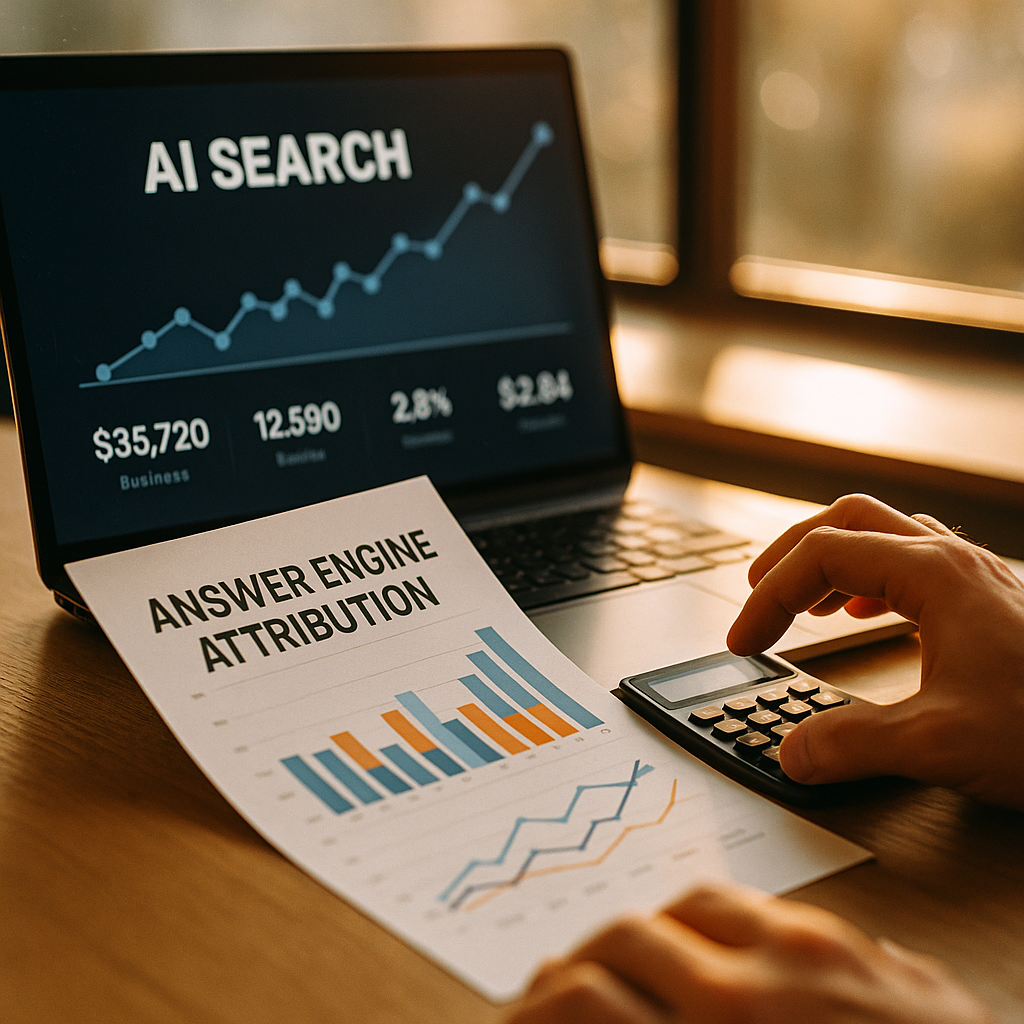
Last-click attribution was already a blunt instrument. Now that answer engine attribution has become a genuine measurement crisis, it is actively misleading executive reporting. Brands are winning discovery moments inside ChatGPT, Perplexity, and Google’s AI Overviews — and their dashboards are showing nothing.
The Discovery Layer Nobody Is Measuring
Here is the problem in plain terms. A consumer asks Perplexity which protein supplement brand is best for endurance athletes. Perplexity synthesizes several sources, cites your brand, and the user clicks through to your site. In most attribution stacks, that visit logs as direct traffic or organic referral, with zero connection to the AI-generated answer that drove it. The discovery moment — the most valuable touchpoint in the funnel — is invisible.
This is not a niche edge case. Statista data shows that AI-assisted search now touches a significant portion of informational queries in key purchase categories. Google’s AI Overviews alone appear on a growing share of commercial intent searches. The referral traffic those surfaces generate often misclassifies in GA4 because the referrer strings are inconsistent or absent entirely.
If your attribution model cannot see the discovery layer, you are making budget allocation decisions based on a map that is missing an entire continent.
The measurement gap compounds fast. Brand teams under-invest in answer engine optimization because they cannot prove its revenue contribution. The contribution shrinks because they under-invest. The CFO defunds the content operation that was quietly generating citations in AI answers. This is the attribution doom loop, and most mid-market brands are already inside it.
Why Last-Click Fails Here Specifically
Last-click attribution was built for a world where the searcher saw your page title in a list, clicked, and bought. Answer engines break every assumption in that model.
First, there may be no click at all. AI Overviews frequently answer the question inline. The user gets what they need, forms a brand impression, and leaves. That zero-click exposure still influences purchase decisions, particularly in high-consideration categories like B2B software, financial products, and health and wellness. Traditional attribution models treat zero-click moments as non-events.
Second, when a click does happen, the referral source is unreliable. ChatGPT, for example, does not always pass structured referral data. Users who follow a link from a ChatGPT conversation may appear in your analytics as direct traffic. Perplexity has improved its referral tagging, but implementation is inconsistent across device types and browsers. Google’s AI Overviews inherit standard organic referral signals, which is slightly better, but still does not distinguish AI-surfaced results from traditional blue-link results.
Third, the path to purchase is longer. Answer engine discovery often sits further up the funnel than branded search or paid click. The conversion window can stretch weeks or months, which means even a multi-touch model with a 30-day lookback window will miss the causal relationship between an AI citation and a downstream sale.
For brands running complex influencer programs, this intersects with an existing attribution challenge. The same incrementality logic that makes Reels attribution and incrementality difficult to capture applies here: mid-funnel and upper-funnel exposures rarely convert in clean, trackable sequences.
Building a Measurement Framework That Actually Works
The fix is not a single tool. It is a layered methodology that combines proxy metrics, controlled testing, and qualitative signal capture.
Layer 1: Referral source segmentation and tagging. Start by cleaning your referral taxonomy. Create a dedicated referral segment in GA4 for known AI engine domains: perplexity.ai, chat.openai.com, claude.ai, and the expanding list of AI-powered browsers and assistants. This is table stakes. It will not capture zero-click impact, but it will stop misclassifying the clicks you do get.
Layer 2: Brand search volume as a proxy signal. AI-generated answers drive brand awareness before they drive direct traffic. Track branded search query volume through Google Search Console as a lagging proxy for answer engine exposure. If you earn a sustained citation run in Perplexity for a high-volume query category, you should see a corresponding lift in branded searches over the following 2-6 weeks. Correlate these curves with your citation monitoring data.
Layer 3: Incrementality testing through geo-suppression. This is the most rigorous option. Identify a query cluster where you have strong answer engine presence. Run a geo-split test, suppressing your optimization efforts in a control market for 8-12 weeks. Measure branded search volume, direct traffic, and conversion rates across test and control. The delta is your best estimate of answer engine’s incremental revenue contribution. Tools like HubSpot’s attribution reporting and dedicated incrementality platforms like Northbeam can support this analysis, though you will need to configure custom source groupings.
Layer 4: Customer surveys and self-reported discovery. Low-tech, underrated. A post-purchase survey asking “How did you first hear about us?” with an explicit “AI search tool” option captures zero-click influence that no analytics platform can. Pipe this into your CRM and weight it in your attribution model. This is exactly the kind of first-party signal that integrating CRM and creator data frameworks are built to accommodate.
Layer 5: Citation monitoring as a leading indicator. Use tools like Profound, Brandwatch, or dedicated AEO (Answer Engine Optimization) platforms that track how frequently your brand and content appear in AI-generated responses. Treat citation share the way you treat share of voice in traditional media: as a leading indicator of future revenue influence, not a direct revenue metric itself.
Reporting This to Finance and Leadership
This is where most attribution work breaks down. You can build a sophisticated measurement stack and still lose the budget conversation because you cannot translate your methodology into language a CFO trusts.
The framing that works: present answer engine attribution as a revenue risk management problem, not a measurement complexity problem. Finance understands risk. The argument is not “we need more budget to measure AI search.” The argument is “we currently have zero visibility into a discovery channel that may be responsible for X% of our unattributed direct traffic, and without measurement we cannot optimize or defend that revenue.”
Use your referral segmentation data to put a floor number on the opportunity. Even conservatively tagged AI referral traffic, multiplied by your average conversion rate and order value, produces a dollar figure. That figure is your minimum defensible estimate of answer engine revenue influence. Call it a conservative floor, not a projection, and finance will engage with it seriously.
This connects to the broader challenge of justifying non-standard ROI to finance — the persuasion model is the same: anchor to revenue risk, show a methodology, present a range rather than a point estimate.
Finance does not need a perfect number. They need evidence that you have a defensible process for arriving at an imperfect one.
What About AI Overviews Specifically?
Google’s AI Overviews deserve separate treatment because they sit inside the world’s highest-volume search surface. Unlike Perplexity or ChatGPT, AI Overviews inherit Google’s referral chain, so clicks to your site from an AI Overview will still log as organic search in most setups. The problem is you cannot distinguish them from traditional organic results without additional signals.
Google Search Console now provides some AI Overview impression and click data in limited rollouts. Monitor this feature closely. Segment by query type: navigational queries are less interesting; informational and commercial investigation queries are where AI Overviews are reshaping discovery patterns most aggressively. If you see a page with high AI Overview impressions but low click-through rates, that is a zero-click exposure candidate and a prime target for your branded search proxy analysis.
For brands running paid search alongside organic, this creates a practical opportunity. Google’s ad platform allows brand keyword bidding that can capture users who encountered your brand in an AI Overview but did not click. The paid brand click becomes an attribution bridge — imperfect, but better than losing the conversion entirely to direct traffic dark matter.
The Operational Shift Required
Solving answer engine attribution is not purely a data problem. It requires organizational change. Someone on your team needs to own citation monitoring the way someone owns keyword rankings. Your content operation needs a pipeline for creating the structured, authoritative content that AI engines prefer to cite. This is a resource question, and it connects directly to how you sequence AI investment against budget constraints.
Consider also that creator-generated content is increasingly being indexed and cited by answer engines. Long-form creator reviews, expert roundups, and in-depth tutorials are appearing in AI-generated answers at a measurable rate. If you are running creator programs, audit which creator content formats are generating AI citations. This adds a new ROI dimension to creator partnerships that most programs are not yet capturing. Platforms that monitor AI citation sources are beginning to flag UGC and creator content as a citation category, which means your UGC ROI measurement framework may need an answer engine layer added.
The gap between brands that build this measurement infrastructure now and those that wait will widen quickly. eMarketer projections consistently show AI-assisted search usage accelerating. Every quarter without a measurement framework is a quarter of budget decisions made on incomplete data.
Start with referral segmentation and a post-purchase survey this quarter. Add citation monitoring in the next 60 days. Run your first geo-incrementality test before your next annual planning cycle. That sequence gives you credible data before you need to defend the channel budget.
FAQs
What is answer engine attribution?
Answer engine attribution refers to the process of measuring and crediting revenue or conversions that were influenced by AI-generated search answers from platforms like ChatGPT, Perplexity, Google AI Overviews, and similar tools. Because these platforms often do not pass standard referral data and frequently deliver zero-click responses, traditional attribution models cannot capture their influence on purchase decisions.
Why does last-click attribution fail for AI-generated search?
Last-click attribution assigns full credit to the final touchpoint before a conversion. AI-generated answers often occur much earlier in the purchase journey, may not generate a tracked click at all, and frequently misclassify as direct traffic when a click does happen. This makes them structurally invisible to last-click models, causing brands to underestimate and underinvest in the channel.
How can brands track traffic from AI search engines like Perplexity or ChatGPT?
Brands should create dedicated referral segments in GA4 for known AI engine domains including perplexity.ai, chat.openai.com, and claude.ai. Additionally, post-purchase surveys with an explicit “AI search tool” discovery option, branded search volume monitoring in Google Search Console, and third-party citation tracking tools like Profound can help capture both direct and zero-click influence.
What is a practical first step for measuring answer engine revenue influence?
The most accessible first step is implementing referral source segmentation in your analytics platform to tag traffic from known AI domains, combined with a post-purchase survey question about discovery channels. These two steps alone will immediately surface data that most brands currently have no visibility into, and they create a baseline for more sophisticated incrementality testing later.
How should brand teams report answer engine attribution to finance?
Frame it as a revenue risk management issue rather than a measurement complexity challenge. Calculate a conservative floor estimate by multiplying conservatively tagged AI referral traffic by your average conversion rate and order value. Present this as the minimum defensible revenue the channel influences, acknowledge the methodology’s limitations, and position improved measurement as a risk mitigation investment rather than a speculative marketing initiative.
Does creator content appear in AI-generated search answers?
Yes. Long-form creator reviews, expert tutorials, and in-depth product comparisons are increasingly being cited by answer engines. Brands running creator programs should audit which content formats generate AI citations, as this adds a measurable ROI dimension to creator partnerships that most programs are not yet capturing in their performance reporting.
Top Influencer Marketing Agencies
The leading agencies shaping influencer marketing in 2026
Agencies ranked by campaign performance, client diversity, platform expertise, proven ROI, industry recognition, and client satisfaction. Assessed through verified case studies, reviews, and industry consultations.
Moburst

-
2

The Shelf
Boutique Beauty & Lifestyle Influencer AgencyA data-driven boutique agency specializing exclusively in beauty, wellness, and lifestyle influencer campaigns on Instagram and TikTok. Best for brands already focused on the beauty/personal care space that need curated, aesthetic-driven content.Clients: Pepsi, The Honest Company, Hims, Elf Cosmetics, Pure LeafVisit The Shelf → -
3

Audiencly
Niche Gaming & Esports Influencer AgencyA specialized agency focused exclusively on gaming and esports creators on YouTube, Twitch, and TikTok. Ideal if your campaign is 100% gaming-focused — from game launches to hardware and esports events.Clients: Epic Games, NordVPN, Ubisoft, Wargaming, Tencent GamesVisit Audiencly → -
4

Viral Nation
Global Influencer Marketing & Talent AgencyA dual talent management and marketing agency with proprietary brand safety tools and a global creator network spanning nano-influencers to celebrities across all major platforms.Clients: Meta, Activision Blizzard, Energizer, Aston Martin, WalmartVisit Viral Nation → -
5

The Influencer Marketing Factory
TikTok, Instagram & YouTube CampaignsA full-service agency with strong TikTok expertise, offering end-to-end campaign management from influencer discovery through performance reporting with a focus on platform-native content.Clients: Google, Snapchat, Universal Music, Bumble, YelpVisit TIMF → -
6

NeoReach
Enterprise Analytics & Influencer CampaignsAn enterprise-focused agency combining managed campaigns with a powerful self-service data platform for influencer search, audience analytics, and attribution modeling.Clients: Amazon, Airbnb, Netflix, Honda, The New York TimesVisit NeoReach → -
7

Ubiquitous
Creator-First Marketing PlatformA tech-driven platform combining self-service tools with managed campaign options, emphasizing speed and scalability for brands managing multiple influencer relationships.Clients: Lyft, Disney, Target, American Eagle, NetflixVisit Ubiquitous → -
8

Obviously
Scalable Enterprise Influencer CampaignsA tech-enabled agency built for high-volume campaigns, coordinating hundreds of creators simultaneously with end-to-end logistics, content rights management, and product seeding.Clients: Google, Ulta Beauty, Converse, AmazonVisit Obviously →