


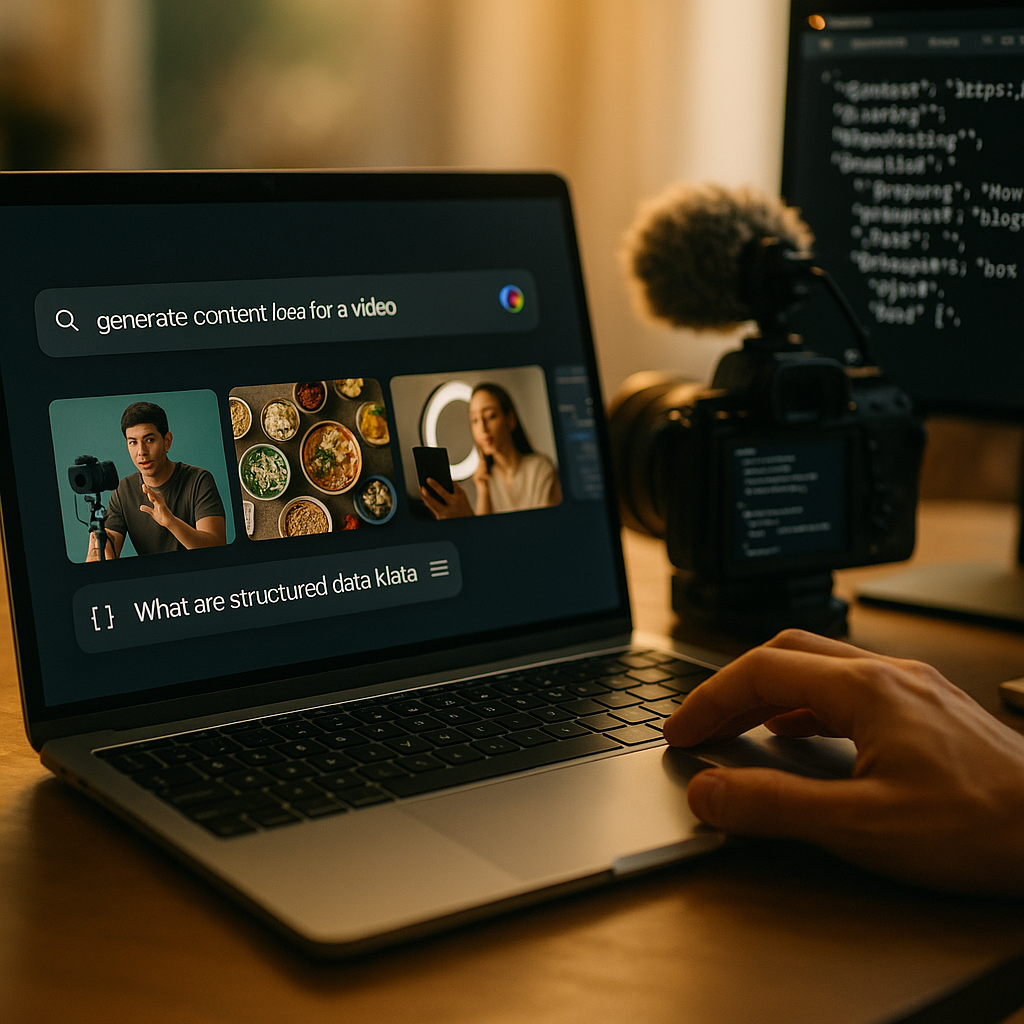
If your creator content isn’t structured for Gemini to read, cite, and monetize, it effectively doesn’t exist in the new search paradigm. Google’s agentic search overhaul is the most significant shift in brand content discoverability since the mobile-first index, and most influencer marketing teams are completely unprepared for it.
What “Agentic Search” Actually Means for Brand Content
Forget ten blue links. Google’s Gemini-powered search now executes multi-step reasoning tasks on behalf of users, pulling product comparisons, creator reviews, and purchase recommendations into synthesized answers without a single click to your site. The agent doesn’t browse. It retrieves, reasons, and responds.
For brand strategists, this changes the fundamental unit of discovery. It’s no longer “does our content rank?” It’s “does our content get cited?” That distinction collapses several assumptions at once: SEO keyword density becomes secondary to factual density. Engagement metrics become less important than structured accessibility. And creator content, historically treated as a paid social asset, is now a potential data source for AI inference engines.
Google’s Gemini now synthesizes creator reviews, product comparisons, and brand mentions into direct answers. If your influencer content isn’t machine-readable, it won’t be cited — and uncited content doesn’t convert in an agentic environment.
The practical implication: brands need to think of every creator deliverable as a structured content artifact, not just a social post. This is a workflow and briefing problem before it’s a technology problem. Our guide on creator brief strategies covers the briefing side, but the technical layer is where most teams are blind.
Structured Data APIs: The New Infrastructure Layer
Google’s rollout of the Knowledge Graph API and the expanded Google Search APIs has created a pathway for brands to push structured product data, creator attribution metadata, and review signals directly into the index. This is not passive SEO. It’s active content infrastructure.
Here’s what this means operationally. When a creator publishes a review video on YouTube or a long-form post on Substack, that content needs to carry schema markup that Google’s agents can parse: Product schema, Review schema, Person schema linking the creator to verified credentials, and ItemList schema for comparison content. Without this markup, Gemini treats the content as unstructured text and either ignores it or, worse, misattributes it.
Several enterprise brands are now appointing “structured content leads” whose sole job is ensuring that creator-generated content is tagged, formatted, and submitted via API before it goes live. This isn’t the creator’s job. It’s a brand-side technical function that sits between the influencer marketing team and the SEO team — a gap that most org charts don’t yet account for.
The tooling ecosystem is catching up. Platforms like Sprout Social and newer AI-native content operations tools are adding schema generation features, but the actual API submission and monitoring workflow requires either in-house engineering resources or a specialized agency partner. For brands running large creator rosters, this is a non-trivial operational investment.
For context on how AI-driven brand visibility is already reshaping marketing stack decisions, the analysis of AI brand value rankings is worth a close read before you spec out your tech requirements.
In-Answer Ad Placements: Where Creator Content Becomes a Bidding Surface
Google’s most commercially significant move is the introduction of sponsored placements within AI-generated answers. These aren’t traditional text ads sitting above organic results. They’re embedded product cards, creator-endorsed recommendations, and comparison modules that appear inside the synthesized response itself.
The implication for influencer programs is direct: creator content that earns citation in organic AI answers can now sit adjacent to, or even integrate with, paid placements from the same brand. This creates a compounding effect where organic creator authority amplifies paid visibility within the same answer block.
Think about what that means for campaign architecture. A creator’s honest review, properly structured and cited by Gemini, can make a brand’s paid in-answer placement more credible. The review functions as social proof inside a Google-controlled UI. That’s a fundamentally new use case for creator content that most influencer contracts don’t address — and most attribution models can’t measure.
Brands running AI search budget strategies already understand the paid-organic interplay in answer engine optimization. The in-answer ad layer adds a bidding dimension that requires close coordination between your paid search team and your creator partnerships team — two groups that rarely share a planning calendar.
The Attribution Model Redesign Problem
Last-click attribution was already broken. Agentic search makes it catastrophically inadequate.
When Gemini synthesizes a product recommendation from three creator reviews, a brand’s owned FAQ page, and a Reddit thread, then serves a paid placement alongside that answer, and the user converts via a voice query on a Nest device — what does your attribution model capture? Probably the last paid click before purchase. Which means your creator content that drove the AI citation gets zero credit, the structured FAQ that informed the synthesis gets zero credit, and your channel-level budget decisions are made on fiction.
The redesign required here is architectural, not cosmetic. Brands need to move toward incrementality testing and media mix modeling (MMM) that treats AI citation volume as a leading indicator — not an afterthought. Tools like eMarketer’s measurement frameworks are beginning to incorporate AI-touchpoint modeling, but most brand-side teams are still using attribution vendors built for a click-based world.
The specific metrics to add to your creator measurement dashboard: citation frequency in AI overviews (trackable via Google Search Console’s AI Snapshot filter), structured data error rates (via the Rich Results Test API), and in-answer impression share for branded queries. These aren’t vanity metrics. They’re leading indicators of conversion influence in a Gemini-first environment.
This connects directly to how you think about splitting budgets between AI search and creator content. The attribution redesign isn’t just a measurement exercise; it’s the input data your budget allocation decisions depend on.
What This Demands from Creator Contracts and Briefing
Most current influencer contracts specify deliverables in terms of platform, format, and posting schedule. They say nothing about structured data rights, metadata requirements, or schema compliance. That’s a gap that creates legal and operational risk as soon as a creator’s content is cited in an AI-generated answer that includes a paid placement.
Brands need contract language that addresses: the right to append schema markup to creator content, the right to submit creator content metadata to search APIs, and clarity on who owns the “citation value” generated when creator content appears in AI answers adjacent to paid placements. The IAB-UK creator contract framework provides a starting point, but it predates the agentic search context and will need updating.
On the briefing side, creators need to understand why factual specificity, proper product naming, and structured review formats (intro, feature assessment, verdict) make their content more likely to earn AI citations. This isn’t asking creators to write for robots. It’s helping them understand that structured content earns more reach in a Gemini-first discovery environment — which serves their audience growth goals too.
The brands winning in agentic search aren’t producing more content. They’re producing more parseable content — structured, factually dense, and technically tagged before it ever goes live.
The Generative AI Opportunity Most Brands Are Missing
There’s a positive-sum dynamic here that pure risk framing misses. Brands that invest in structured creator content infrastructure now are building a citation moat. When Gemini consistently pulls from your creator ecosystem to answer category queries, you earn a form of brand authority that paid search can’t replicate and competitors can’t easily copy.
The brands closest to this today are those already investing in GEO (generative engine optimization), a discipline that maps directly onto the agentic search opportunity. The tactics covered in our piece on getting cited in AI-generated answers apply directly to creator content strategy, not just owned brand content.
The playbook that wins is consistent: structured data done right, creator briefs that drive factual depth, attribution models that credit AI touchpoints, and contracts that protect the brand’s right to operationalize creator content as a machine-readable asset. That combination converts creator investment from a social media line item into a durable discovery infrastructure.
For a comprehensive look at how sequencing your generative AI investment affects overall marketing ROI, that framing is directly applicable to how you prioritize the structured data work against other AI marketing initiatives.
Start this week: audit your top 20 creator deliverables from the last 90 days against Google’s Rich Results requirements, identify which ones have zero schema markup, and use that as the business case for building a structured content workflow into your next creator campaign brief.
FAQs
What is agentic search and how does it affect brand visibility?
Agentic search refers to Google’s Gemini-powered search system that autonomously executes multi-step research and recommendation tasks on behalf of users, synthesizing answers from multiple sources without requiring clicks. For brands, this means visibility is now determined by whether your content is cited in AI-generated answers, not just whether it ranks in traditional search results. Creator content that lacks structured data markup is largely invisible to this system.
How should brands adapt their creator content briefs for Gemini-first discovery?
Briefs should require factual specificity, structured review formats (context, feature assessment, verdict), and accurate product naming conventions. Brands should also brief creators on the importance of these elements for AI discoverability, framing it as audience reach rather than technical compliance. Post-publication, brand-side teams need to append schema markup and submit content metadata via Google’s Search APIs.
What structured data types are most important for creator content in AI search?
The most relevant schema types for creator content are Product schema, Review schema (with proper rating and author markup), Person schema linking creators to verified credentials, and ItemList schema for comparison or roundup content. These allow Gemini’s agents to correctly attribute, parse, and cite creator content within synthesized answers.
How do in-answer ad placements change influencer campaign ROI calculations?
In-answer ad placements create a compounding dynamic where organic creator citations and paid placements can appear within the same AI-generated answer block. This means creator content that earns AI citation amplifies paid ad credibility, and vice versa. ROI calculations need to account for this halo effect, which requires attribution models that can track AI-touchpoint influence rather than relying solely on last-click or platform-reported metrics.
What attribution model changes are required to measure creator content in agentic search?
Brands need to move beyond last-click attribution toward incrementality testing and media mix modeling (MMM) that incorporates AI-specific signals. Key metrics to add include citation frequency in AI Overviews (via Google Search Console), structured data error rates, and in-answer impression share for branded queries. These leading indicators capture creator content’s influence on conversion even when no direct click is tracked.
Do existing influencer contracts need to be updated for agentic search?
Yes. Most current contracts specify platform, format, and posting schedule but don’t address structured data rights, metadata requirements, or schema compliance. Brands should add contract language covering the right to append schema markup, the right to submit content metadata to search APIs, and clarity on how citation value is treated when creator content appears adjacent to paid in-answer placements. Legal review against emerging platform policies is strongly recommended.
Top Influencer Marketing Agencies
The leading agencies shaping influencer marketing in 2026
Agencies ranked by campaign performance, client diversity, platform expertise, proven ROI, industry recognition, and client satisfaction. Assessed through verified case studies, reviews, and industry consultations.
Moburst

-
2

The Shelf
Boutique Beauty & Lifestyle Influencer AgencyA data-driven boutique agency specializing exclusively in beauty, wellness, and lifestyle influencer campaigns on Instagram and TikTok. Best for brands already focused on the beauty/personal care space that need curated, aesthetic-driven content.Clients: Pepsi, The Honest Company, Hims, Elf Cosmetics, Pure LeafVisit The Shelf → -
3

Audiencly
Niche Gaming & Esports Influencer AgencyA specialized agency focused exclusively on gaming and esports creators on YouTube, Twitch, and TikTok. Ideal if your campaign is 100% gaming-focused — from game launches to hardware and esports events.Clients: Epic Games, NordVPN, Ubisoft, Wargaming, Tencent GamesVisit Audiencly → -
4

Viral Nation
Global Influencer Marketing & Talent AgencyA dual talent management and marketing agency with proprietary brand safety tools and a global creator network spanning nano-influencers to celebrities across all major platforms.Clients: Meta, Activision Blizzard, Energizer, Aston Martin, WalmartVisit Viral Nation → -
5

The Influencer Marketing Factory
TikTok, Instagram & YouTube CampaignsA full-service agency with strong TikTok expertise, offering end-to-end campaign management from influencer discovery through performance reporting with a focus on platform-native content.Clients: Google, Snapchat, Universal Music, Bumble, YelpVisit TIMF → -
6

NeoReach
Enterprise Analytics & Influencer CampaignsAn enterprise-focused agency combining managed campaigns with a powerful self-service data platform for influencer search, audience analytics, and attribution modeling.Clients: Amazon, Airbnb, Netflix, Honda, The New York TimesVisit NeoReach → -
7

Ubiquitous
Creator-First Marketing PlatformA tech-driven platform combining self-service tools with managed campaign options, emphasizing speed and scalability for brands managing multiple influencer relationships.Clients: Lyft, Disney, Target, American Eagle, NetflixVisit Ubiquitous → -
8

Obviously
Scalable Enterprise Influencer CampaignsA tech-enabled agency built for high-volume campaigns, coordinating hundreds of creators simultaneously with end-to-end logistics, content rights management, and product seeding.Clients: Google, Ulta Beauty, Converse, AmazonVisit Obviously →