


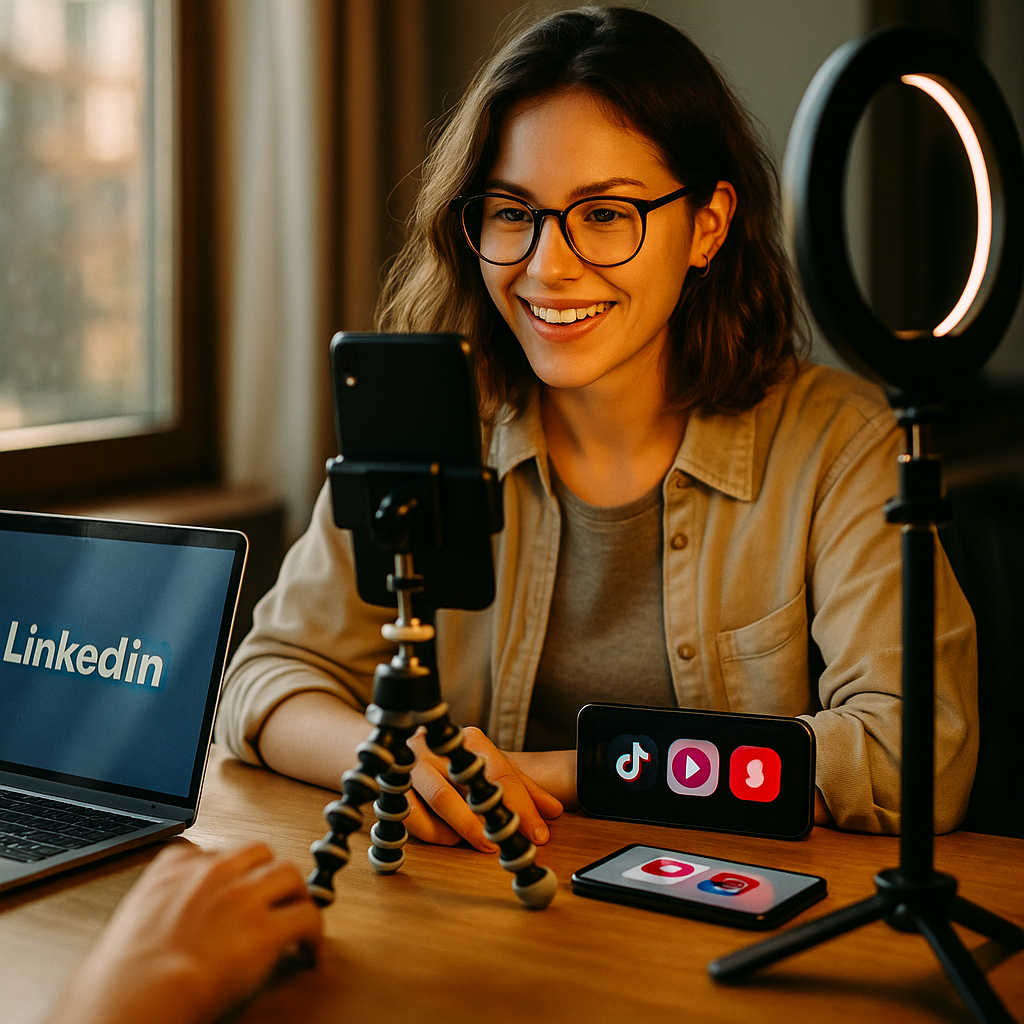
Brands running four separate creator shoots to feed four platforms are burning budget they don’t need to spend. Single-session creator production — one brief, one shoot, four platform-ready asset libraries — is how efficient marketing teams are cutting production costs by 40–60% without sacrificing platform-native creative quality.
Why Most Multi-Platform Briefs Fail Before the Shoot Starts
The instinct is to write one brief, hand it to a creator, and hope the footage travels. It doesn’t. Not because creators can’t perform across formats, but because most briefs are written for a single destination. The hook timing is calibrated for TikTok’s 0.8-second attention window, the CTA phrasing assumes a swipe-up, and the framing locks the creator into a vertical composition that kills any LinkedIn repurpose before editing even begins.
A genuinely platform-agnostic brief isn’t a compromise document. It’s an architectural one. It defines the structural requirements of each output format upfront and then works backward into a shoot plan that captures every layer simultaneously. That’s a fundamentally different creative process from “let’s film it and see what we can cut.”
For a deeper look at how one brief can serve TikTok and Reels, the baseline principles translate directly into this wider framework.
The Four-Output Asset Map: What Each Platform Actually Needs
Before writing a single line of the brief, map the deliverables. Not by platform name, but by technical and behavioral requirements. Here’s what you’re actually building:
- TikTok (15–60 seconds, 9:16): Hook within 0–1.5 seconds. Native caption overlays. Sound-on assumption. Pattern interrupts that reward replays. Algorithm favors completion rate and shares over saves.
- Instagram Reels (15–90 seconds, 9:16): Hook can breathe slightly longer (up to 3 seconds). Cover frame matters for grid visibility. Trending audio or original sound both viable. Explore feed placement rewards visual contrast.
- YouTube Shorts (up to 60 seconds, 9:16): Slightly higher tolerance for information density. Viewers skew toward education and discovery. Subscription prompts perform. Retention past the 30-second mark significantly boosts distribution.
- LinkedIn Video (15–120 seconds, 1:1 or 16:9 with 9:16 supported): Silent autoplay default means text overlays are non-negotiable. Tone shifts from entertainment to professional utility. Hook must establish credibility, not just curiosity. B2B use cases, transformation narratives, and thought leadership framing outperform entertainment-first formats.
Notice that three of the four share the same aspect ratio. That’s your production efficiency leverage point. Shoot everything in 9:16 with a safe-zone framing strategy and you preserve the LinkedIn square crop without reshooting.
Shooting in 9:16 with a centered safe zone that preserves a 1:1 crop isn’t a technical nicety — it’s the difference between a one-day shoot and a four-day production cycle.
Building the Single-Session Brief: Five Structural Layers
A multi-platform brief has five distinct layers. Strip any one of them and the downstream edit becomes a negotiation between what you captured and what you needed.
Layer 1: The Core Narrative Unit. This is the 20–30 second spine of the content. Every platform output derives from it. It must contain: an observable moment (a product in use, a reaction, a transformation), a clear value statement, and a visual payoff. Keep it tight enough that it works as a standalone Short, and expansive enough that you can cut a 90-second Reel around it.
Layer 2: The Hook Variants. Brief the creator on three hook executions of the same opening beat: a curiosity hook (“You’re losing money if you still do this…”), a visual hook (start mid-action, no setup), and a direct-address hook (“If you work in [industry], watch this”). Each takes 90 seconds to shoot. Each unlocks a different platform-audience match. Strong hook design for short-form video is the single biggest lever on completion rate — brief it deliberately, not as an afterthought.
Layer 3: B-Roll Coverage Map. List the specific B-roll shots required for each platform’s editing style. TikTok edits benefit from rapid-cut texture shots (hands, product close-ups, environment). LinkedIn video benefits from wide shots that establish context. YouTube Shorts editing can carry slightly slower B-roll transitions. Pre-specifying 8–12 B-roll targets on the brief means your editor isn’t improvising in the cut.
Layer 4: Audio and Caption Strategy. Record a clean isolated vocal track, always. Background music is a post-production decision, not a shoot decision. For LinkedIn, caption overlays are mandatory — build them into the brief as production assets, not accessibility add-ons. Tools like CapCut and Descript handle automated captioning, but the editorial positioning of each text overlay should come from the brief, not the editor’s discretion.
Layer 5: The Platform-Specific Tail. The last 5–10 seconds of each asset should be platform-native. For TikTok: a comment-bait close (“Comment ‘yes’ if this happened to you”). For Reels: a save-prompt close (“Save this before you brief your next campaign”). For Shorts: a subscription prompt or next-video tease. For LinkedIn: a credibility close with a professional CTA or discussion prompt. These are not interchangeable. Brief them separately and shoot them in sequence at the end of the session.
Creative Direction on the Day
The brief is the architecture. Creative direction on the day is the execution layer, and it’s where multi-platform production either holds together or collapses.
Start with the LinkedIn version. Counterintuitive, but strategically sound. LinkedIn’s format demands the most considered performance: slower pacing, deliberate framing, professional register. Shooting it first, while the creator is fresh and the lighting is precise, gives you the highest-quality foundational footage. Then open the energy. TikTok needs urgency and spontaneity — you’ll get better performance from a creator who has already warmed up in the space.
Use a two-camera setup where budget allows. One locked-off wide in 9:16 capturing safe-zone framing for all platforms. One handheld tight, capturing reaction shots, close-ups, and the kinetic texture that short-form platforms reward. This is not a luxury production spec. It’s a 40-minute setup that doubles your edit options.
Check the multi-platform shoot brief framework for a structured template that maps camera direction to platform outputs in a single production document.
Post-Production: The Asset Matrix
Every single-session shoot should produce a defined asset matrix before the editor opens the timeline. A basic four-platform matrix from one session might look like this: three hook variants (one per TikTok, Reels, Shorts) sharing the same core narrative unit, one LinkedIn version with reframed close and caption overlays, and two “pure repurpose” cuts (one combining hook variant 2 with core narrative for Reels, one combining hook variant 3 with a slightly longer tail for YouTube Shorts). That’s seven platform-ready assets from a single 90-minute shoot.
The editing brief matters as much as the production brief. Specify output specs per platform: Meta’s recommended specs for Reels, YouTube’s technical guidelines for Shorts, and LinkedIn’s video best practices should all be referenced in the editing brief. Your editor shouldn’t be Googling specs mid-project.
For teams scaling this into a repeatable pipeline, UGC repurposing pipelines offer a framework for turning this single-session model into a systematic content operation across owned, paid, and social channels.
Seven platform-ready assets from a 90-minute creator session isn’t a production hack — it’s what systematic creative direction looks like when the brief is built for distribution, not just creation.
Platform Tonal Calibration: The Frequently Skipped Step
The footage is the same. The tone is not. A product demonstration that works on TikTok because of its irreverent caption overlay will land flat on LinkedIn if you use the same copy. Tonal calibration happens in three places: the creator’s delivery cues in the brief, the caption and overlay copy, and the thumbnail or cover frame selection.
Brief tonal shifts explicitly. For TikTok: colloquial, fast, self-aware. For Reels: aspirational with a slightly warmer register. For Shorts: direct and educational. For LinkedIn: authoritative without being stiff. These aren’t personality transplants — they’re register shifts that a skilled creator executes naturally if the brief tells them what you need.
For paid amplification scenarios, tonal calibration becomes even more critical. Briefs optimized for paid amplification require a tighter performance register that holds up under cold-audience conditions, not just warm organic reach.
Budget and ROI Framework
The operational case is straightforward. According to Statista, brands allocate an average of 25–30% of influencer budgets to production and creative development. Single-session multi-platform production cuts that allocation significantly — typically replacing three to four separate production days with one structured session that costs 20–30% more than a standard single-platform shoot but delivers 300–400% more usable assets.
The ROI isn’t just production cost reduction. It’s consistency of narrative across platforms, compressed time-to-market, and the ability to A/B test hook variants across platforms simultaneously without a second creator engagement. For modular briefs designed for A/B testing, the single-session model creates natural variant sets without additional creator fees.
If you’re running multi-platform influencer programs at any meaningful scale, the next brief you write should include a platform asset map as the first section. Build the distribution architecture before you write a single creative directive, and the shoot will produce what you actually need.
Frequently Asked Questions
How long should a single creator session be to capture content for four platforms?
A well-structured session runs 90 minutes to 3 hours depending on the number of hook variants, B-roll targets, and platform-specific tails required. The brief should include a shot list with time allocations. Sessions longer than 3 hours tend to produce diminishing creative returns as creator energy drops.
Do creators need different performance styles for each platform, or is one take sufficient?
Different delivery registers are required, but they don’t need to be entirely separate performances. Brief three to four energy variations on the same core narrative — typically a TikTok-native take (fast, colloquial), a Reels take (warm, aspirational), and a LinkedIn take (measured, professional). YouTube Shorts usually works well with the TikTok or Reels footage, recut. Most experienced creators can shift registers within a single session when the brief is explicit about what each platform demands.
What aspect ratio should be used as the primary capture format?
Shoot primarily in 9:16 (vertical) with a centered safe zone that preserves a usable 1:1 crop for LinkedIn. This covers TikTok, Reels, and Shorts natively while keeping LinkedIn options open. If your shoot budget allows a second camera, use a 16:9 wide for LinkedIn B-roll and repurposing into display or connected TV placements.
How do you handle platform-specific CTAs when shooting all platforms in one session?
Shoot platform-specific tail sequences at the end of the main session. These are typically 5–10 second segments — a comment-bait close for TikTok, a save prompt for Reels, a subscription hook for Shorts, and a professional CTA or discussion prompt for LinkedIn. These short sequences take 15–20 minutes total to capture and are essential for platform-native performance. Do not use a single generic CTA across all outputs.
What editing tools work best for producing multi-platform assets from one shoot?
CapCut handles platform-specific export specs and caption overlays efficiently for TikTok and Reels. Descript is strong for caption editing and audio cleanup. Adobe Premiere Pro or DaVinci Resolve are preferred for professional multi-format export workflows where you need precise aspect ratio control. For teams scaling production, tools like Canva’s video editor or Spline can accelerate thumbnail and cover frame production for each platform variant.
Top Influencer Marketing Agencies
The leading agencies shaping influencer marketing in 2026
Agencies ranked by campaign performance, client diversity, platform expertise, proven ROI, industry recognition, and client satisfaction. Assessed through verified case studies, reviews, and industry consultations.
Moburst

-
2

The Shelf
Boutique Beauty & Lifestyle Influencer AgencyA data-driven boutique agency specializing exclusively in beauty, wellness, and lifestyle influencer campaigns on Instagram and TikTok. Best for brands already focused on the beauty/personal care space that need curated, aesthetic-driven content.Clients: Pepsi, The Honest Company, Hims, Elf Cosmetics, Pure LeafVisit The Shelf → -
3

Audiencly
Niche Gaming & Esports Influencer AgencyA specialized agency focused exclusively on gaming and esports creators on YouTube, Twitch, and TikTok. Ideal if your campaign is 100% gaming-focused — from game launches to hardware and esports events.Clients: Epic Games, NordVPN, Ubisoft, Wargaming, Tencent GamesVisit Audiencly → -
4

Viral Nation
Global Influencer Marketing & Talent AgencyA dual talent management and marketing agency with proprietary brand safety tools and a global creator network spanning nano-influencers to celebrities across all major platforms.Clients: Meta, Activision Blizzard, Energizer, Aston Martin, WalmartVisit Viral Nation → -
5

The Influencer Marketing Factory
TikTok, Instagram & YouTube CampaignsA full-service agency with strong TikTok expertise, offering end-to-end campaign management from influencer discovery through performance reporting with a focus on platform-native content.Clients: Google, Snapchat, Universal Music, Bumble, YelpVisit TIMF → -
6

NeoReach
Enterprise Analytics & Influencer CampaignsAn enterprise-focused agency combining managed campaigns with a powerful self-service data platform for influencer search, audience analytics, and attribution modeling.Clients: Amazon, Airbnb, Netflix, Honda, The New York TimesVisit NeoReach → -
7

Ubiquitous
Creator-First Marketing PlatformA tech-driven platform combining self-service tools with managed campaign options, emphasizing speed and scalability for brands managing multiple influencer relationships.Clients: Lyft, Disney, Target, American Eagle, NetflixVisit Ubiquitous → -
8

Obviously
Scalable Enterprise Influencer CampaignsA tech-enabled agency built for high-volume campaigns, coordinating hundreds of creators simultaneously with end-to-end logistics, content rights management, and product seeding.Clients: Google, Ulta Beauty, Converse, AmazonVisit Obviously →