


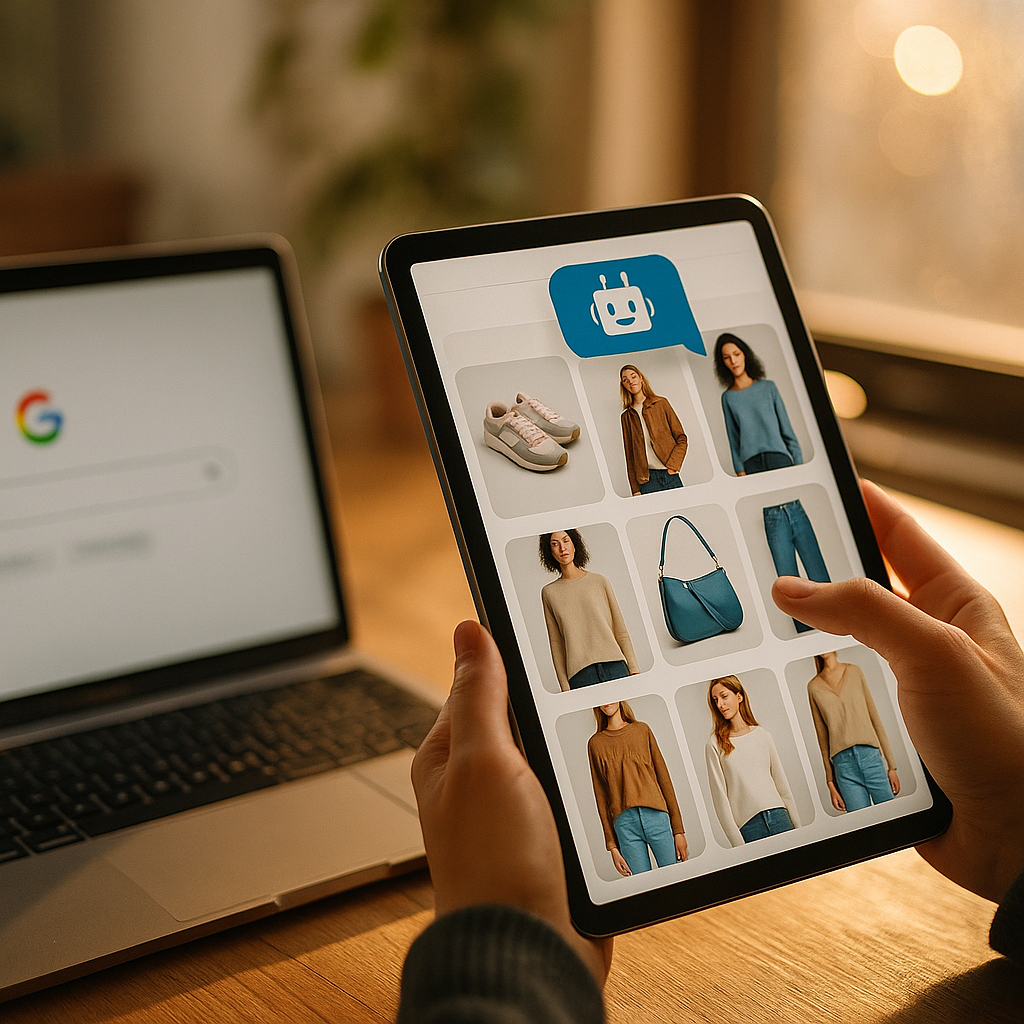
Roughly 40% of consumers now begin product research inside an AI chat interface rather than a search engine. If your brand isn’t structured for generative search visibility, you’re not losing clicks — you’re losing consideration entirely, before a buyer ever reaches your site.
The New Gatekeepers Aren’t Algorithms. They’re Language Models.
Traditional SEO was about ranking. Generative search is about citation. ChatGPT, Gemini, and Grok don’t serve a list of blue links — they synthesize a recommendation, sometimes with a single brand named, sometimes with three. If your brand isn’t in that synthesis, no amount of paid search spend recovers the lost intent.
The brands winning in this environment aren’t necessarily those with the highest domain authority. They’re the ones whose content is structured in a way that LLMs can parse, attribute, and confidently repeat. That distinction matters operationally, because it shifts the investment from link acquisition toward information architecture, creator brief design, and metadata hygiene.
For a deeper grounding on how LLMs select which sources to cite, the LLM citation optimization framework is worth your team’s time before you restructure anything.
How LLMs Actually Select Shopping Recommendations
LLMs don’t crawl in real time (with limited exceptions like Grok’s live X integration and Gemini’s Google Search grounding). They surface brands based on patterns in their training data, reinforced by retrieval-augmented generation (RAG) pipelines that pull current web content. This means two things work in parallel: your historical content footprint, and what’s crawlable and structured right now.
When a user asks “what’s the best protein powder for endurance athletes,” the model pulls from product reviews, editorial roundups, Reddit threads, creator content, and brand pages. It then synthesizes based on frequency of mention, consistency of claims, and source authority. Your job is to appear across multiple credible surfaces making the same coherent claim about your product.
LLMs weight consistency over volume. A brand mentioned 50 times with contradictory descriptions performs worse in recommendation outputs than a brand mentioned 20 times with precise, repeated positioning across independent sources.
This is why creator briefs matter more than most brand teams realize. The language a creator uses to describe your product becomes training signal. Vague briefs produce vague descriptions, which produce weak citation patterns.
Structuring Creator Content for LLM Discoverability
Start at the brief level. Every creator brief should include a “language specification” section: three to five specific phrases that describe the product’s core benefit, use case, and differentiator. Not marketing copy — functional descriptors. “Dissolves in cold water,” “third-party tested for heavy metals,” “designed for postpartum recovery” are the kinds of phrases LLMs match against specific user queries.
Require creators to publish long-form content alongside short-form. A 90-second TikTok is not crawlable in a way that feeds LLM citation pipelines. A 600-word YouTube description, a Substack post, or a linked blog review is. The short-form drives attention; the long-form earns citation. Budget for both.
Ensure creator content includes:
- Product name + category + use case in the first 100 words of any written piece
- Specific claims that match language on your own product pages (consistency signals authority)
- Attribution signals: author bio with relevant expertise, publication date, and a link back to the product page
- Structured headings that mirror common user query formats (“Is [Product] good for X?”)
For brands running at scale, the LLM-compatible creator brief model offers a practical template for encoding this into your existing brief workflow without adding friction for creators.
Product Pages That Earn Citation
Your product page is your primary citation asset. Most are not built for it.
LLMs extract structured meaning from pages. That means your product page needs: a clear H1 that states product name, category, and primary benefit; a features section with discrete, scannable claims; an FAQ section (yes, directly on the product page) that mirrors real user questions; and schema markup, particularly Schema.org Product, Review, and FAQPage types.
The FAQ section deserves special attention. When Gemini or ChatGPT encounters a question like “does [Brand X] protein powder work for lactose intolerant people?”, a well-structured FAQ block on your product page that directly answers that question is one of the highest-probability citation sources available to you. Write the FAQ as if answering the LLM directly, because functionally, you are.
Also audit your metadata. Title tags and meta descriptions remain relevant not just for traditional crawlers but because they appear in RAG source previews. A meta description that states your product’s key differentiator in plain language outperforms a vague brand tagline every time.
For the metadata standards that apply specifically to creator partnerships, the GEO content metadata standards guide covers the technical spec your team should be building against.
The Third-Party Credibility Layer
LLMs are trained to weight independent sources above brand-owned content. This isn’t a problem to solve; it’s a distribution challenge to design around.
Build a deliberate presence on the surfaces LLMs trust: Reddit threads where real users discuss your category, editorial review sites (Wirecutter, Healthline, CNET depending on your vertical), and creator-owned platforms like Substack and independent blogs. You cannot control what’s said there, but you can seed the conversation through earned media, product seeding programs, and transparent creator partnerships.
One operational point most teams miss: ensure your product is discussed consistently across these surfaces using the same product name and variant naming convention you use on your own site. LLMs match strings. If your site calls it “Recover Pro Chocolate 2lb” but a creator calls it “the chocolate recovery powder from [Brand],” you’re splitting citation weight across two entities that the model may not resolve as the same product.
Naming consistency across owned, earned, and creator surfaces is a low-effort, high-impact fix that most brands overlook entirely when building their generative search presence.
For brands building out their broader AI shopping recommendations strategy, there’s an important interplay between GEO positioning and how budget allocation shifts when AI becomes the primary discovery layer.
Measurement: What Signals Tell You It’s Working
Direct attribution for generative search visibility is still maturing. Tools like Semrush and Ahrefs have begun tracking AI Overview appearances; dedicated LLM visibility tools like Profound and Otterly.AI are worth evaluating. But the proxy metrics available now are still useful.
Track branded search volume as a leading indicator. When LLMs name your brand in recommendation outputs, users who weren’t previously aware will search for you directly. A rising branded search trend without a corresponding paid brand spend increase is a reasonable proxy for generative visibility gains.
Monitor your presence in AI-generated roundups manually. Run weekly queries relevant to your category across ChatGPT, Gemini, and Grok. Document whether your brand appears, what language surrounds it, and which competitor brands consistently appear alongside you. This is qualitative intelligence, but it’s actionable.
Connect this to your influencer program. Creators who produce structured, long-form content with LLM-optimized descriptions contribute measurably to your citation footprint over time. Factor this into influencer budget allocation decisions, particularly when evaluating the long-tail value of evergreen creator content versus campaign-burst content.
The creator content SEO and GEO checklist gives your team a repeatable audit framework to score existing and new creator content against LLM discoverability criteria before it publishes.
Start this week: audit your top five product pages against the citation criteria above, run your three most important category queries in ChatGPT and Gemini, and document what brand language appears. That gap analysis is your generative search roadmap.
FAQs
What is generative search visibility and why does it matter for brands?
Generative search visibility refers to how often and how accurately your brand is surfaced in AI-generated responses from tools like ChatGPT, Gemini, and Grok. It matters because a growing share of product research now begins inside AI chat interfaces. If your brand isn’t structured to be cited by these models, you’re absent from the consideration set before a buyer ever reaches a search engine or your website.
How do LLMs like ChatGPT decide which brands to recommend in shopping queries?
LLMs synthesize recommendations based on patterns across their training data and, where applicable, real-time retrieval. They weight brands that appear frequently, consistently, and across multiple credible sources, including product pages, editorial reviews, creator content, and community platforms like Reddit. Brands with contradictory or vague descriptions across sources perform worse in recommendation outputs than brands with precise, repeated positioning.
What schema markup should product pages use to improve LLM citation?
At minimum, product pages should implement Schema.org Product schema (including name, description, brand, and offers), Review or AggregateRating schema, and FAQPage schema for question-and-answer sections. These structured data types improve how crawlers and RAG pipelines extract and attribute your product information, increasing the likelihood that an LLM cites your page accurately.
How should creator briefs change to support generative search goals?
Creator briefs should include a language specification section with three to five specific functional descriptors of the product. These should match the language used on your product pages. Require creators to produce long-form written content alongside short-form video, since written content is crawlable and feeds LLM citation pipelines. Enforce consistent product naming so the model can resolve all mentions to the same entity.
How can brands measure their generative search visibility?
Direct attribution is still evolving, but useful approaches include monitoring branded search volume trends (which rise when LLMs name your brand to new audiences), manually running category queries in ChatGPT, Gemini, and Grok to track brand appearance, and using tools like Semrush AI Overview tracking, Profound, or Otterly.AI for more systematic LLM mention monitoring. Treat these as directional signals while the measurement ecosystem matures.
Top Influencer Marketing Agencies
The leading agencies shaping influencer marketing in 2026
Agencies ranked by campaign performance, client diversity, platform expertise, proven ROI, industry recognition, and client satisfaction. Assessed through verified case studies, reviews, and industry consultations.
Moburst

-
2

The Shelf
Boutique Beauty & Lifestyle Influencer AgencyA data-driven boutique agency specializing exclusively in beauty, wellness, and lifestyle influencer campaigns on Instagram and TikTok. Best for brands already focused on the beauty/personal care space that need curated, aesthetic-driven content.Clients: Pepsi, The Honest Company, Hims, Elf Cosmetics, Pure LeafVisit The Shelf → -
3

Audiencly
Niche Gaming & Esports Influencer AgencyA specialized agency focused exclusively on gaming and esports creators on YouTube, Twitch, and TikTok. Ideal if your campaign is 100% gaming-focused — from game launches to hardware and esports events.Clients: Epic Games, NordVPN, Ubisoft, Wargaming, Tencent GamesVisit Audiencly → -
4

Viral Nation
Global Influencer Marketing & Talent AgencyA dual talent management and marketing agency with proprietary brand safety tools and a global creator network spanning nano-influencers to celebrities across all major platforms.Clients: Meta, Activision Blizzard, Energizer, Aston Martin, WalmartVisit Viral Nation → -
5

The Influencer Marketing Factory
TikTok, Instagram & YouTube CampaignsA full-service agency with strong TikTok expertise, offering end-to-end campaign management from influencer discovery through performance reporting with a focus on platform-native content.Clients: Google, Snapchat, Universal Music, Bumble, YelpVisit TIMF → -
6

NeoReach
Enterprise Analytics & Influencer CampaignsAn enterprise-focused agency combining managed campaigns with a powerful self-service data platform for influencer search, audience analytics, and attribution modeling.Clients: Amazon, Airbnb, Netflix, Honda, The New York TimesVisit NeoReach → -
7

Ubiquitous
Creator-First Marketing PlatformA tech-driven platform combining self-service tools with managed campaign options, emphasizing speed and scalability for brands managing multiple influencer relationships.Clients: Lyft, Disney, Target, American Eagle, NetflixVisit Ubiquitous → -
8

Obviously
Scalable Enterprise Influencer CampaignsA tech-enabled agency built for high-volume campaigns, coordinating hundreds of creators simultaneously with end-to-end logistics, content rights management, and product seeding.Clients: Google, Ulta Beauty, Converse, AmazonVisit Obviously →