


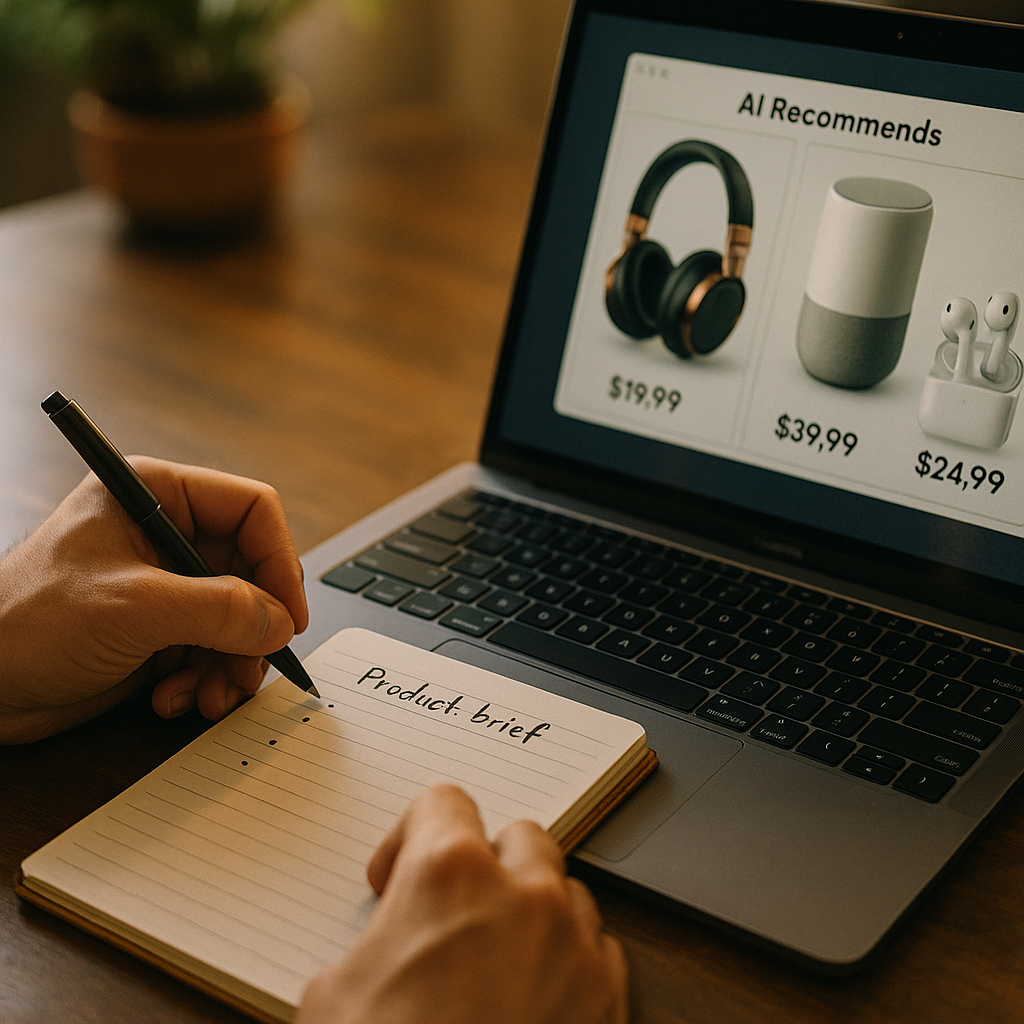
When a consumer asks ChatGPT or Perplexity to recommend the best protein powder or skincare routine, whose content gets cited? Not ad copy. Not brand landing pages. Increasingly, it’s creator-produced reviews with deep authority signals — and most brands are completely unprepared to engineer that outcome. Understanding the creator-trust-to-AI-citation pipeline is now a core competitive capability.
Why LLMs Cite Some Creator Content and Ignore Everything Else
Large language models don’t rank content the way Google’s PageRank does. They synthesize from sources that consistently demonstrate expertise, corroboration across multiple independent voices, and structural signals that make claims easy to extract and verify. A creator who posts a 30-second reel saying “this moisturizer is amazing” contributes almost nothing to that equation. A creator who publishes a 1,200-word structured review with ingredient analysis, before/after documentation, and first-person testing methodology? That’s a different category entirely.
AI search-optimized content from creators needs to satisfy the same EEAT signals that Google’s Quality Rater Guidelines demand — but with the additional requirement that claims be extractable as discrete, citable facts. LLMs are essentially pattern-matching on what looks like trustworthy expert testimony at scale.
The implication for brand strategy is uncomfortable: you need creators who can write or produce with something close to journalistic discipline, and you need to brief them specifically to do so.
The Trust Architecture LLMs Actually Reward
Before you can brief creators effectively, you need to understand what authority signals LLMs weight. There are four that matter most in the context of product recommendations:
- Longitudinal credibility: Creators who have published consistently in a vertical for 12-plus months are treated as domain voices. A single review, however thorough, carries less signal weight than a body of work.
- Specificity of claim: Vague endorsements (“I love this product”) are invisible to citation engines. Specific, falsifiable claims (“After 8 weeks of daily use, my skin barrier measurably improved based on transepidermal water loss testing”) are citable.
- Cross-platform corroboration: When the same creator’s assessment appears in a YouTube video, a written blog post, and a Reddit thread (or is referenced by other creators), the citation probability increases significantly. LLMs weight corroborated claims more heavily.
- Structural formatting: Headers, numbered comparisons, explicit pros/cons sections, and clear conclusion statements make content easy for LLMs to parse and extract. Unstructured prose is harder to surface.
LLMs don’t reward enthusiasm. They reward specificity, structure, and a demonstrable track record of expertise in a defined topic area. Brands that brief for virality are optimizing for the wrong variable entirely.
For more on what actually drives trust-based ROI from creator programs, the analysis on creator trust signals and ROI breaks down the measurable components in useful detail.
Briefing for Citation, Not Just Coverage
Most creator briefs are written to produce social content. They specify posting schedule, hashtags, disclosure language, and brand messaging. That’s fine for reach-based campaigns. It’s completely insufficient if you want LLM citations.
A brief designed to produce citable content has a different architecture. Here’s what needs to change:
Require a long-form anchor asset. Every campaign should include at minimum one piece of long-form content per creator: a blog post, a YouTube video with a detailed written description, or a Substack-style newsletter entry. Short-form content can amplify, but LLMs need something substantive to cite. The anchor asset is the citation target.
Provide a claims framework, not talking points. Give creators a structured set of verifiable claims about your product — clinical data, comparison benchmarks, ingredient specifics, manufacturing details. Don’t tell them what to say. Give them the raw material for specificity. Let them form their own conclusions. That authenticity is precisely what makes the content citable versus promotional.
Build in the testing period. A review written after three days of use signals shallow authority. Brief your long-term creator partners for 4-to-8-week testing windows before publishing the anchor asset. This produces the longitudinal first-person data that LLMs treat as genuine expert testimony.
Structure the output explicitly. Brief creators to include a clear product verdict, a structured comparison to alternatives they’ve personally used, and an explicit methodology section explaining how they tested. This isn’t asking them to write academic papers — it’s asking for the kind of rigor that makes their content more trustworthy to both human readers and AI systems simultaneously.
If you’re managing this at scale, the operational frameworks in scaling creator briefs without losing brand voice are directly applicable here.
Long-Term Partners Are the Only Viable Vehicle
You can’t build AI citation equity with campaign-based creator relationships. Full stop.
The longitudinal credibility signal that LLMs weight requires a creator to have published multiple pieces of content in your product category over time. A creator who reviews your protein supplement in January and your competitor’s in March is sending a mixed authority signal. A creator who has spent 18 months building a body of work around sports nutrition — including multiple reviews of your product at different stages — is generating the kind of consistent domain voice that citation engines recognize.
This is why the strategic case for long-term creator partnerships extends well beyond traditional authenticity arguments. It’s now a GEO (Generative Engine Optimization) asset-building strategy. The creator’s accumulated body of work becomes a citation infrastructure for your brand in AI-answered queries.
The practical implication: when selecting long-term partners, evaluate their existing publishing history in your category. A creator with 60 pieces of substantive content on skincare is a better GEO asset candidate than a creator with 500k followers and no topical depth. eMarketer research consistently shows that topical depth outperforms raw audience size for downstream conversion in search-influenced purchase paths.
Cross-Platform Corroboration as a Deliberate Strategy
Brands that understand the citation pipeline will start engineering corroboration deliberately. This means briefing the same creator to publish the same core assessment across multiple formats and platforms — a YouTube demonstration, a written review on their blog or Substack, a Reddit AMA or comment thread contribution, and a Pinterest pin with structured product data.
It also means building a creator ecosystem where multiple voices independently arrive at similar conclusions. When three credible, topically-authoritative creators produce separate, genuine reviews of the same product and reach comparable verdicts, the corroboration signal to LLMs is significant. Ecosystem architecture for brands covers the structural design of these multi-creator networks in depth.
The compliance note: “independent” means independent. These creators need to genuinely test the product and form their own assessments. Coordinating messaging to manufacture false corroboration isn’t just ethically problematic — it’s a pattern that LLMs are increasingly capable of detecting, and it risks FTC disclosure violations if not handled with rigorous transparency.
Measuring Whether It’s Working
Attribution here is genuinely hard, but not impossible. The operational approach is to run monthly prompt audits: query ChatGPT, Perplexity, Google’s AI Overviews, and Bing Copilot with your target category queries (“best collagen supplement for women over 40,” “most effective beard oil for sensitive skin”) and track which creators and which pieces of content appear as citations or references.
Build a citation share metric: what percentage of AI-answered queries in your category reference content produced by your creator partners versus competitors’ creators? This is your GEO health score. Track it quarterly and tie it back to your creator brief standards. For the broader attribution methodology, answer engine attribution provides a practical measurement framework.
Citation share in LLM responses is emerging as a leading indicator of brand consideration — it surfaces before click-through data does, and it reflects genuine authority accumulation rather than paid placement.
As LLM-influenced purchase decisions become more prevalent (researchers at Statista project continued growth in AI-assisted product discovery), the brands that have systematically invested in creator authority infrastructure will have durable competitive advantages that can’t be bought with a single campaign.
The GEO budget case for building this capability is increasingly straightforward to make to finance leadership. If you haven’t yet modeled it, the framework in making the GEO case to your CFO is worth reviewing before your next planning cycle.
Your immediate next step: Audit your top five long-term creator partners right now. Do their bodies of work include long-form anchor assets with specific, extractable claims about your product category? If not, your next brief cycle needs to correct that before your competitors’ creator programs get cited in every AI recommendation query you care about.
Frequently Asked Questions
What is the creator-trust-to-AI-citation pipeline?
It refers to the process by which creator-produced content — reviews, demonstrations, comparisons — accumulates enough authority signals (specificity, topical depth, cross-platform corroboration) that large language models like ChatGPT and Perplexity cite it when answering product recommendation queries. Brands can deliberately engineer this outcome through strategic creator briefing.
Which types of creator content are most likely to be cited by LLMs?
Long-form, structured content with specific and verifiable claims performs best. This includes detailed written reviews with methodology sections, YouTube demonstrations with comprehensive written descriptions, and comparison content that explicitly evaluates alternatives. Short-form social posts rarely generate citations because they lack the extractable specificity that LLMs require.
How do brands brief creators differently for AI citation versus traditional campaigns?
Briefs for AI citation require: a long-form anchor asset (not just social posts), a claims framework built on verifiable product data, a testing window of 4-8 weeks before publication, and explicit structural requirements such as a verdict section, methodology explanation, and competitive comparison. The goal is to equip creators to produce genuine expert testimony, not promotional talking points.
Why do long-term creator partnerships matter more than one-off campaigns for this strategy?
LLMs weight longitudinal credibility heavily. A creator who has published consistently on a topic for 12-plus months is treated as a domain authority. A single review, however well-structured, carries less citation weight than a body of work. Long-term partnerships allow brands to build that accumulated authority infrastructure over time, which one-off campaigns cannot replicate.
How can brands measure whether their creator content is being cited by AI systems?
Run regular prompt audits across ChatGPT, Perplexity, Google AI Overviews, and Bing Copilot using target category queries. Track which creator assets appear as citations or references, and build a “citation share” metric — the percentage of relevant AI-answered queries that reference your creator partners’ content versus competitors’. Track this quarterly and use it to refine your briefing standards.
Does engineering AI citations risk FTC compliance issues?
Only if done irresponsibly. Brands must ensure creators genuinely test products, form independent assessments, and disclose the commercial relationship transparently. Coordinating false corroboration or suppressing negative findings creates both FTC disclosure risk and a pattern LLMs can increasingly detect. Authentic independent reviews, properly disclosed, are both compliant and more credible to citation algorithms.
Top Influencer Marketing Agencies
The leading agencies shaping influencer marketing in 2026
Agencies ranked by campaign performance, client diversity, platform expertise, proven ROI, industry recognition, and client satisfaction. Assessed through verified case studies, reviews, and industry consultations.
Moburst

-
2

The Shelf
Boutique Beauty & Lifestyle Influencer AgencyA data-driven boutique agency specializing exclusively in beauty, wellness, and lifestyle influencer campaigns on Instagram and TikTok. Best for brands already focused on the beauty/personal care space that need curated, aesthetic-driven content.Clients: Pepsi, The Honest Company, Hims, Elf Cosmetics, Pure LeafVisit The Shelf → -
3

Audiencly
Niche Gaming & Esports Influencer AgencyA specialized agency focused exclusively on gaming and esports creators on YouTube, Twitch, and TikTok. Ideal if your campaign is 100% gaming-focused — from game launches to hardware and esports events.Clients: Epic Games, NordVPN, Ubisoft, Wargaming, Tencent GamesVisit Audiencly → -
4

Viral Nation
Global Influencer Marketing & Talent AgencyA dual talent management and marketing agency with proprietary brand safety tools and a global creator network spanning nano-influencers to celebrities across all major platforms.Clients: Meta, Activision Blizzard, Energizer, Aston Martin, WalmartVisit Viral Nation → -
5

The Influencer Marketing Factory
TikTok, Instagram & YouTube CampaignsA full-service agency with strong TikTok expertise, offering end-to-end campaign management from influencer discovery through performance reporting with a focus on platform-native content.Clients: Google, Snapchat, Universal Music, Bumble, YelpVisit TIMF → -
6

NeoReach
Enterprise Analytics & Influencer CampaignsAn enterprise-focused agency combining managed campaigns with a powerful self-service data platform for influencer search, audience analytics, and attribution modeling.Clients: Amazon, Airbnb, Netflix, Honda, The New York TimesVisit NeoReach → -
7

Ubiquitous
Creator-First Marketing PlatformA tech-driven platform combining self-service tools with managed campaign options, emphasizing speed and scalability for brands managing multiple influencer relationships.Clients: Lyft, Disney, Target, American Eagle, NetflixVisit Ubiquitous → -
8

Obviously
Scalable Enterprise Influencer CampaignsA tech-enabled agency built for high-volume campaigns, coordinating hundreds of creators simultaneously with end-to-end logistics, content rights management, and product seeding.Clients: Google, Ulta Beauty, Converse, AmazonVisit Obviously →