


Your Brand Is Already on TikTok Shop. Is It Actually Yours?
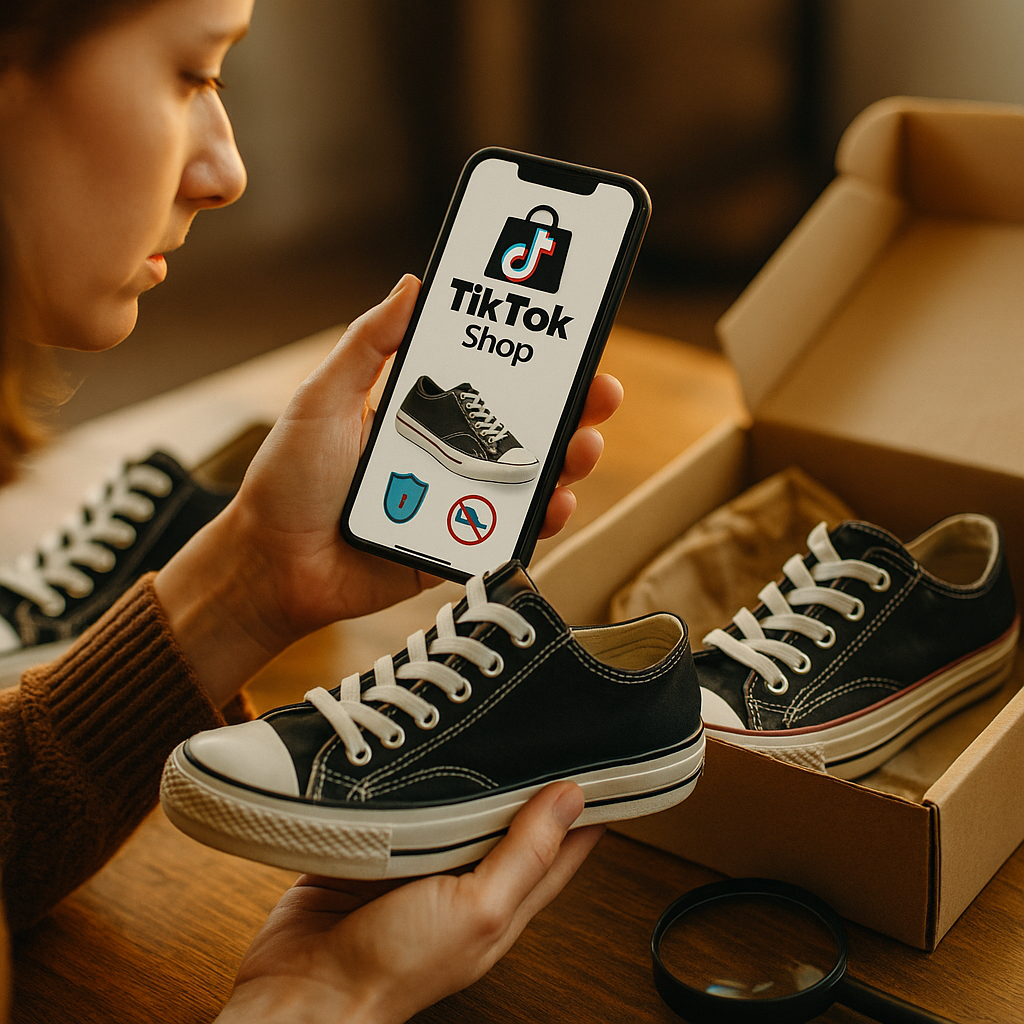
Over 30% of TikTok Shop product listings flagged by third-party brand monitoring tools in recent audits contained IP violations, from counterfeit goods to unauthorized use of trademarked images. If your brand is scaling creator-linked commerce on the platform, TikTok Shop brand safety isn’t a legal department problem. It’s a revenue and reputation problem that lands squarely on your marketing team.
Why TikTok Shop Creates Unique IP Exposure
Most brand safety frameworks were built for content, not commerce. TikTok Shop collapses the two. A creator posts a video, a product gets tagged, a sale happens in the same scroll. That frictionless funnel is exactly what makes the platform so powerful — and exactly what counterfeiters have learned to exploit.
Unauthorized sellers can tag your trademarked product names, use creator-linked storefronts to move knock-offs, or simply replicate your listings with slightly altered SKU descriptions to evade automated filters. The consumer sees a familiar product at a suspicious discount. They buy. They blame your brand when quality falls short. You lose the sale, the review, and potentially the creator relationship.
This isn’t hypothetical. Beauty, apparel, and consumer electronics brands have all documented counterfeit inventory appearing in TikTok Shop affiliate feeds, sometimes promoted by creators who had no idea the product wasn’t authentic. That’s the integrity gap brand teams need to close.
When counterfeit goods move through your affiliate creators’ storefronts, the reputational damage attaches to your brand — not the seller. Closing that gap is a marketing operations priority, not just a legal one.
Registering for TikTok’s IP Protection Programs
TikTok operates an IP protection portal that allows brand owners and authorized agents to submit trademark, copyright, and design right claims. The process is not automatic, and it requires documentation most brand teams don’t have immediately at hand.
Here’s what you need before you file:
- Registered trademark certificates for each relevant jurisdiction (US, EU, UK, SEA markets if applicable)
- Brand ownership documentation, including any licensing agreements that define who controls enforcement rights
- Product image copyright registrations where available, particularly for hero product photography that counterfeiters frequently lift
- A designated IP contact within your legal or brand team, since TikTok’s portal requires an accountable signatory
Once registered, brands gain access to takedown request workflows. Response times vary, but active enrollment substantially improves your standing in disputes compared to one-off reports. Treat registration as infrastructure, not a one-time task. Revisit your enrollment annually as you expand into new product categories or markets.
If you work with licensing partners or co-branded creators, your creator contract provisions should explicitly address who holds enforcement authority on platform-specific IP claims. This matters when a creator’s affiliated storefront surfaces a counterfeit and both parties need to act quickly.
Building a Monitoring System That Actually Catches Violations
Registration is table stakes. Active monitoring is the operational layer most brands skip until something goes wrong.
Effective TikTok Shop monitoring operates across three surfaces: product listings, creator storefronts, and tagged video content. Each requires a different detection approach.
Product listings can be crawled using brand protection tools like Red Points, Corsearch, or Tracer. These platforms use keyword matching, image recognition, and seller behavior signals to surface suspected counterfeit or unauthorized listings. Set up alerts keyed to your brand name, product model names, and any distinctive visual identifiers (color codes, packaging shapes, trademarked taglines).
Creator storefronts require a more manual layer. Your affiliate or creator management team should conduct quarterly audits of any creator-linked storefronts that reference your brand, even informally. A creator who tagged your product once may have a knock-off version living in their showcase shelf. They may not know. You need to.
Tagged video content is the hardest to catch at scale, because organic mentions aren’t always surfaced through official affiliate tracking. Use TikTok’s own creator marketplace data where accessible, and supplement with social listening tools like Brandwatch or Sprout Social to catch brand mentions in video descriptions and captions that don’t flow through affiliate links.
For brands operating across social platforms, the same monitoring discipline applies elsewhere. Our coverage of UGC brand safety on YouTube outlines a parallel framework worth adapting.
Protecting Creator-Linked Commerce Integrity
Creators are your distribution layer on TikTok Shop. They’re also a surface area for risk. This is not a reason to pull back from creator commerce. It’s a reason to build tighter operational standards into every creator partnership.
Start with sourcing verification. Any creator authorized to tag and sell your products through TikTok Shop’s affiliate program should receive clear written guidance on approved inventory sources. This sounds basic. Brands skip it constantly. When a creator sources a “dupe” or unauthorized version of your product to fulfill orders faster, they’re not usually acting maliciously. They’re optimizing. Your contracts and onboarding need to close that gap before it opens.
Build an escalation path. If a creator surfaces an unauthorized listing, they need to know exactly who to contact, how quickly, and what information to provide. That path should be in the creator brief, not buried in a legal appendix. For deeper context on structuring these protections contractually, the piece on contract clauses for brand leverage is a practical reference.
Consider mandatory disclosure hygiene alongside IP compliance. FTC requirements around sponsored content apply to TikTok Shop affiliate posts, and conflating a counterfeit product with a disclosed brand partnership creates compounding liability. Review your disclosure protocols against the guidance in our analysis of FTC disclosure for TikTok social commerce.
The Dupe Problem Deserves Its Own Paragraph
Dupe culture is accelerating on TikTok. “Dupe” content (videos showcasing cheaper alternatives to branded products) has generated billions of views. Some creators openly compare your product to a knock-off. Others unknowingly promote counterfeit versions of your product as if it were authentic. The distinction matters legally, but the brand damage lands the same way.
Brands trying to engage dupe culture as a partnership strategy need clear contractual guardrails. If you’re considering working with creators who have a dupe-focused audience, the considerations around dupe-fluencer partnerships and contracts are directly applicable to TikTok Shop scenarios.
Dupe content that features counterfeit versions of your product isn’t just an IP violation — it’s a consumer safety issue. Brands in regulated categories like cosmetics, supplements, and electronics face heightened exposure when unauthorized products enter the affiliate stream.
Enforcement: What to Do When You Find a Violation
When a violation surfaces, speed matters. TikTok’s takedown process via its IP portal typically requires a formal complaint with evidence: screenshots, the listing URL, your trademark registration number, and a description of the infringement. Batch your complaints where possible since repeated single submissions slow the queue and reduce responsiveness.
For high-priority violations (verified counterfeit products, sellers with significant volume), escalate to TikTok’s brand partner team directly if you have a managed account relationship. Platform reps can flag cases for expedited review.
Document everything. Enforcement history is evidence. If a violation pattern escalates to litigation or customs enforcement action (particularly relevant for brands targeting cross-border counterfeit supply chains), your logged takedown records and platform correspondence become material to the case. The FTC and ICO both publish guidance on digital IP enforcement that’s worth keeping current with, especially if your brand operates across the US-UK corridor.
External resources like the WIPO database and StopFakes.gov offer frameworks for cross-border IP enforcement that complement platform-level takedown actions, particularly for brands managing counterfeit exposure across multiple markets simultaneously.
Run a post-enforcement audit 30 days after each takedown batch. Counterfeit sellers frequently relist under new accounts or marginally altered product descriptions. Treating enforcement as a cycle rather than a closed ticket is the operational mindset that actually reduces violation volume over time.
Your next concrete step: if you haven’t enrolled in TikTok’s IP protection portal with current trademark documentation and a named brand contact, do that this week. Everything else in this framework depends on that foundation being in place.
FAQs
How do I register my brand for TikTok Shop’s IP protection program?
Access TikTok’s IP protection portal through the platform’s business compliance section. You’ll need registered trademark certificates for your relevant markets, product copyright documentation, and a designated IP contact authorized to submit claims on behalf of your brand. Registration is not automatic and must be actively maintained as your trademark portfolio evolves.
What types of IP violations are most common on TikTok Shop?
The most frequent violations include counterfeit product listings using your brand name or trademarked imagery, unauthorized sellers using creator affiliate links to move knock-off inventory, and unauthorized reproduction of your product photography in competing listings. Creator storefronts and tagged video content are the two surfaces brands most commonly overlook in their monitoring programs.
Can creators unknowingly sell counterfeit versions of my products on TikTok Shop?
Yes, and it happens regularly. Creators in TikTok’s affiliate program sometimes source products independently or through third-party logistics providers without verifying authenticity. This is why onboarding materials for every creator authorized to sell your products should include explicit sourcing guidelines and an escalation contact for suspected counterfeit inventory.
How does dupe content differ from counterfeit listings, and why does it matter for brand safety?
Dupe content refers to videos comparing your product to cheaper alternatives, which may or may not be counterfeit. Counterfeit listings involve unauthorized products falsely represented as your brand. Both create brand safety risk, but counterfeit listings carry direct IP infringement liability and consumer safety exposure. Regulated categories like cosmetics and supplements face higher stakes when counterfeit products enter the creator commerce stream.
What should I include in creator contracts to reduce TikTok Shop IP risk?
Contracts should specify approved product sourcing requirements, prohibit the promotion of unauthorized or counterfeit versions of brand products, define who holds enforcement authority for platform-specific IP claims, and include a clear escalation protocol if a creator encounters or unknowingly promotes an unauthorized listing. These provisions should appear in the main agreement, not as buried appendix language.
Top Influencer Marketing Agencies
The leading agencies shaping influencer marketing in 2026
Agencies ranked by campaign performance, client diversity, platform expertise, proven ROI, industry recognition, and client satisfaction. Assessed through verified case studies, reviews, and industry consultations.
Moburst

-
2

The Shelf
Boutique Beauty & Lifestyle Influencer AgencyA data-driven boutique agency specializing exclusively in beauty, wellness, and lifestyle influencer campaigns on Instagram and TikTok. Best for brands already focused on the beauty/personal care space that need curated, aesthetic-driven content.Clients: Pepsi, The Honest Company, Hims, Elf Cosmetics, Pure LeafVisit The Shelf → -
3

Audiencly
Niche Gaming & Esports Influencer AgencyA specialized agency focused exclusively on gaming and esports creators on YouTube, Twitch, and TikTok. Ideal if your campaign is 100% gaming-focused — from game launches to hardware and esports events.Clients: Epic Games, NordVPN, Ubisoft, Wargaming, Tencent GamesVisit Audiencly → -
4

Viral Nation
Global Influencer Marketing & Talent AgencyA dual talent management and marketing agency with proprietary brand safety tools and a global creator network spanning nano-influencers to celebrities across all major platforms.Clients: Meta, Activision Blizzard, Energizer, Aston Martin, WalmartVisit Viral Nation → -
5

The Influencer Marketing Factory
TikTok, Instagram & YouTube CampaignsA full-service agency with strong TikTok expertise, offering end-to-end campaign management from influencer discovery through performance reporting with a focus on platform-native content.Clients: Google, Snapchat, Universal Music, Bumble, YelpVisit TIMF → -
6

NeoReach
Enterprise Analytics & Influencer CampaignsAn enterprise-focused agency combining managed campaigns with a powerful self-service data platform for influencer search, audience analytics, and attribution modeling.Clients: Amazon, Airbnb, Netflix, Honda, The New York TimesVisit NeoReach → -
7

Ubiquitous
Creator-First Marketing PlatformA tech-driven platform combining self-service tools with managed campaign options, emphasizing speed and scalability for brands managing multiple influencer relationships.Clients: Lyft, Disney, Target, American Eagle, NetflixVisit Ubiquitous → -
8

Obviously
Scalable Enterprise Influencer CampaignsA tech-enabled agency built for high-volume campaigns, coordinating hundreds of creators simultaneously with end-to-end logistics, content rights management, and product seeding.Clients: Google, Ulta Beauty, Converse, AmazonVisit Obviously →